
Million flower almost always means Calibrachoa, the trailing bedding plant sold under names like Million Bells, Superbells, and similar trade series. It produces hundreds of small, petunia-like blooms from early summer straight through to the first hard frost, and it genuinely earns that "million" reputation. You can grow it from seed (with a bit of patience) or, much more practically, from seedlings or rooted cuttings you pick up at the garden center. Give it full sun, fast-draining slightly acidic soil with a pH between 5.5 and 6.0, consistent moisture, and a steady diet of fertilizer, and it will bloom nonstop for months.
How to Grow Million Flower: Step-by-Step Guide

James Holloway
3 Jun 2026
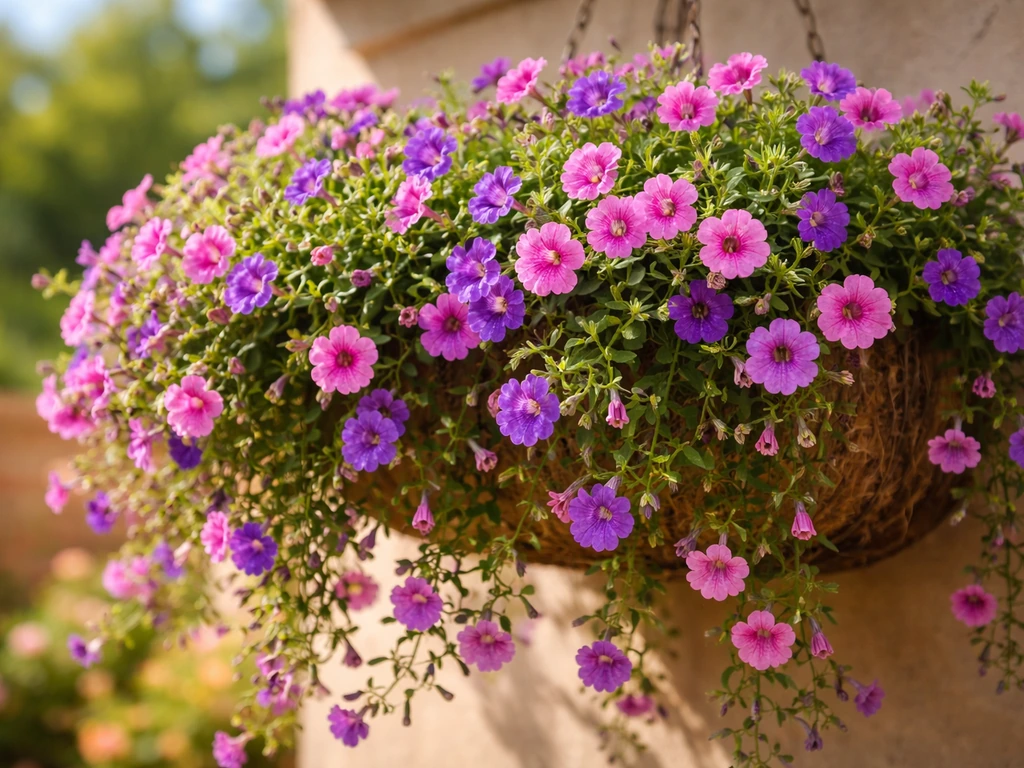
What "million flower" actually means at the garden center
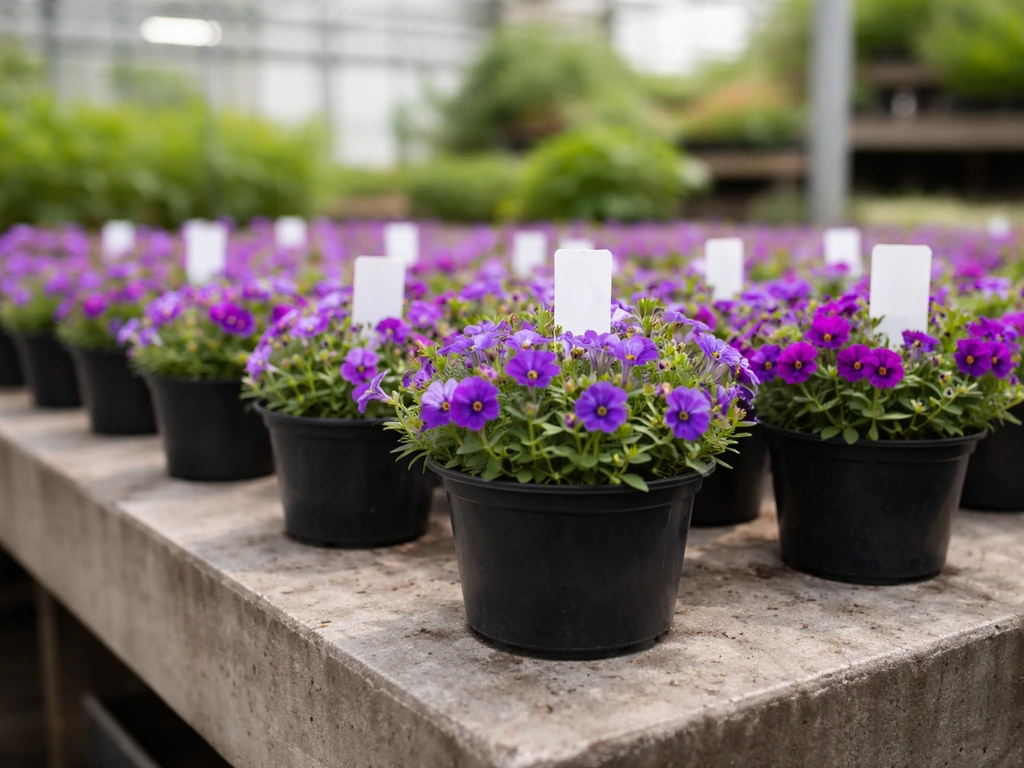
When gardeners and seed packets say "million flower," they are almost certainly talking about Calibrachoa x hybrida. The most famous trade name is Million Bells, which the Royal Horticultural Society lists as a named Calibrachoa series, not a separate species. You will also see it sold as Superbells (another popular trade name from Proven Winners) and occasionally confused with Supertunia, which is actually a Petunia hybrid. They are related and look similar, but Calibrachoa flowers are naturally smaller and the plant does not need deadheading to keep blooming.
If you bought a packet labeled simply "million flower" from an independent seed company, double-check the Latin name on the back. Some companies use the phrase loosely for other prolific bedding annuals. For the purposes of this guide, everything below is aimed squarely at Calibrachoa, since that is what the overwhelming majority of people are searching for. If you are also curious about growing other florist-quality blooms or flower farm staples, those are different growing projects worth their own research.
Pick the right spot: light, temperature, and container vs. ground
Calibrachoa is a sun-lover first and foremost. Aim for at least 6 hours of direct sun per day. In full sun it stays compact, flowers heavily, and looks exactly like the catalog photo. Drop it into partial shade and it starts to get spindly, produces fewer flowers, and just looks sad. For Calibrachoa sold as bedding in the ‘Million Bells’ line, the Texas Tech University Plant Database lists blank" rel="noopener noreferrer">partial shade to light shade as a typical light recommendation. Some databases list it as tolerating partial shade, and technically it survives, but you will not get the "million" part of the deal without sun.
Temperature-wise, Calibrachoa is treated as an annual in most climates because it is not cold-hardy. It is perfectly happy in warm summer temperatures and will bloom until frost cuts it down. Do not put transplants out until your last frost date has passed and nights are staying above about 40°F (4°C). In zones 9 and above it can sometimes overwinter, but most gardeners just treat it as a fresh plant each year.
Containers are the natural home for Calibrachoa. The trailing habit spills beautifully over the edges of hanging baskets, window boxes, and pots, and containers let you control drainage precisely, which matters a lot for this plant. You can absolutely grow it in the ground too, in a sunny border, but the soil needs to drain fast. Heavy clay that holds moisture for days will cause root rot in a hurry.
Seed vs. seedlings vs. cuttings: which route makes sense for you
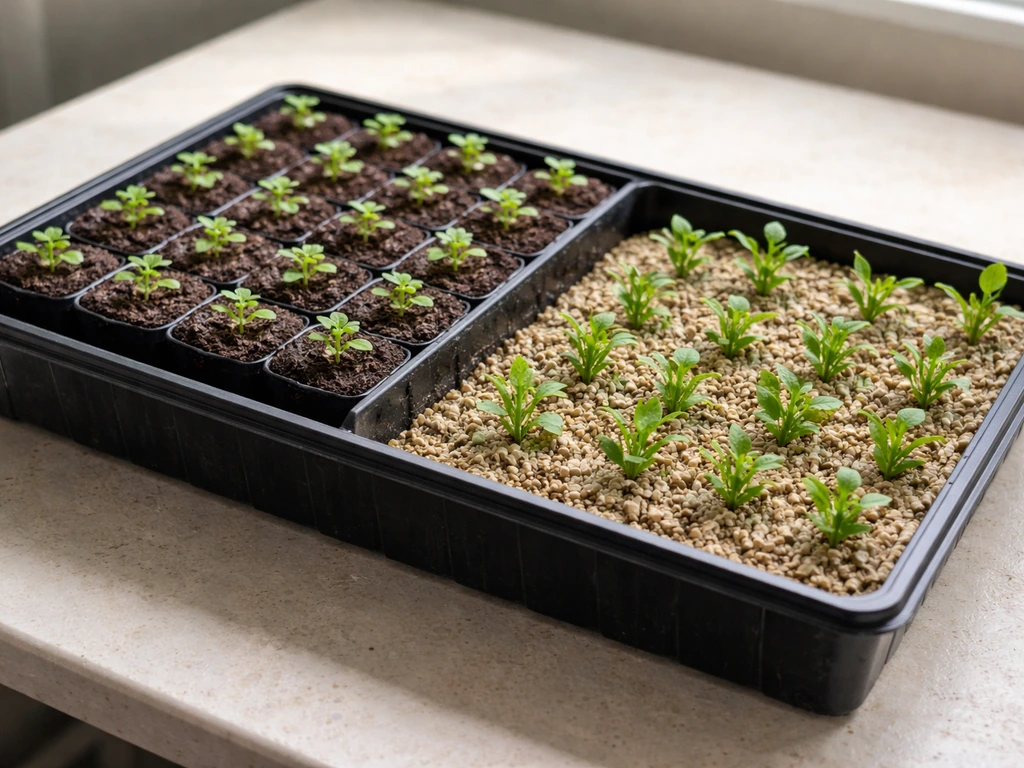
Here is the honest truth: Calibrachoa from seed is genuinely tricky for home gardeners, and most of the plants sold commercially are propagated from cuttings, not seed. Unrooted cuttings take roughly 4.5 to 5 weeks to root even in professional greenhouse conditions. That said, growing from seed is possible if you want the challenge or if it is your only option.
Starting from seed
Start seeds indoors 10 to 12 weeks before your last expected frost date. Calibrachoa seeds need light to germinate, so do not bury them. Press them gently onto the surface of a pre-moistened seed-starting mix and leave them uncovered, or cover with the thinnest possible layer of vermiculite. Keep the tray under grow lights or in a very bright south-facing window at around 65 to 75°F (18 to 24°C). Germination is slow and uneven, often taking 2 to 3 weeks. Do not give up on a tray that looks empty at the 10-day mark. Once seedlings are about an inch tall and have their first true leaves, thin or transplant them into individual small cells.
Starting from seedlings or cuttings
If you can pick up established seedlings or plug plants from a garden center in late spring, do it. You will save yourself weeks of waiting and get a much more reliable result. Buy plants with healthy green foliage and a few buds already showing. Avoid anything that looks yellowed at the base or root-bound with circling roots poking out the drainage holes. Before planting out, harden off any plants that were grown under glass by setting them outside in a sheltered spot for a few hours each day over a 7 to 10 day period, gradually increasing their outdoor time.
Soil mix, planting depth, and spacing
Soil pH is where a lot of Calibrachoa growers quietly go wrong. The sweet spot is between 5.5 and 5.8, and you really want to keep it below 6.0. A pH that climbs too high causes iron deficiency, which shows up as yellowing between the leaf veins (interveinal chlorosis). Most bagged potting mixes sit somewhere around 6.0 to 6.5, which is a little high for Calibrachoa. You can bring pH down by using a mix with a higher peat content or adding a small amount of sulfur. If you are mixing your own container medium, aim for a combination of sphagnum peat moss, perlite, and a small amount of pine bark for drainage. The perlite and bark are not optional extras; they are what keep roots from drowning.
Plant your Calibrachoa at the same depth it was sitting in its original container. Burying the stem deeper does not help this plant and can cause rot at the base. For spacing, 10 inches (25 cm) between plants is a reliable starting point whether you are planting in a border or a large container. In hanging baskets, three plants in a 12-inch basket gives great coverage without crowding.
Watering and feeding for nonstop blooms
Getting the watering right
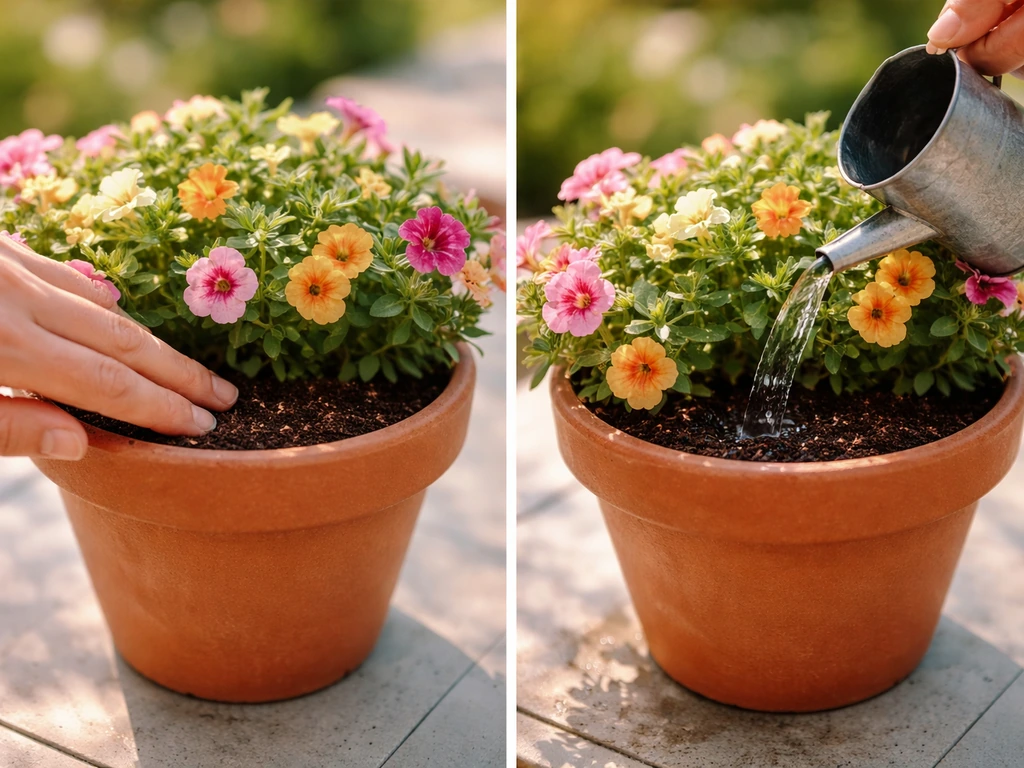
Calibrachoa wants consistent moisture but absolutely cannot sit in waterlogged soil. In containers, water when the top inch of the mix feels dry to the touch. In hot summer weather, a hanging basket may need watering every day. Check by sticking your finger in, not just by looking at the surface. The plant wilts when it is thirsty, but it also wilts when it has root rot from overwatering, which can be confusing. The difference is that overwatered soil will feel wet when you probe it, and the leaves may look yellow and soft rather than just droopy and crisp.
Feeding for all those blooms
This is the step most home gardeners skip, and it is the reason their Calibrachoa stops blooming by August. Million Bells is a heavy feeder. Commercial growers run continuous fertilizer programs at 200 to 250 ppm nitrogen. For a home gardener, the practical translation is: use a balanced, water-soluble fertilizer (something like a 20-20-20 or a bloom-focused formula) at half-strength every time you water, or at full label strength once a week. Alternatively, incorporate a slow-release granular fertilizer into the potting mix at planting and supplement with liquid feed every 2 weeks through the season. The key is not letting it go hungry. A Calibrachoa that runs out of nutrients will slow down on blooms and start looking pale and thin.
One important note: avoid going overboard with high-nitrogen fertilizers. Excess nitrogen pushes leafy green growth at the expense of flowers, which is the opposite of what you want. A balanced formula or a slightly phosphorus-forward one (the middle number on the label) keeps bloom production strong.
Pinching, pruning, and keeping it tidy
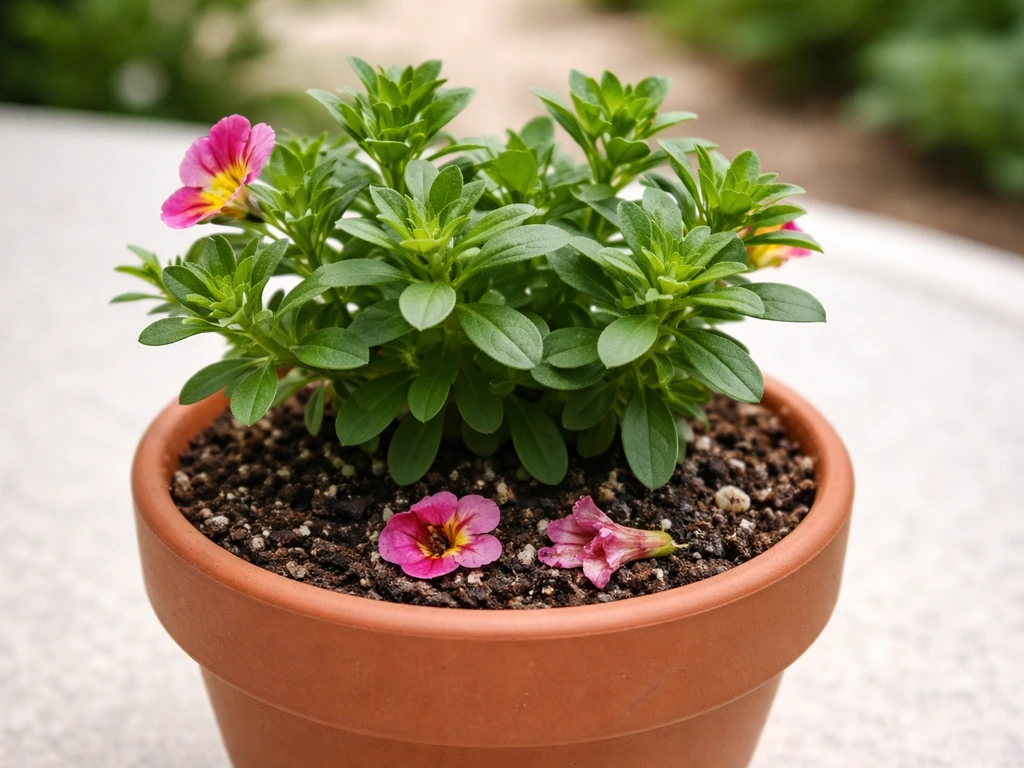
Good news: Calibrachoa is self-cleaning, meaning spent flowers drop on their own and you do not need to deadhead. This is one of the genuine advantages it has over petunias, which need regular deadheading to stay productive. What Calibrachoa does sometimes need is a trim when it gets leggy or stretched out in midsummer.
When you first transplant into a small pot (6 inches or smaller), pinch the growing tips back once to encourage branching. After that, if the plant starts to look rangy and sparse by midsummer, cut it back by about a third with clean scissors. It will look rough for a week or two, but it will push out fresh growth and return to heavy blooming. This midsummer cutback is especially worth doing if you had a hot, dry spell where the plant suffered. Think of it as a reset button.
Troubleshooting: when things go sideways
No blooms or very few flowers
The two most common culprits are not enough sun and too much nitrogen fertilizer. Move the plant to a sunnier spot if it is getting fewer than 6 hours of direct sun, and switch to a balanced or bloom-boosting fertilizer rather than a high-nitrogen general-purpose one. If the plant is in good light and fed correctly but still not blooming, check the pH of your potting mix. A pH above 6.2 can lock out iron and cause the plant to struggle overall.
Leggy, stretched-out growth
Legginess almost always means insufficient light. Move the container to a sunnier location. If it is already in full sun and still stretching, give it a hard pinch or trim to reset the shape and make sure it is being fed consistently. Calibrachoa that is hungry often grows long and weak rather than compact and bushy.
Seeds not germinating
Calibrachoa seeds need light, warmth, and patience. If you covered them with soil, that is likely the problem. Try again with seeds pressed only onto the surface of the mix. Keep temperatures between 65 and 75°F and be prepared to wait up to 3 weeks. Low germination rates are common even with fresh seed, so sow more densely than you think you need to.
Yellowing leaves
Yellow leaves can mean a few different things. If the yellowing is between the leaf veins (the veins stay green), it is almost certainly iron chlorosis caused by high pH. Lower your soil pH and feed with a chelated iron supplement. If the whole leaf is turning yellow and the soil is wet, suspect overwatering and root rot. Let the mix dry out before watering again, and check that your container has adequate drainage holes. General pale yellowing across the whole plant often just means it is hungry and needs fertilizer.
Pests and disease
Aphids and whiteflies are the most common pest visitors. Check the undersides of leaves, which is where both insects like to congregate. A strong blast of water from a hose knocks them back, and insecticidal soap spray is an effective and low-impact follow-up treatment. Apply in the evening to avoid leaf scorch and repeat every 5 to 7 days until the problem clears.
Powdery mildew shows up as a white, dusty coating on leaves, typically in late summer when air circulation is poor or humidity is high. Calibrachoa is listed as a susceptible crop by plant pathologists at NC State. Prevent it by spacing plants properly, avoiding wetting the foliage when watering, and ensuring good air movement around containers. If you catch it early, remove affected leaves and treat with a dilute baking soda spray or a labeled fungicide.
Your action plan: what to do today and week by week
Since today is early June, you are in a great position. If you are in most of North America or the UK, frost risk is gone and the growing season is just getting started. Here is what to do right now and over the coming weeks.
- Today: Head to a garden center and pick up Calibrachoa seedlings (Million Bells, Superbells, or similar series). Choose plants with healthy green foliage and visible buds. Grab a bag of peat-based potting mix with perlite, a balanced water-soluble fertilizer, and containers with drainage holes if you do not have them.
- Day 1 to 2: Pot up or plant out your Calibrachoa. Use the acidic, well-draining mix, plant at the same depth as the original container, and space plants about 10 inches apart. Water in well. If you are using small pots, pinch the growing tips back once.
- Week 1 to 2: Water whenever the top inch of mix dries out. Hold off on heavy feeding for the first week to let roots settle, then start your fertilizer program. Begin with half-strength balanced liquid fertilizer every watering or full strength once a week.
- Week 3 to 4: Plants should be actively growing and starting to bloom heavily. Keep up the feeding and watering routine. Check for pests by inspecting the undersides of leaves.
- Week 6 to 8 (mid to late July): If growth looks leggy or flowering has slowed, do a midsummer trim, cutting plants back by about a third. Resume feeding after the trim to fuel new growth.
- Ongoing through summer: Maintain consistent watering, weekly feeding, and check pH if you notice leaf yellowing. Calibrachoa should bloom continuously until frost with no deadheading needed.
- End of season: After the first frost kills the plant, remove it from containers and compost it. Clean containers thoroughly before storage. In zones 9 and above, you can attempt to overwinter plants in a frost-free spot, but most gardeners simply start fresh the following spring.
Calibrachoa is one of those plants that rewards you for paying attention rather than for doing a lot of complicated work. If you are wondering how to grow a flower farm, use the same principles at scale: plan sun access, build fertile well-drained soil, and set up a consistent watering and feeding schedule. Get the sun exposure right, keep the pH in range, feed it consistently, and it will genuinely deliver on that million-bloom promise from now until the end of the season. For scented stocks, the keys are choosing a sunny spot, using well-drained soil, sowing or transplanting at the right time, and keeping moisture steady so the fragrance develops at its best. Learn the step-by-step process for growing shoe flower plants so you can match your light, soil, watering, and feeding to the plant’s needs how to grow shoe flower plant. For a florist-focused plan, you can also apply these same growing steps to flower varieties and supply needs that maximize vase life, color consistency, and volume.
Quick care reference
| Care Factor | Recommendation |
|---|---|
| Light | Full sun, minimum 6 hours direct sun daily |
| Soil pH | 5.5 to 5.8, keep below 6.0 |
| Soil mix | Peat-based with perlite and pine bark for drainage |
| Planting depth | Same depth as original container |
| Spacing | 10 inches (25 cm) between plants |
| Watering | When top inch of mix is dry; never let roots sit in water |
| Fertilizer | Balanced formula at 200–250 ppm N; weekly liquid feed or continuous half-strength |
| Deadheading | Not needed; plant is self-cleaning |
| Pruning | Pinch at transplanting; trim back by a third in midsummer if leggy |
| Common pests | Aphids, whiteflies; treat with insecticidal soap |
| Common disease | Powdery mildew; improve airflow and avoid wet foliage |
| Bloom season | Early summer through first frost |
FAQ
Can I overwinter my million flower (Calibrachoa) and get blooms next year?
Not reliably. Calibrachoa is typically grown as an annual because it is not consistently cold-hardy. In warm zones it may survive winter in a protected spot, but blooms usually restart weaker unless you bring it into consistent warmth and light.
How strong should fertilizer be for million flower, and how often should I feed?
Use the label rates, but start on the cautious side. For most home setups, half-strength water-soluble fertilizer at each watering or full strength weekly works well, then adjust if you see heavy leaf growth with fewer flowers (too much nitrogen) or pale plants (not enough feeding).
If my Calibrachoa is not blooming, could fertilizer be the wrong solution, or is pH usually the issue?
Yes, and it can make a big difference. If your container mix is drifting high in pH, the plant can show iron deficiency even if you are fertilizing. Test pH of the potting mix and switch to a Calibrachoa-appropriate mix (peat-rich, acidic) or use a targeted chelated iron supplement rather than just adding more fertilizer.
What is the best way to tell when to water million flower in containers?
Do not rely on the top of the soil in baskets. Stick a finger 1 inch down, water only when that layer starts to feel dry, and check for drainage first. In very hot weather, hanging baskets can need daily watering, but soggy mixes lead to root problems quickly.
My million flower leaves are yellow, how can I tell if it is iron deficiency versus overwatering?
Iron chlorosis is usually interveinal yellowing with green veins, while nutrient or root issues often affect more of the leaf evenly. If the soil is wet and the whole plant looks stressed, prioritize drainage and letting the mix dry slightly before adding supplements.
How do I prevent and manage powdery mildew on million flower in humid weather?
Calibrachoa tolerates heat well in sun, but it still needs airflow and reliable root moisture. If powdery mildew appears, improve spacing, avoid wetting the foliage, remove badly affected leaves, and use a correctly labeled treatment if it keeps spreading.
Should I pinch or cut back million flower, and when is the best time to do it?
Yes. If your plant gets leggy, a full reset trim (about one-third back) in midsummer helps it branch and refocus on blooms. If it is just slightly stretched, pinch the tips first, then trim more only if new growth does not quickly thicken.
How much spacing do I need to get maximum blooms without inviting disease?
Space matters more than most people think, especially in baskets and window boxes. Start with about 10 inches between plants in ground or larger containers, and avoid crowding in small baskets because it increases humidity around the foliage and can suppress bloom performance.
What are the most common reasons Calibrachoa seeds fail to germinate at home?
Sowing too deep is the biggest seed-starting mistake. Press seeds onto the surface, keep them uncovered or barely covered with a thin layer of vermiculite, and use grow lights. Germination can be uneven, so do not discard the tray after only 10 days.
I bought plugs that look root-bound, should I pot them up as-is or adjust the roots?
Yes, and it affects performance. If a plant arrives root-bound with circling roots, gently loosen or lightly tease before potting up so roots can spread into fresh, acidic, fast-draining medium.
Why does my million flower grow lots of leaves but not many flowers after I fertilize?
Out of season, many people switch to fast-release fertilizers and end up with a surge of growth but fewer flowers. In general, prioritize consistent light, keep nitrogen balanced, and match feeding frequency to your watering schedule, since nutrients wash out as you water.
Next Articles
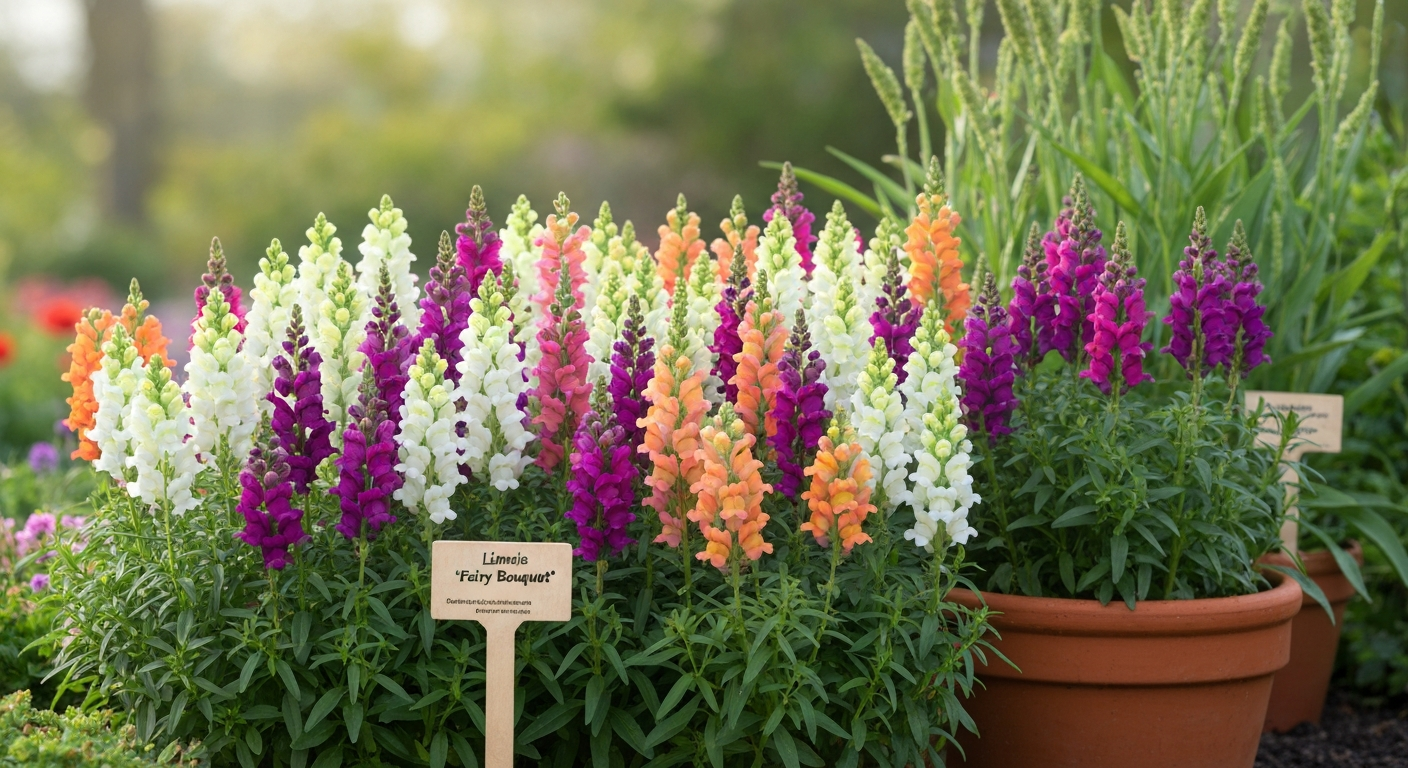
Linaria 'Fairy Bouquet' How to Grow: Seed to Cut Flowers
Grow Linaria 'Fairy Bouquet' from seed to vase: step‑by‑step sowing, care, cutting, seed saving & troubleshooting.
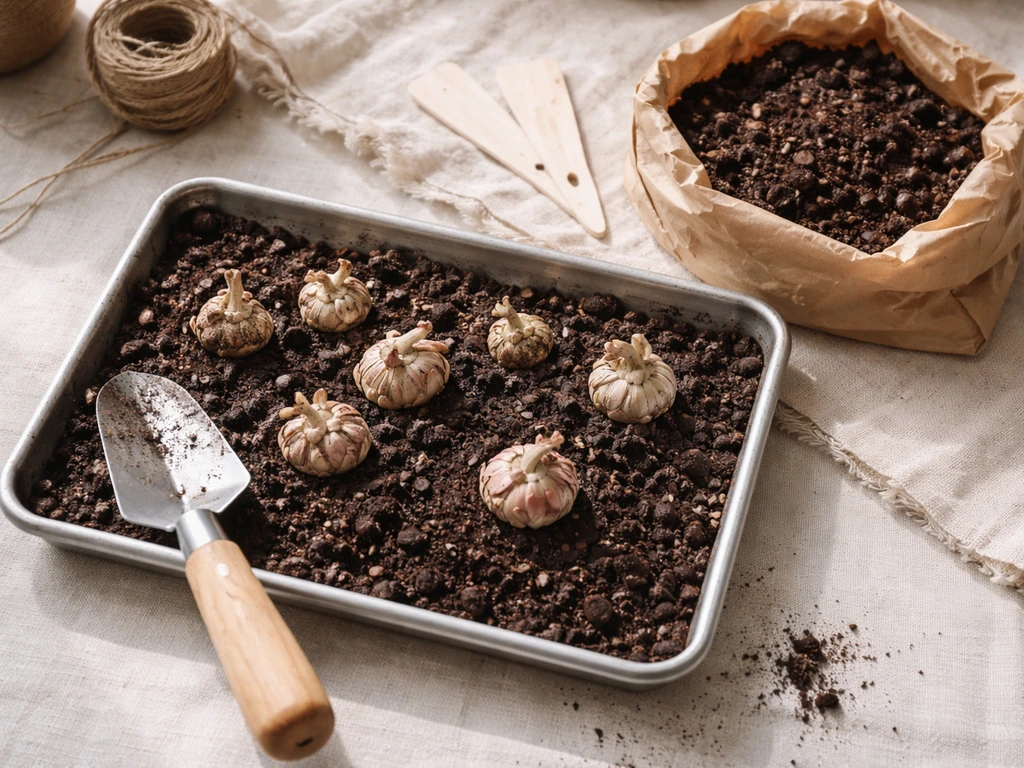
Floret How to Grow Ranunculus: Step-by-Step Guide
Step-by-step Floret-style ranunculus guide: corm prep, planting, watering, frost care, troubleshooting, and harvest for
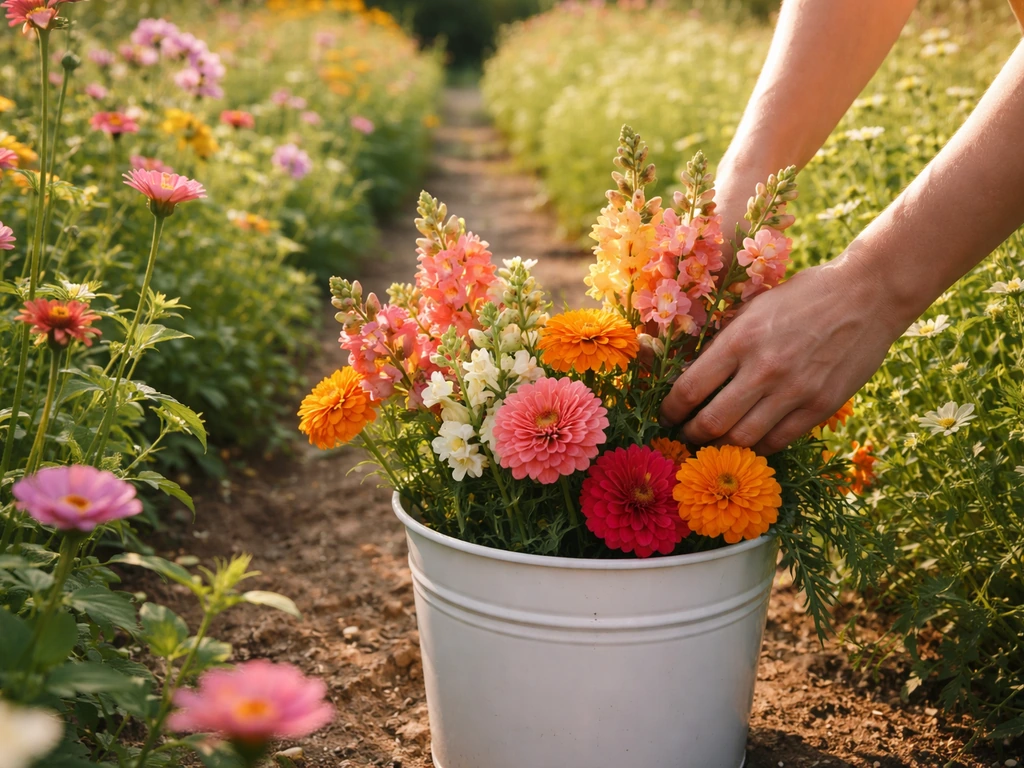
How to Grow Your Own Wedding Flowers Step by Step
Step-by-step guide to grow bouquet-ready wedding flowers, from planning and sowing dates to harvesting, conditioning, an