Yes, you can absolutely grow your own wedding flowers, and it is more achievable than most people think. If you want bouquet-style blooms without wedding-specific planning, you can also use the same steps to grow flowers from a bouquet grow your own wedding flowers. The key is picking the right varieties, counting backward from your wedding date to set a sowing schedule, growing more than you think you need, and learning how to harvest and condition stems so they look just as good on the big day as they did in the garden. Marigolds, snapdragons, calendula, poppies, and wildflower mixes are all beginner-friendly options with reliable seed-to-bloom timelines. With a simple cutting garden plan and a little succession sowing, you can pull this off even if you have never grown a cut flower before.
How to Grow Your Own Wedding Flowers Step by Step
Decide your wedding timeline and flower goals first
Before you touch a seed packet, sit down with your wedding date and work backward. This is the single most important planning step, because every decision you make about what to sow, when to sow it, and how much to plant flows from this number. Most annual cut flowers take anywhere from 60 to 120 days from sowing to first bloom, depending on the variety and whether you start them indoors or direct sow. Give yourself a generous buffer: aim to have flowers blooming at least 1 to 2 weeks before the wedding so you have time to harvest, condition, and store them without panicking.
Next, define what you actually need. Are you making your own bouquets, centerpieces, and ceremony arrangements, or just filling in around flowers from a florist? Be honest about scale. A single bridal bouquet might need 20 to 30 stems depending on size, while a full DIY wedding with multiple centerpieces could require hundreds. Write out a rough list: bridal bouquet, bridesmaid bouquets, boutonnieres, ceremony arches, table centerpieces, and any loose blooms for decorating. Then estimate stem counts for each. That number tells you how many plants you actually need to grow, and from that you can size your cutting garden realistically.
Also think about your color palette and the style of arrangements. Loose, garden-style arrangements are the most forgiving for home growers because they mix different flower types and foliage and do not need perfect uniformity. Tighter, formal arrangements demand more precise bloom timing and stem length, which is harder to control at home. If you are a first-timer, go garden-style. It suits homegrown flowers perfectly and is genuinely beautiful.
Choose easy-to-grow wedding cut-flower varieties (and how many to plant)
Stick to varieties that are known to perform well in a cutting garden and are tolerant of beginner mistakes. If you want to try something a bit different, Linaria fairy bouquet is another related cut-flower option and you can follow a linaria fairy bouquet how to grow guide for timing and basic care. Here are the best options for most home growers, along with what you need to know about each.
The best beginner-friendly wedding cutting flowers
| Flower | Days Seed to Bloom | Vase Life | Best For | Notes |
|---|---|---|---|---|
| Snapdragon | 90–120 days from seed | 7–10 days | Bouquets, tall arrangements | Start indoors 8–10 weeks before transplant date; cool-season crop |
| Marigold (African/tall) | 60–90 days from seed | 7–10 days | Bouquets, centerpieces | Prolific bloomer; easy and heat-tolerant |
| Calendula | 50–70 days from seed | 6–10 days | Bouquets, loose arrangements | Direct sow or transplant; harvest half-open for longest vase life |
| Corn Poppy | 60–80 days from direct sow | 3–5 days (short) | Accent blooms only | Direct sow only; very short vase life — use day-of or day before |
| Wildflower mix (annual types) | 60–90 days from sow | Varies by type | Filler and texture | Germination and bloom timing varies; read mix contents carefully |
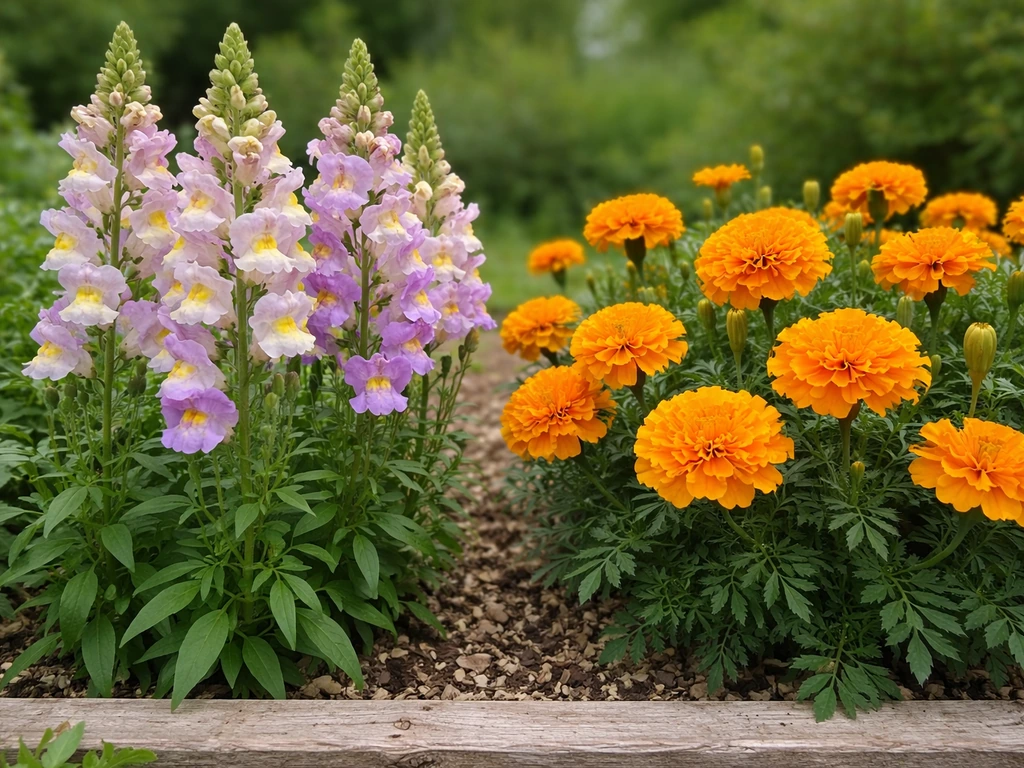
Snapdragons and marigolds are the two workhorses of the home cutting garden. Snapdragons have tall, elegant spikes perfect for bouquets and offer a long vase life of 7 to 10 days when harvested at the right stage. African marigolds (the tall types) give you big, saturated blooms with the same 7 to 10 day vase life. Calendula is one of the easiest flowers you can grow and looks genuinely lovely in loose wedding arrangements. Blushing bride can be grown as a wedding flower too, and it is worth matching your sowing schedule to its bloom timeline so you have enough stems for arrangements. Corn poppies are stunning but be honest with yourself: their vase life is very short, so they are only practical for same-day use. Wildflower mixes add beautiful filler and texture, but success depends heavily on what is actually in the mix, since annuals and perennials bloom on very different schedules.
For quantities, a useful starting rule is to grow at least 30 to 50 percent more plants than you think you need. Not every plant will peak at the right moment. Some will be past bloom, some will not have opened yet, and a few will succumb to pest or weather stress. If your stem count goal is 200, aim to grow enough plants to produce 280 to 300 stems. For African marigolds spaced 12 to 18 inches apart, one plant typically produces multiple stems over its bloom period, so a 4x8 bed can realistically support 12 to 16 plants. Plan your beds accordingly.
Start seeds vs. buy starts: what makes sense for your timeline
Starting from seed gives you the most variety options and the lowest cost per plant, but it requires more lead time and attention. Buying starts from a nursery trades variety selection and cost for convenience and time savings. For a wedding, you often want a combination of both.
Snapdragons should be started from seed indoors 8 to 10 weeks before your outdoor planting date. They germinate in 7 to 14 days at 70 to 75 degrees Fahrenheit, and importantly, they need light to germinate, so surface-sow or just barely press the seeds into the surface of your seed-starting mix. Bottom-water or mist gently so you do not displace the seeds. Once they are up and growing, they prefer cooler conditions. Marigolds are faster: start them indoors about 4 to 6 weeks before transplanting out, sowing about 1/4 inch deep in 72-cell flats. You can also direct sow marigolds once soil temperatures hit 65 degrees Fahrenheit. Calendula can be direct sown about 1/4 inch deep with 16-inch final spacing, germinating in 10 to 15 days.
Corn poppies and most wildflower annuals should be direct sown directly into the ground as early as the soil can be worked in spring. Corn poppy seeds specifically need darkness to germinate, so sow them 1/4 inch deep and firm the soil over them. Do not try to transplant poppies, they strongly dislike root disturbance and direct sowing is the only reliable method.
If your wedding date is within 10 to 12 weeks and you have not started seeds yet, buying nursery starts for snapdragons and marigolds is a smart call. You will have fewer variety options, but you will actually have flowers at the right time, which matters a lot more than having the perfect cultivar.
Build a sowing calendar
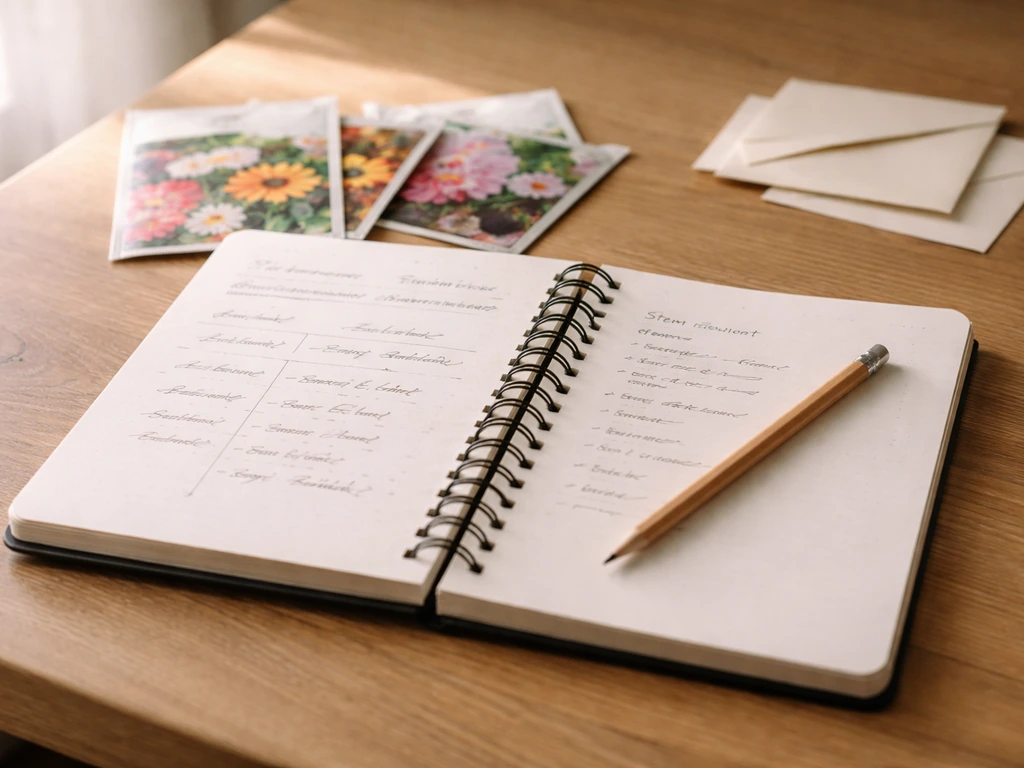
Here is how to build your personal sowing calendar. Take your wedding date and subtract the days-to-bloom for each variety (use the table above as a starting point). Then subtract another 1 to 2 weeks as a buffer. That is your target outdoor planting date. If starting seeds indoors, subtract your indoor start time from that outdoor planting date. Write it all out on a calendar. It sounds simple, but having actual dates on paper (or in your phone) is what turns this from an idea into a plan you can execute.
Planting, care, and troubleshooting to get strong blooms
Site and soil preparation
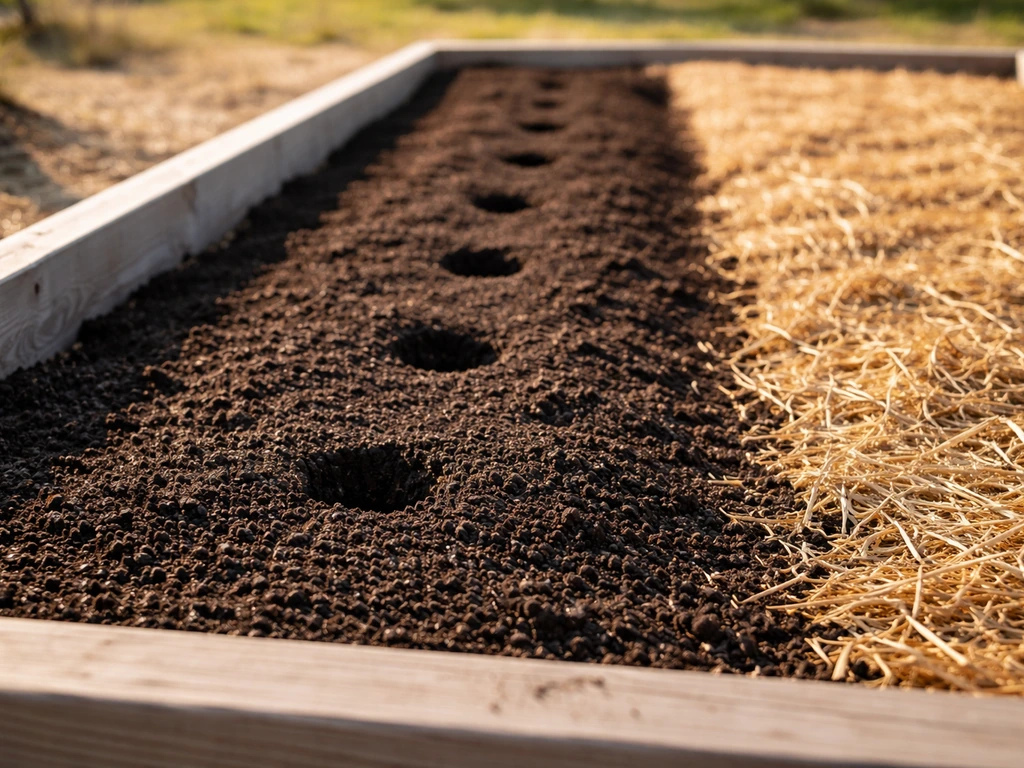
Almost all of the flowers on this list want full sun, meaning at least 6 to 8 hours of direct sunlight per day. This is non-negotiable. A shady cutting garden will give you leggy, weak-stemmed plants with fewer blooms. Before planting, work compost or a balanced slow-release granular fertilizer into the bed. Loose, well-draining soil is what you are after. Compacted or waterlogged soil will stunt growth and invite root disease.
Watering
Water deeply and slowly rather than frequently and shallowly. Deep watering encourages roots to grow down, which makes plants more drought-resistant and more stable when they get tall. For young seedlings, water gently so you do not knock them over or compact the soil around their roots. Once established, most of these annuals want about 1 inch of water per week from rain or irrigation. Avoid overhead watering in the evening, which can encourage fungal problems.
Fertilizing
Less is more when it comes to fertilizer for cutting flowers. Over-fertilizing, especially with high-nitrogen products, pushes lush leafy growth at the expense of blooms. Marigolds in particular are notorious for going all foliage and no flowers when overfed. Apply fertilizer to moist soil, follow label rates exactly, and resist the urge to add extra. A single application of balanced slow-release granular at planting plus one light liquid feed mid-season is usually all you need.
Common problems and how to handle them
- Powdery mildew: White coating on leaves, especially in humid conditions with cool nights and warm days. Improve airflow by spacing plants properly and avoid overhead watering. Powdery mildew is unusual in that it does not need wet leaves to spread, so spacing is your best prevention tool.
- Leggy seedlings: Usually caused by insufficient light indoors. Move them closer to a grow light or a very bright south-facing window immediately. Leggy seedlings are not necessarily ruined — they often perk up once in the ground.
- No blooms on marigolds: Usually over-fertilized or planted in too much shade. Cut back on feeding and make sure they are in full sun.
- Poor germination: Check soil temperature and sowing depth. Snapdragons need light and will fail if buried. Corn poppies need darkness and will fail if left on the surface. Each flower has its own rules — reread the seed packet.
- Pest damage: Aphids and caterpillars are the most common culprits on cutting-garden annuals. Knock aphids off with a strong spray of water or use insecticidal soap. Hand-pick caterpillars when populations are small. Check plants every few days so you catch problems before they escalate.
Harvesting, conditioning, and storing cut flowers for the wedding day
How you harvest and handle your flowers after cutting is just as important as how you grow them. A flower picked at the wrong stage or left without water for an hour on a warm day can look tired before it ever makes it into an arrangement.
When and how to cut
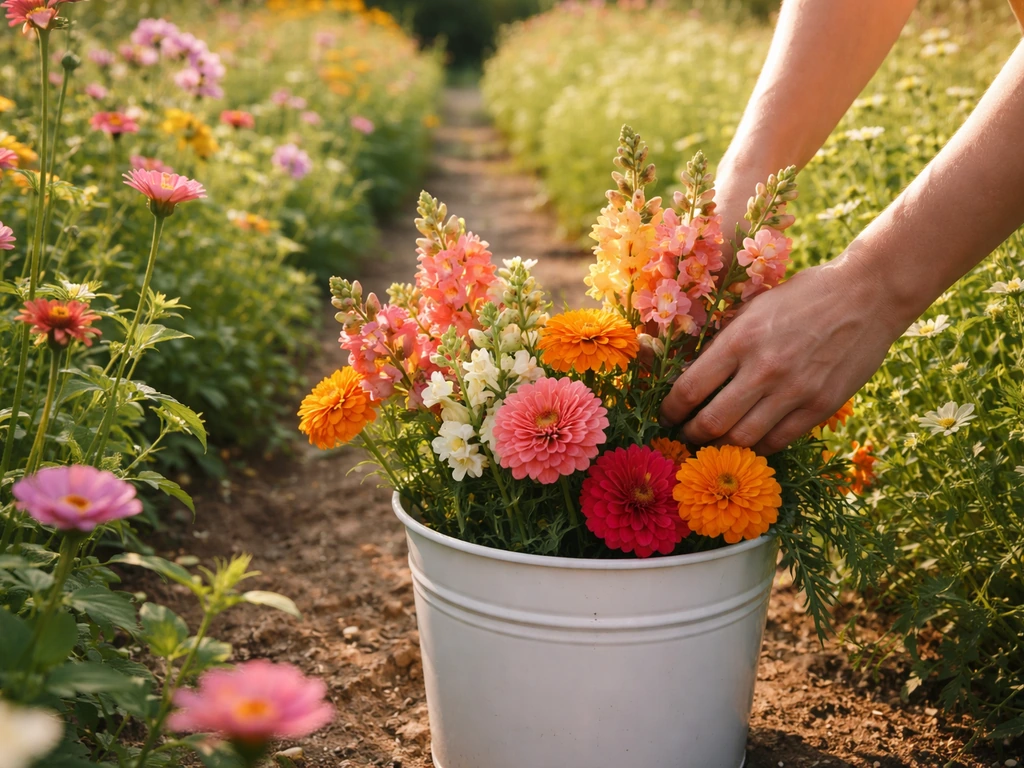
Always harvest in the early morning. This is when plant water content is highest and temperatures are lowest, which means the stems are at their most turgid and will last longest after cutting. Evening is your second-best option if mornings are not possible. Avoid harvesting in the heat of the afternoon. Use clean, sharp scissors or pruners and cut stems at an angle so more surface area is exposed for water uptake. Cut longer stems than you think you need, you can always trim them down during arranging, but you cannot add length back.
Pay attention to harvest stage. For snapdragons, cut when the bottom 2 to 3 flowers on the spike are open and the rest of the spike is still in bud, vase life is 7 to 10 days from this point. For marigolds, harvest when blooms are about half open and strip most of the foliage from the stem. Calendula is also best cut at the half-open stage for longest vase life. Corn poppies are the exception: pick them when buds are just showing color but have not opened, and immediately sear the cut end in a flame for a few seconds to seal the stem, which dramatically extends their very short vase life.
Conditioning after the cut
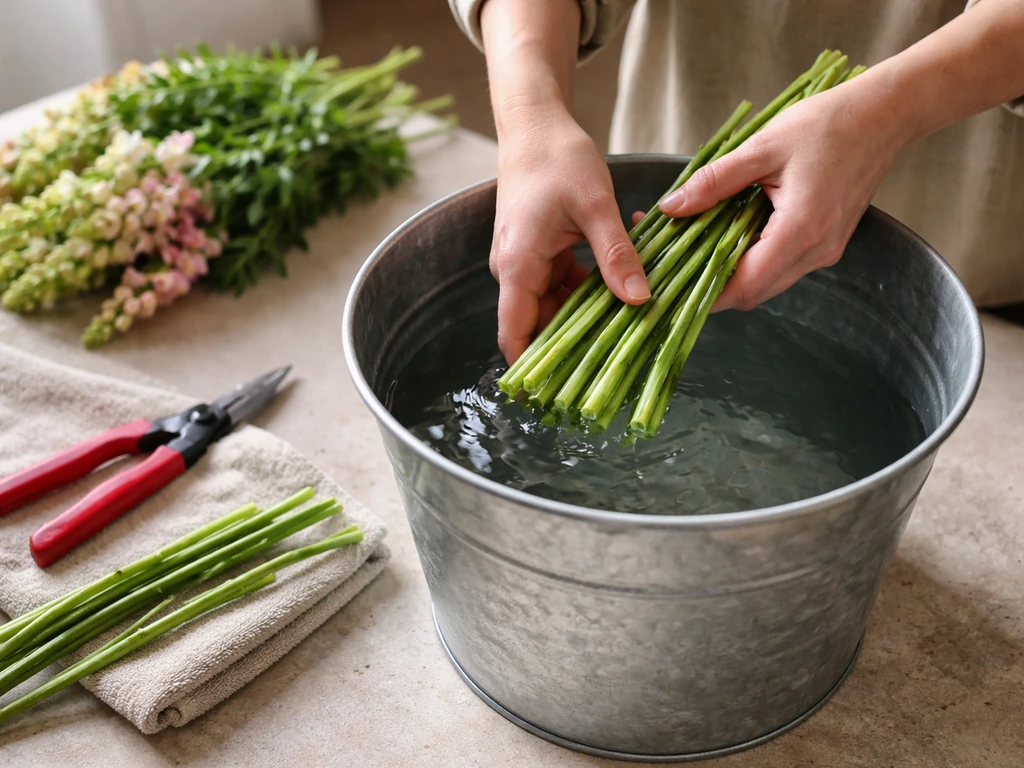
The moment you cut a stem, plunge it into a bucket of cool, clean water. Do not leave stems sitting in the air while you keep cutting. Once you have a batch, bring them inside to a cool, dim space and let them hydrate for at least 4 to 8 hours, ideally overnight. This conditioning period, sometimes called hardening off, lets the stems fully drink up and firms the petals before they go into arrangements. Strip any foliage that would sit below the waterline in your bucket, since submerged leaves rot quickly and foul the water.
For snapdragons specifically, avoid stems with visible stem bending or yellowing foliage, which are signs of temperature stress after harvest. If you want to use a floral preservative solution for conditioning snapdragons, a mix containing a bactericide and a small amount of sugar (sucrose around 1.5 percent) helps extend vase life significantly.
Storing flowers before the wedding
The cold chain concept is simple but critical: keep flowers cool from harvest through the moment they go into arrangements. Store conditioned stems in buckets of fresh water in the coolest part of your house, ideally between 34 and 38 degrees Fahrenheit in a refrigerator if possible. If you are using a regular fridge, keep flowers away from fruits, which release ethylene gas that causes premature wilting. Recut stems and change the water daily. Properly conditioned and stored flowers can hold for 3 to 5 days (or longer depending on variety) before the wedding, which gives you a practical harvest window of 2 to 4 days beforehand.
Simple layout for a cutting garden: beds, containers, succession planting, and support
You do not need a huge space. A 4x8 raised bed or even a few large containers can produce a meaningful number of cutting stems. The trick is being strategic about layout and timing.
Bed layout basics
Plan rows narrow enough that you can reach the center from either side without stepping on the bed, 4 feet wide is the standard sweet spot. Spacing matters more than most beginners realize: getting it right affects stem length, flower size, disease pressure, and overall yield. Tall African marigolds want 12 to 18 inches between plants. Snapdragons can be spaced a bit tighter in a cutting garden, around 6 to 9 inches, since the close spacing encourages taller, straighter stems. Calendula does well at about 16 inches apart. Label each row or section with the variety and the sowing date so you can track what is producing when.
Succession planting for peak bloom timing
Do not sow everything at once. Make 2 to 3 successive sowings of your main varieties spaced 2 to 3 weeks apart. This staggers your bloom times so you are not facing a feast-or-famine situation where everything peaks two weeks before the wedding and nothing is open on the day. Succession sowing is especially valuable for marigolds and snapdragons. For a June wedding, for example, you might sow snapdragons indoors in three waves: the first in early January, the second in mid-January, and the third in late January, targeting a range of bloom windows around late May through early June.
Support structures
Tall flowers flop without support, and a flopped stem is a bent, kinked, unusable stem. Install support early, before plants need it. Stretch horizontal netting (sometimes called flower netting or grow-through support netting) across the bed at about 12 to 18 inches above the ground. As plants grow, their stems thread through the grid and stay upright. For snapdragons especially, this makes a dramatic difference in stem quality. You can also use simple bamboo stakes and string for smaller plantings.
Containers as a backup plan
If you have no garden space, large containers (at least 12 to 16 inches in diameter) can work for marigolds, calendula, and even snapdragons. Use a high-quality potting mix, not garden soil, and plan to water and fertilize more frequently than in-ground plants since containers dry out faster. Container-grown plants will generally produce fewer stems per plant than in-ground ones, so bump up your plant count accordingly.
Budgeting, sourcing, and tips for next season
Realistic cost breakdown
Growing your own wedding flowers is genuinely cost-effective compared to buying from a florist, but it is not free. If you also want to use store-bought blooms as inspiration, you can learn how to grow store bought flowers and then build a longer-lasting cut-flower plan buying from a florist. Your main costs are seeds or starter plants, seed-starting supplies (trays, mix, grow lights if needed), soil amendments, and the time you invest. A packet of 50 to 100 marigold or snapdragon seeds typically costs between $3 and $6, and one packet can grow far more plants than you need. Starter plants from a nursery run $3 to $6 each depending on size and variety, which adds up faster but saves significant time. Budget separately for floral supplies: buckets, flower food, sharp cutting tools, and ribbon or floral tape for arranging.
Where to source seeds and plants
For seeds, specialty seed companies that focus on cut flowers (Johnny's Selected Seeds is a strong example) offer varieties specifically selected for long stems and good vase life, these are noticeably better for cutting garden purposes than generic grocery store seed packets. For nursery starts, local garden centers usually carry marigolds and snapdragons by mid-spring. If you are looking for unusual varieties for your wedding palette, check online specialty growers who ship starter plants in spring.
If things do not go perfectly
Plan a hybrid approach from the start. Identify a local flower farm or wholesale flower market where you could buy supplemental stems at the last minute if your garden underperforms. Knowing this backup exists takes enormous pressure off the growing process and lets you enjoy it rather than stress about it. Many home growers do a mix of their own flowers plus a few bunches from a market and the results look completely cohesive when arranged together.
Build on this season for next time
Even if your wedding is this year and the timeline is tight, keep notes on everything: what germinated well, what bloomed early or late, which varieties held up best in a vase, and what you wish you had planted more of. Those notes are pure gold for next season, whether you are growing for another event, a friend's wedding, or just the joy of having fresh flowers in the house all summer. Growing your own ranunculus, linaria, or more unusual bouquet plants becomes much easier once you have a season of cut-flower growing under your belt and understand how your specific garden performs.
Your immediate next steps
- Write down your wedding date and count backward to set a sowing deadline for each variety you want to grow.
- List every arrangement you need and estimate a stem count for each, then add 30 to 50 percent as a buffer.
- Choose 2 to 4 varieties based on your color palette and your available growing time, prioritizing snapdragons and marigolds as your backbone crops.
- Order seeds from a cut-flower specialty company or source starter plants from a local nursery if your timeline is short.
- Prepare your beds or containers now: amend soil, install support netting, and plan your row layout.
- Set up a simple sowing calendar with actual dates written down, including 2 to 3 succession sowings spaced 2 to 3 weeks apart.
- Practice harvesting and conditioning a small batch of any flowers you can get your hands on now so the process feels familiar before the wedding.
FAQ
How close to the wedding should I harvest my stems?
If you will need stems on the wedding day itself, plan to harvest 1 to 4 days beforehand, not the morning of. Many home growers reserve the final morning for trimming and conditioning only. Before harvest, pre-stage labeled buckets in a cool spot so cut stems never sit in air while you keep working.
Can I prep and store flowers ahead of time for the wedding, or should I arrange them right away?
Yes, but for a wedding it is usually better to do it in batches so you can re-balance the look. Condition stems first, then keep each variety in its own labeled bucket in a cool place. Mix varieties only when you are ready to build arrangements, and avoid combining flowers with very different vase life unless you plan to refresh the shorter-lived ones quickly.
Why did my flowers bloom earlier or later than my sowing calendar predicted?
A common mistake is counting “days to bloom” from the seed packet as if it starts the moment you sow. Indoors, temperatures, light, and pot volume can shift timing by more than a week. Use your calendar based on first bloom, then build buffer, and consider doing one small trial sowing earlier the season to calibrate your own conditions.
What do I do if I grow fewer stems than I calculated?
If you are short on volume, substitute texture before you substitute color. Use extra foliage and filler (like calendula and wildflower-type textures) to make arrangements look full even if the main “hero” stems are fewer. Also adjust mechanics, for example, use smaller focal blooms per bouquet and increase negative space intentionally for a modern look.
At what bloom stage should I cut snapdragons for best wedding-day appearance?
For snapdragons, you generally want a visible bud-to-open range so the spike can finish opening in the vase. Harvesting too early often leads to flat-looking spikes, and harvesting too late can mean petals are already past their best. If any spike is showing early bending or yellowing, skip it for key pieces like bouquets.
Can I direct sow everything instead of starting indoors?
If you have to direct sow, focus on varieties that tolerate it well, and accept that timing is less controllable. Marigolds and calendula are more forgiving direct-sowing choices than snapdragons, which typically benefit from indoor starts for reliable bloom windows. For anything that absolutely must be on schedule, buy starts if you are within roughly 10 to 12 weeks of the wedding.
How does growing in containers change my plant count and care for wedding flowers?
In containers, the biggest difference is drying out and faster nutrient drawdown, so you will need more frequent watering and lighter, more consistent feeding. Choose a large pot (at least 12 to 16 inches for the types in the article), use potting mix not garden soil, and plan on fewer stems per plant by increasing your plant count.
When should I add support so my tall flowers do not flop?
For a cutting garden, support should be installed before flopping starts, not after stems begin to bend. The best results usually come from using a grid or netting placed early at about the height where plants naturally reach, then letting stems grow through. Waiting too long turns “fixable” plants into kinked stems you cannot salvage.
Is it worth using floral preservative for conditioning, and how do I avoid overdoing it?
Yes, but use it strategically. If you are using floral preservatives, apply them during the conditioning stage where recommended for that flower type, and do not mix multiple products at once unless the label instructions align. For snapdragons, preservatives that include a bactericide plus a small amount of sugar can improve vase life, but using too much sugar without guidance can also feed microbes if water handling is sloppy.
My flowers wilted quickly after harvest, what are the most likely causes?
If you notice bud drop or fast wilting, the cause is often either temperature stress after harvest or exposure to warm, dry air while cutting. Re-cutting the ends and changing to fresh cool water can help, but the most effective fix is preventing delays and keeping the cold chain from harvest to arranging. Also keep flowers away from fruit in the fridge to reduce ethylene exposure.
Can I mix short-lived and long-lived flowers in the same arrangement for the wedding?
Do a compatibility check by grouping flowers with similar “peak to decline” timing. Snapdragons often last longer in a vase than poppies, so poppies are best kept for same-day or very near-day use. If you include short-lived blooms in a bouquet, build the bouquet for visual impact first and plan to replace or refresh them if the wedding runs late.
How can I set up better tracking so next season’s wedding timeline is more accurate?
Start a simple note system immediately, even if you are first-timing. Record sowing dates, transplant dates, bloom onset dates, and vase life in your home fridge conditions. Next season, adjust your calendar using what actually happened for your garden, since your local weather and light can shift germination and bloom timing.
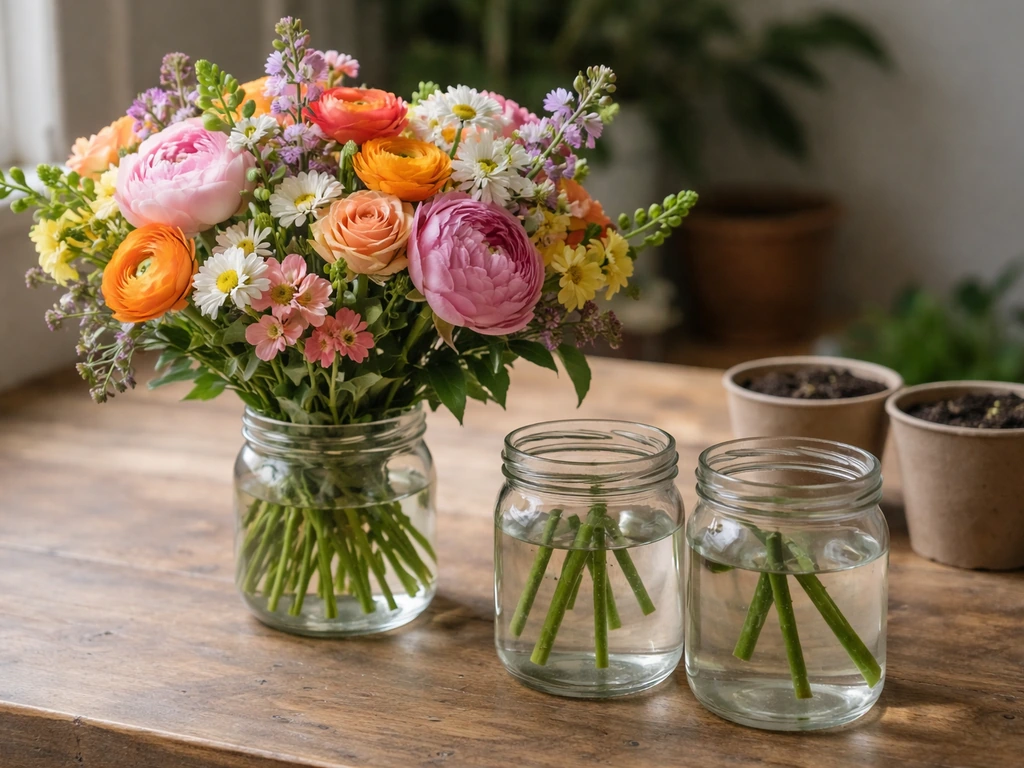
Step-by-step guide to propagate bouquet stems into new flowers: prep, rooting in water/soil, transplanting, care, timeli
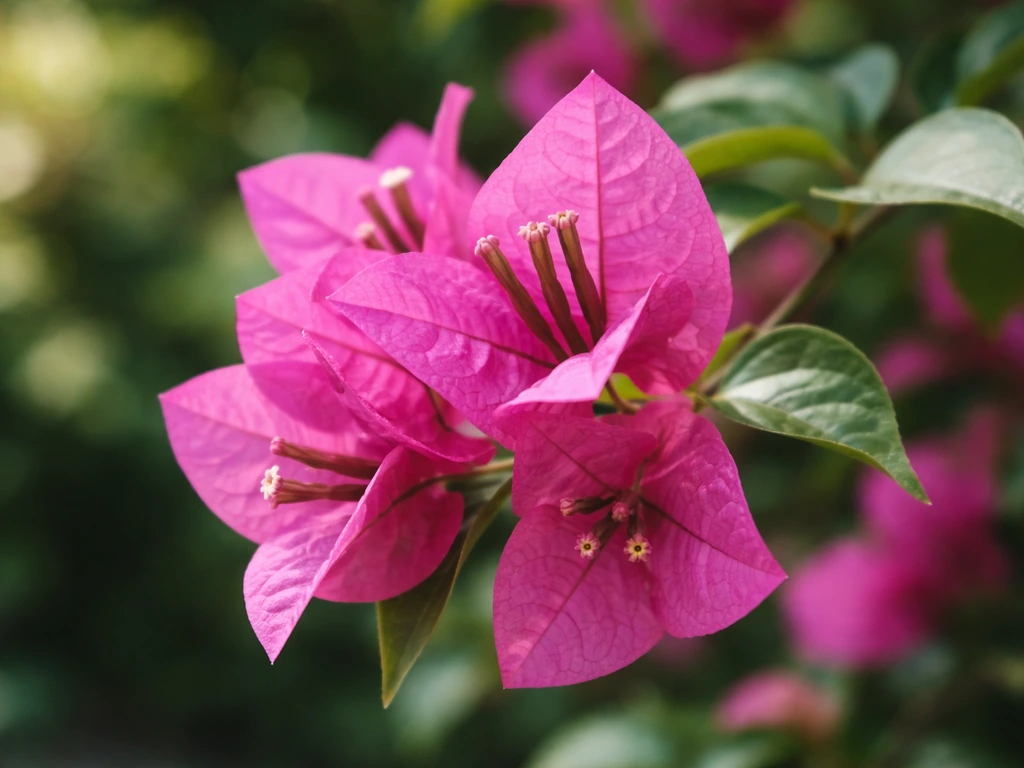
Step-by-step guide to grow a paper flower plant from seed or cuttings, with light, watering, feeding, pruning, and fixes
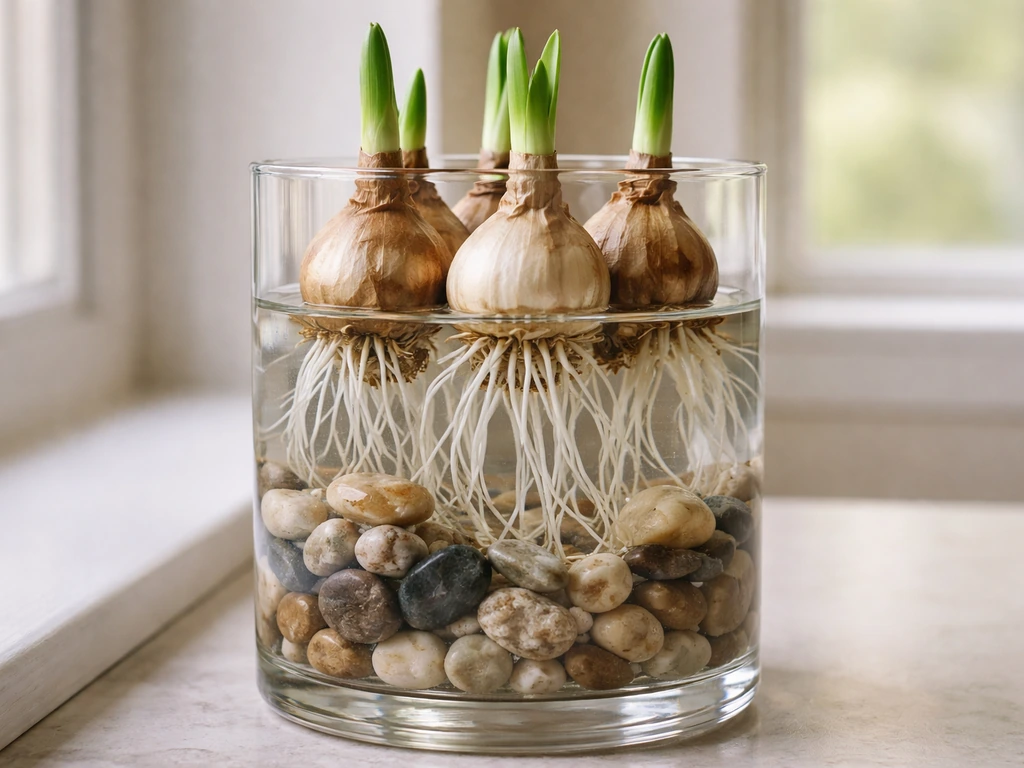
Step-by-step how to grow paperwhites in rocks indoors: rock choice, bulb setup, water level, light care, and post-bloom