
You can grow a wildflower meadow in the UK on almost any scale, from a single square metre of bare border to a full garden conversion, by stripping out fertility, sowing the right seed mix at the right rate, and resisting the urge to tidy. The core steps are: assess and prepare your soil (lower fertility, not raise it), sow annual or perennial mixes at roughly 2–5 g/m² depending on type, keep the seedbed firm and weed-free in the first season, then mow at the right moments to let wildflowers hold their own against grass. Get those fundamentals right and you will have flowers by summer one.
How to Grow a Wildflower Meadow UK: Step-by-Step Guide

James Holloway
16 Jul 2026
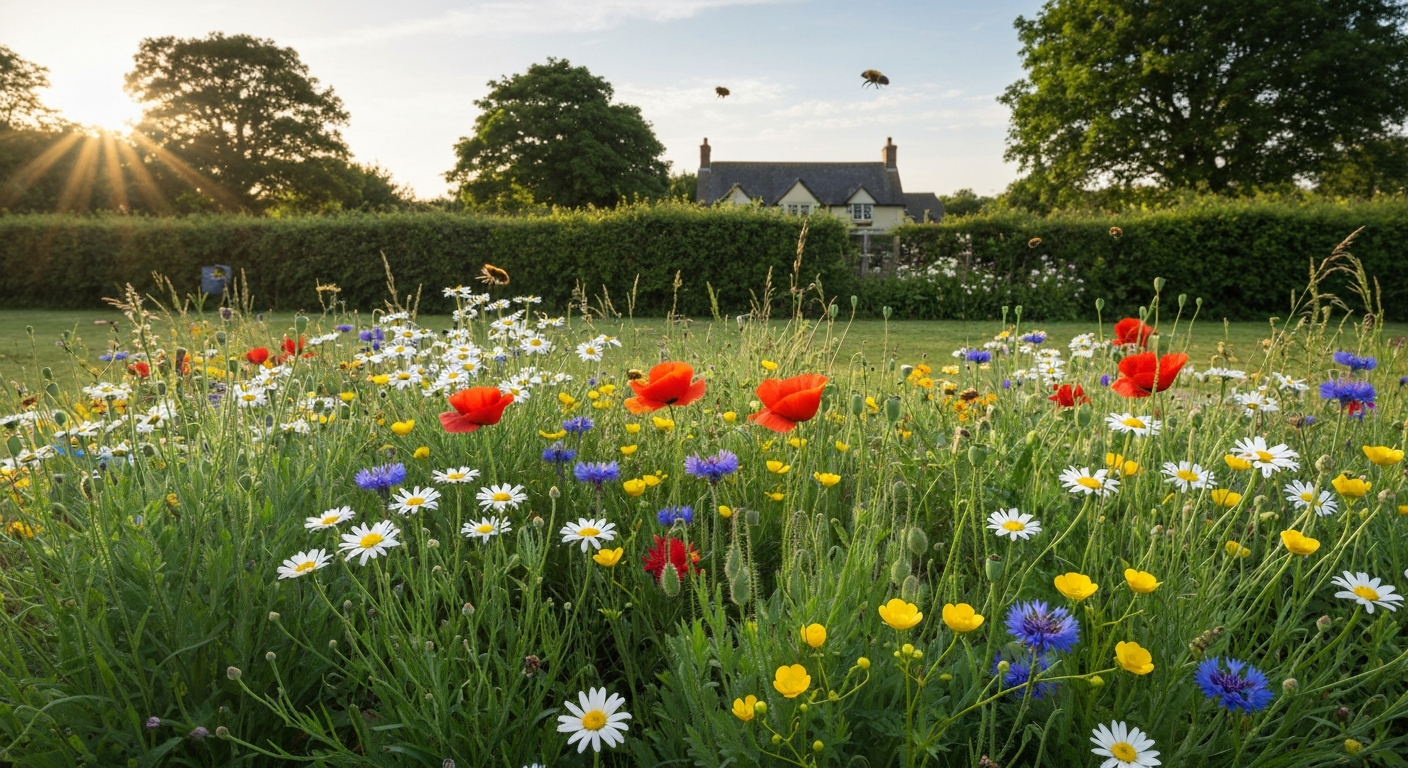
Why a wildflower meadow is worth it in the UK
The UK has lost around 97% of its traditional hay meadows since the 1930s, so even a small patch in your garden genuinely contributes to restoring habitat for bees, hoverflies, butterflies and seed-eating birds. Beyond the wildlife angle, wildflower meadows are lower maintenance than a conventional lawn once established, and they can double as a cutting garden if you choose the right species. I started with a 4 m² test strip alongside my lawn and have gradually extended it over three years. The early wins were enough to keep me going, and the mistakes taught me more than any success did.
A meadow does not have to mean a large field. A raised bed, a sunny border cleared of shrubs, or even a deep container can support a genuine wildflower community. The principles stay the same regardless of scale: low fertility, good seed-to-soil contact, and managed cutting rather than leaving it permanently untouched.
Quick decision checklist before you start
Before you buy a single seed packet, it helps to nail down four things: the size and scale of your project, the style you are aiming for, the wildlife value you want, and whether you plan to cut flowers for the house. Working through these now saves you from buying the wrong mix or preparing too much or too little ground.
- Size: under 5 m² suits a pure wildflower mix (no grass); 5–50 m² works well with a wildflower+grass mix; over 50 m² benefits from a full meadow mix with slow-growing fescues included
- Style: annual-only meadow (poppies, cornflowers, corn marigold) gives colour in year one but needs re-sowing; perennial/native meadow builds slowly but is self-sustaining by year three
- Wildlife value: native species mixes (knapweed, oxeye daisy, birds-foot trefoil, meadow buttercup) offer far more to pollinators and insects than ornamental cultivars; aim for at least 50% native species if wildlife is a priority
- Cutting goals: if you want flowers for vases, include annuals like cornflower, scabious, corn marigold, and ammi alongside the meadow perennials; these give long, strong stems and cut well without damaging the meadow base
- Sun exposure: at least 6 hours of direct sun per day is ideal; most native wildflowers struggle in deep shade
- Soil type: sandy or chalky soil with low fertility is a head start; heavy clay or rich garden soil will need significant preparation
Tools, materials and a simple seed calculator
You do not need specialist equipment for a garden-scale meadow. Here is a practical list of what you actually need, followed by a simple way to work out how much seed to buy.
- Spade or turf cutter (for stripping existing grass and turf)
- Garden fork or power scarifier (for loosening and roughing up the surface)
- Rake (for creating a fine, firm seedbed)
- Garden roller or flat board for treading (for pressing seed into soil after sowing)
- Sharp horticultural sand (for mixing with seed to aid even distribution, roughly 1:1 ratio by volume)
- Seed — see rates below
- Soil pH test kit or strips (available from garden centres for under £5)
- Pegs and string (for marking out your area before you start)
- Optional: a soil nutrient test from a lab (ADAS or SRUC in Scotland) if you suspect high phosphorus from previous fertilising
To work out how much seed to buy, measure the length and width of your plot in metres and multiply them to get the area in m². Then multiply by the sowing rate for your mix type. For example: a 10 m x 3 m strip = 30 m². At 5 g/m² for a wildflower-and-grass mix, you need 150 g of seed. Round up by 10–15% to allow for patchy distribution.
| Mix type | Typical sowing rate | Seed needed for 10 m² | Seed needed for 30 m² | Seed needed for 100 m² |
|---|---|---|---|---|
| Annual-only mix | ~2 g/m² | 20 g | 60 g | 200 g |
| 100% wildflower mix (no grass) | 1–4 g/m² (use 2 g as a starting point) | 20 g | 60 g | 200 g |
| Wildflower + grass meadow mix | ~4–5 g/m² | 45 g | 135 g | 450 g |
| Yellow rattle alone (to suppress grass) | ~1–3 g/m² | 15 g | 45 g | 150 g |
One reassuring note from the research: on well-prepared, low-fertility sites, trials have shown that sowing rate differences between roughly 1 g/m² and 4 g/m² had no significant effect on species richness after two years. Good site preparation matters far more than getting the exact gram count perfect. That said, do not go below the minimum recommended rate on the packet, as thin sowing gives weeds more room to establish.
Choosing your site: light, drainage and soil
Most wildflowers evolved in nutrient-poor, open habitats, which is why they struggle in typical garden soil that has been fed, mulched and improved for years. The ideal site gets full sun for the majority of the day, has free-draining soil that does not pool water in winter, and has not been heavily fertilised. South or south-west facing slopes are particularly good because they warm up quickly in spring and stay drier.
Check what is growing in your potential site now. A dense carpet of vigorous perennial grasses like ryegrass, or lots of nettles and docks, tells you the soil is fertile and will fight your wildflowers hard. Sparse vegetation, mosses, or plants like plantain and yarrow already coming through naturally are signs of lower fertility and a more promising starting point. Also think about what is nearby: if your plot borders a hedgerow, woodland edge, or existing rough grassland, seeds from local wildflowers may naturally drift in over time and enhance your mix.
What about small spaces and raised beds?
A raised bed can actually make the whole process easier because you control the growing medium from the start. Fill it with a low-fertility mix: roughly 70% subsoil or sharp sand and 30% unfed topsoil, with no added compost or fertiliser. Avoid multi-purpose compost, which is far too rich for most native wildflowers. A raised bed of even 1 m x 1 m can support a genuine wildflower community and work as a miniature cutting patch. The key constraint is watering in the first season: raised beds dry out faster, so check moisture regularly until plants are established.
Testing and reducing your soil fertility
This is the step most beginners skip, and it is the main reason wildflower meadows fail. Rich soil gives aggressive grasses and annual weeds a huge competitive advantage over the relatively slow, delicate wildflower seedlings. Your aim is to reduce fertility, not increase it.
Start with a basic pH test using inexpensive strips or a probe from any garden centre. Most UK wildflower mixes thrive between pH 5.5 and 7.5, with many native chalk-grassland species preferring slightly alkaline conditions around 6.5–7.5. If you want to go further, a laboratory soil test for pH, available phosphorus (Olsen P), potassium and organic matter is well worth the cost of around £20–30 for larger projects. Labs like ADAS or SRUC in Scotland can turn this around quickly. High available phosphorus is particularly damaging for wildflower establishment, and no amount of good sowing will overcome very fertile soil.
Practical preparation steps (and what actually works)
- Strip the existing turf: use a spade or mechanical turf cutter to remove the top 5–10 cm of vegetation and topsoil on very fertile ground. This is labour-intensive but removes weed seed and surface nutrients in one go. Research from multiple UK restoration sites confirms this is the most reliable method on high-fertility ground.
- Scarify and rake if stripping is not practical: use a garden fork, power scarifier or rake to break up and thin the existing vegetation, then remove all the arisings from the site. Do not compost them back into the meadow area.
- Avoid rotovating unless you follow up immediately with seed: rotovation creates lots of micro-sites but also brings buried weed seeds to the surface. If you rotovate, sow your wildflower seed within a week before weed seeds germinate.
- Do not add compost, manure, or fertiliser: this seems counterintuitive but is essential. Adding organic matter increases nitrogen and phosphorus availability, which favours grasses and docks over wildflowers.
- Lime if pH is below 5.5: some native wildflowers, particularly knapweed and oxeye daisy, prefer neutral to slightly alkaline soil. Use ground limestone to raise pH if needed, but only after you have tested. Do not lime acidic grassland if you want acid-loving species like tormentil or heath bedstraw.
- Firm the surface: after all preparation, rake to a fine tilth, then tread over the whole area or use a roller. You want a firm, consolidated surface that seeds can sit against rather than sink into lumps.
If your soil is genuinely too fertile and stripping the turf is not an option, consider capping the area with a layer of low-nutrient subsoil or imported low-fertility topsoil (sometimes available from landscaping suppliers) to a depth of 5–10 cm. It is more effort upfront but can transform a hopelessly rich border into a viable meadow base.
Annual vs perennial vs native: choosing the right seed mix
This is the decision that shapes your whole first year experience. Annual mixes flower in their first season and give you that instantly rewarding sea of poppies and cornflowers, but they need re-sowing each year. Perennial and native mixes take two to three years to really establish but then largely look after themselves, build year on year, and deliver the highest ecological value. For more on establishing and caring for these longer-lived plants, see our guide on how to grow perennial flowers. Most gardeners do well starting with an annual nurse crop mixed in with a perennial base, which gives early colour while the slower perennials develop.
| Mix type | First-year colour | Long-term effort | Wildlife value | Best for | Re-sowing needed |
|---|---|---|---|---|---|
| Annual-only mix | High (same year) | Re-sow annually | Moderate | Beginners wanting quick results, cutting gardens | Yes, every year |
| Perennial/native mix | Low to moderate | Low once established | High (native insects) | Long-term meadow, wildlife gardens | No (self-seeds or divides) |
| Annual + perennial blend | Moderate-high | Moderate in years 1–2 | High | Most UK garden meadows | Partially (annuals re-sown or self-seed) |
| 100% wildflower (no grass) | Moderate | Moderate (weed control) | High | Small spaces, raised beds, borders | Partially |
| Wildflower + fine grass mix | Low in year 1 | Low once established | Very high | Large areas, permanent meadow | No |
Professional meadow mixes, such as those from suppliers like Emorsgate, typically contain around 80–90% slow-growing grasses by weight with 10–20% wildflowers. That might sound like a lot of grass, but slow-growing fine-leaved fescues and bents create the tight, low-fertility sward that wildflowers actually need to thrive long-term. For a cutting-focused patch, a 100% wildflower mix gives you better stem quality and density.
The role of yellow rattle
If you are converting an existing grassy area, yellow rattle (Rhinanthus minor) is one of the most useful plants you can introduce. It is a native annual hemi-parasite that attaches to grass roots and weakens vigorous grasses, opening up gaps in the sward for wildflowers to establish. Natural England and Plantlife both recommend it for grassland restoration. Sow it at 1–3 g/m² either mixed with your main seed or as a separate overseeding, and crucially it must have a cold period to germinate: sow between July and December so seed overwinters and germinates in spring. Do not sow it in spring or it will simply not come up.
Recommended species and ready-made mixes for UK gardens
Here is a practical shortlist of species that perform reliably in UK conditions, work well for wildlife, and give you usable cut flowers where noted. This is not exhaustive but it covers the species I keep coming back to and that consistently appear in well-reviewed UK mixes.
- Oxeye daisy (Leucanthemum vulgare): perennial, easy, excellent for cutting, loved by bees and hoverflies
- Common knapweed (Centaurea nigra): perennial, very long flowering season, top nectar source for bumblebees and butterflies
- Field scabious (Knautia arvensis): perennial, beautiful pale lilac flowers, outstanding for cutting, brilliant for pollinators
- Birds-foot trefoil (Lotus corniculatus): perennial, low-growing, fixes nitrogen but stays compact, excellent for small blues and common blues
- Cornflower (Centaurea cyanus): annual, iconic blue, excellent for cutting, self-seeds reliably
- Common poppy (Papaver rhoeas): annual, self-seeds vigorously, stunning in mass plantings, adored by bees for pollen
- Corn marigold (Glebionis segetum): annual, vivid yellow, long-flowering, easy from seed
- Meadow buttercup (Ranunculus acris): perennial, classic native, good in damper spots, attractive to early pollinators
- Wild carrot (Daucus carota): biennial, striking lacy white flower heads, excellent for parasitic wasps and hoverflies
- Ragged robin (Lychnis flos-cuculi): perennial, vivid pink, thrives in damper or heavier soils, good for cutting
- Tufted vetch (Vicia cracca): perennial climber, attracts bumblebees, adds structure through longer grass
- Yellow rattle (Rhinanthus minor): annual hemi-parasite, essential for suppressing grass in conversion projects
For ready-made mixes, look for suppliers who publish a full species list with percentages rather than just a name. Reputable UK suppliers include Emorsgate Seeds, Pictorial Meadows, British Wildflower Seeds, and Landlife Wildflowers. For wildlife-first meadows, a mix certified as containing only native UK species is worth the slightly higher cost. For cutting gardens that double as meadow patches, a mix with a high percentage of cornflower, scabious and oxeye daisy will give you the best return.
Exact seed rates and sowing quantities by mix type and area
These figures bring together RHS guidance, specialist supplier recommendations, and published restoration research to give you practical starting points. Always check the specific packet rate for your chosen mix, as formulations vary, but these numbers will tell you whether a supplier's recommendation is within the normal range.
| Mix type | Sowing rate (g/m²) | 5 m² | 20 m² | 50 m² | 100 m² |
|---|---|---|---|---|---|
| Annual-only meadow mix | 2 g/m² | 10 g | 40 g | 100 g | 200 g |
| 100% wildflower mix (perennial, no grass) | 2–4 g/m² (use 2 g/m² as default) | 10–20 g | 40–80 g | 100–200 g | 200–400 g |
| Wildflower + grass meadow mix (standard) | 4–5 g/m² | 20–25 g | 80–100 g | 200–250 g | 400–500 g |
| Yellow rattle alone | 1–3 g/m² | 5–15 g | 20–60 g | 50–150 g | 100–300 g |
| Nurse crop annuals (overseeded into perennial base) | 1 g/m² | 5 g | 20 g | 50 g | 100 g |
Experimental evidence from UK restoration trials suggests that once your soil preparation is right, sowing at the lower end of the recommended range works just as well as the upper end for final species richness. The main practical advantage of sowing at a higher rate is that dense cover establishes faster and gives weeds less space in year one.
How to actually sow the seed
Mix your seed with dry horticultural sharp sand at roughly a 1:1 ratio by volume. The sand does two things: it dilutes the seed so you can see where you have sown, and it helps the fine, light seeds stay close to the soil surface rather than blowing away. Divide the mixture in half and broadcast the first half across the area in one direction, then sow the second half at right angles to the first. This cross-hatching technique is the single most reliable way to get even coverage without specialist equipment. For a full step-by-step guide on how to grow wildflowers, see the how to grow wildflowers guide.
After sowing, do not rake the seed in. Most wildflower seeds need light to germinate and should sit on or very near the surface. Instead, firm the whole area by treading it in with your feet, walking in a shuffling pattern, or using a light roller. This seed-to-soil contact is critical and is the step most beginners forget. I lost a whole sowing one dry spring because I left the seed loose on the surface and a windy week moved most of it into the hedge.
When to sow: sowing windows by UK region
Timing matters more for perennial and native mixes than for annuals, because many perennial wildflower seeds need a cold period (cold stratification) to break dormancy. Autumn sowing lets the seeds experience winter naturally and gives a stronger, more synchronised germination in spring. RHS guidance and regional practice recommend sowing perennial wildflower mixes in autumn, typically Sept–Nov in southern/SE and Midlands, with later autumn (Sept–Oct) preferred in northern/Scottish and upland areas to allow natural cold stratification; annual mixes can be sown in spring in cooler regions RHS guidance and regional practice recommend sowing perennial wildflower mixes in autumn — typically Sept–Nov in southern/SE and Midlands, with later autumn (Sept–Oct) preferred in northern/Scottish and upland areas to allow natural cold stratification; annual mixes can be sown in spring in cooler regions..
| Region | Perennial/native mix | Annual mix | Yellow rattle |
|---|---|---|---|
| Southern England and East Anglia | September to November (best: late Sept/Oct) | March to May | July to December |
| Midlands and Wales | September to October | March to May | July to November |
| Northern England | September to early October | April to May | July to October |
| Scotland and uplands | Late August to late September | April to May | July to September |
Spring sowing is a valid option for perennial mixes if you miss the autumn window, but you will likely see slower or patchier germination in the first year as the seeds have not had the cold period they prefer. You can improve spring germination by cold-stratifying seeds yourself in the fridge for 4–8 weeks before sowing, though this is only practical for small quantities.
Month-by-month care guide for years one to three
Year one is the most hands-on period. You are managing a newly sown seedbed rather than a meadow, and the main job is dealing with weeds before they set seed. For detailed techniques on minimizing weeds while establishing a meadow, see our guide on how to grow wildflowers without weeds.
Year one
- March to April: if autumn-sown, germination begins. Thin, spidery grass-like seedlings are normal. Do not weed randomly at this stage without identifying what you have first.
- April to June: watch for tall, fast-growing weeds (docks, thistles, fat hen, nettles). These are easy to spot as they grow much faster than your wildflower seedlings. Hand-pull or spot-cut them before they flower.
- June to August: annual mixes will be flowering. Perennial mixes will mostly be forming rosettes in year one with limited flowering. This is completely normal, not a failure.
- August: once annual flowers have finished and set seed, cut the whole area down to around 5 cm with shears or a strimmer. Remove all the cuttings. This is important: leaving the cut material on the ground adds fertility and smothers seedlings.
- September to October: the cut-down meadow looks bare and uninspiring. This is normal. Some late species may still be visible as rosettes. Leave the soil surface open for self-seeding and for overwintering insects.
- November to February: leave largely undisturbed. Some dead stems provide winter habitat for insects.
Year two
This is often the most rewarding year for perennial mixes. Plants that spent year one establishing root systems now flower properly. The mix starts to look intentional rather than weedy. Continue the same weed vigilance through spring, and carry out the late summer cut-and-remove routine again. If yellow rattle was sown, you should see it clearly in late spring, and by midsummer you will likely notice the grass is thinner and patchier where it has been active. That patchiness is a good sign.
Year three and beyond
A well-established meadow reaches genuine self-sufficiency around year three. The cut-and-remove routine in August remains the single most important annual task. Some gardeners do a second light cut in March to tidy over-wintered material before new growth starts, which reduces the thatch layer. Spot-weed for any persistent docks or brambles that try to creep in from the edges. Top up bare patches in autumn with fresh seed of species you want to encourage.
Common problems and how to fix them
Most wildflower meadow problems trace back to one of three causes: soil too fertile, sowing too late or too deep, or cutting at the wrong time. Here are the most common issues and practical responses.
- Nothing came up: check whether you sowed too deep (seed should be on the surface, not buried), whether the seedbed dried out in the critical two weeks after sowing, or whether the area was too shaded. Re-sow in autumn with firmer seed-to-soil contact and keep an eye on moisture.
- Mostly weeds came up, almost no wildflowers: this almost always means the soil fertility is too high or the weed seed bank in the top soil was too dense. Prepare more thoroughly next time by stripping turf or removing topsoil. In the meantime, weed thoroughly before the weeds set seed.
- Lots of grass, few flowers: either the grass in a mixed sowing is outcompeting the wildflowers (common in year one) or your soil is too fertile for forbs. Introduce yellow rattle in late summer to weaken grass and give flowers more space.
- Patchy germination: usually uneven seed distribution or an irregular seedbed surface. Mix seed more thoroughly with sand next time, and check your surface for high and low spots before sowing.
- Annual mix not coming back in year two: annual mixes do not come back unless they self-seed. If the area was cut before seeds matured, or if cut material was left smothering the seed, re-sowing will be needed. Let at least some flowers fully set seed before cutting.
- Meadow looks brown and dead from July: this is normal during hot dry spells. Wildflowers go dormant in drought. They will recover. Resist watering unless on a raised bed or container in extreme heat.
Wildflower plugs as an alternative starting point
If sowing from seed feels daunting for your first attempt, wildflower plugs offer a more visible, controllable route into meadow gardening. Plugs are young plants grown in small modules and planted directly into prepared ground or an existing short grass sward. They cost more per square metre than seed but establish faster and let you see exactly what you are planting. You can also use plugs to fill gaps in an established meadow or introduce species that are tricky to establish from seed. Planting into a grass sward works particularly well for plugs: space them 20–30 cm apart in irregular groups rather than rows, plant firmly so there are no air pockets, and water in dry spells for the first few weeks.
The long view: what to expect in years one, two and three
Managing your expectations for each year will save you a lot of anxiety. A meadow does not appear overnight, and the early stages often look more like a weedy patch than a picture-postcard scene. Here is an honest summary of what most UK gardeners experience.
| Year | What you will likely see | Main jobs | What counts as success |
|---|---|---|---|
| Year 1 | Annual mixes: colour by June–July. Perennial mixes: mostly leafy rosettes and some early flowers by late summer. | Weed management, late summer cut-and-remove | Seedlings established, weeds controlled, no bare soil by autumn |
| Year 2 | First proper flowering from perennials, more species diversity, fuller coverage | Weed spot-checks, cut-and-remove in August, introducing yellow rattle if needed | Multiple species flowering, grass starting to thin where yellow rattle is present |
| Year 3 | Self-sustaining meadow character, self-seeding annuals returning, perennials spreading | Annual August cut, edge management, patch over bare spots | Recognisable meadow with distinct species, minimal intervention needed |
The biggest mental shift for most beginner meadow gardeners is accepting that a wildflower meadow in July looks genuinely wild, not neat. Once you stop comparing it to a lawn and start looking for individual species, you will find it deeply rewarding. I still find new plants establishing from my original sowing three years on, including some I never deliberately planted, presumably arriving on the wind or in bird droppings. That kind of surprise is one of the things that makes a meadow genuinely different from any other type of gardening.
FAQ
When is the best time to sow a wildflower meadow in the UK and why?
For perennial/native meadow mixes: sow in autumn (September–November) where possible — natural cold stratification over winter improves germination and allows seedlings to establish before summer. Spring sowing (March–May) is an alternative where autumn sowing was missed or on very wet sites, but expect later establishment the first year. Annual-only mixes can be sown in spring (March–May) for a display that year. In northern/ upland areas avoid very late autumn sowing if the ground will freeze hard before seedlings can get rooted.
How do I pick the right site for a meadow in the UK garden?
Choose a sunny or part‑sun place (minimum 4–6 hours sun/day) with reasonable drainage. Avoid compacted, waterlogged or heavily shaded areas unless selecting specialist wet or shade mixes. For best wildflower diversity pick an area with low to moderate fertility — high fertility favours vigorous grasses and weeds. If space is limited, a raised bed, wide container or lawn patch (see small‑space advice) can work well with adapted species and management.
How should I test and prepare my soil before sowing?
1) Do a simple home check: dig a small hole and note texture; use an inexpensive pH test strip or probe. 2) For accurate decisions send a sample to a lab for pH, available phosphorus (P), potassium (K) and organic matter. 3) Target low fertility: do NOT add fertiliser. If soil is very fertile, reduce fertility by removing topsoil/turf (5–15 cm) or by cultivating and removing arisings. 4) Rough seedbed: remove perennial weeds, rake to a firm, fine surface. For turf conversion either strip turf or scarify/rotovate then collect arisings; on difficult sites consider a short herbicide treatment (follow regulations) before creating seedbed.
What seed mix types exist and which should I choose?
- Annual mixes: mainly annual species, strong first‑year display, die out after seed set; good for quick colour. - Perennial/native mixes: longer‑term meadows with perennial forbs and grasses; establish more slowly but persist 3+ years and beyond. - Wildflower‑only vs wildflower+grass: 100% wildflower gives a flowery sward but can be less stable; mixes with grasses (typical professional mixes ~10–90% by weight flower:grass or c.10% flowers in some 'complete' mixes) give structural stability and are suited to cutting/hay regimes. For wildlife and cutting in a typical UK garden choose a perennial/native mix with an appropriate grass component; add yellow rattle if converting productive turf to reduce grass vigour.
How much seed do I need (seed rates) and how do I sow it?
Typical guidance: - Annual‑only mixes: ~2 g/m². - Wildflower‑only mixes: 1–4 g/m² (many specialist mixes 1–2 g/m²). - Wildflower+grass meadow mixes: 4–8 g/m² (common spec ≈4–5 g/m²). Always check the packet rate. Sowing method: mix seed with dry sharp sand (1:1) to aid even distribution. Broadcast half the mix walking one direction and the other half at right angles. Lightly rake or roll (or tread) to ensure seed‑to‑soil contact but do not bury seed deeply. For small patches you can spot sow or drill at appropriate rates following manufacturer drill settings.
Should I use yellow rattle and when/how much?
Yellow rattle (Rhinanthus minor) is recommended on productive/grass‑dominated swards because it suppresses grass vigour and helps forbs establish. Typical practical sowing rates range c.1–3 g/m² (check supplier). Sow July–December so seed overwinters and germinates in spring. For best results, include it when converting turf or where grasses dominate; establish a small patch first if unsure.
Next Articles
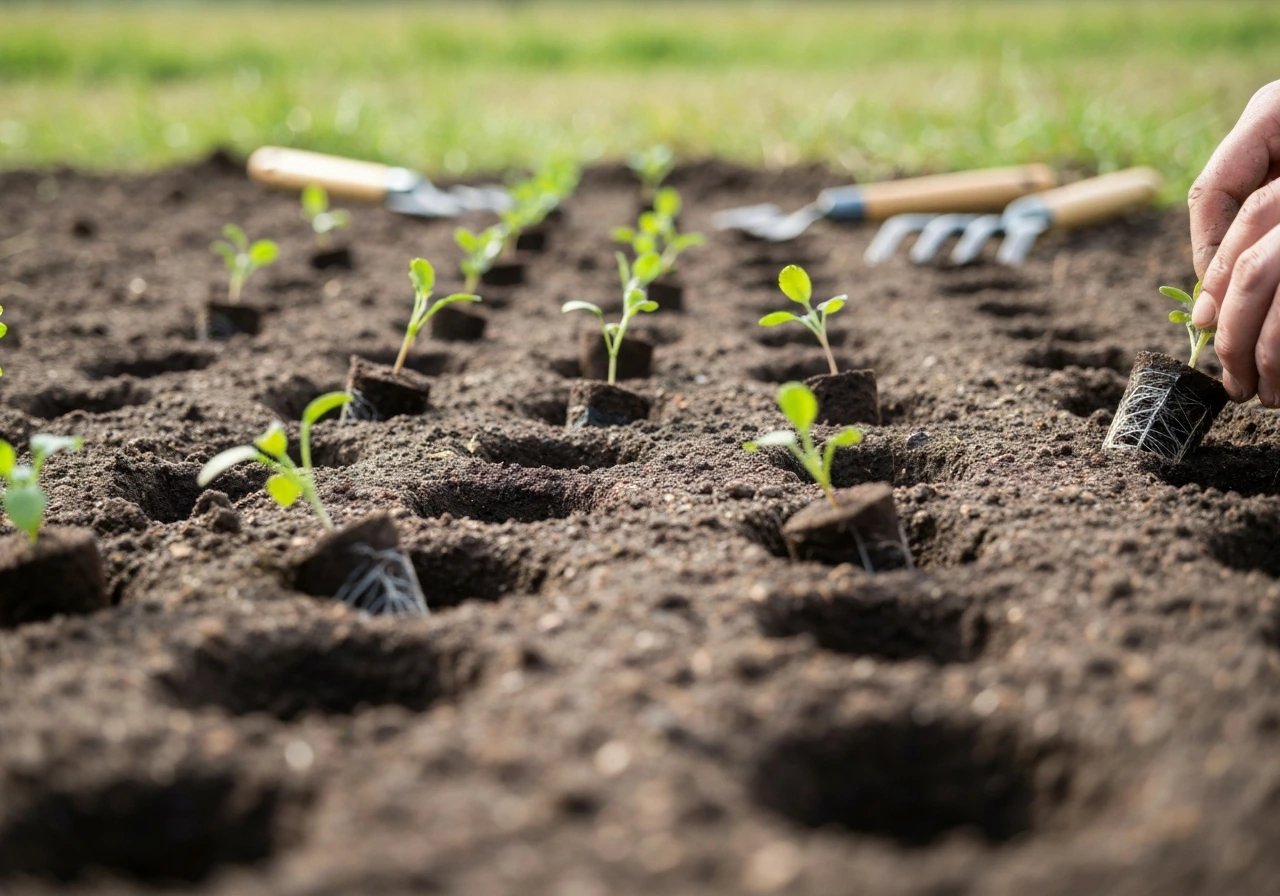
How to Grow Wildflower Plugs Step by Step Guide
Plant wildflower plugs step by step: pick types, prep soil, space right, water after planting, and troubleshoot for bloo
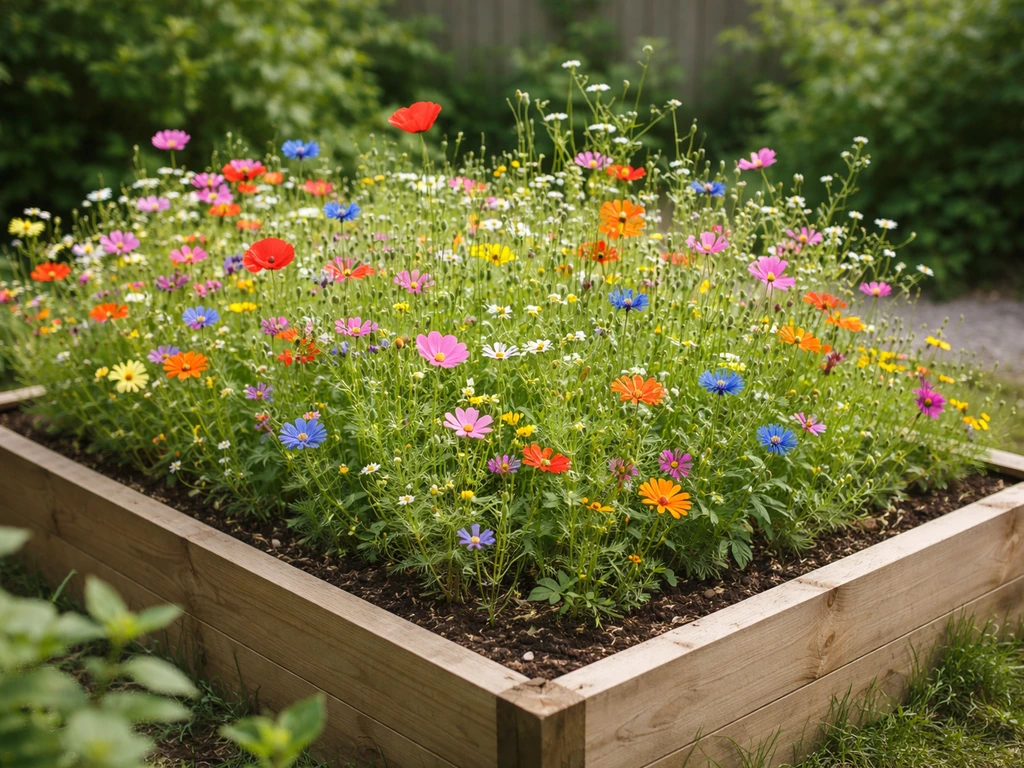
Can You Grow Wildflowers in a Raised Bed? How-To
Yes, grow wildflowers in raised beds with step-by-step sowing, bed prep, watering, weed control, and troubleshooting.
How to Grow Wildflowers Without Weeds: Step by Step
Step-by-step guide to grow wildflowers with minimal weeds using smart site prep, seeding, suppression, and first-season