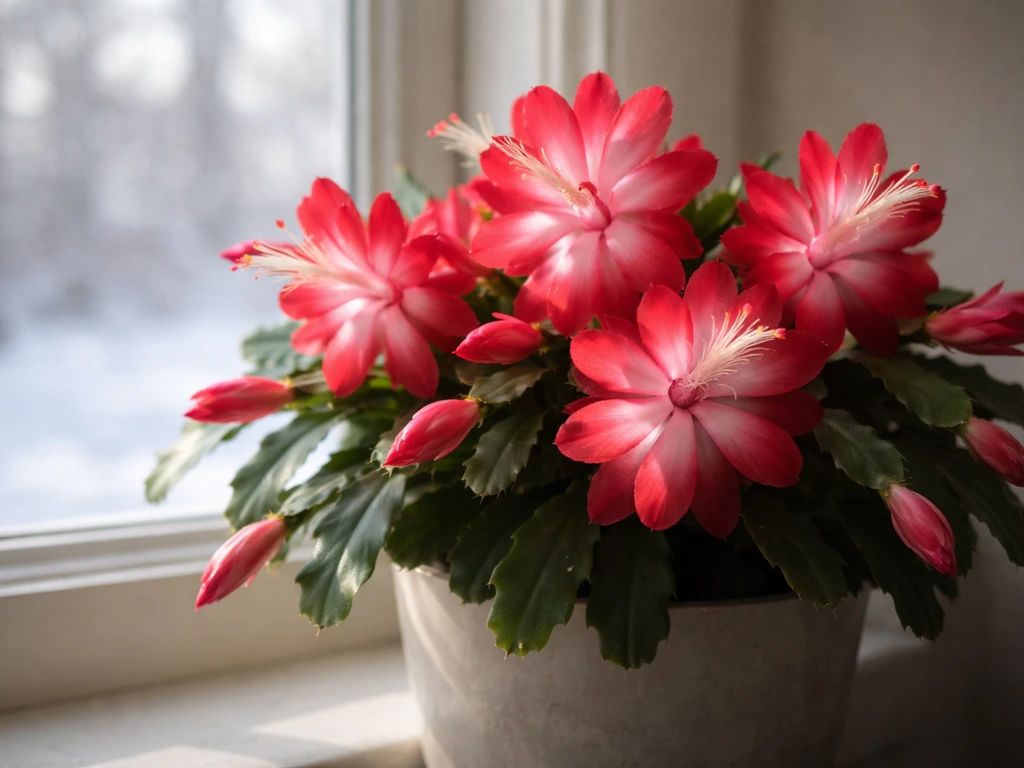
The most common "Christmas flower" people want to grow is Christmas cactus (Schlumbergera), a tropical epiphyte that blooms in late November through December when you give it a spell of cool temperatures and long, uninterrupted nights. Get those two triggers right, and it will reward you with cascading pink, red, white, or salmon blooms right on cue. But before diving into care, it helps to know which plant you actually have, because "Christmas flower" is used loosely for several different plants, and the growing approach changes depending on which one you're dealing with.
How to Grow Christmas Flowers: A Step-by-Step Guide

James Holloway
1 Jun 2026
Which plant are you actually growing?
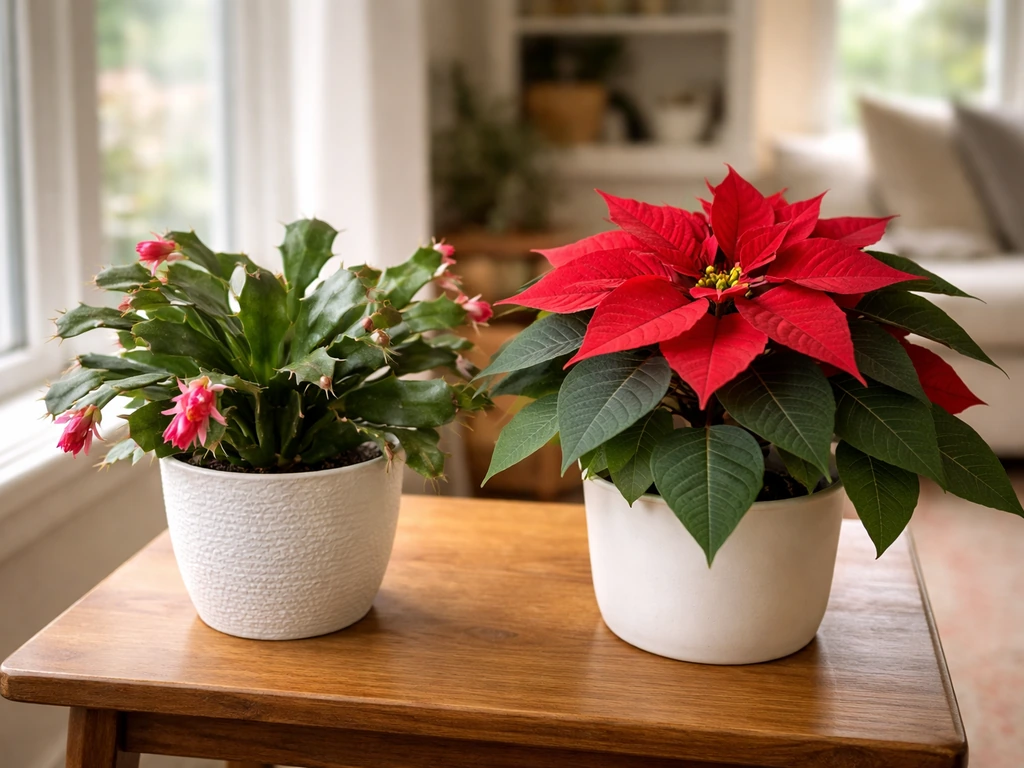
"Christmas flower" gets applied to a handful of holiday-season plants, and it's worth sorting out which is which before you start. The most popular by far is Christmas cactus (Schlumbergera × buckleyi), a hybrid developed from crosses between Schlumbergera russelliana and Schlumbergera truncata. It's a tropical rainforest epiphyte, not a desert cactus, which explains why it needs more water and humidity than you might expect.
The closely related Thanksgiving cactus (Schlumbergera truncata) is sold right alongside it and blooms about three to four weeks earlier. The easiest way to tell them apart is by looking at the stem segments: Thanksgiving cactus has pointed, claw-like edges on each segment, while Christmas cactus has smoother, more rounded ones. A third plant, Easter cactus (Rhipsalidopsis gaertneri), is sometimes bundled under the "holiday cactus" umbrella but blooms in spring and is a different genus entirely.
Gardeners commonly lump “holiday cactus” into two genera: Schlumbergera (including Christmas and Thanksgiving cactus) and Rhipsalidopsis (often sold as Easter cactus) two genera: Schlumbergera and Rhipsalidopsis.
Beyond the cacti, some gardeners use "Christmas flower" to mean poinsettia (Euphorbia pulcherrima), and in certain parts of the world it refers to hellebores or even paperwhite narcissus. This guide focuses on Schlumbergera (the Christmas and Thanksgiving cactus group), because that's the plant most people are genuinely trying to get to bloom indoors in December. If you're working with poinsettias, many of the light-and-dark triggering principles overlap, but the care specifics differ.
Light, temperature, and where to put it
Christmas cactus is almost always grown as a houseplant, and that's the right call. It cannot tolerate frost and should never be left outside once temperatures dip toward 10°C (50°F). That said, during the frost-free growing season (late spring through early fall), you can move it outside to a shady spot under a tree or on a covered porch, and it will grow vigorously. If you want to grow flowers on a balcony, bring the plant out only during the frost-free season and choose a sheltered spot that avoids harsh sun and overnight light. Just bring it back in well before the first frost.
For everyday growing conditions, bright but indirect light is the target. A spot near an east- or north-facing window works well. Avoid direct afternoon sun, which can bleach or scorch the flattened stems. During spring and summer, aim for a room temperature around 18–20°C (65–69°F). The plant is comfortable in normal household humidity but will benefit from occasional misting or a pebble tray with water if your home runs very dry in winter.
One thing that surprises people: where you place the plant in autumn really matters. Any artificial light hitting the plant after sunset, even from a lamp or streetlight through a window, can interrupt the dark period it needs to form buds. More on that in the blooming section, but keep this in mind when you're deciding on a permanent spot.
Seeds, cuttings, or a plant from the store?
Forget seeds for Christmas cactus. They're rarely available, germination is slow and unreliable, and you'd wait years for flowers. Cuttings are the standard approach, and they root easily. A store-bought plant is the fastest path if you want blooms this Christmas, which is a totally valid choice.
Taking stem cuttings
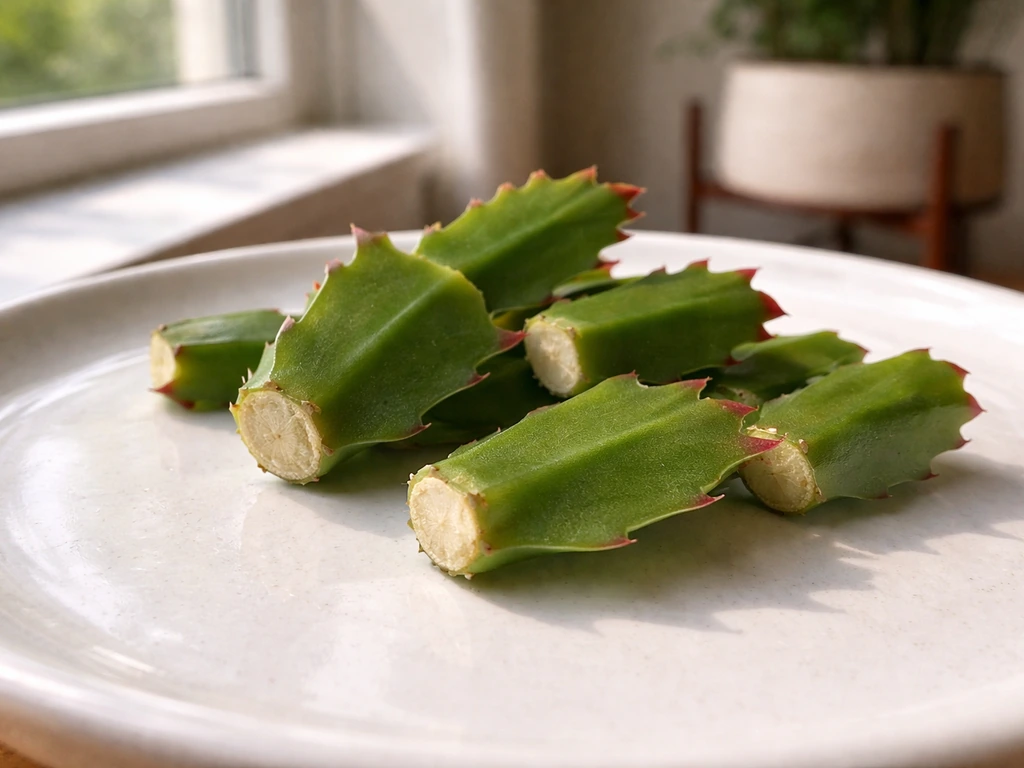
Take cuttings in late spring or early summer. Pinch off a segment of two to five stem sections, let the cut end dry out and callus for a day or two (this helps prevent rot), then press it about 2–3 cm into a moist, well-draining potting mix. You can dip the cut end in rooting hormone powder first to speed things up, but it's optional.
Penn State Extension also describes how to propagate holiday cacti from stem segments and notes that using a good, well-draining potting medium along with optional rooting hormone powder can help cuttings root. Water sparingly for the first four weeks while feeder roots develop.
Rooting in water is also possible before transplanting, but soil rooting tends to produce sturdier plants. One cutting can give you several new plants, and that's one of the genuinely fun parts of growing this species.
Buying from a garden center
If you want blooms this December, grab a plant from a garden center or grocery store in October or early November. Look for a plant that has plenty of unopened buds rather than fully open flowers (it'll last longer). Once you get it home, resist the urge to repot it right away. Let it settle, and repot in spring if needed.
Getting the soil and pot right
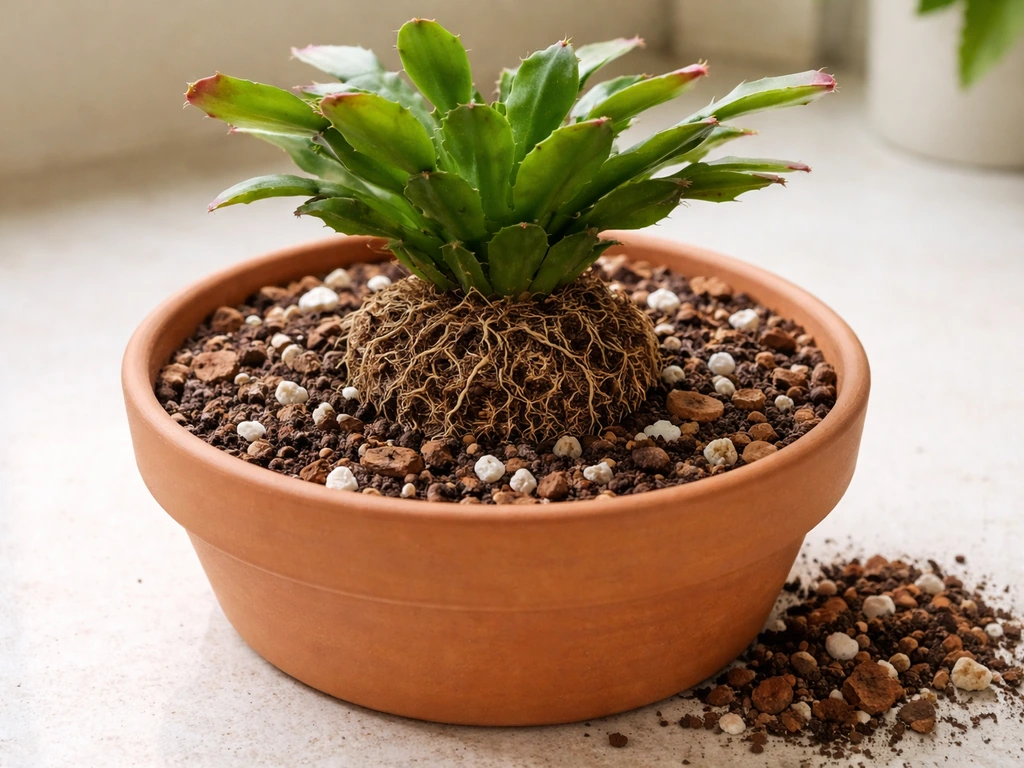
Christmas cactus is an epiphyte in the wild, meaning it grows in decaying leaf matter in tree branches rather than in ground soil. That tells you everything about what it needs from a potting mix: fast-draining, loose, and slightly acidic. A standard houseplant mix on its own holds too much moisture and will lead to root rot. The fix is to cut it with perlite or coarse sand, roughly one part amendment to two parts potting mix. Aim for a soil pH between 5.5 and 6.5. If you want a ready-made shortcut, a cactus and succulent mix with a bit of extra perlite stirred in works really well.
For the pot, choose one that's only slightly larger than the root ball. Christmas cactus actually blooms better when it's a little pot-bound, so don't go too big. The pot must have drainage holes, no exceptions. Terracotta is a good choice because it breathes and helps prevent overwatering mistakes. If you use a decorative outer pot or cachepot, always empty it after watering so the plant isn't sitting in standing water.
Watering and feeding through the year
Watering is where most people go wrong, usually in one of two directions: too much (causing root rot) or too little (causing bud drop). The rule of thumb that actually works: water when the top inch of potting soil feels dry and the pot feels noticeably light. In spring and summer, that might mean watering every seven to ten days depending on your home's temperature and humidity. In autumn and winter, especially during the rest and forcing period, you'll water much less.
For fertilizing, feed every two weeks during active growth (spring through early fall) with a balanced water-soluble fertilizer at the recommended strength. When autumn arrives and you start the bloom-triggering routine, switch to a half-strength fertilizer with low nitrogen and higher phosphorus and potassium. This shift encourages flowering rather than leaf and stem growth. Stop fertilizing entirely once buds are well formed and the plant is blooming.
| Season | Watering | Fertilizing |
|---|---|---|
| Spring (growth resumes) | Water when top inch is dry, roughly every 7–10 days | Every 2 weeks, balanced fertilizer at full strength |
| Summer (active growth) | Regular watering, increase slightly in heat | Every 2 weeks, balanced fertilizer at full strength |
| Autumn (forcing period) | Reduce significantly, allow soil to mostly dry between waterings | Half-strength, low nitrogen, higher P and K |
| Winter (blooming) | Water regularly once buds appear, don't let it dry out completely | Stop fertilizing |
| Post-bloom rest (2 months) | Very little to no water | None |
How to actually make it bloom for Christmas
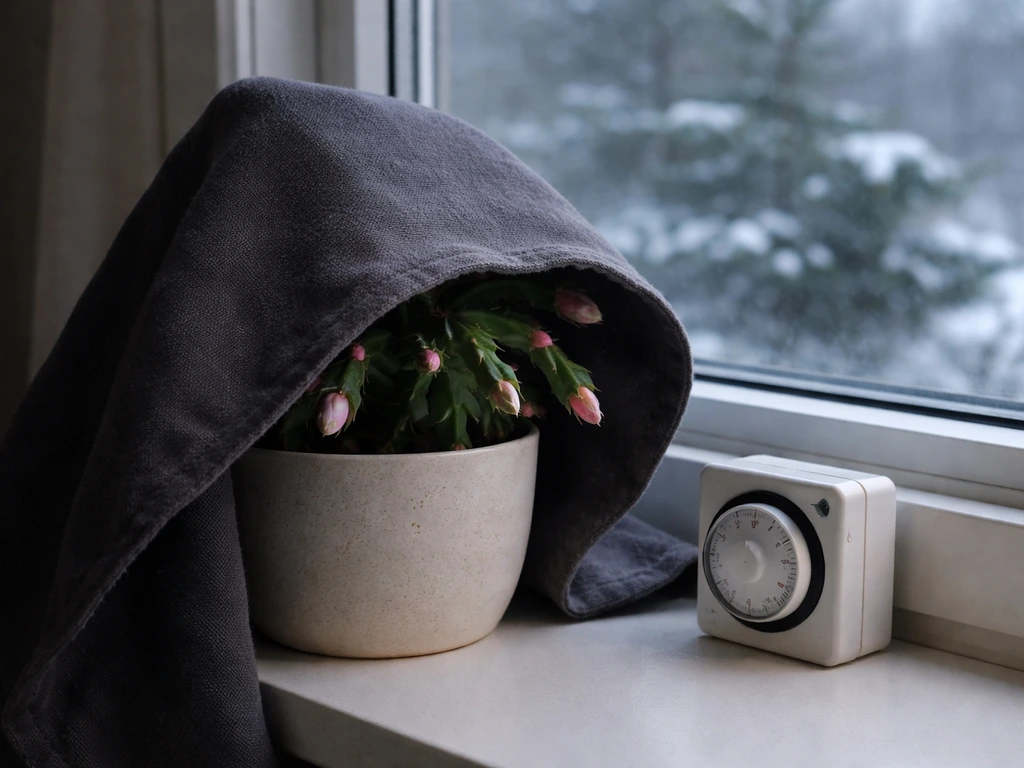
This is the part that separates the people who get flowers every year from the ones who don't. Christmas cactus blooms in response to two specific environmental triggers: long uninterrupted nights (short days) and cooler temperatures. You need both. If your plant sits in a warm room with lights on until midnight, it's not going to bloom reliably, no matter how good your general care is.
To target Christmas blooms, start the forcing routine 6–8 weeks before your desired bloom date, which puts you around late October to early November. Here's what you're aiming for during that trigger period, which should last four to five weeks:
- 12–14 hours of complete, uninterrupted darkness every night (a closet, a cardboard box over the plant, or a room that stays truly dark after sunset all work)
- Daytime temperatures around 15–21°C (60–70°F)
- Nighttime temperatures around 12–15°C (55–60°F), which is about a 5°C (10°F) drop from daytime
- Reduced watering during this period
- No fertilizer at full strength (use the half-strength, high P/K formula)
Once you see the first small buds forming, the hard work is done. Move the plant back to its normal bright-indirect-light spot at around 18–20°C (65–69°F) and resume regular watering. From this point, stability is everything: don't move it, don't let it get drafts, keep it away from heaters and fireplaces, and avoid sudden temperature swings. Bud drop almost always comes from one of these disruptions.
What to do starting this week (if it's early June)
Since it's early June right now, you have a comfortable runway to set up for Christmas blooms. Here's a practical timeline to work from:
- June: If you have a plant or fresh cuttings, repot if needed into a well-draining mix. Move the plant to a shady outdoor spot or a bright indoor window to encourage vigorous summer growth.
- June through August: Water and fertilize regularly (every two weeks, balanced fertilizer). Let the plant grow freely.
- Early September: Bring any outdoor plants back inside before nights get cool. Start reducing fertilizer to the half-strength, low-N formula.
- Late October: Begin the dark/cool forcing routine. 12–14 hours of darkness per night, cooler temperatures, reduced watering. Keep this up for 4–5 weeks.
- Late November: Watch for bud development. Once buds appear, move back to normal indoor conditions and water regularly.
- December: Enjoy the blooms. Keep stable conditions and the flowers should last three to four weeks.
Pruning, repotting, and year-round upkeep
Christmas cactus doesn't need heavy pruning, but a light trim in late spring (after the post-bloom rest period ends) will encourage bushier growth and more flowering stems the following year. Simply pinch or twist off one to three stem segments at the joints. Don't cut with scissors if you can help it; twisting at the natural joint causes less damage and leaves a cleaner break.
Repot every two to three years in spring, stepping up only one pot size. As mentioned, Christmas cactus blooms better when slightly root-bound, so there's no rush to give it more space than it needs. When you do repot, use fresh potting mix, water lightly, and hold off on fertilizing for about a month to let the roots settle.
After blooming, the plant needs a genuine rest period of about two months with very little water and moderate light. This isn't the plant being sad, it's just part of its natural cycle. Treat this rest period as non-negotiable and you'll have a much more vigorous plant come spring. If you're also interested in growing flowers in a greenhouse or in winter more broadly, the rest-then-forcing rhythm of Christmas cactus translates well to other seasonal bloomers managed in controlled environments. It also means you can plan around a greenhouse schedule if you want consistent winter blooms growing flowers in a greenhouse. Wax flowers are also grown by following a seasonal rest and a consistent light-and-temperature routine.
Troubleshooting: when things go sideways
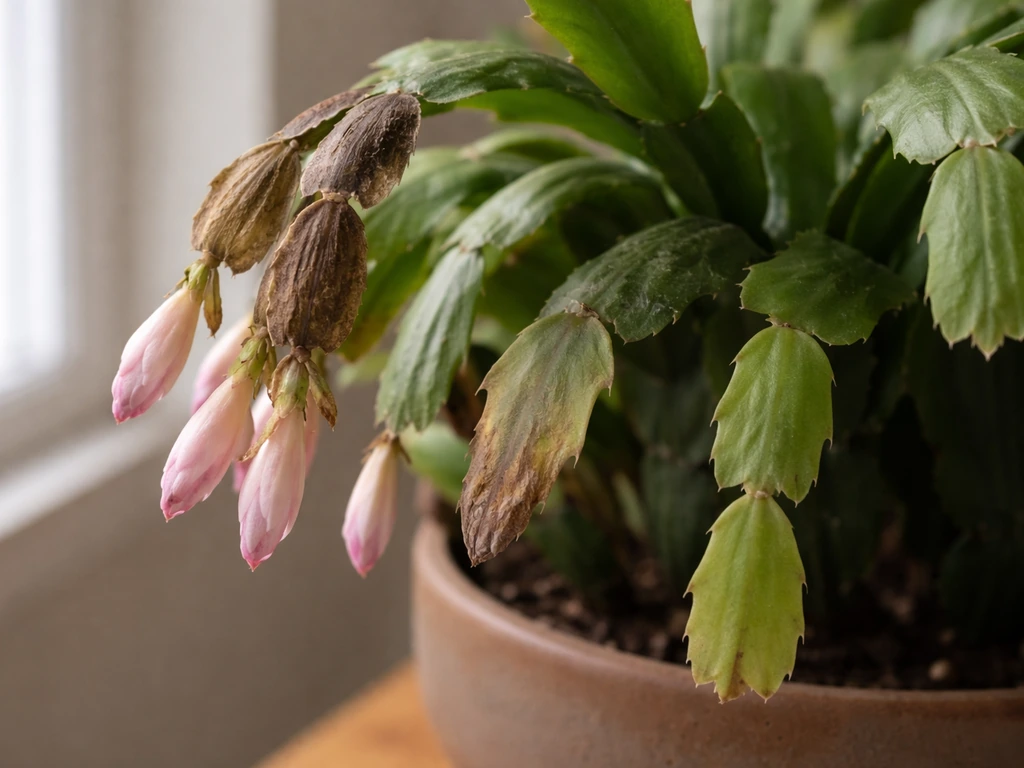
Most Christmas cactus problems have a pretty short list of causes, and once you know what to look for, they're fixable.
| Problem | Likely cause | Fix |
|---|---|---|
| Buds dropping before opening | Draft, sudden temperature change, overwatering, underwatering, gas fumes, or being moved during bud set | Move away from vents, fireplaces, and windows with drafts. Stabilize watering. Don't relocate the plant once buds form. |
| No buds at all | Insufficient darkness during forcing period, too warm at night, too much nitrogen in fertilizer | Start the dark/cool routine earlier next year. Check for any light sources hitting the plant after dark. Switch to low-N, high P/K fertilizer in autumn. |
| Yellow or shriveled stems | Overwatering or root rot | Let the soil dry out more between waterings. Check roots for rot; if severe, take cuttings from healthy stems and start fresh. |
| Limp, wrinkled stems (but not yellow) | Underwatering or very low humidity | Water thoroughly and let it drain. Increase humidity with a pebble tray or occasional misting. |
| White cottony patches on stems | Mealybugs | Dab with a cotton swab soaked in rubbing alcohol. For larger infestations, treat with insecticidal soap or neem oil. |
| Brown, crusty bumps on stems | Scale insects | Scrape off with a soft toothbrush, then treat with insecticidal soap. Isolate the plant from others. |
| Plant blooms in November, not December | You actually have a Thanksgiving cactus (Schlumbergera truncata) | Not really a problem! Start your forcing routine two to three weeks later next year if you want December blooms specifically. |
A note on bud drop specifically
Bud drop is the most heartbreaking Christmas cactus problem, and it almost always comes down to stress after bud set. The plant goes from a cool, dark, relatively dry environment to a warm, bright, well-watered living room, and that transition can shock it. Make the transition gradual when buds first appear, rather than immediately moving it to the warmest spot in the house. Also keep it away from gas stoves and fireplaces, since combustion fumes can trigger drop even in otherwise healthy plants.
Your next steps, right now
If you're starting from scratch in June, you're actually in a great position. Here's what to do this week to set yourself up for Christmas blooms:
- Get a plant or take cuttings. If you don't have one, pick up a Christmas cactus from a garden center now. If a friend has one, ask for a few stem segments.
- Set up the right pot and mix. Use a terracotta pot with drainage, and mix in perlite or coarse sand with your potting mix for drainage.
- Choose your spot. Find a bright, indirect-light location away from air conditioning vents and direct sun. If you want to put it outside for the summer, pick a shaded, sheltered spot.
- Start a fertilizing routine. Feed every two weeks with a balanced fertilizer and water when the top inch of soil is dry.
- Mark your calendar for late October. That's when you'll start the dark/cool forcing period. Set a reminder now so you don't forget.
- Plan for a dark forcing spot. Identify where you'll put the plant during the 4–5 week darkness routine, whether that's a closet, a spare room, or somewhere you can drape it with a box each evening.
Christmas cactus is genuinely one of the most rewarding houseplants to grow once you understand its rhythm. It's not fussy about most things, it can live for decades (some plants are passed down through families), and when it blooms it's spectacular. Get the light and temperature triggers right in autumn, give it a proper rest after flowering, and it'll perform for you year after year.
If you want to expand beyond Christmas cactus, growing flowers in winter or even exploring a small greenhouse setup opens up a whole range of season-extending possibilities that use similar forcing and rest-cycle techniques. If you're wondering how to grow flowers in winter beyond Christmas cactus, you can apply similar rest and forcing timing to suit the plants you choose growing flowers in winter.
FAQ
Can I rotate my Christmas cactus to keep it growing evenly and still get blooms?
Move it to the forcing spot only 6–8 weeks before your target bloom date, and during that period keep the plant away from any light sources that come on after sunset. Before buds form, you can still rotate the pot very slightly for even growth, but once you see bud swelling, stop moving it (rotating or carrying it can trigger bud drop).
What happens if I accidentally leave my plant in a warm room after the buds start forming?
Yes, but do it carefully. If you bring the plant back to normal conditions after the first buds appear, change one variable at a time if possible (temperature first, then light). Sudden jumps to warmer rooms, drafts, or a brighter window can cause buds to abort even if the forcing period was perfect.
How can I tell root rot from underwatering on Christmas cactus?
Use your nose and touch test. Root rot usually shows as a sour smell, dark mushy roots, and collapsing pads, while thirst stress more often looks like limp segments and dry potting mix. If you suspect rot, unpot and check roots, trim any black or soft sections, and repot into a fresh, fast-draining mix (with drainage holes).
Should I repot in October or early November to help it bloom better?
Avoid repotting right before forcing. The stress from handling and fresh soil timing is a common cause of bud failure, especially if you repot in late fall. If you must address severe issues (like active rot or no drainage), repot early in the growing season and let it recover before you begin the light-and-dark forcing routine.
Is it okay to keep my plant near a heater or in a drafty window during forcing?
It can, especially with heaters near windows or rooms that heat up at night. Forcing works best when nights are consistently cool and uninterrupted, and when the plant is not hit by heat pulses from radiators, fireplaces, or vents. If your home is drafty, use a stable spot rather than a cold draft near doors or unsealed windows.
How do I troubleshoot common pests or fungus during the months leading up to blooming?
Look for soft, watery buds and gray fuzz to identify fungal issues, while mealybugs and scale often appear as cottony clusters or brown bumps on segment joints. For pests, wipe with a damp cloth first, then treat with insecticidal soap and isolate the plant, repeating as directed until signs stop.
My Christmas cactus won’t form buds, what should I check first?
If it has no buds by the time the forcing window is over, the usual cause is missing the uninterrupted dark period, temperatures that stayed too warm, or incorrect light (too bright or too dim). Confirm the dark interruption source (TV backlights, room lamps on timers, streetlight through a window) and then try again the next cycle, adjusting one factor at a time so you know what changed.
Can I take cuttings in summer and expect flowers the same December?
Yes, but note that the cutting’s rooting start influences timing. If your cutting roots in summer and you want blooms by December, you still need a proper forcing period on the rooted plant, not just on the cutting. Many cuttings flower in their second season if they are small, so plan on buying a mature plant if you need guaranteed December blooms.
What are the most common reasons for bud drop after I have already gotten some buds?
If you want to troubleshoot a bud-drop event, check for two things first: any change in light schedule during forcing (including indoor lighting after sunset) and environmental shocks after buds appear. Also consider gas stove fumes, fireplaces, and sudden watering changes, since stress after bud set is the most common pattern.
Why do I still get root problems even when I use terracotta?
Terracotta helps, but the bigger rule is using a potting mix that drains fast enough that the plant never sits wet. Always empty the cachepot after watering, and if water runs through too quickly, your mix may be too coarse or the pot too large, which can swing moisture levels. Aim for a mix that feels lightly moist just below the surface, then dries down by the time the top inch is dry.
Next Articles
How to Grow Flowers in Small Spaces: Step-by-Step Guide
Step-by-step plan for growing flowers in small spaces with containers, vertical space, seed timing, and troubleshooting.
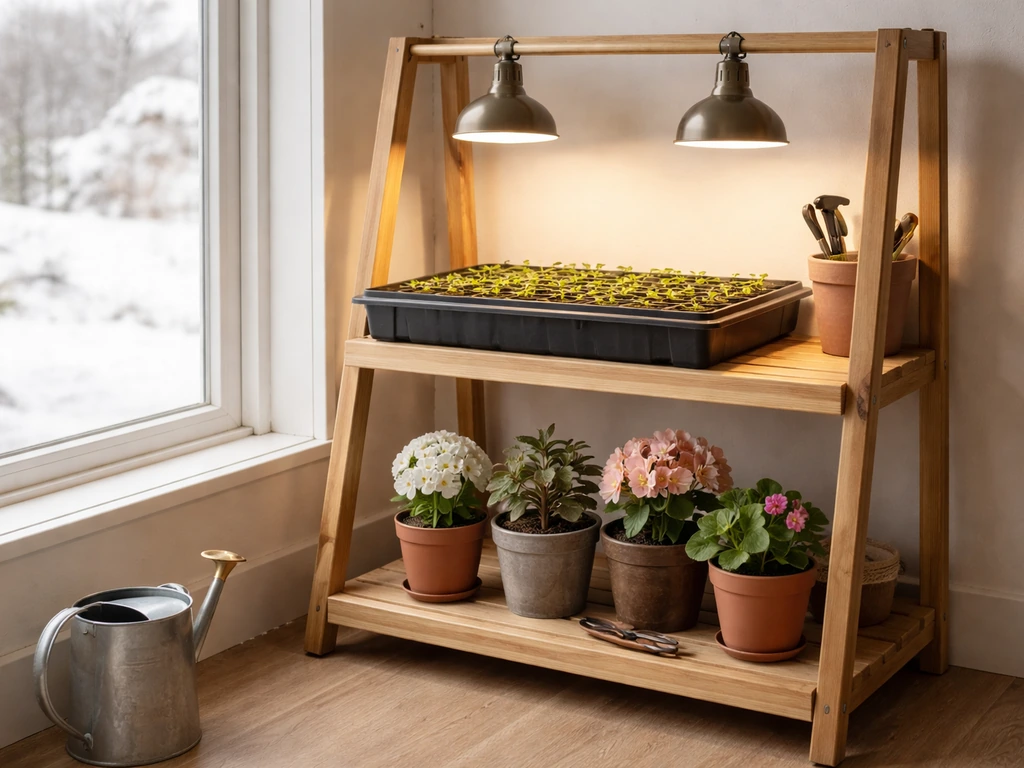
How to Grow Flowers in Winter Indoors Step by Step
Step by step guide to grow indoor winter flowers from seed to bloom, with lights, watering, care, and troubleshooting.
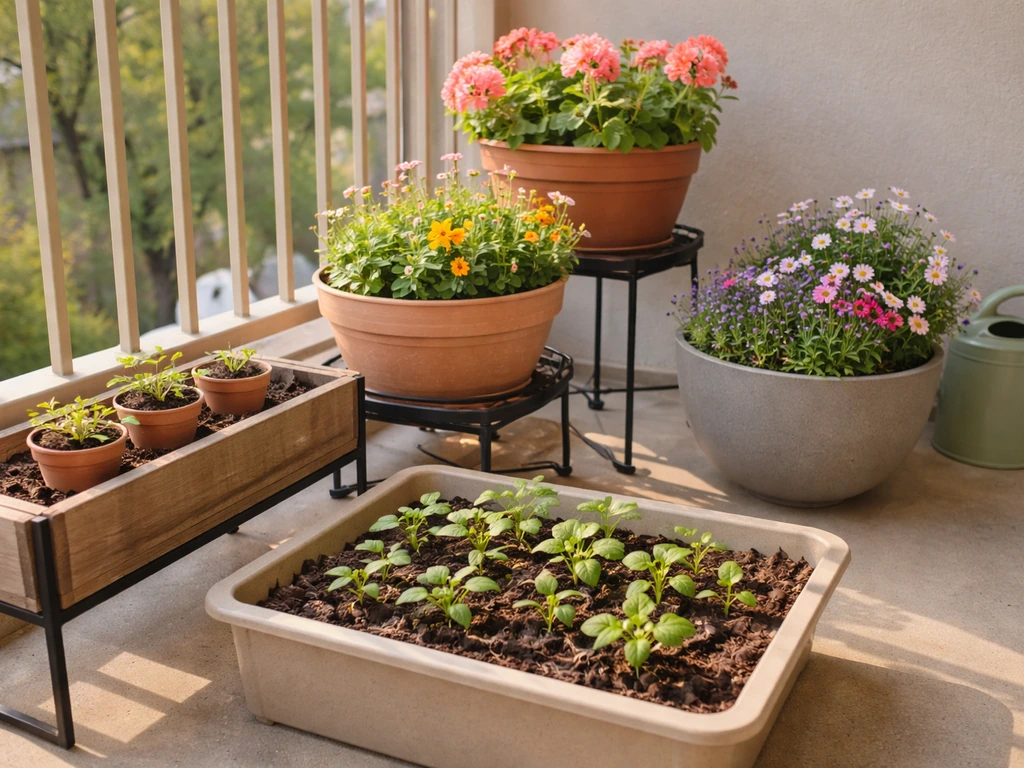
How to Grow Flowers on a Balcony: Step by Step Guide
Step-by-step how to grow balcony flowers from seed to bloom, including setup, timing, sowing, and care tips.