Getting an olive tree to flower comes down to three things: picking a variety that's mature enough to bloom, giving it the right combination of sun and cold exposure, and not overfeeding it with nitrogen. Once you understand the same core requirements, you can apply them to Botania flowers as well Getting an olive tree to flower comes down to three things. Most gardeners who struggle with a flowerless olive tree are dealing with at least one of those three issues. Get all three right, and those tiny, creamy-white flower clusters will appear in spring without much fuss at all.
How to Grow Olive Flowers: Step-by-Step Guide
James Holloway
14 Jun 2026
Choosing the right olive variety for flowers (and fruit)
Not every olive tree is built for the same goal, so start by deciding what you actually want. If you're after the full experience, including flowers and fruit, you need a fruiting variety. If you're mainly after ornamental value or just the experience of those delicate spring blooms, a dwarf or landscape olive can work fine but won't give you edible olives.
For fruiting and flowering, some varieties reliably perform in a wider range of conditions than others. Arbequina is the go-to recommendation for most home gardeners because it's self-fertile, compact, flowers relatively young (sometimes as early as 3 to 4 years from a grafted tree), and tolerates container growing well. Manzanillo is another solid choice for warmer climates and produces heavy flower clusters. Mission is more cold-tolerant and a classic in California growing, though it can take longer to mature. Picual is popular in oil production and tends to be a reliable bloomer in warm, dry climates.
One thing that catches beginners off guard: olive trees grown from seed take much longer to flower, often 7 to 10 years or more. Grafted trees from a nursery can flower in 3 to 5 years. If you're starting from scratch and want flowers sooner rather than later, buy a grafted tree that's at least 2 to 3 years old. That's a few years of waiting you're buying back. It's worth every penny.
| Variety | Self-Fertile? | Years to First Flower (Grafted) | Best For | Cold Tolerance |
|---|---|---|---|---|
| Arbequina | Yes | 3 to 4 years | Containers, small gardens, oil | Moderate (down to 22°F) |
| Manzanillo | Yes | 4 to 5 years | Warm climates, table olives | Moderate (down to 22°F) |
| Mission | Partially | 5 to 6 years | Larger landscapes, oil | Good (down to 15°F) |
| Picual | Yes | 4 to 5 years | Hot, dry climates, oil | Moderate (down to 22°F) |
| Swan Hill (fruitless) | N/A | 3 to 4 years | Ornamental only | Moderate |
Site and timing: sun, warmth, cold, and when olives actually bloom
Olives are Mediterranean plants, which tells you a lot. They want long, hot, dry summers and cool but not brutally cold winters. That seasonal contrast is exactly what triggers flowering. In California conditions, olive flower buds begin forming roughly two months before bloom, which places bud differentiation somewhere between mid-March and mid-May, with actual flowering following in late spring, typically April through June depending on your location and variety.
The cold piece is more important than most people expect. Olive trees need a chilling period of somewhere between 200 and 300 hours below 45°F (7°C) to properly trigger flower bud development. Think of it the same way you think about spring bulbs needing cold stratification. Without those winter chill hours, bud differentiation is incomplete and flowering is sparse or completely absent. This is why olive trees rarely flower well in truly tropical climates or in a warm indoor space year-round.
For sunlight, there's no compromise: full sun, meaning at least 8 hours of direct sunlight daily. Six hours will keep an olive alive, but it won't push it into productive flowering. Ten to twelve hours is ideal if you can manage it. South or southwest-facing spots are best in the Northern Hemisphere. This is not a plant for a semi-shaded courtyard.
In terms of hardiness zones, most fruiting olives do best in USDA zones 8 through 11. Zone 7 growers can succeed with cold-hardy varieties like Mission or Frantoio if they're planted in a sheltered spot and mulched well in winter. Below zone 7, container growing with winter protection becomes the more realistic approach.
Planting setup: in-ground vs containers, soil, and drainage
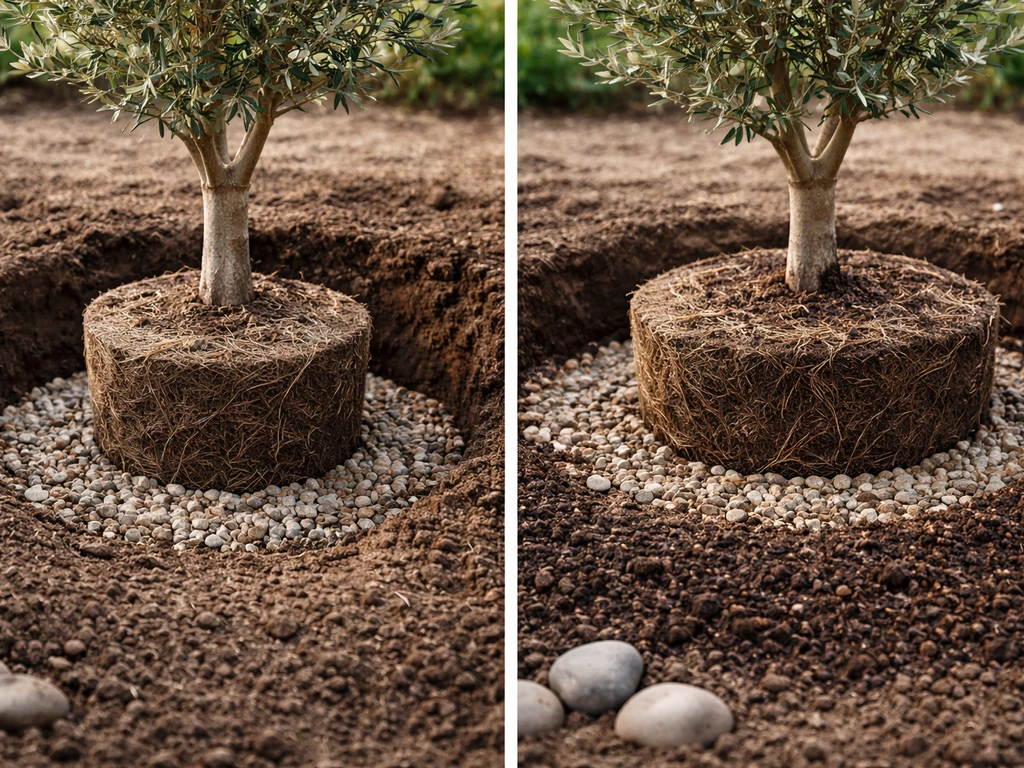
Olive trees are surprisingly forgiving about soil type as long as drainage is excellent. They hate sitting in wet soil. Root rot is the fastest way to kill an olive tree and the surest way to prevent it from ever flowering. Whether you're planting in-ground or in a container, drainage is the non-negotiable first principle.
Planting in the ground
Choose a spot with a slight slope or raised grade so water naturally moves away from the root zone. Dig a hole twice as wide as the root ball but no deeper than the nursery container. Olives prefer a soil pH between 6.0 and 8.0, so they're tolerant of a wide range. If your soil is clay-heavy, amend it with coarse sand or grit and some compost to improve drainage, but don't go overboard on organic matter because too-rich soil encourages leafy growth over flowering. Backfill with your native soil mix, water in deeply, and then largely leave it alone for the first growing season.
Growing in containers
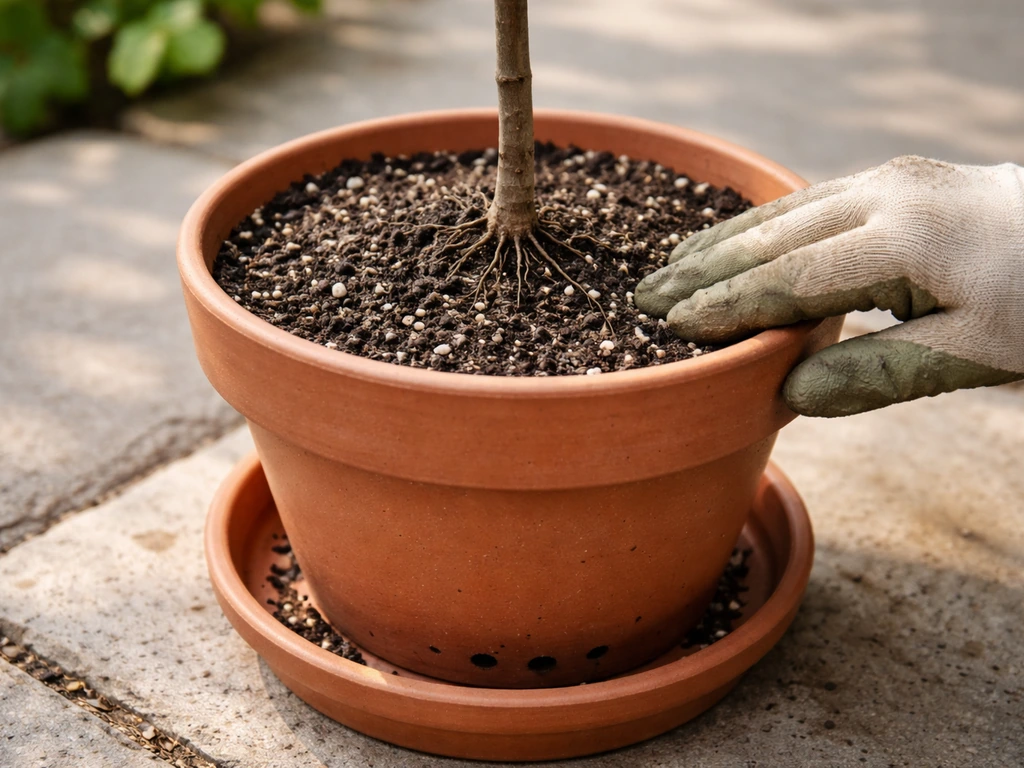
Containers are a great option if you're in zone 7 or colder because you can move the tree somewhere sheltered in hard freezes and still give it its needed chill hours in autumn. Use a large container, at least 15 to 20 gallons for a young tree, and plan to size up every 2 to 3 years. Use a well-draining mix: a blend of potting mix, perlite, and coarse sand in roughly equal thirds works well.
Make sure the pot has multiple drainage holes. Terra cotta or fabric pots are better than solid plastic because they breathe and dry out faster. One honest note: container olives do need more attentive watering and feeding than in-ground trees because nutrients leach out with every watering cycle.
Watering and feeding to actually trigger flowering
This is where a lot of well-meaning gardeners accidentally stop their olive from flowering. The two most common mistakes are overwatering and over-fertilizing with nitrogen. Both push the tree into lush vegetative growth at the expense of flower production.
For watering, once established (after the first year in the ground), olive trees are drought-tolerant and actually benefit from some water stress going into the bud differentiation period. Research on olive production shows that water availability during the bud differentiation window, roughly mid-March through mid-May, directly affects bud timing and development. The practical guidance: water deeply but infrequently during active growth in spring and early summer, allow the top 2 to 3 inches of soil to dry out between waterings, and reduce watering further in late summer and autumn. Container trees need more consistent moisture but should never sit waterlogged.
For feeding, use a low-nitrogen fertilizer or a balanced fertilizer used sparingly. A ratio like 10-10-10 applied once in late winter and once after bloom is enough for most trees. Potassium supports flowering and fruit set, so a fertilizer with a slightly higher potassium level (the third number) is a reasonable choice for trees you want to push into bloom. Avoid heavy nitrogen feeds in spring because you'll get a gorgeous canopy of silvery-green leaves and almost no flowers. If you've been over-fertilizing, back off entirely for a season and let the tree find its own balance.
Pruning and training for more bloom-ready growth
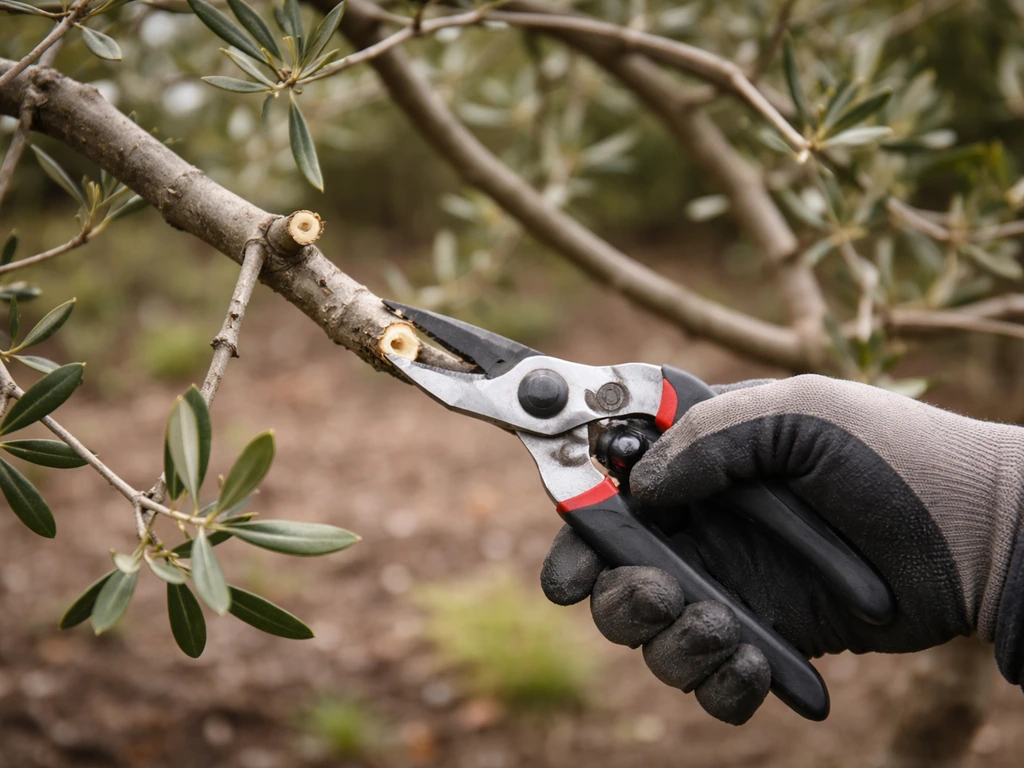
Olive trees produce flowers on the previous year's growth, so pruning timing matters. The general rule is to prune in late winter or very early spring, before new growth pushes out, but after the worst cold of the season has passed. In zone 8 to 9, that's typically February to early March.
The goal of pruning for flowering is to open up the canopy for light penetration and to encourage a cycle of new lateral shoots that will become next year's flowering wood. Remove crossing branches, downward-growing stems, and any dense interior growth that blocks light from reaching the middle of the tree. Aim for an open vase or goblet shape with 3 to 5 main scaffold branches. Don't be afraid to make real cuts. Olives respond very well to pruning and bounce back with productive new growth.
Avoid heavy pruning in autumn because you risk cutting off the shoots that are already preparing to flower in spring. If you have an older, neglected olive that's become a dense thicket, renovate it gradually over 2 to 3 years rather than doing a drastic cut all at once. Drastic cuts push the tree into heavy vegetative regrowth and delay flowering by another year or two.
For container trees, keep the overall size manageable by removing the longest shoots by about a third each late winter. This encourages branching and keeps flowering wood within reach of good light.
What happens after flowering: pollination and fruit outlook
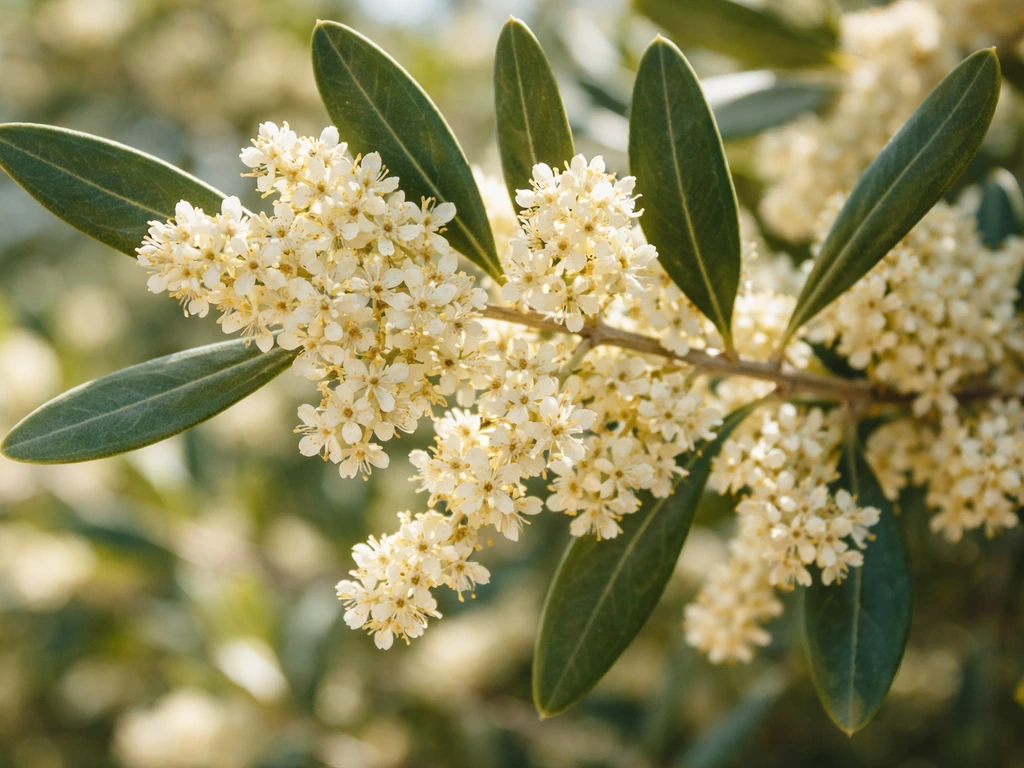
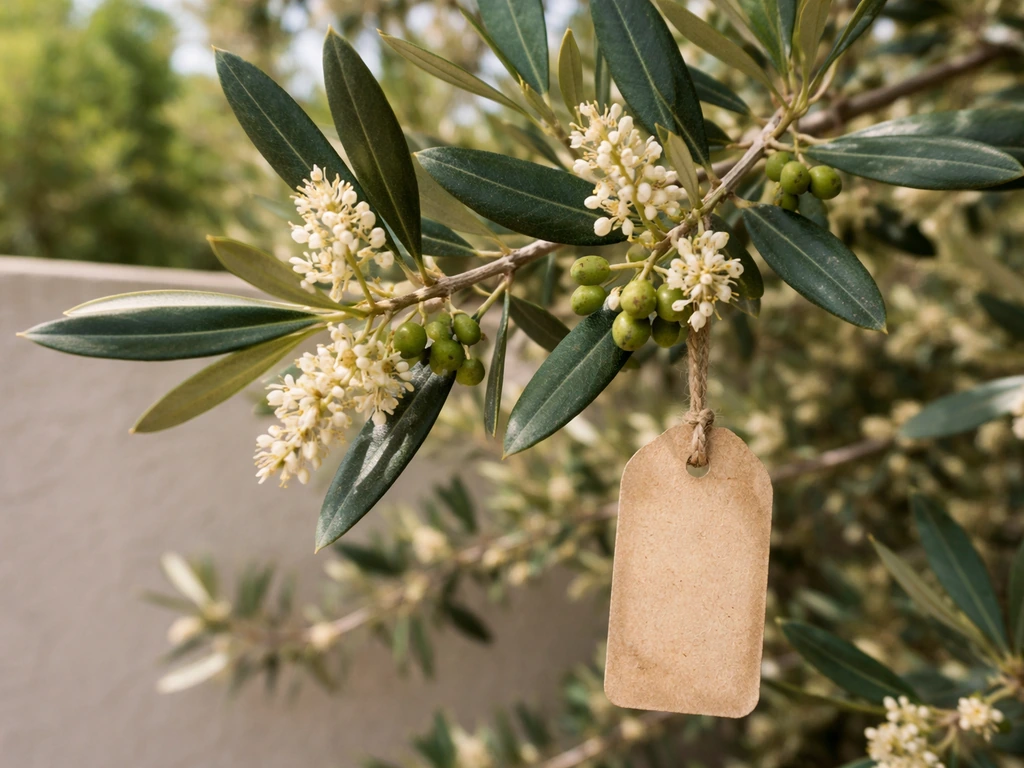
Olive flowers are small, creamy white, and produced in clusters called panicles along the previous season's shoots. They're wind-pollinated, which means you don't need to do much other than make sure there's airflow around the tree. Most fruiting varieties are at least partially self-fertile, but planting two different varieties nearby will significantly improve pollination rates and fruit set. Arbequina and Arbosana are frequently planted together for this reason.
One thing worth knowing before you start mentally calculating your olive harvest: olive trees are naturally alternate bearing. That means they'll have a heavy flowering and fruiting year followed by a noticeably lighter one. This is completely normal and has nothing to do with your care routine. If you had a bumper flower year and then barely any the following spring, the tree isn't sick or unhappy. It's just in its off-cycle. Consistent pruning helps moderate this pattern but doesn't eliminate it entirely.
After flowers drop, fruit (called a drupe) begins developing through summer and reaches maturity from October into December depending on variety and use: green table olives are harvested earlier, oil olives and black table olives later. Don't expect a massive harvest in the first flowering years. Young trees produce lightly. Full production typically kicks in at 7 to 9 years from planting, even from grafted stock.
Why your olive tree isn't flowering (and what to do about it)
If your olive tree is healthy and growing but producing zero flowers, something specific is blocking it. Here's how to systematically work through the most common causes.
| Problem | What's Happening | What to Do Now |
|---|---|---|
| Tree is too young | Seedling-grown trees take 7 to 10 years; grafted trees 3 to 5 years | Switch to a grafted nursery tree; be patient with young trees |
| Not enough chilling hours | Insufficient cold exposure prevents bud differentiation | Move container trees outdoors in autumn; don't overwinter in a warm house |
| Too much nitrogen | Lush vegetative growth at the expense of flower buds | Stop high-N feeds; switch to low-nitrogen or potassium-focused fertilizer |
| Not enough sun | Below 8 hours daily suppresses flowering | Move container; prune surrounding vegetation; consider relocating in-ground tree |
| Overwatering | Wet roots stress the tree and discourage fruiting signals | Let soil dry between waterings; improve drainage; check pot drainage holes |
| Recent heavy pruning | Drastic cuts push vegetative regrowth, delaying flowering | Hold off heavy pruning for a season; do light corrective cuts only |
| Alternate-bearing off year | Natural light year following a heavy crop year | Nothing to do; wait for the next on-year; moderate with annual light pruning |
One scenario I see most often: someone has kept their olive in a pot indoors near a sunny window all winter to protect it from frost. The tree looks healthy but never flowers. The problem is almost always lack of chill hours. Moving it outside in October or November, somewhere it gets temperatures between 35°F and 50°F for a few months without hard freezing, makes a dramatic difference the following spring. You don't need to risk killing it. You just need to let it experience real winter.
Your seasonal action plan for getting to first bloom
If you're starting today (mid-June), here's a practical calendar for the next 12 months to put yourself in the best position for flowers next spring.
| Month | What to Do |
|---|---|
| June to August | Water deeply but infrequently; avoid nitrogen fertilizer; ensure full sun; let the tree harden off |
| September to October | Reduce watering significantly; no more fertilizer; allow the tree to experience shortening days and cooling nights; move container trees to an unheated porch or sheltered outdoor spot |
| November to February | Let the tree experience its chilling hours (35°F to 50°F); protect from hard freezes below 15°F; no watering unless soil is completely dry; no feeding |
| Late February to March | Prune lightly to open the canopy; apply a low-nitrogen balanced fertilizer once; resume light watering as temperatures warm |
| April to June | Watch for flower panicles on last year's shoots; water during bud development period; enjoy the bloom; reduce nitrogen entirely during flowering |
Growing olive flowers is genuinely one of the more rewarding things you can do in a garden. If you’re specifically looking for how to grow baboon flowers, the same core ideas about getting enough sun and the right seasonal conditions can guide your approach. If you are also curious about other plants with sticky, unusual-looking blooms, sticky monkey flower is another great species to try once you understand its specific sun and moisture needs.
The trees are long-lived, architectural, and surprisingly low-maintenance once you understand their rhythm. Most of what they need, you're either already providing or can easily adjust. Get the sun, the chill, and the feeding right, and those clusters of tiny white blooms will show up for you every spring. If you are specifically trying to grow bonsai flowers, the same core ideas about light, chill hours, and avoiding excess nitrogen fertilizer still apply.
FAQ
Can I grow olive flowers if I live in a warm climate or indoors most of the year?
Yes, but it is usually a “partial success” situation. Olive flowers require winter chill, which most home interiors cannot provide. If you must keep it indoors to avoid freezes, move it outside for chill weeks in late fall (aim for cool nights and days in the 35°F to 50°F range), then bring it back in before hard freezes. A garage or unheated porch that actually gets cold counts far more than a sunny window.
Will pruning in late fall or after growth starts help my olive flower sooner?
Generally, you should not. The winter chill requirement is what triggers bud differentiation, and late-season heat can disrupt it. If you prune after new growth has started, you may remove shoots that would have become next year’s flowering wood. Use the “late winter or very early spring, after the worst cold” timing, then stop pruning once growth is underway.
My olive has lots of leaves but no flowers, what should I check first?
If your olive never flowers, temperature and nitrogen are the two fastest culprits to check, but drainage is the hidden third. In wet soil, a stressed tree may grow leaves yet fail to progress toward healthy bud formation. Before changing fertilizer, confirm the root zone stays dry enough, especially in winter, and that the pot has multiple drainage holes (and use a fast-draining mix).
What if I already over-fertilized with nitrogen and my tree is leafy but not flowering?
Do not rush to add nitrogen “to get it going.” Once you are already seeing lush canopy growth, extra nitrogen commonly suppresses flowering. Instead, back off feeding for a season, then resume with a low-nitrogen or balanced fertilizer used sparingly, and consider a slightly potassium-leaning option after late winter once you know the tree is entering its flowering cycle.
If my olive doesn’t flower this spring, will it flower next year automatically?
It depends on where you are in the tree’s cycle. After a flowerless spring, many olives take a year to re-establish proper flowering wood, especially if pruning was too heavy or mistimed. However, if the tree never got sufficient chill hours or has poor drainage, it can remain flowerless for longer. Track whether bud formation occurs in late winter through spring, then adjust chill and water habits before changing the pruning routine.
Do I need two olive varieties to get flowers, or only to get olives?
For container olives, yes, pollination can still limit fruit, even if flowers appear. Many varieties are partially self-fertile, but nearby cross-pollination usually improves rates. If you are aiming for both flowers and fruit, keep airflow around the tree and, if possible, place a second compatible variety within the same flowering window.
How does pruning affect whether my olive flowers on this year’s wood or next year’s?
Flowers are produced on the previous year’s shoots, so the “old wood” concept matters. Very late pruning (or any pruning that removes much of the previous season’s lateral growth) reduces the flowering sites for the next bloom cycle. When pruning, remove clutter that blocks light, but avoid cutting back indiscriminately on already-established flowering wood late in the season.
How should I water olive trees differently for flowering in-ground versus in containers?
If your tree is container-grown, increase your watering consistency during active spring growth, but still avoid waterlogged soil. A practical method is to water thoroughly, then wait until the top 2 to 3 inches dry out, then repeat. In-ground trees need deeper but less frequent irrigation, and they should receive some water reduction in late summer and autumn to avoid pushing tender growth.
Can I use containers to create better flowering conditions even if my soil is poor?
Yes, but focus on drainage and chill rather than simply “more sun.” Make sure the pot is large enough (at least 15 to 20 gallons for young trees) and uses a breathable container (terracotta or fabric). Then ensure it can still experience cool fall weather to build chill hours. Small pots often dry too fast and can stress the tree, which can indirectly reduce flowering.
If I’ve tried sun and fertilizer, what is the most reliable next troubleshooting step?
If an olive is already established outdoors and you get full sun, you should not “force flowering” by changing fertilizer every week. Olive flowering responds more to seasonal chill, pruning timing, nitrogen level, and water pattern in the bud differentiation window. The most effective next step is to review those four variables first, then make one change at a time so you can tell what worked.
Next Articles
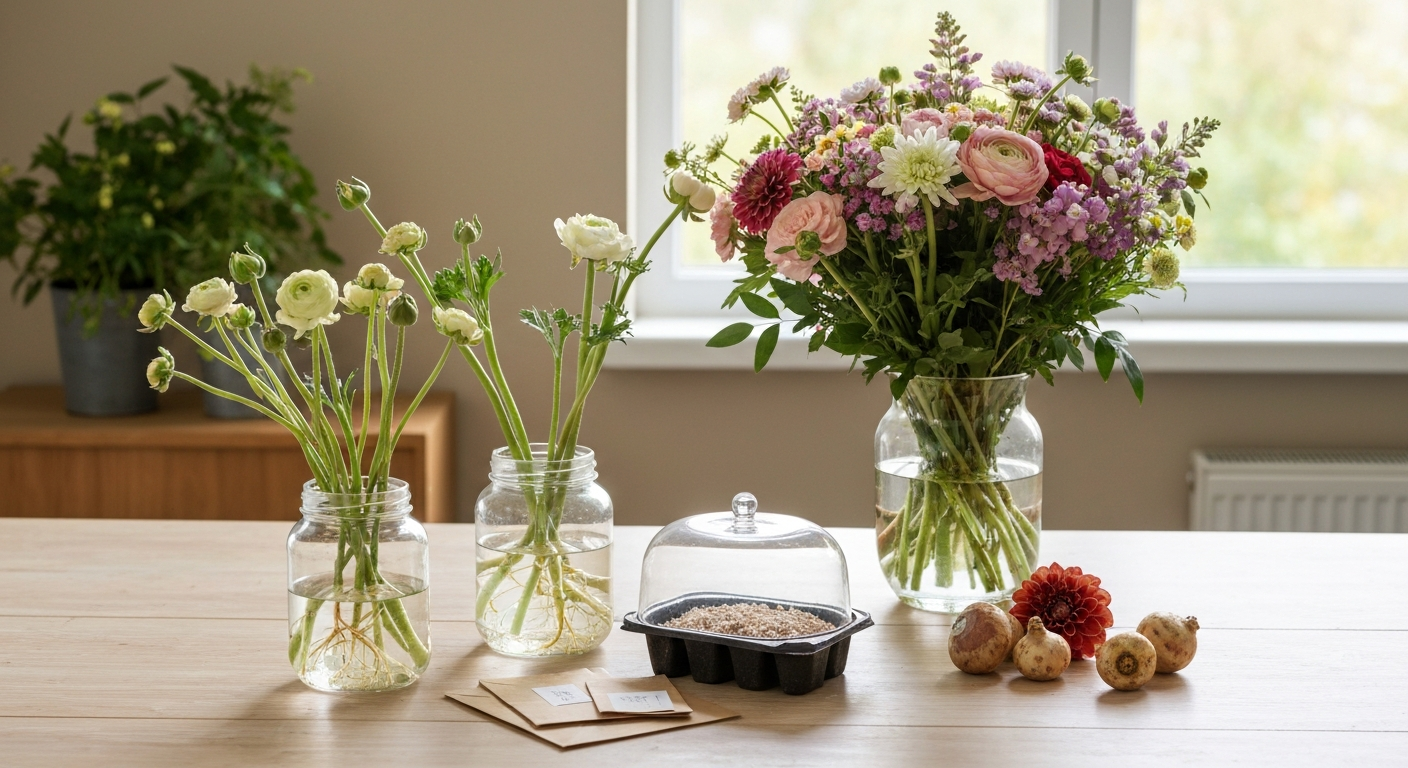
How to Grow Plants from a Bouquet: Step-by-Step Guide for Beginners
How to grow plants from bouquet: step-by-step rooting, seed saving, bulbs, timelines and troubleshooting
Linaria 'Fairy Bouquet' How to Grow: Seed to Cut Flowers
Grow Linaria 'Fairy Bouquet' from seed to vase: step‑by‑step sowing, care, cutting, seed saving & troubleshooting.
Floret How to Grow Ranunculus: Step-by-Step Guide
Step-by-step Floret-style ranunculus guide: corm prep, planting, watering, frost care, troubleshooting, and harvest for