
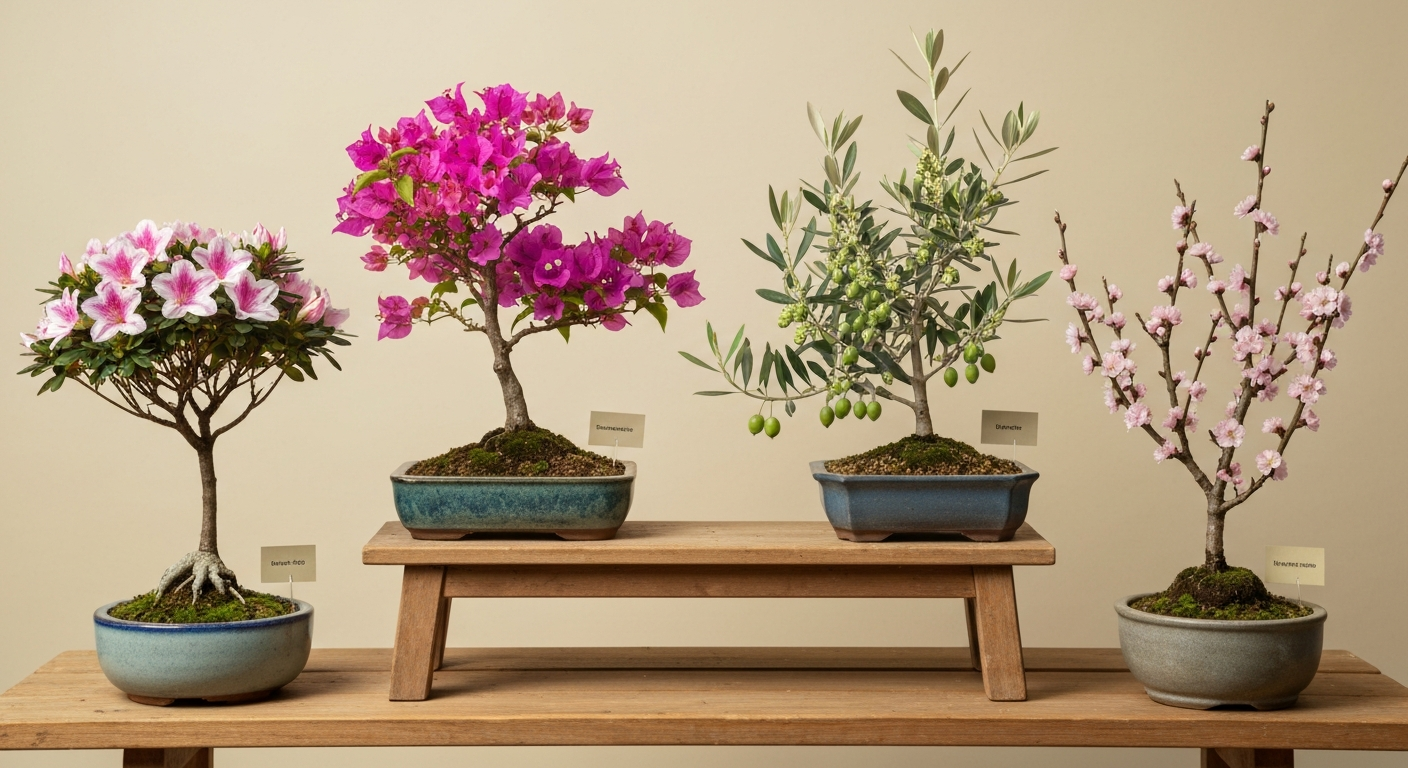
You can grow flowering bonsai as a complete beginner, but the key is picking the right species from the start and understanding that most reliable bloomers come from nursery starters or rooted cuttings rather than seed. Azaleas, bougainvillea, olives, and flowering cherries are the workhorses of the hobby: they bloom on a predictable schedule, tolerate container life, and respond well to the pruning and feeding techniques that coax repeat flowers out of a small tree. This guide walks you through everything from choosing your first plant and deciding whether to start from seed, all the way through potting, seasonal care, and the specific tricks that actually trigger blooms.
How to Grow Bonsai Flowers: Seed-to-Bloom Guide & Calendar
James Holloway
24 Jul 2026
Why grow flowering bonsai (and what this guide covers)
Flowering bonsai sits at a sweet crossroads between patience and payoff. You are training a living tree into a miniature form, and when it finally blooms, every flower feels earned in a way a regular pot plant never quite matches. I started with a Satsuki azalea on my apartment balcony, mostly because I had nowhere near enough space for a garden, and I was genuinely surprised by how much color a tree the size of a shoebox could produce in May. That first year hooked me. What followed was a lot of trial, a few dead ends (a couple of olive seedlings that took years to show a single flower bud), and eventually a reliable routine I want to share here.
This guide covers species selection, the seed-versus-nursery decision, a seed-to-bloom workflow, a month-by-month seasonal calendar, soil and container rules, pruning and wiring for flower production, fertilizing and bloom-trigger techniques, and pest prevention. It also sorts out some of the confusing common names, like sticky monkey flower, baboon flower, and botania, that often come up alongside bonsai searches, so you know what is actually a bonsai candidate and what is not.
Choosing the right flowering bonsai species
Not every flowering plant makes a good bonsai. You want something with small leaves, woody stems that respond to pruning, a compact habit you can encourage, and reliably repeating flowers in container conditions. Here are the species that consistently deliver for home growers.
Satsuki and Kurume azaleas
Rhododendron indicum (Satsuki group) and Kurume azaleas are probably the single most popular flowering bonsai species in the world, and for good reason. They are naturally compact, produce small leaves and dense ramification, and bloom in late spring to early summer, typically May through June in temperate Northern Hemisphere climates. The flowers come in a spectacular range: solid pinks and reds, lavender, white, and multicolored stripes. One important pruning rule: azaleas bloom on old wood, meaning the flower buds form on growth from the previous season. Always prune immediately after flowering, not in autumn, or you cut off next year's buds.
European olive (Olea europaea)
Olives make strikingly beautiful bonsai: silver-grey bark, small leathery leaves, and gnarled trunks even on young material. The tiny white flowers appear in late spring and are followed by miniature fruit that looks fantastic on a bonsai. The catch is that olives need a genuine chilling period to initiate flowers, typically around 6 to 11 weeks below about 9°C (48°F). If you keep an olive in a warm room all winter, it simply will not bloom. In USDA zones 8 and above, you can achieve this outdoors naturally. In colder zones, an unheated but frost-protected greenhouse or cool garage works well. Nursery-grafted stock flowers much sooner than seedlings, which can remain in a juvenile, non-flowering phase for 10 to 20 years depending on genetics. For step-by-step advice on meeting olives' chilling requirement and encouraging blooms, see how to grow olive flowers.
Bougainvillea
Bougainvillea (B. glabra and B. spectabilis are the most common bonsai forms) is a powerhouse in warm climates. It can bloom almost year-round given enough sun, heat, and the right stress triggers. It is genuinely full-sun only: shade will shut down flowering completely. UF/IFAS Extension recommends full sun for bougainvillea and notes poor flowering in shade, and research on bougainvillea photoperiod (ResearchGate) documents short‑day sensitivity that influences bloom timing blank" rel="noopener noreferrer">UF/IFAS Extension; Research on bougainvillea photoperiod (ResearchGate). Bloom is driven by a combination of short days (it is photoperiod-sensitive in many cultivars), deliberate water stress cycles, and pruning hard after each flowering flush. The 'flowers' you see are actually colourful bracts around tiny true flowers, but the effect is stunning on a small tree. Keep bougainvillea in lean, very free-draining soil and resist overwatering once buds form. blank" rel="noopener noreferrer">UF/IFAS bougainvillea guidance recommends lean, very free‑draining mixes and controlled watering to encourage bract production.
Prunus species: flowering cherry, apricot, and plum
Prunus mume (Japanese flowering apricot) and ornamental cherries like P. serrulata are classic bonsai subjects prized for their late-winter to early-spring bloom. P. mume in particular blooms in late winter, often while there is still frost around, which makes it genuinely dramatic on a bonsai bench. These species need a proper winter dormancy, so do not try to keep them in a heated space. Grafted nursery stock or air-layered material from a mature tree will give you flowers far earlier than seed-grown plants.
White-flowering varieties worth knowing
If white flowers are your aesthetic, several species deliver well in bonsai form. White-flowered Prunus mume cultivars ('Alboplena', 'Omoi-no-mama'), white Satsuki azaleas like 'Hakurin', white bougainvillea cultivars ('White Stripe', 'Vera Deep Purple' is obviously not white but 'Vera White' and 'Alba' forms exist), and European olive itself with its small cream-white blooms all make excellent choices. White-flowering bonsai tend to photograph beautifully and look clean against dark, aged bark.
How those related search terms map to bonsai
A lot of people arrive at bonsai searches via common flower names they already know, and it is worth being honest about which of those translate into bonsai candidates and which do not.
Sticky monkey flower (Diplacus aurantiacus)
Sticky monkey flower is the common name for Diplacus aurantiacus, a drought-tolerant woody shrub native to western North America. It produces bright orange-yellow flowers and is genuinely attractive in the garden. As a bonsai subject it is unconventional: the leaves are quite coarse and the stems are not particularly well-suited to refined bonsai styling. That said, some experimental growers have developed it in informal pre-bonsai styles, especially in California where it grows natively. If you want a bonsai with orange blooms and you live in a dry western climate, it is worth experimenting with, but do not expect the refined silhouette you get from an azalea or Prunus. It is a much better candidate for a naturalistic, wildlife-friendly garden planting.
Olive flowers and bonsai
When people search 'olive flowers' in a bonsai context, they are usually asking about Olea europaea, which is covered above. The small, fragrant, cream-white blooms appear in late spring after a satisfactory chilling period. The flowers are not showy individually but they cluster attractively and the resulting miniature fruit extends the season of interest well into autumn. If you are looking for species-specific seed and variety guidance for olive growing, the olive tree sits naturally at the intersection of bonsai and edible gardening, and its chilling requirement is the single most important variable to get right.
White flowers as a bonsai category
Searching 'how to grow white flowers' often lands on garden annuals and perennials like white marigolds, white snapdragons, or white poppies, which are not bonsai subjects at all. In a bonsai context, white-flowering species refers to the tree and shrub candidates described above. If you are interested in white-flowering plants more broadly in the garden, that is a separate seed-to-bloom journey from what bonsai training involves.
Baboon flower (Babiana spp.)
Baboon flower is the common name for Babiana, a genus of South African cormous plants related to iris. They produce beautiful spikes of blue, violet, or pink flowers and are well worth growing, but they are geophytes, meaning they grow from bulb-like corms. They have no woody stems and do not take to bonsai training in any traditional sense. The same applies to Freesia, which is sometimes also called baboon flower in some regions. If you are drawn to Babiana or Freesia for your garden, treat them as bulb-bed or container perennials rather than bonsai subjects. For growing tips and container care for these corms, see our guide on how to grow baboon flowers.
Botania flowers
Botania is not a plant genus recognized in any major taxonomic database. In search results it comes up as a brand name, a garden design company, a Minecraft mod, and occasionally as a misspelling of 'botanica' or 'botanique'. If you searched 'how to grow botania flowers' and landed here, the most likely intended searches are either bougainvillea bonsai, a general botanical garden inquiry, or possibly botanic garden plant sales. There is no specific flowering plant called botania that applies to bonsai or seed growing.
Seed vs. nursery starter: making the right call
This is probably the most practically important decision you will make, and I want to be direct about it: for most flowering bonsai species, starting from seed is the hard road, and not always the rewarding one. Growing from seed gives you the lowest cost entry and genuine genetic diversity, but juvenile phases in woody plants are long. Olive seedlings can take 10 to 20 years to flower depending on genetics. Prunus from stone can take 5 or more years even with cold stratification to break dormancy, and flower characteristics will be variable. Azaleas from seed can take 3 to 5 years to bloom reliably. Buying a nursery-grown plant, a rooted cutting, or grafted stock is not cheating. It is just choosing to spend your energy on the art of bonsai rather than on plant propagation genetics.
Grafted stock deserves a special mention: nursery grafting or top-working (placing a scion from a mature, flowering tree onto a rootstock) is the standard commercial technique that compresses time-to-first-flower from many years down to 1 to 3 years in most woody ornamentals. For olives and Prunus especially, this matters enormously.
Use this checklist to decide
- Budget is your primary constraint and you have patience measured in years: choose seed
- You want flowers within 1 to 3 seasons: choose nursery starter, rooted cutting, or grafted stock
- Species is azalea or bougainvillea: cuttings root easily and give true-to-type flowers faster than seed
- Species is olive or Prunus: always buy grafted nursery stock unless you specifically want a multi-year propagation project
- You are experimenting with Diplacus (sticky monkey flower) as a casual bonsai: semi-hardwood cuttings root well in summer and are faster than seed
- You want to sow Prunus from seed: the stone needs moist cold stratification for several weeks before it will germinate, and the resulting seedling may not match the parent's flower
- You plan to air-layer from a mature tree you already own: this is the best of both worlds, producing rooted stock with adult flowering characteristics
Seed-to-bloom workflow: step by step
Whether you are starting from seed, a cutting, or a nursery plant, the general workflow follows the same stages. The timelines differ but the logic is the same.
- Select your species and propagation method based on the checklist above, and source your seed, cutting material, or nursery plant
- If starting from seed, prepare a small seed tray with the appropriate germination mix: acidic for azaleas (surface-sow on damp sphagnum or ericaceous mix, do not cover as they need light to germinate), standard gritty seed compost for bougainvillea, moist cold stratification in the fridge for Prunus stone over 8 to 12 weeks before spring sowing
- Germinate seeds in bright indirect light at 18 to 22°C (65 to 72°F) for most species; keep moist but not waterlogged; expect azalea germination in 3 to 6 weeks, bougainvillea in 2 to 4 weeks
- For cuttings: take semi-hardwood material in summer, treat with rooting hormone, insert into a 50/50 perlite and coir mix, cover with a humidity dome, and keep at around 20°C until roots develop, usually 4 to 8 weeks
- Pot up rooted seedlings or cuttings into a small training pot using a species-appropriate bonsai mix (see soil section below); resist moving to a decorative display pot until the root system is established
- In years 1 to 2 (or seasons 1 to 2 for nursery starters), focus on root and trunk development rather than immediate flowering; allow more vigorous growth than you eventually want to build the root structure
- Begin basic structural pruning once the plant has established in its pot: remove crossing branches, select your primary and secondary branches, and cut back new growth to the first or second bud pair
- Apply wire to shape branches during the active growing season; check frequently as flowering bonsai branches can thicken quickly and wire cuts in rapidly
- Begin bloom-trigger management in the season before you expect first flowers: for azaleas, allow buds to set on old wood by pruning no later than 6 weeks after the previous bloom; for bougainvillea, begin water stress cycles 6 to 8 weeks before your target bloom window; for olives and Prunus, ensure the plant experiences the required chilling period
- First bloom is your milestone: photograph it, note the date, and adjust your care calendar accordingly for the following year
Seasonal calendar: month-by-month milestones
This calendar is written for temperate Northern Hemisphere growers in approximate USDA zones 6 to 9. Adjust 6 to 8 weeks forward if you are in the Southern Hemisphere, or shift tasks based on your last frost date if you are in a colder or warmer zone.
| Month | Key Tasks | Species Notes |
|---|---|---|
| January | Maintain dormancy for azaleas and Prunus; keep olives in cool but frost-free conditions; reduce watering for bougainvillea | Prunus mume may begin blooming late January in mild zones 8–9 |
| February | Check soil moisture; protect from hard frost below -5°C; begin watching for first Prunus/P. mume flower buds | P. mume peak bloom zones 7–8; first azalea buds beginning to swell |
| March | Repot azaleas if due (every 2–3 years); repot bougainvillea if root-bound; begin light feeding as growth resumes | Begin cold stratification of Prunus seed now for late spring sowing |
| April | Increase watering as temperatures rise; apply first nitrogen-balanced feed; bring tropical bougainvillea back outdoors once nights are above 10°C | Azalea buds visible; olive pushing new growth |
| May | Satsuki and Kurume azaleas bloom; prune azaleas within 4–6 weeks after last flowers drop; set flower bud for next year on new growth | Bougainvillea beginning to flush with warm weather |
| June | Continue post-bloom azalea pruning; start water stress cycle for bougainvillea (reduce watering to stress-trigger buds); sow Prunus seed outdoors | Olive in flower; early bougainvillea bract colour appearing |
| July | Peak summer growth; wire new branches; switch to low-nitrogen, high-phosphorus fertilizer to encourage flower bud set | Bougainvillea peak bloom in warm/full-sun conditions |
| August | Continue high-phosphorus feeding; avoid heavy pruning of azaleas (buds are setting for next spring); check for pests (spider mites, aphids) | Second bougainvillea flush possible with post-flush pruning |
| September | Begin reducing feeding; ensure olives have had adequate chilling start outdoors; root prune and repot fast-growing species if needed | Azalea buds fully set for next season |
| October | Bring tropicals (bougainvillea) indoors before first frost; allow azaleas and Prunus outdoors until hard frost, then into frost-free but cool shelter | Olive fruit developing on bonsai; ornamental display season |
| November | Stop feeding; dormancy management; keep bougainvillea in a cool but frost-free spot (min 5°C) with minimal water | Check wiring from summer; remove any wire threatening to bite in |
| December | Full dormancy maintenance; inspect for scale, overwintering pests; plan repotting schedule for spring | Order new cultivars, seeds, and supplies for next season |
Quick timelines and fertilizer schedule
The table below gives realistic bloom timelines for each major species from different starting points, alongside a simplified fertilizing calendar. Phosphorus promotes root and flower development; nitrogen drives leafy green growth. The standard bonsai shift from a balanced feed in spring to a low-nitrogen, higher-phosphorus feed in late summer is what sets flower buds for the following season.
| Species | From Seed to First Bloom | From Nursery Starter to First Bloom | Spring Feed (Mar–May) | Summer Feed (Jun–Aug) | Autumn Feed (Sep–Oct) | Winter |
|---|---|---|---|---|---|---|
| Satsuki Azalea | 3–5 years | 1–2 years (already in bud) | Balanced NPK (e.g., 10-10-10) every 2 weeks | Balanced to low-N from July onward | Low-N, higher P/K (e.g., 0-10-10) once monthly | None |
| European Olive | 10–20 years (genotype-dependent) | 1–3 years grafted stock | Balanced NPK every 3–4 weeks | Balanced; ensure chilling conditions are planned | Single low-N feed in September | None |
| Bougainvillea | 2–4 years from cutting | Bloom same or next season with stress triggers | Balanced NPK every 2 weeks | High-P feed (e.g., 2-10-10) with water stress cycles | Reduce feeding; single balanced feed early September | None |
| Prunus mume | 5+ years from seed | 1–2 years grafted stock | Balanced NPK every 2 weeks post-bloom | Balanced; reduce N from August | Single low-N, higher P/K feed | None |
| Diplacus (Monkey Flower) | 1–2 years from cutting | Bloom within first season | Balanced NPK monthly (lean feeder) | Monthly balanced feed | Minimal feeding | None (mild climates only) |
A note on fertilizer form: liquid feeds are easiest for bonsai because you can control the dose precisely and flush through the small soil volume. Slow-release granular fertilizers work too but can be harder to calibrate in pots with high drainage. I use a balanced liquid feed fortnightly from spring bud break through June, then shift to a tomato-type fertilizer (low nitrogen, higher phosphorus and potassium) from July through September, which mimics the late-season conditions that trigger flower bud formation.
Potting mix, container rules, and repotting
Bonsai soil is not garden soil
The single biggest mistake beginners make with bonsai is using regular potting compost. Standard compost holds too much moisture, compacts quickly, and deprives roots of oxygen, which is fatal in the restricted volume of a bonsai pot. Bonsai soil is particle-based: think of it as a structured open mix of inorganic granules rather than soft brown compost. The three most common components are akadama (a Japanese granular clay with a slightly acidic pH around 6.5 to 6.9), pumice (volcanic, excellent drainage and aeration), and lava rock or coarse perlite. These are mixed in varying ratios depending on species and climate.
Species-specific mix ratios
| Species | Recommended Mix | pH Target | Notes |
|---|---|---|---|
| Satsuki / Kurume Azalea | 100% kanuma (a volcanic acidic aggregate) OR 70% kanuma / 30% pumice | 4.5–6.0 | Never use standard akadama for azaleas; kanuma is species-specific and acidic |
| European Olive | 40% akadama / 40% pumice / 20% lava rock | 6.5–7.5 | Lean, very free-draining; low organic matter |
| Bougainvillea | 30% akadama / 50% pumice / 20% lava rock | 6.0–7.0 | Maximum drainage; organic matter encourages leaf over flower |
| Prunus (cherry/apricot) | 50% akadama / 30% pumice / 20% lava rock | 6.0–7.0 | Balanced drainage and moisture retention |
| Diplacus (Monkey Flower) | 40% coarse perlite / 40% gritty compost / 20% lava rock | 6.0–7.0 | Drought-tolerant; err toward drainage in humid climates |
Choosing the right container
Container size directly affects root vigor and therefore flowering. A pot that is too large allows excessive root and vegetative growth, which competes with flower bud formation. The general rule of thumb is to choose a pot roughly two-thirds the width of the tree's canopy for oval pots, or equal to the tree's height for upright styles. Drainage holes are non-negotiable, and most bonsai pots are covered with mesh to prevent soil loss without blocking drainage. Material matters too: unglazed clay pots breathe and dry out faster than glazed ones, which is useful for drought-tolerant species like olive and bougainvillea but may require more frequent watering in hot climates.
Repotting intervals
Repot when roots begin circling the pot base or when the soil has compacted and water runs off the surface rather than absorbing. Fast-rooting tropical species like bougainvillea typically need repotting every 1 to 3 years. Slower temperate species like olives and established Prunus can go 3 to 7 years between repots. Azaleas generally benefit from repotting every 2 to 3 years. The best time to repot is early spring as buds begin to swell, just before major growth resumes, so the tree has a full season to recover. Always prune the root mass lightly at repotting, removing circling and downward roots, then place in fresh mix.
Light, watering, and daily care
Most flowering bonsai need significant direct sunlight: at least 4 to 6 hours for azaleas and Prunus, and full sun (6+ hours) for bougainvillea and olive. Shade is one of the most common reasons for non-flowering, especially with bougainvillea. Indoor flowering bonsai are possible but require a supplemental grow light if your windowsill does not deliver sufficient direct light.
Watering has no fixed schedule, and I cannot stress this enough. Water thoroughly until water runs freely from the drainage holes, then allow the top layer of soil to just begin to dry before watering again. Never allow the soil to dry out completely, and never let the pot sit in standing water. In high summer a small shohin pot can dry out within a single afternoon. A larger pot in mild weather may hold moisture for several days. Check daily by pressing a finger into the top centimetre of soil: if it feels barely damp to dry, water thoroughly.
Pruning and wiring for better flowering
Pruning and flowering are directly linked in most bonsai species, but the timing rules differ and getting them backwards costs you a whole season. For azaleas, prune within 4 to 6 weeks after flowers drop, full stop. Pruning in autumn removes the flower buds that have been setting on old wood since summer. For bougainvillea, prune hard after each flowering flush to encourage the next one; the new growth that follows a post-flush pruning will produce the next round of bracts. For Prunus, light structural pruning in summer after the flush of growth, and do not prune after late summer when flower buds are forming.
Wiring shapes branches into the angles and positions that give a bonsai its character. Use aluminium wire for most flowering species. Wrap at a 45-degree angle to the branch, bend gently, and check every two to three weeks during the growing season. Flowering bonsai branches can thicken quickly in summer and wire bites in faster than you expect, leaving scars. I have lost the clean lines on several branches by leaving wire on two weeks too long. When in doubt, check sooner.
Bloom triggers: dormancy, temperature, and photoperiod
Several flowering bonsai species need specific environmental cues to trigger blooming, and these are not optional extras. For olives, the chilling requirement is the gatekeeper: roughly 6 to 11 weeks below 9°C (48°F) to initiate flower buds. For Prunus, both the flower buds and the trees themselves need proper winter dormancy, typically several weeks below 5 to 7°C. Skipping dormancy by keeping these trees warm indoors all winter produces weak, non-flowering growth and long-term decline.
Bougainvillea responds to both photoperiod and water stress. Short days (under about 12 hours of light) combined with a deliberate dry-down period of 2 to 3 weeks (allowing the soil to approach dryness without causing leaf drop) is the classic way to force a flowering flush. Once you see bract colour developing, resume normal watering. This cycle can be repeated several times per year in warm climates.
Pests, diseases, and quick troubleshooting
Flowering bonsai are susceptible to the usual suspects: aphids on soft new growth and flower buds in spring, spider mites in hot dry conditions (azaleas and bougainvillea especially), scale insects on olive and Prunus bark, and vine weevil grubs in the root zone over winter. Check the undersides of leaves weekly during the growing season. A strong water spray dislodges aphids and spider mites before they establish. Neem oil or insecticidal soap is effective for most soft-bodied pests without the chemical load of systemic insecticides.
Root rot from overwatering in compacted soil is the most common non-pest killer. If a plant suddenly wilts despite moist soil, tip it out of the pot and check the roots: healthy roots are white or light tan; rotted roots are brown, mushy, and smell unpleasant. Remove all affected roots with clean scissors, dust the cuts with cinnamon or a sulfur powder, repot into fresh dry mix, and hold back watering for a few days. Recovery is possible if you catch it early.
- No flowers on azalea: pruned at the wrong time (autumn instead of immediately post-bloom) or insufficient light
- No flowers on bougainvillea: too much shade, overwatering, or excess nitrogen fertilizer
- No flowers on olive: insufficient chilling period in winter, or seedling still in juvenile phase
- No flowers on Prunus: dormancy was disrupted by warm indoor winter conditions
- Leaves yellowing on azalea: soil pH is too high; flush with dilute acidic solution or repot into fresh kanuma
- Leaf drop on bougainvillea in winter: normal in cool dormancy conditions; reduce water and do not panic
- Wire scars on branches: remove wire before it bites in; scars fade slowly but are not fatal
FAQ
What is the fastest, most reliable route to a flowering bonsai for a beginner?
Buy a nursery starter (young grafted or container‑grown cultivar) of a known flowering species rather than starting from seed. Nursery starters are true to type and usually past juvenile phase or grafted from mature scions so they flower in 1–3 years. For fastest results pick species known to flower early as bonsai (Satsuki azalea, bougainvillea, some dwarf Prunus, potted olives that are grafted).
Which flowering bonsai species are reliably good choices for beginners and intermediates?
Good, dependable choices: Satsuki/Kurume azaleas (Rhododendron indicum group), bougainvillea (heat/sun loving), European olive (Olea europaea — preferably grafted), flowering Prunus (Prunus mume, P. serrulata and dwarf cherry cultivars), and small‑flowering fruit trees or ornamental varieties. Choose cultivars sold for container or patio use when possible.
Should I start a flowering bonsai from seed or from a nursery starter/cutting/graft?
Tradeoffs: seed = low cost, genetic diversity, but unpredictable bloom time and longer juvenile periods (sometimes many years). Nursery starters, cuttings, or grafts = true‑to‑type, predictable flowering, much faster bloom (1–3 years). For reliable flowers choose nursery starters or vegetatively propagated/grafted material; experiment with seed if you enjoy breeding or long‑term projects.
How does timing and seasonal calendar affect flowering bonsai care?
General seasonal workflow: Winter — dormancy care, cold exposure for vernalization (species dependent), reduced water/fertilizer. Late winter/early spring — repot (species dependent), pruning of structural wood, maintain cool nights for vernalization‑sensitive species. Spring — flowering period (prune immediately after for species that set buds on old wood). Summer — maintenance pruning, wiring if needed, summer fertilizing schedule. Fall — reduce feeding, harden for winter, prepare for dormancy. Adjust timing to local climate and species-specific bloom windows.
What soil and container rules ensure healthy flowering bonsai?
Use a free‑draining, particle‑based bonsai substrate appropriate to species. Azaleas: acidic, higher organic (peat/sphagnum/leaf mold added) with good drainage. Olives/bougainvillea: lean, very free‑draining, neutral to slightly alkaline mixes (pumice/lava/akadama). Choose pots sized to restrict but not starve roots; repot frequency: fast‑rooting species 1–3 years, temperate shrubs/trees 3–7 years. Always ensure adequate drainage holes.
How often and how much should I water flowering bonsai?
There is no fixed schedule. Water thoroughly until runoff, then allow the top of the substrate to begin drying before rewatering. Frequency depends on pot size, soil mix, species, season and microclimate. Small pots in hot sun may need daily checking; larger pots and moisture‑retentive mixes need less frequent watering. Avoid constant saturation and avoid bone‑dry stress in bud‑forming periods.
Next Articles
How to Grow Olive Flowers: Step-by-Step Guide
Step-by-step guide to grow olive flowers: pick the right variety, optimize light and cold, prune, feed, water, and troub
Floret How to Grow Ranunculus: Step-by-Step Guide
Step-by-step Floret-style ranunculus guide: corm prep, planting, watering, frost care, troubleshooting, and harvest for
How to Grow Your Own Wedding Flowers Step by Step
Step-by-step guide to grow bouquet-ready wedding flowers, from planning and sowing dates to harvesting, conditioning, an