Everlastings are flowers that hold their color, shape, and structure long after they are cut and dried. Grow them once and you have materials for wreaths, bouquets, and pressed-flower art that last for years. The best varieties for beginners include strawflower, gomphrena, statice, celosia, and yarrow. All of them grow reliably from seed, tolerate a little neglect, and dry beautifully without any special equipment beyond a warm, dark room with decent airflow.
Everlastings: How to Grow, Harvest & Craft Dried Flowers
James Holloway
4 Aug 2026
What everlastings are and why they belong in your garden
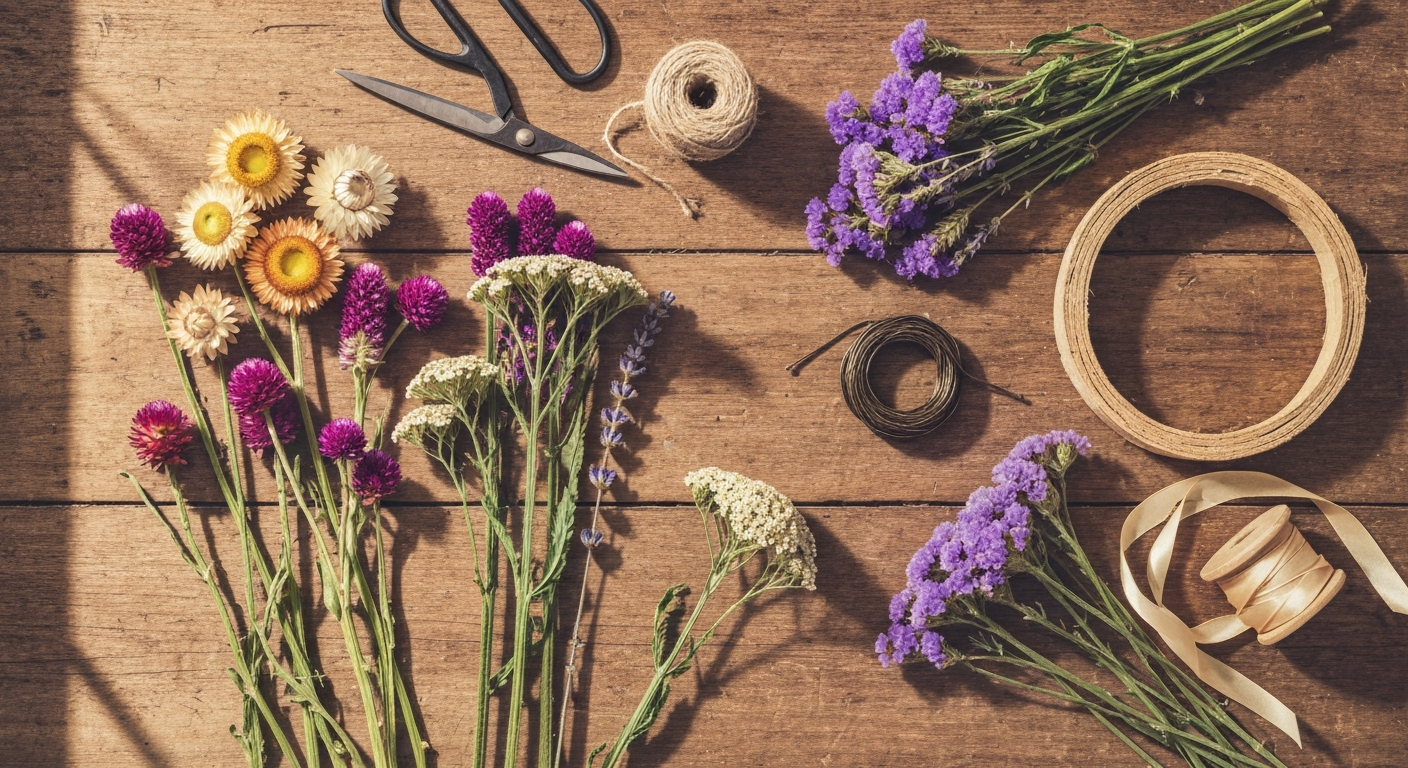
The word 'everlasting' covers any flowering plant whose blooms retain their shape and pigment when the moisture is removed. What makes them different from ordinary cut flowers is structure: the petals are often papery or straw-like (in strawflower, the 'petals' are actually bracts, modified leaves), and the pigments are stable enough to survive the drying process without turning brown. University extension programs including Cornell Cooperative Extension regularly list around ten core species as true everlastings, and that list maps almost perfectly onto what you can find in most seed catalogs.
For home gardeners the appeal is practical. A single season of growing gives you dried material that costs far less than buying it pre-dried, and you control the colors. Fresh-cut everlastings also work beautifully in mixed vases before they are dried, which means you are not sacrificing the cutting-garden experience. And if you get into seed saving, these flowers complete the full cycle: grow, harvest, dry, craft, collect seed, sow again. That loop is genuinely satisfying, especially once you have been through it a couple of times.
Top everlasting varieties and how to choose
Not all everlastings behave the same way in the garden or in a dried arrangement. Some are compact mound-formers that want to stay low; others throw long, straight stems perfect for bunching. Here is a practical breakdown of the main ones, followed by some notes on choosing based on your goals.
| Variety | Days to Bloom | Stem Length | Best Use | Key Notes |
|---|---|---|---|---|
| Strawflower (Xerochrysum bracteatum) | 75–85 days | 18–36 in. | Bunches, wreaths, focal blooms | Cut at 2–3 outer bract rows open; bracts close at night |
| Gomphrena / Globe Amaranth | 95–110 days | 18–24 in. | Filler, buttonhole-style accents | Audray series gives tallest stems; harvest at peak color |
| Statice / Limonium sinuatum | 90–110 days | 12–24 in. | Filler, texture, background color | Prefers very well-drained soil; almost no stem prep needed |
| Yarrow (Achillea millefolium) | Perennial; blooms yr 2 | 18–36 in. | Flat-head focal, herbal use | Excellent color range; dries flat and keeps well |
| Celosia (cockscomb) | 60–90 days | 12–24 in. | Texture, sculptural focal | Cut before color fades from the tip; dries fast |
| Lavender (Lavandula spp.) | Perennial; blooms yr 2 | 8–16 in. | Sachets, bundles, wreath filler | Harvest at 50% bud opening for fragrance retention |
| Helipterum / Acroclinium (paper daisy) | 55–70 days | 12–18 in. | Delicate filler, posies | Similar harvest cue to strawflower; very papery |
| Ammobium (winged everlasting) | 75–90 days | 12–24 in. | Airy filler, white accent | Distinctive winged stems; air-dries in two weeks |
| Limonium (sea lavender) | 90–110 days | 12–20 in. | Cloud-like filler | Same genus as statice; treat identically |
If you only have space for one variety, strawflower is the one I always come back to. The color range is enormous, the stems are long enough to work with, and harvesting at the right moment gives you near-perfect shape retention every time. Gomphrena is a close second, especially the Audray series, which gives you stems in the 18-24 inch range that are far more useful in arrangements than the shorter, rounder types.
A note on proteas: these dramatic, long-lasting blooms are technically everlastings in the sense that they dry well on the stem, but they are not annual seed-sown plants. Proteas are slow-growing shrubs or small trees typically propagated from cuttings or specialist-grown seedlings rather than off-the-shelf seed packets. If you want to explore them, regrowing from a cut flower vase stem is generally not reliable, which is worth knowing before you try. If you're wondering can you grow proteas from cut flowers, the short answer is no, regrowing proteas from vase stems is generally not a realistic expectation.
Direct sow vs. starting indoors: making the right call
This is the decision that trips up most beginners, and it matters because getting it wrong either wastes seed or wastes weeks of growing time. The honest answer is that it depends on your last frost date, your summer length, and the days-to-bloom figure on the seed packet.
When direct sowing makes sense
Direct sowing is simpler, avoids transplant shock, and often produces stockier plants. It works well for everlastings with shorter days-to-bloom figures (under 80 days), gardeners in Zones 7 and warmer where the frost-free window exceeds 140 days, and anyone growing a fast-cycling variety like celosia or helipterum. Sow directly once nighttime temperatures stay reliably above 50°F (10°C) and the soil is workable.
When starting indoors is worth the effort
Statice needs 90-110 days to bloom. Gomphrena Audray can need up to 110 days. If your frost-free window is 100 days or less (common in Zones 4-5), you simply cannot get those varieties to a useful harvest by direct sowing after your last frost. Starting indoors 8-10 weeks before your last frost date solves that problem and costs you nothing except some potting mix and a sunny windowsill or grow light.
| Method | Pros | Cons | Best For |
|---|---|---|---|
| Direct sow | No transplant stress, simpler, cheaper | Reduces usable season length, vulnerable to late frosts | Short-season varieties in Zones 6+ |
| Start indoors | Extends effective growing season by 8–10 weeks, stronger transplants | Requires space, light, potting-up time | Long-season varieties (statice, gomphrena) in Zones 4–6 |
| Buy transplants | Fastest start, no indoor setup | Limited variety choice, higher cost | Anyone short on time or equipment |
Sowing windows and a planting calendar for every climate
The most useful number on your seed packet is not the variety name but the days-to-bloom figure. Combine that with your average last spring frost date (find it by zip code via your local extension service) and count backward. That is your indoor sow date. Count forward from your last frost to find your direct sow or transplant-out date.
| USDA Zone | Approx. Last Frost | Indoor Sow Window | Direct Sow / Transplant Out | Notes |
|---|---|---|---|---|
| Zone 4 (e.g., Minneapolis, MN) | Mid-May | Early–Late March | Late May–early June | Start long-season varieties indoors; short-season only |
| Zone 5 (e.g., Chicago, IL) | Early–Mid May | Late Feb–Mid March | Mid-May | Indoors start needed for statice, gomphrena |
| Zone 6 (e.g., St. Louis, MO) | Late April | Late Feb | Early May | Most everlastings doable; statice still benefits from indoor start |
| Zone 7 (e.g., Nashville, TN) | Early April | Early–Mid Feb | Mid-April | Can direct sow most varieties; lavender overwinters |
| Zone 8 (e.g., Atlanta, GA / Pacific Northwest) | Mid-March | Jan–Early Feb | Late March | Fall sowing also possible for spring bloom |
| Zone 9–10 (e.g., Southern CA, Gulf Coast) | Jan–Feb or frost-free | Nov–Dec for spring crop | Feb–March or Sept for fall crop | Dual-season growing possible; avoid summer heat peaks |
In hot climates (Zones 8-10), late summer and early fall is actually a better sowing window for many everlastings than spring. Statice in particular hates prolonged summer heat and performs far better when it matures into cooler autumn weather. I learned that the hard way one July in Zone 8, watching a whole flat of statice bolt and sulk. The following September sowing gave me the best crop I had ever grown.
Nursery steps: seed starting, potting up, hardening off, and transplanting
Starting everlastings from seed indoors is straightforward, but there are a few steps where cutting corners causes problems later. Here is the sequence that consistently works.
- Fill a clean seed tray or small cells with a peat-free seed-starting mix. Do not use garden soil — it compacts and harbors damping-off fungi.
- Sow seeds on the surface or just barely covered (strawflower and statice need light to germinate; check your packet). Keep the mix moist but not soggy.
- Cover with a humidity dome or plastic wrap and place at 65–70°F (18–21°C). Bottom heat from a seedling mat speeds germination significantly for gomphrena and celosia.
- Germination for most everlastings is 7–21 days. Remove the dome as soon as seedlings emerge to prevent damping off.
- Move seedlings under grow lights (2–4 inches below the bulb) or into your brightest south-facing window. Leggy seedlings almost always mean not enough light.
- Pot up to individual 3–4 inch containers when two sets of true leaves appear. Crowded roots slow growth noticeably.
- Begin hardening off about 10–14 days before your planned transplant date. Set plants outside in a sheltered spot for 1–2 hours on the first day, adding an hour or two each day over two weeks.
- Transplant on a cloudy day or in the evening, watering in with plain water. Avoid fertilizing at transplanting time — it pushes soft top growth before the roots are established.
The step most beginners skip is hardening off, and it shows. Seedlings that go straight from a warm indoor space to full outdoor sun can lose days of growth to sun scorch and wind stress. Two weeks of gradual exposure is not optional if you want plants to hit the ground running.
Growing-care essentials for strong stems and vivid color
Soil and drainage
Almost every everlasting on the list originates from regions with poor, well-drained soils. Statice is literally called 'sea lavender' because it grows in coastal sands. What this means practically is that soggy soil is more dangerous than lean soil. Amend heavy clay with coarse grit or perlite and raise your beds if drainage is a persistent issue. A sandy loam with a pH of 6.0–7.0 suits most varieties. I do not add much compost to my everlasting beds, maybe a light top-dressing at planting, because too-rich soil produces lush foliage at the expense of flower development.
Light
All the main everlastings are full-sun plants. That means a minimum of six hours of direct sunlight per day, and preferably eight or more. Anything less and you get taller, weaker stems that fall over and produce fewer flowers. If your garden is partially shaded, celosia is the most tolerant of the group, but even it blooms best in full sun.
Watering
Water at the base of the plant rather than overhead. Wet foliage on strawflower and statice in particular invites fungal issues. Most everlastings want about 1 inch of water per week during the growing season and far less once established. Let the top inch of soil dry out between waterings. Drip irrigation is genuinely useful here, especially if you are growing a row or two for cutting.
Feeding
A single side-dressing of balanced granular fertilizer (something like a 10-10-10) at planting time is usually enough for the whole season in average garden soil. If plants look pale or growth stalls in midsummer, a dilute liquid feed once or twice can help, but avoid high-nitrogen formulas after the plants start budding, because nitrogen at that stage delays flowering and softens stems that then dry poorly.
Spacing
- Strawflower: 9–12 inches apart for cutting stems; 6 inches if growing compact varieties for low-growing borders
- Gomphrena: 12–15 inches apart; Audray series benefits from slightly wider spacing for branch development
- Statice: 12 inches apart; needs airflow to avoid fungal spotting on lower foliage
- Celosia: 6–12 inches apart depending on variety; crested types need more room than plume types
- Yarrow: 18–24 inches apart; it spreads by rhizome over time so give it room
- Lavender: 18–24 inches apart; do not crowd, it needs exceptional airflow
Deadheading vs. letting seed set: the tradeoff you need to understand
Deadheading means removing spent blooms before they go to seed, which redirects the plant's energy into producing more flowers. For most of the annual everlastings, regular deadheading extends your harvest window by weeks. Strawflower and gomphrena in particular will keep throwing new stems all summer if you stay on top of it. When I stop deadheading in late August, I get a final flush of blooms that I leave to fully mature and brown on the plant for seed collection.
The decision point is simple: deadhead throughout the season to maximize bloom production, and stop deadheading on a few plants in late summer when you want to save seed. Do not try to do both on the same plant at the same time. If you let a plant set seed early, it will wind down flowering significantly, sometimes completely, for the rest of the season. For perennials like yarrow and lavender, cut spent flower stems back to the basal foliage after the first flush and you will often get a second bloom cycle.
Harvest cues and technique for best color retention
Getting the harvest moment right is the single biggest factor in how good your dried flowers look. Cut too early and the buds never fully open after drying. Cut too late and the petals shatter or the color has already started to fade. Here is what to look for, species by species.
| Variety | Harvest Stage | What to Look For |
|---|---|---|
| Strawflower | 2–3 outer bract rows open | Center still tight; outer rows fully colored and firm |
| Gomphrena | Head fully open, color at peak | Bright, uniform color throughout; no brown at base |
| Statice | Florets just beginning to open | Color visible; most flowers not yet fully expanded |
| Celosia | Before tip color fades | Vibrant color to the very tip; no browning at edges |
| Yarrow | Flat heads fully open | All florets open; pollen just becoming visible |
| Lavender | 50% of buds open | Lower buds open, upper still closed; maximum fragrance |
| Helipterum / paper daisy | Outer petals open, center tight | Similar to strawflower; center still domed and firm |
| Ammobium | Buds showing yellow center | White bracts open but center not yet fully expanded |
Time of day matters too. Harvest in the afternoon on a dry day, after any dew or morning moisture has fully evaporated. Plant tissues hold less free water later in the day, which means less moisture to drive off during drying and a lower risk of mold in your bundles. Avoid harvesting after rain or on humid mornings, especially for strawflower, which traps water at the base of its bracts.
Use clean, sharp scissors or bypass pruners. Crush cuts from dull blades create entry points for bacteria and make conditioning the stems for water uptake harder. Cut stems as long as the plant allows, at least 12 inches if possible, because you can always shorten them later but you cannot add length back. Strip foliage from the bottom two-thirds of the stem before bundling or placing in water.
Drying and preserving: every method explained
Air-drying (the easiest starting point)
Strip lower foliage from the stems, bundle 3–10 stems with a rubber band (not string, as the stems shrink while drying and string will not contract with them), and hang upside down in a warm, dark, well-ventilated space. A closet with a box fan running low, a garden shed, or an attic all work. Avoid direct sunlight, which bleaches color even in the drying phase. Most everlastings air-dry fully in 2–3 weeks, though dense blossoms like large celosia plumes can take longer in humid conditions. Check for mold at the one-week mark, especially if your drying space has limited airflow.
Silica gel drying (best color and shape retention)
University of Missouri Extension describes silica gel as 'probably the best material for drying flowers' because it pulls moisture away fast enough to lock in color and three-dimensional form. Pour a 1–2 inch base layer of silica gel crystals into an airtight container, place the flower heads face up (or for heavy heads, face down), then gently pour more silica around and over each bloom until fully buried. Seal the container and leave undisturbed. Small to medium flowers (gomphrena, statice, small strawflowers) typically dry in 3–7 days. Large or dense blooms can take up to 10 days. Lift flowers out carefully with a spoon, brush away crystals with a soft paintbrush, and allow them to equilibrate at room temperature for a few hours before using.
Silica gel is reusable. When the crystals turn from blue to pink (indicating saturation in the color-indicating variety), spread them on a baking sheet and place in an oven at 200–250°F (93–121°C) for 30 minutes to 3 hours depending on how saturated they are. Let them cool in a sealed container. Always follow the specific instructions from your product's manufacturer, and reactivate in a well-ventilated oven.
Microwave plus silica gel (fastest method)
For a single bloom you want to dry in an hour rather than a week, the microwave-plus-silica method works well. Place the flower in a microwave-safe container surrounded by silica gel, just as you would for the container method. Heat on low or medium power in 1-minute intervals, checking after each interval. Typical total times run 1–3 minutes for small to medium flowers, but this varies with microwave wattage and flower density so it takes a few trial runs to dial in. After microwaving, seal the container and leave the flower in the silica for 12–24 hours to finish equilibrating. Do not skip this step: rushing it leads to crispy petals that fall apart. Be aware that some fragile varieties scorch easily, so start at the low end and increase time cautiously.
Glycerin preservation (for foliage and stems)
Glycerin works differently from drying: rather than removing moisture, it replaces it with glycerin, leaving the plant material supple, flexible, and long-lasting. It is best suited to foliage and branching stems rather than delicate everlasting blooms. Mix one part glycerin to two parts warm water, cut and split the stem ends for better uptake, and stand the stems in the solution. Most foliage takes 1–3 weeks to fully glycerinize, turning slightly darker and feeling waxy to the touch. Research comparing immersion methods (submerging leaves fully rather than just stem uptake) suggests immersion can give better texture retention for some species, so for single leaves rather than branched stems, try fully submerging in the glycerin-water solution in a flat dish.
Saving seed so you can grow again next year
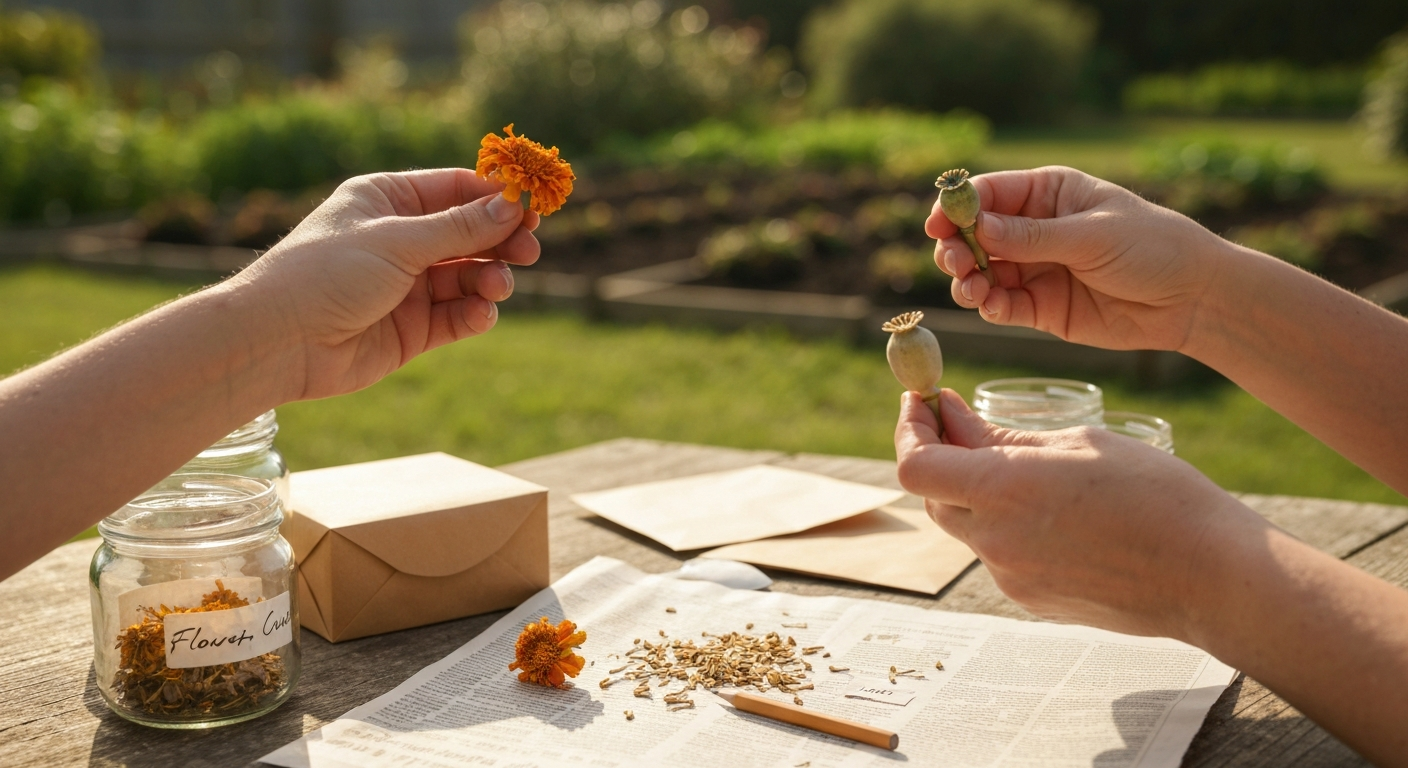
Everlastings and seed saving go hand in hand. Most of the annual varieties are open-pollinated or heirloom types that come reasonably true from seed, which means saving them year to year is practical. The steps are simple but timing is everything.
- Leave a few of your best plants un-deadheaded from late summer onward to let seed heads fully mature and dry on the plant.
- Harvest seed heads on a dry, warm day when the seed heads are visibly brown and papery. For strawflower, the bracts will have opened fully and the seeds inside will be loose.
- Thresh the seed by rubbing the heads between your palms over a bowl or tray. Winnow out chaff with a light breath or a fan set low.
- Spread cleaned seed on a paper towel and allow to air-dry at room temperature for one to two weeks before storing. Seeds stored with residual moisture will mold.
- Store in airtight containers (small glass jars with sealed lids work well) in a cool, dark location. A refrigerator is fine for one-season storage; a freezer extends viability for several years. Label everything with variety name and harvest year.
- Test germination before planting stored seed by placing 10 seeds on a damp paper towel in a sealed bag at room temperature for the typical germination period. Count how many sprout to estimate your germination rate.
The FAO's genebank standards confirm what seed savers have known for decades: cool, dry, dark storage dramatically extends seed viability. The FAO's Genebank Standards for Plant Genetic Resources, FAO (Genebank Standards) recommend drying seeds to low equilibrium moisture and storing orthodox seeds for long‑term conservation at about −18°C with low moisture, plus periodic viability monitoring blank" rel="noopener noreferrer">The FAO's Genebank Standards for Plant Genetic Resources — FAO (Genebank Standards) recommend drying seeds to low equilibrium moisture and storing orthodox seeds for long‑term conservation at about −18°C with low moisture, plus periodic viability monitoring.. For home gardeners, a sealed jar in the refrigerator is a significant upgrade over a kitchen drawer. See Seed‑saving guidance & seed exchange resources, Southern Exposure Seed Exchange / Seed Savers community guidance for home seed‑saving steps like isolating varieties where cross‑pollination matters; harvesting mature, dry seed heads on warm days; threshing and cleaning seed; drying to under about 8–10% moisture when possible; and storing seeds in airtight, labeled containers in a cool, dark place (and testing germination before replanting) blank" rel="noopener noreferrer">Seed‑saving guidance & seed exchange resources — Southern Exposure Seed Exchange / Seed Savers community guidance. If you are interested in growing more flowers from saved seed or even from other plant parts, the same principles of moisture management and genetic identity apply across a wide range of flower types.
Can you regrow everlastings from cut flowers or cuttings?
The short answer is: sometimes, but not in the way most people hope. Annual everlastings like strawflower and gomphrena cannot be propagated from a vase stem because the stems have been cut from the root system and the plant has no mechanism to regenerate roots reliably once severed. You can try rooting a cutting taken directly from a living plant in the garden, but annual species do not root as readily as perennial shrubs or herbs, and success rates are inconsistent enough that seed sowing is almost always a better use of your time. For step-by-step guidance on attempting to regrow blooms from cuttings, see our guide on how to grow a flower from a flower. If you’re asking “can you grow a plant from a flower,” see our short guide on regrowing from cut flowers and cuttings for practical expectations and step-by-step tips.
Perennial everlastings like lavender and yarrow are a different story. Both can be propagated from softwood or semi-hardwood cuttings taken from living plants in early summer, rooted in a free-draining propagation mix with high humidity. Lavender in particular is routinely propagated this way by nurseries. Proteas, as mentioned earlier, are typically propagated from cuttings by specialist growers rather than from seed or vase stems, and regrowing one from a purchased bunch is not a realistic expectation.
Craft ideas: what to do with your dried flowers
Once you have a supply of dried everlastings, the creative options are genuinely wide. For step-by-step growing and drying techniques, see our guide on how to grow dried flowers. Here are the most practical starting points, roughly in order of difficulty.
- Dried bundles and posies: the simplest project — bundle 5–15 stems, tie with twine or ribbon, hang for display. Strawflower, gomphrena, and statice together make a classic cottage-garden posy.
- Wreaths: use a wire or foam wreath base and hot-glue or wire clusters of dried stems around it. Lavender, yarrow, and ammobium work well together for a muted, natural look.
- Framed pressed pieces: press individual blooms or small sprays between parchment in a heavy book for 2–4 weeks, then arrange and glue onto card stock inside a frame. Statice and helipterum are particularly well-suited to pressing.
- Resin work: embedding dried flowers in clear casting resin creates pendants, coasters, and decorative panels. Fully dry flowers are essential — any residual moisture causes cloudiness in the resin. Strawflower and gomphrena hold up exceptionally well in resin.
- Sachets and drawer bags: dried lavender is the classic choice, but dried rose petals, yarrow, and chamomile work equally well. Fill a small fabric pouch and use as a natural room or drawer freshener.
- Seasonal table arrangements: mix dried stems with seed heads, grasses, and branches for arrangements that last months without water. No floral foam needed — a wide-mouthed jar or vase with a grid of tape across the top holds stems in place.
Storing dried flowers and keeping them looking good
The enemies of dried flowers are humidity, light, insects, and rough handling. UV light bleaches color over months, so display pieces away from direct sunlight or strong artificial light. High humidity (above 60% RH) causes reabsorption of moisture, which leads to limpness, color change, and mold. The ideal storage environment for dried material you are not yet displaying runs at 30–50% relative humidity with stable, cool temperatures. For long-term storage, acid-free archival boxes or sealed zip bags are far better than open shelves.
If you notice small moths, beetles, or larvae in stored dried material (a real problem with large collections kept in outbuildings), a freezing treatment kills insects at all life stages without chemicals. Seal the affected material in a polyethylene bag and freeze at 0°F (-18°C) or below for at least 14 days. Remove from the freezer and allow to come to room temperature inside the sealed bag before opening, which prevents condensation from forming directly on the dried flowers. Museum conservators use this same protocol for insect management in natural-history collections.
Troubleshooting common problems
| Problem | Likely Cause | Fix |
|---|---|---|
| Mold on drying bundles | Stems too wet at harvest, or drying space lacks airflow | Harvest only on dry afternoons; add a fan to drying space; reduce bundle size to 3–5 stems |
| Color fades quickly after drying | Cut too late, or stored in bright light | Harvest at earlier stage (before fully open); store away from UV |
| Petals shatter when touched | Flowers cut too late, or dried too slowly in high humidity | Harvest earlier; use silica gel for faster moisture removal |
| Stems flop in arrangements | Air-dried too slowly or stored in humid conditions | Use silica gel drying for stiffer stems; use floral wire for support |
| Seeds fail to germinate the following year | Stored with residual moisture or in warm conditions | Dry seed for 2 weeks before storing; use airtight container in refrigerator |
| Damping off in seedling trays | Overwatering and poor airflow | Remove humidity dome at germination; water from below; use sterilized mix |
| Leggy, weak transplants | Insufficient light indoors | Move closer to grow light (2–4 inches); supplement window light |
Tools and supplies checklist
You do not need to buy everything at once. Start with the basics and add as your growing and crafting expand.
- Sharp bypass pruners or clean floral scissors (essential from day one)
- Rubber bands or twist-ties for bundling (not string, which does not shrink with the stems)
- S-hooks or a hanging rod in a warm, dark space for air-drying
- Airtight containers and silica gel crystals for preserved-shape drying
- Microwave-safe containers for microwave-silica technique
- Soft natural-bristle paintbrush for removing silica crystals from delicate petals
- Glycerin and warm water for foliage preservation
- Seed-starting trays, seed-starting mix, and a humidity dome for indoor starting
- Grow light or bright south-facing windowsill
- Small glass jars with lids for seed storage, labeled with variety and date
- Hot glue gun and wire wreath frames for wreath making
- Acid-free storage boxes or large zip-seal bags for long-term flower storage
FAQ
Which everlastings are best for drying and recommended varieties for reliable home-garden results?
Reliable, widely recommended everlastings: strawflower (Xerochrysum/Bracteantha — e.g., ‘Vintage White’, mixed colors), globe amaranth (Gomphrena — Audray series), statice/sea lavender (Limonium sinuatum), paper daisy/Acroclinium (Helipterum/Acroclinium), immortelle (Helichrysum), yarrow (Achillea), celosia (Cockscomb), scabiosa, Ammobium (winged everlasting), and ornamental grasses (panicum, pennisetum, lagurus). These species are repeatedly named by extension services and seed suppliers for retaining color and form when dried. Choose cultivars noted for long stems and uniform bloom times if you plan to cut in bulk.
When and how should I sow everlastings (direct sow vs. starting indoors)?
Sowing guidelines: - Start indoors: sow 6–10 weeks before your last frost for statice, strawflower and some slow-to-flower varieties (helps hit early-season harvests). - Direct sow: many gomphrena, ammobium, and fast-growing annuals can be direct-sown after the last frost when soil is warm. - Timing specifics: strawflower cultivars commonly reach harvestable stage in ~75–85 days from seed; gomphrena Audray series ~95–110 days. - Method: use a seed-starting mix, shallow sow (many species need light to germinate or small covering), keep 65–75°F (18–24°C) and provide bright light. Harden off seedlings 7–10 days before transplanting.
What are clear, species-specific harvest cues so dried flowers retain the best color and shape?
Harvest cues (cut when indicated stage reached, ideally on a dry, sunny afternoon): - Strawflower: cut when 2–3 outer rows of bracts have opened (not fully open) — about 75–85 days for many cultivars. - Gomphrena: harvest when heads are fully colored and firm (flower head open but not weathered). - Statice: cut as the individual florets begin to open on the spike. - Paper daisy/Helipterum: harvest when bracts show full color but before petals become papery-brittle. - Grasses: cut when seed heads have formed but before shattering. Cutting slightly before full bloom lets petals/bracts finish opening while drying and preserves shape and color.
What are step-by-step air-drying and hanging protocols and timing?
Air-drying (standard extension protocol): 1) Harvest on a dry afternoon; strip lower foliage. 2) Group 3–10 stems into small bundles (don’t overfill — bundles shrink). 3) Secure with a rubber band (it will tighten as stems dry). 4) Hang bundles upside down in a warm, dark, well-ventilated area out of direct sun (attic, closet, shaded shed). 5) Drying time: typically 2–3 weeks, longer in high humidity; check after 10 days for progress. 6) Once dry and crisp, remove bundles and optionally seal with hairspray or a spray varnish for fragile petals.
When should I use silica gel versus air-drying or microwave; what are concrete silica-gel burial steps and timings?
Use silica gel when you need rapid color retention and 3‑D form (dense or multi-petaled heads). Silica-gel burial steps: 1) Use an airtight container and a base layer of silica 1–2 in. deep. 2) Place trimmed flower heads on the bed, gently pour silica around and over petals to fill gaps without crushing. 3) Seal and store at room temperature. 4) Check small/medium flowers after ~3–7 days; dense heads may take 7–10+ days. 5) Remove carefully and brush silica away with a soft brush. Reactivate silica in an oven per manufacturer instructions (typically ~200–250°F / 93–121°C for 0.5–3 hours) for reuse. Safety: follow product SDS and avoid moisture on fresh blooms.
How do I use the microwave + silica-gel technique safely and effectively?
Microwave + silica protocol (extension-tested): 1) Place 1–2 in. silica base in a microwave-safe, vented container. 2) Nest the flower heads on the silica and gently cover with more silica. 3) Microwave on low/medium power in short intervals (start 30–60 seconds, then 30-second increments) and check between intervals for overheating; total initial heating often 1–3 minutes depending on thickness. 4) After heating, leave the sealed container closed for 12–24 hours to equilibrate and fully dry. 5) Open and inspect; repeat short bursts only if needed. Always follow microwave and silica manufacturer safety notes and test with a sample flower first.
Next Articles
Can You Grow a Plant From a Flower? Seed & Cutting Guide
Can you grow a plant from a flower? Step-by-step seed and cutting methods, timing, materials, and troubleshooting.
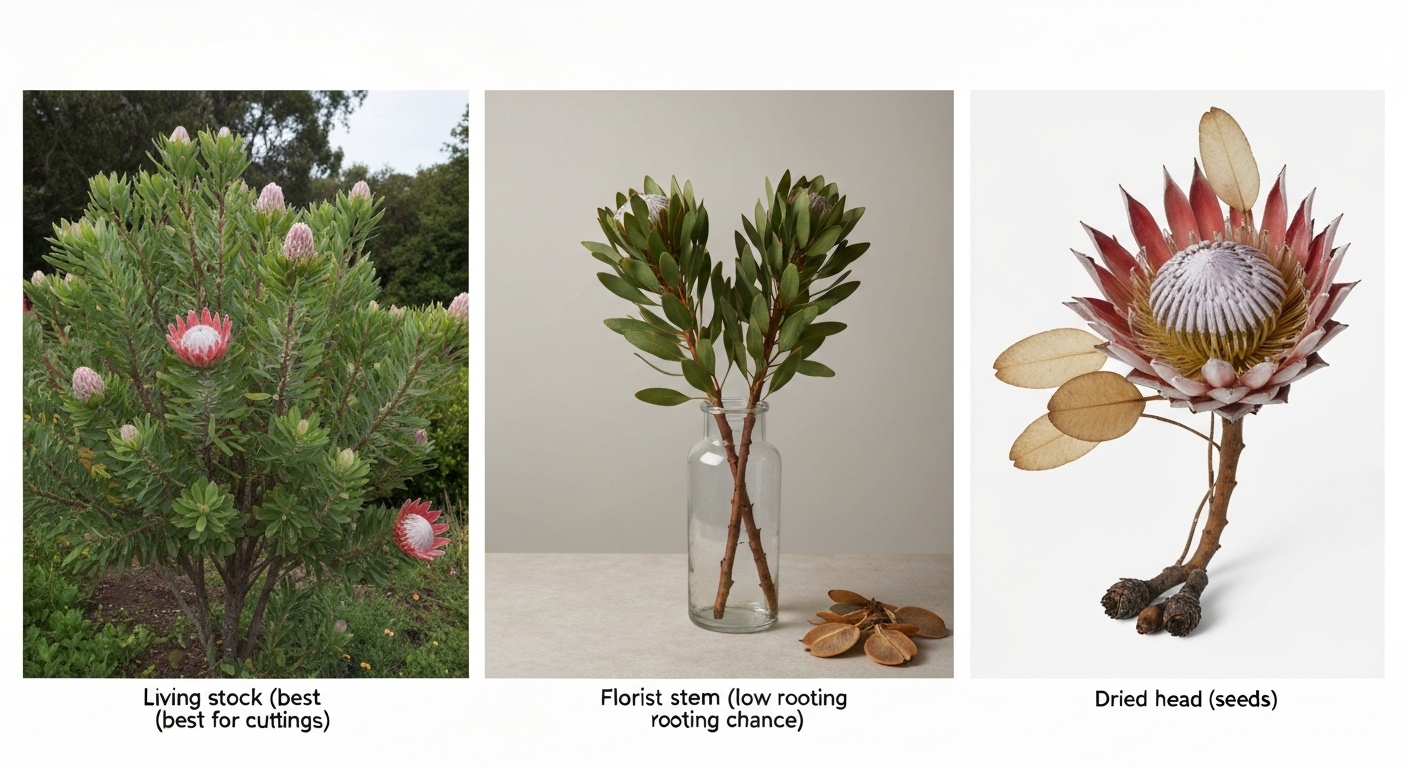
Can You Grow Proteas From Cut Flowers? Cuttings vs Seeds
Yes, learn when and how to grow proteas from florist stems or dried heads: step-by-step cutting and seed methods.
How to Grow Dried Flowers: Complete Seed-to-Shelf Guide for Beginners
Grow, harvest and dry flowers step-by-step: varieties, planting schedules, cutting timing, drying methods, seed-saving.