You can grow flowers specifically for drying by choosing the right varieties (everlastings and sturdy cutting-garden types), sowing seeds at the right time, and harvesting blooms at a precise stage before they fully open. See everlastings how to grow harvest and create with dried flowers for a full guide with step-by-step growing, harvesting, and creative project ideas. The key is planning the whole process from the seed packet forward: pick varieties that hold their color and structure when dry, give them the growing conditions they need for long strong stems, cut them at exactly the right moment, and dry them in a warm, dark, well-ventilated spot. Get those four things right and you will have bowls, bunches, and wreaths full of color that lasts for years.
How to Grow Dried Flowers: Complete Seed-to-Shelf Guide for Beginners
Why grow flowers specifically for drying?
Fresh flowers last a week, maybe two. Dried flowers last years. Once I started growing a dedicated cutting patch with drying in mind, I stopped buying dusty bunches from craft stores and started filling my home with colors I had personally coaxed out of the ground. There is a real satisfaction in that, and it is surprisingly achievable even in a modest garden bed.
Growing for drying is also more forgiving than growing for the vase. A fresh-cut stem that gets slightly bruised or wilts on a hot afternoon is ruined for a bouquet. That same stem, if it still has structural integrity, can usually still be dried successfully. You also get to work on your own timeline. Instead of rushing flowers into water before they fade, you pick them, tie them in bunches, and hang them up. The garden does most of the work.
From a seed-cost perspective, dried-flower varieties are also a good investment. A single packet of strawflower or statice gives you dozens of stems that, once dried, can be used in arrangements all year. Compare that to buying even a small bunch of dried flowers at a florist and the economics become obvious very quickly.
The best varieties to grow for drying
Not every flower dries well. Roses can work but they drop petals quickly. Tulips turn to mush. The varieties below are tried-and-true performers, and several of them are true 'everlastings', meaning the flower head is mostly papery or straw-like even when fresh, so it holds its shape almost perfectly when dried. I grow nearly all of these every season and they consistently deliver.
Strawflower (Xerochrysum bracteatum)
This is the gold standard for dried flowers and the one I recommend to every beginner. The bracts are naturally papery, the colors are vivid (deep reds, bright oranges, soft pinks, creamy whites), and they hold those colors for years. Seeds need light to germinate and sprout in about 7 to 14 days at warm temperatures. Cut them just as the outer bracts begin to feel papery but before the center is fully open. They will continue opening slightly as they dry, which is actually a good thing.
Statice (Limonium sinuatum)
Statice is a workhorse filler that looks delicate but is almost indestructible once dry. The papery calyces (the tiny funnel-shaped parts that surround each floret) retain their color even after the small true flowers drop. The plant needs a bit of patience: give seedlings a 3 to 8 week cool treatment at around 50 to 55°F at the plug stage to accelerate flowering. Once it goes, it goes, and you can harvest armfuls of stems.
Gomphrena / Globe amaranth (Gomphrena globosa)
These clover-like globes are wonderfully heat and drought tolerant, which makes them some of the easiest plants in the dried-flower patch. They dry almost perfectly on the stem and the colors (magenta, purple, white, pink, orange) stay vivid for a very long time. If you are new to growing for drying, put gomphrena on your list. It is genuinely hard to fail with.
Yarrow (Achillea spp.)
Yarrow is one of the fastest-drying flowers in the garden. Its flat-topped flower heads air-dry in days and hold their yellows, reds, and creamy whites extremely well. Many garden hybrids can be sown directly in spring without stratification. Harvest when the blooms are fully open or just past early open stage for best results.
Lavender (Lavandula spp.)
Cut lavender when the buds are plump and richly colored but before the individual flowers have opened fully. This is the single most important timing rule for lavender: cutting too late means the tiny florets fall off as the stems dry. Cut too early and the color is thin. Get it right and dried lavender bundles retain both their color and their fragrance for a year or more.
Marigold (Tagetes spp.)
Marigolds dry reasonably well for their size and add warmth and boldness to any dried arrangement. African types with large double heads need silica gel to dry properly without collapsing. French marigolds are smaller and more manageable for air-drying. Both prefer a soil pH of about 6.0 to 7.5 and grow quickly from seed, often reaching maturity 70 to 90 days from sowing.
Poppy (Papaver spp.)
Dried poppy seed heads are some of the most architectural elements you can add to an arrangement. You are not really drying the flower here but the decorative pod left behind after the petals drop. Leave the heads on the plant until they start to turn papery, then cut with a long stem. As a bonus, each head is packed with seeds you can save for next year.
Cosmos (Cosmos bipinnatus)
Cosmos pressed beautifully and also responds well to silica gel drying (2 to 3 days in silica preserves the daisy-like form). For fresh-to-dry air-drying the petals can shrivel more than other varieties, so silica gel is worth the effort here. The blooms come fast, typically 60 to 90 days from sowing, and the plant produces continuously once it starts.
Snapdragon (Antirrhinum majus)
Snapdragons are a slightly unusual dried-flower choice, but the tall cut varieties with their vertical spikes add great structure to arrangements. Dry them by hanging upside-down. The individual florets can shrink a little but the spike shape holds. Seeds need light to germinate (do not cover them) and take 10 to 14 days to sprout. Use tall varieties and stake them during growing to keep the stems straight for drying.
Baby's breath (Gypsophila paniculata)
A classic filler for both fresh and dried arrangements. For drying, harvest when about 50% of the tiny florets are open. It dries in as little as 2 to 3 days in silica gel. For a more translucent, flexible result, glycerin preservation works very well: a 1:2 ratio of glycerin to water drawn up through the stem keeps the tiny branches from becoming brittle.
Hydrangea
Hydrangeas are not grown from seed by most home gardeners, but if you have a bush in your garden they are worth mentioning here. The best approach is to leave large flower heads on the plant until late summer or early autumn (August to October in most temperate zones), then harvest when the color has begun to shift from its peak fresh color to something slightly muted and papery. Cut and air-dry quickly in a warm spot or treat with glycerin to retain form.
A note on Protea
Proteas are spectacular when dried and hold their shape and texture remarkably well. They are not beginner seed crops (they are slow, fussy, and need very specific soil conditions), but if you are curious about growing proteas from cut flowers or cuttings, that topic has its own detailed treatment worth exploring separately.
Tools and supplies you will need
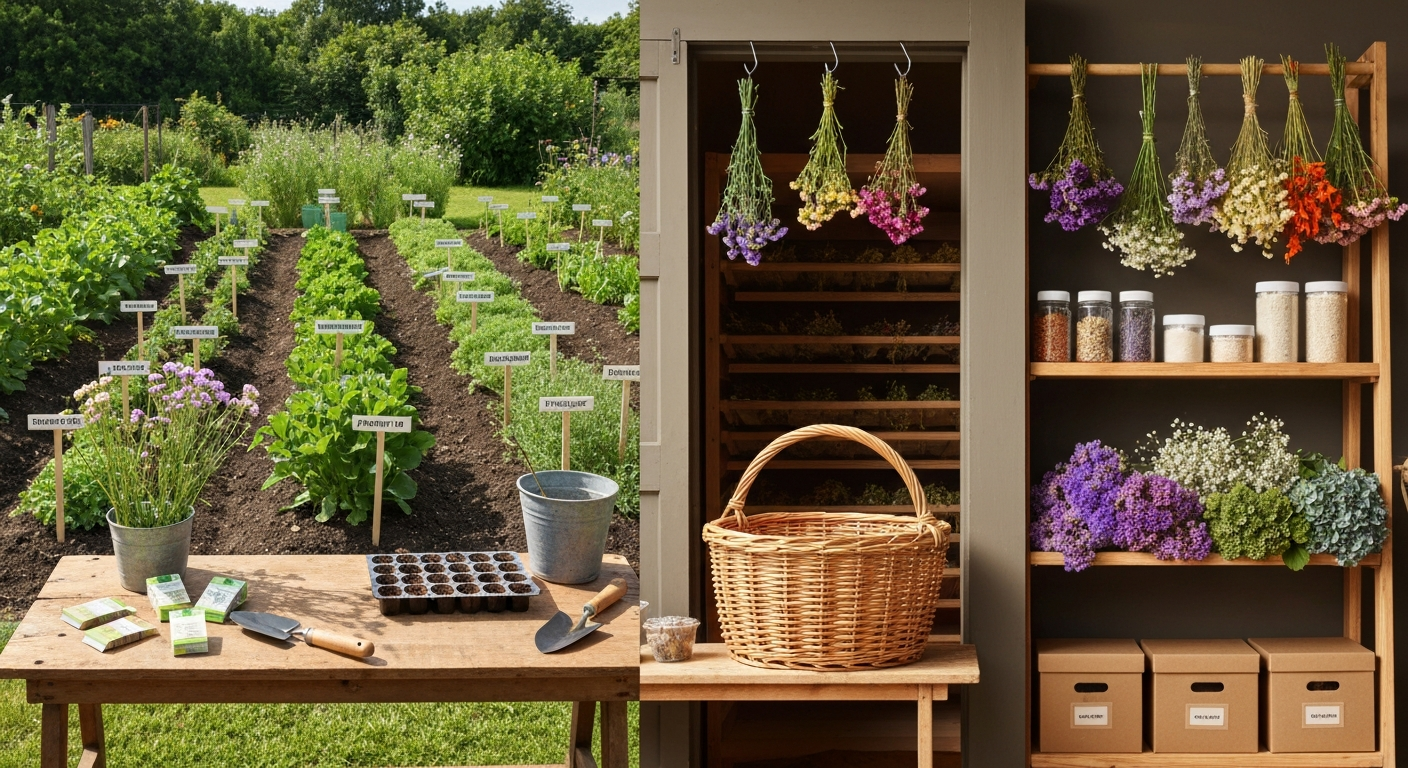
You do not need much to get started. Here is what I actually use, split into growing gear and harvesting/drying gear.
For growing
- Seed trays or cell packs (72-cell trays work well for most flower seeds)
- Good quality seed-starting mix (not garden soil, which compacts and can carry disease)
- Plant labels and a waterproof marker (you will absolutely forget what you sowed where)
- A heat mat — very helpful for germinating strawflower, gomphrena, and marigolds which prefer soil temps of 70 to 80°F
- Grow lights or a bright south-facing windowsill for indoor starts
- A trowel, hand fork, and garden hoe for bed prep and transplanting
- Bamboo stakes and soft ties for tall varieties like snapdragon
For harvesting and drying
- Sharp, clean harvesting scissors or florist shears (blunt scissors crush stems)
- A harvesting bucket with a small amount of water for stems that need conditioning before drying
- Rubber bands (they contract as stems dry and keep bunches tight)
- Hooks or a drying rack in a warm, dark, well-ventilated space
- Silica gel desiccant and airtight containers for delicate blooms
- A hygrometer (optional but genuinely useful) to check that your drying space stays under 60% relative humidity
- Brown paper bags or cardboard boxes for storing finished dried flowers away from light
Step-by-step: from seed packet to dried bloom
Think of the process in four stages: sowing, growing on, transplanting, and harvesting. Each stage has a narrow window where your decisions really matter.
- Read the packet. Before you sow anything, check what the variety needs: light or darkness to germinate, cold stratification, surface sowing. Strawflower and snapdragon both need light to germinate, so if you cover them you will get nothing. Spend two minutes reading first.
- Start indoors 6 to 8 weeks before your last frost date (for most varieties). This gives transplants a head start and means your flowers bloom earlier in the season, giving you a longer harvest window. Marigolds, strawflower, gomphrena, and statice all benefit from indoor starts.
- Sow at the correct depth. Most flower seeds are small and need only surface contact or a very shallow covering of 1/8 to 1/4 inch. Cosmos and marigolds can go a bit deeper at about 1/4 inch. Press small seeds gently into moist seed-starting mix rather than burying them.
- Keep the seed tray warm and moist but not wet. A heat mat helps most dried-flower varieties germinate faster. Check daily. Thin seedlings once the first true leaves appear, keeping the strongest plant per cell.
- Harden off for 7 to 10 days before transplanting outdoors. Move trays outside to a sheltered spot for increasing amounts of time each day before planting out. Skipping this step causes transplant shock, which sets plants back by weeks.
- Transplant after your last frost date when the soil has warmed. Space plants according to variety (see the planting schedule table below). Firm them in and water well.
- From transplant to first bloom is typically 4 to 10 weeks depending on the variety. Strawflower and cosmos are among the faster bloomers. Statice takes longer. Watch for buds and plan your harvest window ahead of time.
- Harvest at the right stage. This is the single most critical step in the whole process. Most flowers for drying should be cut just before or at peak opening, not after. Details are in the harvest section below.
Planting schedules and spacing by variety
The dates below are relative to your last frost date (LFD). For Zone 6 that is typically around April 15 to May 1. For Zone 7 think late March to mid-April. For Zone 9 you are transplanting much earlier. Adjust accordingly. Days to maturity (DTM) is measured from transplant unless noted.
| Variety | Indoor sow (before LFD) | Transplant | Seed depth | Spacing | DTM (approx.) | Notes |
|---|---|---|---|---|---|---|
| Strawflower | 6–8 weeks | After LFD | Surface (needs light) | 9–12 inches | 70–80 days | Do not cover seeds; warm germination 70–75°F; 7–14 days to sprout |
| Statice | 8–10 weeks | After LFD | 1/8 inch | 12 x 12 inches | 90–110 days | Cool treatment (50–55°F for 3–8 wks at plug stage) boosts flowering |
| Gomphrena | 4–6 weeks | After LFD | 1/4 inch | 8–15 inches | 70–90 days | Soil temp 70–75°F for germination; very heat/drought tolerant |
| Yarrow | 6–8 weeks or direct sow early spring | After LFD or early spring | Surface/1/8 inch | 12–18 inches | 60–90 days | Many hybrids do not need stratification; tolerates poor soil |
| Lavender | 10–12 weeks | After LFD | 1/8 inch | 18–24 inches | 90–120 days (year 2 for best yield) | Slow from seed; germination can be slow and erratic |
| Marigold (French) | 4–6 weeks | After LFD | 1/4 inch | 8–12 inches | 70–80 days from seed | Germinates in 4–7 days at 75–80°F |
| Marigold (African) | 4–6 weeks | After LFD | 1/4 inch | 12–18 inches | 80–90 days from seed | Best dried with silica gel due to large head size |
| Cosmos | 3–4 weeks or direct sow | After LFD | 1/4 inch | 12–18 inches | 60–90 days from seed | Germinates 7–10 days at 65–75°F; direct sowing works well |
| Snapdragon | 10–12 weeks | 4–6 weeks before LFD (cool-season crop) | Surface (needs light) | 9–12 inches | 70–90 days from transplant | Start very early; prefers cool weather; stake tall varieties |
| Baby's breath | 6–8 weeks | After LFD | 1/8 inch | 12–18 inches | 90–120 days from seed | Can also direct sow; thin carefully |
| Poppy (seed heads) | Direct sow in early spring or autumn | Not transplanted (direct sow only) | 1/16 inch (surface) | 6–12 inches (thin) | 60–90 days to flower/pod | Cool-season direct sow only; does not transplant well |
Soil, light, watering, and fertilizer
Most dried-flower crops are not heavy feeders and several of them actively prefer lean conditions. Over-fertilizing, especially with nitrogen, produces big leafy plants with weak, floppy stems and fewer flowers. That is the opposite of what you want for a drying patch.
Soil
Aim for well-drained, moderately fertile soil with a pH of around 6.0 to 7.0 for most varieties. Lavender is the main exception: it prefers a neutral to slightly alkaline pH (6.5 to 7.5) and absolutely must have sharp drainage. Waterlogged roots kill lavender faster than almost anything else. For the rest of your patch, work in a couple of inches of compost before planting to improve drainage and add some organic matter, then leave it at that.
Light
All of the varieties listed here need full sun, meaning at least 6 hours of direct sunlight per day, and most perform best with 8 or more hours. Insufficient light is the most common reason dried-flower crops produce weak stems. Weak stems are almost impossible to dry successfully because they bend and break during hanging. Pick the sunniest spot in your garden for this patch.
Watering
Water consistently while plants are establishing after transplant, then reduce frequency once they are well-rooted. Most dried-flower crops, especially gomphrena, yarrow, and statice, are quite drought-tolerant once established. Overhead watering can increase disease pressure and damages blooms that are nearly ready to harvest. Where possible, water at the base of plants. Aim for about 1 inch of water per week total (rain plus irrigation) and always let the top inch of soil dry out before watering again.
Fertilizer
At transplanting, a single application of a balanced granular fertilizer (something like 10-10-10) worked into the planting hole gives plants a good start. After that, most dried-flower crops need very little additional feeding. If plants look pale or are growing slowly mid-season, a light liquid feed with a low-nitrogen, high-phosphorus fertilizer (favoring bloom over leaf growth) can help. Marigolds and cosmos are especially prone to producing all foliage and no flowers if given too much nitrogen.
Dealing with pests, disease, and tricky weather
I will be honest: I have lost batches of nearly-ready strawflowers to aphid infestations and ruined dried statice because I left it hanging in a bathroom that was too humid. Here is what I have learned.
Common pests
- Aphids: Cluster on tender new growth and flower buds. Knock them off with a strong water spray or use insecticidal soap. Check the undersides of leaves daily during warm weather.
- Thrips: Cause silvery streaking on petals and can deform blooms before they are harvestable. Most common in hot, dry conditions. Remove and discard affected flower heads rather than trying to dry damaged material.
- Spider mites: Favor hot, dry conditions. Fine webbing on leaves is the giveaway. Increase humidity around plants slightly and use miticide or neem oil if populations build.
- Slugs and snails: Attack young transplants at ground level. Use grit around the base of plants or iron phosphate pellets. Most damage happens at night.
Common diseases
- Powdery mildew: White powdery coating on leaves, especially later in the season. Improve air circulation by thinning plants to their recommended spacing. Remove affected leaves promptly. Cosmos and zinnia-adjacent crops are most susceptible.
- Botrytis (gray mold): Fuzzy gray mold on petals and stems, especially in cool, damp conditions. Avoid overhead watering, remove dead plant material promptly, and make sure drying areas have good ventilation.
- Root rot: Almost always caused by waterlogged soil. Lavender is the highest-risk variety. Improve drainage before planting rather than trying to fix it after.
Weather challenges
A heat wave just before harvest is frustrating because blooms rush open faster than expected. Check your patch daily during hot spells and harvest a day or two earlier than you think you need to. Conversely, a stretch of cool, damp weather slows everything down and raises disease risk. Prune out any stems showing mold or heavy insect damage rather than trying to salvage them for drying. Damaged material introduces mold into your drying bunches and can spoil an entire batch.
Mold in the drying space
Mold in the drying room is almost always a humidity problem. Indoor relative humidity above about 60% creates ideal conditions for mold to develop on stems within days. Target a drying environment of 35 to 50% relative humidity with good airflow. Air‑drying environments should be warm, dark, dry, and ventilated; research and extension guidance recommend low ambient humidity for drying, target roughly 40–50% RH and keep RH below about 60% to avoid mold, with steady airflow to prevent condensation and mildew (Nebraska Extension) target roughly 40–50% RH (keep RH below about 60% to avoid mold). A simple hanging rack in an attic, garden shed with ventilation, or a warm dry room with a small fan running works well. A hygrometer costs a few dollars and tells you exactly what you are working with.
When and how to harvest for the best results
Harvest timing is where most beginners go wrong. The instinct is to wait until a bloom is fully open and at its showiest before cutting. For fresh arrangements that is usually right. For drying, it is usually too late.
The right stage to cut each variety
Most flowers for drying should be cut when they are about three-quarters open or when the buds are fully colored but not yet wide open. Flowers continue to open during the drying process, and if they are already fully open when you cut them, they will often lose petals, shatter, or fade quickly. Here are the specific cues I watch for:
- Strawflower: Cut when the outer bracts are papery but the center disk is still tight. The center will open gently during drying to reveal a beautiful full bloom.
- Lavender: Cut when most buds are plump and richly colored but the individual florets have not yet opened. This preserves both color and fragrance.
- Statice: Cut when most of the color is showing in the calyces. The tiny florets may not all be open, and that is fine.
- Gomphrena: Cut when the globe is fully formed and richly colored. These are very forgiving on timing.
- Yarrow: Cut when heads are fully open or just past first open stage. They dry very fast.
- Cosmos: Cut in bud or just-opening stage if air-drying. For silica gel, cut when fully open.
- Marigold: Cut when the head is just fully open. For silica gel drying, cut at peak.
- Baby's breath: Cut when about 50% of tiny florets are open.
- Snapdragon: Cut when about one-third to half of the florets on the spike are open.
- Poppy seed heads: Wait until petals have dropped and the pod is fully formed and just starting to turn papery and dry on the plant.
Best time of day to cut
Cut in the late morning after the dew has fully evaporated but before the peak heat of the afternoon. This timing preserves the stem's moisture and turgor, which helps flowers hold their shape during drying. Wet flowers cut in early morning or during rain carry extra moisture into the drying process and are more prone to mold.
How to cut
Use sharp, clean shears. Cut stems as long as possible, ideally 12 to 18 inches, angled at about 45 degrees. Long stems give you more flexibility in arrangements and are much easier to bundle for hanging. Remove all foliage from the lower two-thirds of the stem immediately after cutting. Leaves trap moisture and promote mold during drying. If you are not hanging immediately, stand stems briefly in a bucket with just a small amount of water to prevent wilting, then move to drying within a few hours.
Seed saving while harvesting
If you want free seeds for next year, let a portion of each variety go to full seed maturity on the plant before cutting. Poppy heads are obvious because the whole point is the seed pod. For marigolds, gomphrena, strawflower, and cosmos, leave a few stems to go completely dry on the plant, then cut and thresh the heads over a paper bag to collect seed. Store in labeled paper envelopes in a cool, dry place. For more depth on growing a new plant from a harvested flower head, that topic is worth exploring in its own right, as the nuances of propagating from flowers versus seeds versus cuttings vary considerably by species. For a deeper guide on whether you can grow a plant from a flower and the methods involved, see can you grow a plant from a flower.
Drying and preservation methods
There is no single best drying method. The right technique depends on the flower type, your available space, and how much time you want to invest. Here is a breakdown of the main methods with honest notes on when each one works best.
Air-drying (hang upside-down)
This is the simplest, cheapest, and most practical method for most dried-flower crops. Remove all foliage, group stems into small, loose bunches (around 5 to 10 stems per bunch), tie with a rubber band rather than string (rubber bands tighten as stems shrink and keep the bunch from falling apart), and hang upside-down from a hook or rack. The drying space must be warm, dark, dry, and well-ventilated. Most sturdy stems are fully dry in 2 to 3 weeks. Darkness matters: light fades color during drying. This method works brilliantly for strawflower, statice, gomphrena, yarrow, lavender, snapdragon, and baby's breath.
Silica gel (desiccant drying)
Silica gel is the method to use for delicate blooms (cosmos, marigolds) and anything where you want to preserve the shape precisely. Pour a layer of silica gel crystals into an airtight container, place stems face-up in the crystals, and gently pour more crystals around and over the petals (not on top of the center, but supporting from the sides). Seal the container. Check after 2 days and every day afterward. Over-drying in silica makes petals brittle and causes them to crumble. Typical times: yarrow 1 day, baby's breath 2 to 3 days, cosmos 2 to 3 days, marigold 3 to 4 days, larger and denser blooms up to 8 days.
Pressing
Pressing is ideal for flat or semi-flat flowers: cosmos, pansies, lavender sprigs, and individual yarrow florets all press beautifully. Place blooms between sheets of absorbent paper inside a heavy book or flower press. Change the paper after 24 hours to prevent mold. Most flowers are fully pressed and dry within 2 to 4 weeks. Pressed flowers are not suitable for three-dimensional arrangements but are perfect for cards, resin work, framed art, and decorative projects.
Glycerin preservation
Glycerin-treated stems stay flexible and do not become brittle. This is ideal for foliage, baby's breath, and hydrangea. Mix one part glycerin with two parts warm water, pour about 4 inches of the solution into a vase, and stand freshly cut stems in it for 2 to 6 weeks while the solution is drawn up through the stem. The leaves and florets gradually change color (usually to tan or olive tones) as the solution replaces moisture. This technique will not give you the vivid colors of air-dried everlastings, but it produces beautifully tactile, lasting material.
Microwave drying
Microwave drying with silica gel is a fast option when you want results in minutes rather than days. Place blooms in silica gel in a microwave-safe container (no metal), heat on low power in 30-second intervals, and check frequently. The bloom is done when the petals feel dry but not crispy. Leave in the sealed container for 24 hours after microwaving to finish the drying process before removing. Results vary by microwave and flower type, so treat your first few attempts as experiments rather than relying on this for your best stems.
Comparing drying methods at a glance
| Method | Best for | Time required | Equipment needed | Color retention | Difficulty |
|---|---|---|---|---|---|
| Hang air-drying | Everlastings, lavender, statice, yarrow, gomphrena | 2–3 weeks | Hooks, rubber bands, dark dry room | Good to excellent | Very easy |
| Silica gel | Delicate blooms: cosmos, marigold, baby's breath | 2–8 days | Silica gel, airtight containers | Excellent | Easy to moderate |
| Pressing | Flat flowers, foliage, decorative use | 2–4 weeks | Books or flower press, absorbent paper | Good | Very easy |
| Glycerin | Foliage, baby's breath, hydrangea | 2–6 weeks | Glycerin, water, tall vase | Alters to tan/olive tones | Easy |
| Microwave + silica | Quick single stems | Minutes + 24 hrs rest | Microwave-safe container, silica gel | Variable | Moderate; needs practice |
Storing dried flowers and keeping their color
The enemies of dried flowers are light, humidity, and dust. Once your stems are fully dry, store them away from direct sunlight in a low-humidity space. Color fades fastest in bright light, so a dark cupboard or storage box is better than a sunny shelf display if you want to preserve colors for the long term. For loose stems, wrap loosely in tissue paper and place in a cardboard box. For bunches you are keeping ready to use, hang them in a dim corner rather than in a south-facing window.
Relative humidity is the other big factor. Above about 60% RH, dried flowers can begin to reabsorb moisture, go limp, and develop mold even after they are fully dried. If you live in a humid climate, store dried flowers in sealed containers with a small sachet of silica gel inside to absorb any ambient moisture. Check occasionally during humid seasons to make sure nothing is softening or showing signs of mold. If you catch it early, a session back in the drying room usually saves the batch.
For arrangements, handle dried stems gently since many become brittle. Use floral foam designed for dried flowers (standard wet-foam crumbles) or wire stems to add length and flexibility before arranging. A light coat of unscented hairspray or a commercial dried-flower sealant spray can help hold petals in place on especially delicate flowers like strawflowers and cosmos heads.
Growing flowers from flowers: propagation basics
A question that comes up regularly in the dried-flower community is whether you can grow a new plant from a flower head rather than a seed. The honest answer is: usually not directly from the flower itself, but the flower contains the seeds that become next year's plants. A flower head is the seed-producing organ of the plant. Once pollinated, it forms seeds that you collect and sow. You are not propagating from the flower so much as from the seeds inside it.
Some plants can also be propagated from stem cuttings taken near the flower, but this is a different process from growing from seed. Lavender, for instance, roots reliably from soft or semi-ripe stem cuttings, and this is actually a much faster way to get a flowering plant than starting lavender from seed. The broader question of how to grow a plant from a flower, whether through seeds, cuttings, or other methods, is its own fascinating topic that goes well beyond the scope of a dried-flower growing guide, but it is worth understanding the basic principle: the flower is a means to an end (seed production), not typically a propagation unit itself.
A quick-reference care checklist for your dried-flower patch
Here is the seasonal checklist I run through each year. Pin it somewhere visible in your potting shed.
Late winter (8–10 weeks before last frost)
- Order seeds and check supplies: seed trays, heat mat, seed-starting mix, labels
- Sow snapdragon (surface sow, needs light, 10–14 days to germinate)
- Sow statice and lavender (both are slow, need plenty of time)
Early spring (6–8 weeks before last frost)
- Sow strawflower, marigold, gomphrena, yarrow indoors
- Direct sow poppy seeds outdoors as soon as soil can be worked (they prefer cold)
- Begin hardening off snapdragons and any earlier starts
Spring (around last frost date)
- Transplant snapdragon out (it tolerates light frost)
- Sow cosmos indoors or direct sow outdoors after last frost
- Prepare beds: amend soil, check drainage, mark rows and spacing
Late spring to early summer (after last frost)
- Transplant strawflower, marigold, gomphrena, statice, yarrow after last frost when soil is warm
- Water in transplants and apply balanced fertilizer at planting
- Stake tall snapdragons
- Watch for first pest activity (aphids especially on new growth)
Summer (blooming and harvest season)
- Check plants daily during hot spells: blooms rush open faster than expected
- Harvest in late morning after dew has dried
- Hang dry in small bunches in warm, dark, ventilated space
- Keep drying room RH below 60% (ideally 35–50%)
- Leave a few stems per variety for seed saving
Late summer to autumn
- Harvest hydrangea heads as color begins to shift and turn papery
- Collect and dry seed heads (poppy, marigold, gomphrena, cosmos)
- Clean and store dried flowers away from light and humidity
- Label and store saved seeds in cool, dry envelopes for next year
FAQ
What varieties are best to grow specifically for drying and preserving?
Choose 'everlastings' and sturdy cutting‑garden staples: strawflower (Xerochrysum/Helichrysum), statice (Limonium), gomphrena (globe amaranth), yarrow, marigold, lavender, cosmos, snapdragon, baby's breath (Gypsophila), hydrangea, poppy, and globe amaranth. These keep color and form when dried. Pick varieties labeled for cut flowers where possible (long stems, strong stems, good color).
When and how should I sow seeds and space plants for best cut/dry stems?
General sowing and spacing guidelines: - Start indoors 4–6 weeks before last frost for marigold and snapdragon; statice and strawflower can be started under cover or direct sown after frost. - Cosmos, gomphrena and poppy can be direct sown after frost (cosmos 1/4" deep). - Strawflower seeds often need light to germinate; germination ~7–14 days. - Typical spacings for strong cutting stems: cosmos 12–18", statice ~12"; marigold (cut types) 8–18" depending on variety; gomphrena 8–15"; snapdragons 6–12" (support tall varieties). - For continuous harvest, succession‑sow every 2–3 weeks early in the season.
What soil, light, watering, and fertilizer practices give the best stems for drying?
Soil & light: grow in well‑drained soil with full sun (6–8+ hours) for most cut/dried flowers; lavender prefers very good drainage and slightly alkaline soil. Water: keep even moisture while establishing; many drying crops (gomphrena, strawflower) tolerate drier conditions once established. Avoid overwatering—wet conditions lead to weak stems and poor drying. Fertilizer: use a balanced, moderate feed (e.g., 10‑10‑10) or compost; avoid heavy nitrogen late in season which promotes lush foliage at expense of flowers and color retention. Good airflow reduces disease risk and improves drying potential.
When is the best time of day and bloom stage to harvest for drying?
Harvest late morning after dew has evaporated but before heat of day. Pick blooms at the right stage: many everlastings are best slightly immature or just as outer bracts are papery (strawflower), lavender when buds are plump and not fully open, yarrow and statice when about half to fully open depending on use. Avoid wilted, insect‑damaged, or diseased blooms. Cutting slightly before full open helps preserve color and shape — many flowers continue opening during drying.
How should I cut stems for best length and condition?
Use sharp shears and cut stems long enough for arranging and bundling (leave extra for trimming). Remove excess foliage that will be below the tie point; foliage only adds moisture and can cause mold. For hang‑drying, gather small bunches (6–12 stems; keep similar thickness flowers together) tie with a rubber band (it contracts as stems dry) and hang upside‑down in your drying space.
What are the main drying and preservation methods and when should I use each?
Main methods: - Air/hang‑dry: simplest for sturdy, woody or papery flowers (strawflower, gomphrena, statice, yarrow, lavender). Hang small bunches upside‑down in a warm, dry, dark, well‑ventilated space for ~2–3 weeks. - Silica gel: best for delicate/high‑moisture blooms (marigold, cosmos, baby's breath) to preserve shape and color; dry in airtight container with silica gel 2–8 days per bloom size. - Microwave + desiccant: rapid option using silica gel or microwave‑safe desiccant trays; good for small batches and fragile blooms but requires careful timing to avoid scorching. - Pressing: for flat art/frames—use a flower press or heavy books with blotter paper; takes days to weeks. - Glycerin: for foliage or some woody flowers (hydrangea stems, eucalyptus) to keep pliable and change color; submerge stems in glycerin:water (1:2) solution until glycerin replaces plant moisture (days–weeks). - Freezing/vacuum drying and professional freeze‑drying: specialized methods for best color retention but require equipment or services.
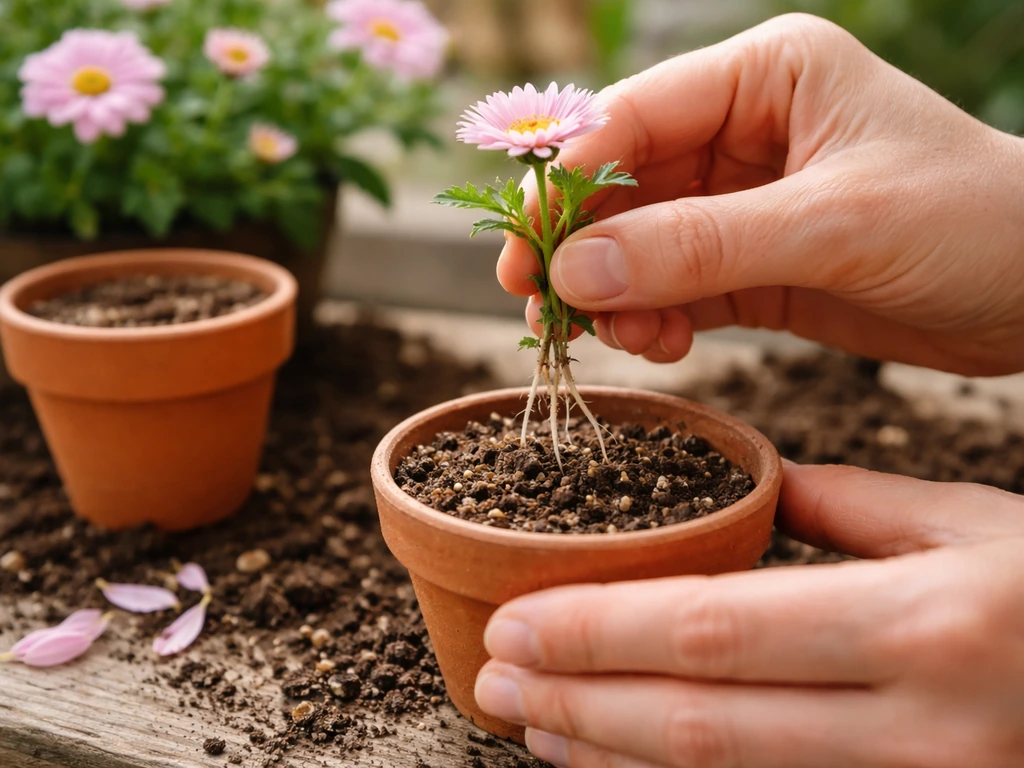
Step-by-step guide to grow new flowers from existing blooms: seed, cuttings, division or layering, with timing, care and
Step-by-step Floret-style ranunculus guide: corm prep, planting, watering, frost care, troubleshooting, and harvest for
Step-by-step guide to grow bouquet-ready wedding flowers, from planning and sowing dates to harvesting, conditioning, an