
You can technically use regular Miracle-Gro fertilizer in vase water, but it's not a great idea and it's not what the product is designed for. What you actually want is Miracle-Gro's dedicated cut-flower product, called Miracle-Gro for Fresh Cut Flowers. That one works. The standard blue granule fertilizer (24-8-16 N-P-K) is built for feeding roots in soil, not for keeping stems alive in a vase, and using it on cut flowers can do more harm than good.
Can You Use Miracle-Gro on Cut Flowers in a Vase?

James Holloway
2 Jun 2026
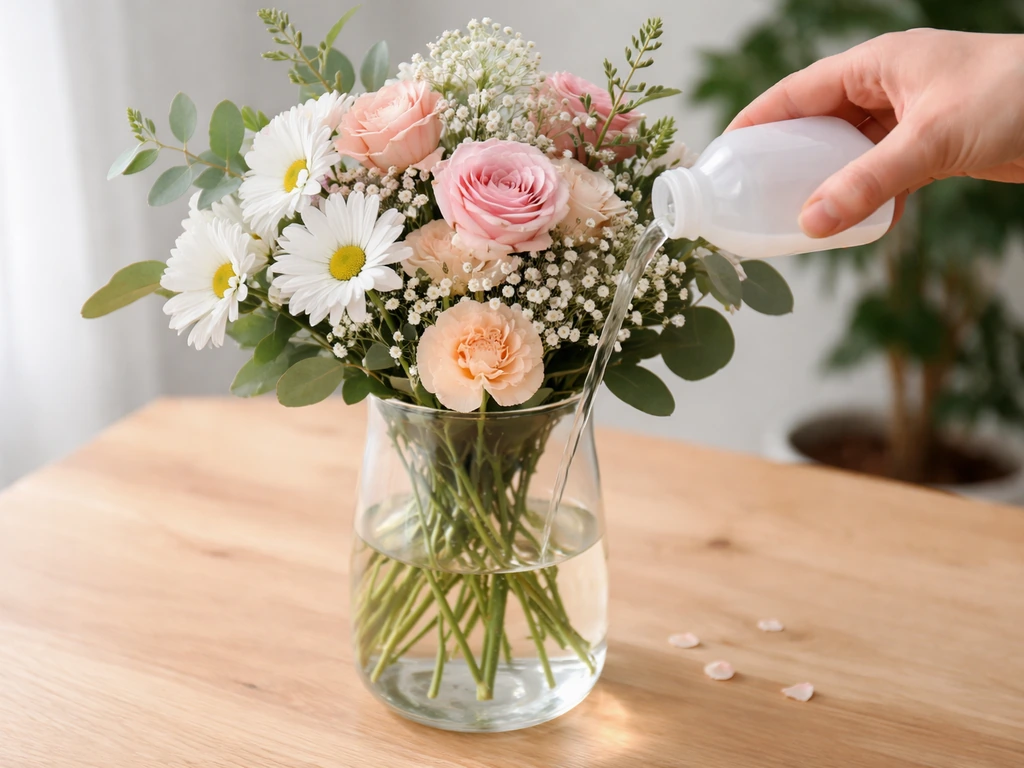
What Miracle-Gro fertilizer does vs. what cut-flower food actually does
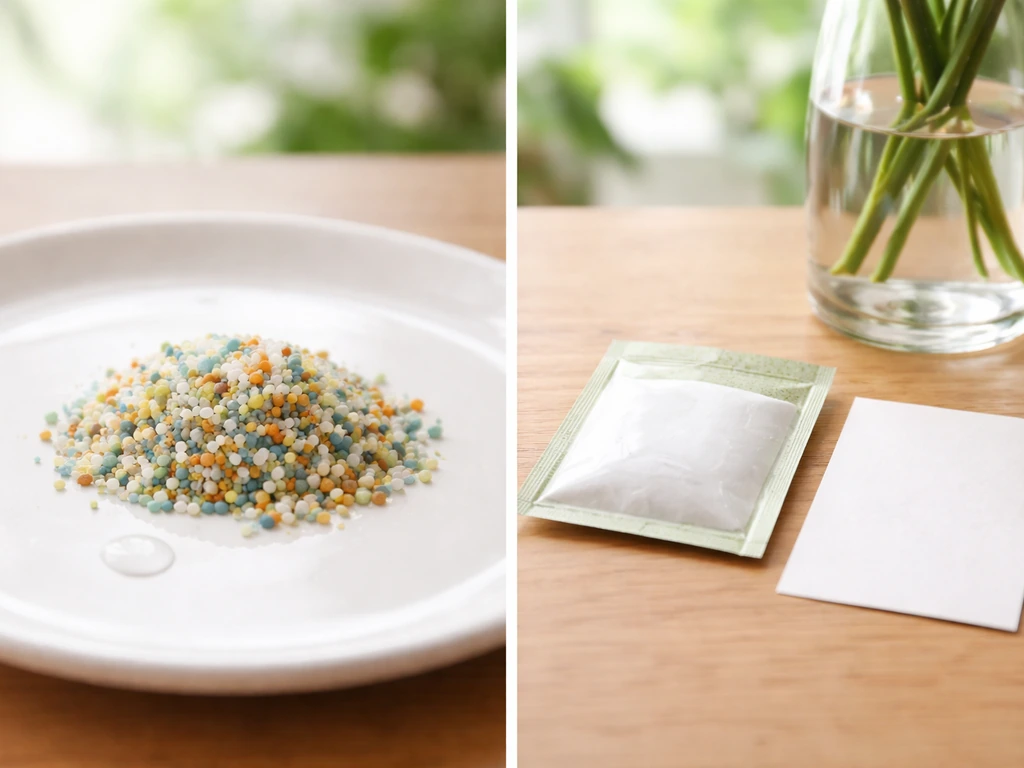
Standard Miracle-Gro plant food is a soluble fertilizer built around nitrogen, phosphorus, and potassium (the classic N-P-K formula). It feeds a plant's root system so the plant can grow new tissue. Cut flowers don't have roots. They're already severed from their water and nutrient supply, and what they need to survive in a vase is completely different from what a growing plant in the ground needs.
Cut-flower preservatives, including the Miracle-Gro fresh-cut version, are formulated around three things: a sugar source (to feed the flowers since they can't photosynthesize effectively once cut), an acidifier like citric acid (to lower the pH of the water, which improves uptake and slows microbial growth), and a biocide (usually something like a low-level bleach compound to kill the bacteria that clog stems and cause premature wilting). That combination is what actually extends vase life. A nitrogen-heavy fertilizer gives you none of those three things.
In fact, the soluble salts in standard Miracle-Gro can concentrate in the flower tissue as water moves through the stem and evaporates. University of Maryland Extension research on salt damage shows this is a real mechanism that stresses plant tissue. So instead of helping, too much fertilizer salt in your vase water can scorch or damage soft petals and foliage, especially on sensitive flowers like sweet peas, ranunculus, or lisianthus.
How to actually use Miracle-Gro on cut flowers (the safe version)
If you have Miracle-Gro for Fresh Cut Flowers, here's exactly how to use it today. Follow the brand’s listing directions: fill the vase with 1 qt of water, add three pumps of solution, then cut about 1 inch off stems while underwater. This is the one product in the Miracle-Gro line that's genuinely designed for vase use, and the directions are simple.
- Fill a clean vase with 1 quart (about 1 liter) of room-temperature water.
- Add three pumps of the Miracle-Gro for Fresh Cut Flowers solution directly into the water.
- Before placing your flowers, cut about 1 inch off the bottom of each stem, ideally at a 45-degree angle and while the stems are submerged underwater. This prevents air bubbles from blocking water uptake.
- Arrange the flowers and place the vase in a cool spot away from direct sunlight and heat sources.
- Change the water every two days, add fresh solution at the same ratio, and recut the stems each time.
If you only have standard Miracle-Gro granules or liquid plant food and no cut-flower-specific product, skip the fertilizer entirely. Plain clean water with a stem recut will outperform a vase full of fertilizer-spiked water. Save the plant food for your garden beds.
What to realistically expect: freshness, longevity, and risks
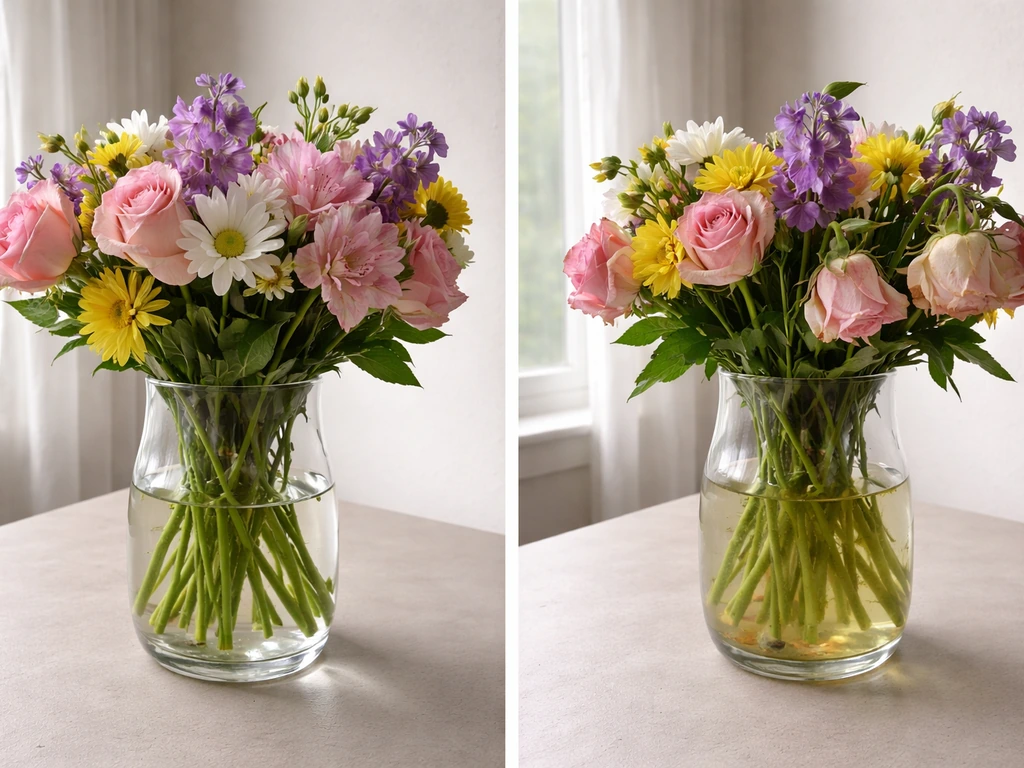
Used correctly, Miracle-Gro for Fresh Cut Flowers can genuinely extend the life of your bouquet compared to plain water alone. That's the product's stated claim and it's backed by the same science behind any commercial floral preservative. Expect a few extra days of vase life for most common cutting-garden flowers like zinnias, marigolds, snapdragons, and sunflowers.
That said, flower type matters quite a bit. Mixed bouquets can be tricky because some species are sensitive to chemical additives. Daffodils, for example, exude compounds from their stems that actually affect the vase life of other flowers like roses and tulips placed in the same water. If you're working with a mixed bouquet, condition daffodils separately for a few hours before mixing them in with other stems. This is the kind of detail that makes a real difference and no amount of flower food fully compensates for it.
The risks of using regular Miracle-Gro fertilizer in vase water include soft stem damage from excess salt, accelerated bacterial growth (fertilizer actually feeds bacteria too, not just plants), and general faster breakdown of the flowers. If you accidentally added some standard Miracle-Gro to your vase, dump the water, rinse the vase, and start fresh with plain water or proper flower food.
The cut-flower care basics that matter more than fertilizer
Honestly, the biggest wins for cut flower longevity don't come from what you put in the water. They come from a few simple habits that most people skip. Iowa State University Extension emphasizes that regular water changes are one of the single most effective things you can do, and Purdue Extension recommends changing water every other day while recutting the stems each time. That routine alone beats using fertilizer in stale water.
- Recut stems every time you change the water: cut at least half an inch off at a 45-degree angle, ideally while the stem is submerged to prevent air from entering the cut end.
- Change the water every one to two days, not once a week. Bacteria build up fast in warm vase water and that's what clogs stems and causes drooping.
- Start with a spotlessly clean vase. Bacteria from a previously used vase can immediately shorten the life of a fresh bouquet. Wash with dish soap and rinse well.
- Keep flowers away from direct sun, heating vents, and ripening fruit. Ethylene gas from fruit like apples and bananas accelerates petal drop.
- Strip any leaves that would sit below the waterline. Submerged foliage rots quickly and feeds bacterial growth.
- Use cool or room-temperature water. Very cold water can shock some tropical flowers; very warm water speeds bacterial growth.
These fundamentals apply whether you're caring for flowers you bought at a farmers market, cut from your own garden, or received as a gift. If you're curious about getting more mileage from your cutting garden by actually rooting or propagating stems, that's a related rabbit hole worth exploring too. Yes, you can grow mums from dried flowers, but you’ll typically get best results by taking viable seeds and starting them indoors before transplanting grow your own cutting flowers.
If you're wondering whether you can grow a flower from a stem, propagation is a different process than vase care, but it can work for some plants. Yes, you can also grow new flowers from cut flowers, but the odds and method depend heavily on the type of bloom rooting or propagating. You can also grow new flowers from a bouquet by saving seeds or trying cuttings, depending on the type of blooms rooting or propagating.
Better alternatives: commercial flower food vs. DIY options
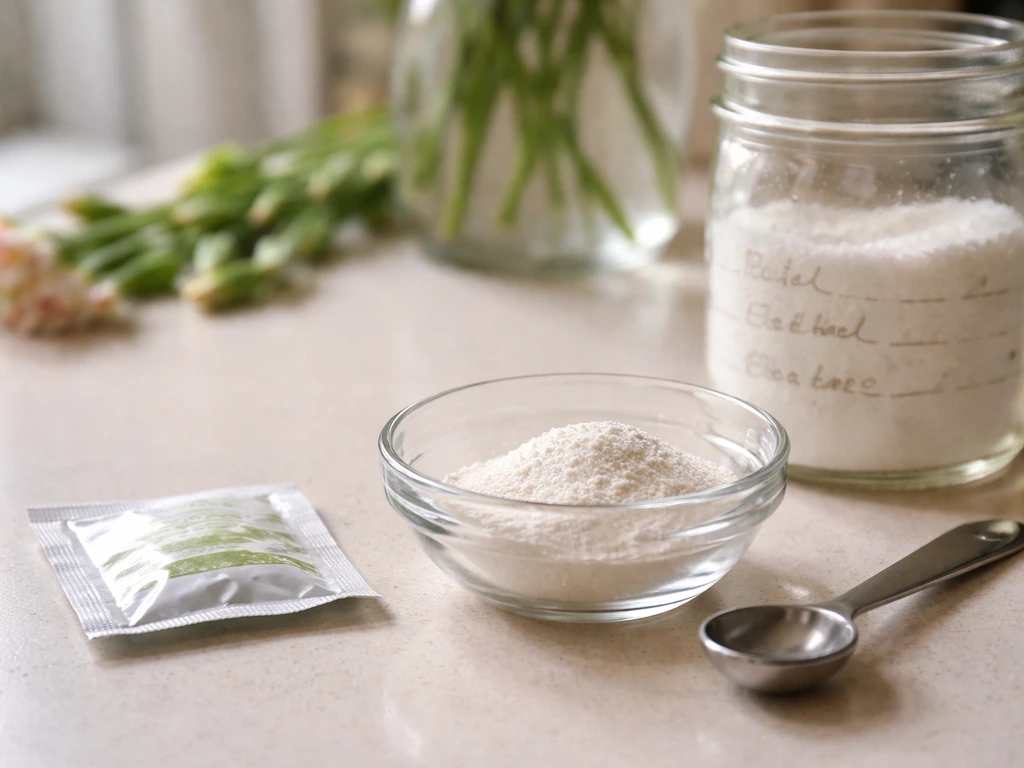
Here's a quick comparison of your real options when it comes to treating vase water.
| Option | What it contains | Effectiveness | Best for |
|---|---|---|---|
| Commercial cut-flower preservative (florist packets) | Sugar + citric acid + biocide | Best: proven formula at correct ratios | Any cut flowers, especially mixed bouquets |
| Miracle-Gro for Fresh Cut Flowers | Sugar + acidifier + preservative compound | Very good: same 3-component approach | Home bouquets, available at major retailers |
| DIY preservative (sugar + lemon juice + bleach) | Rough approximation of commercial formula | Decent: works better than plain water but ratios vary | When you have nothing else on hand |
| Plain water with frequent changes | Nothing but hydration | Good baseline with proper stem care | Minimalist approach; pair with daily recutting |
| Standard Miracle-Gro fertilizer | N-P-K salts, no biocide, no acidifier | Not recommended: can damage stems, feeds bacteria | Avoid in vase water |
If you want to try a DIY approach when you're out of commercial preservative, UC Cooperative Extension and University of Nebraska-Lincoln Extension both support a simple formula: about 1 teaspoon of sugar, 1 teaspoon of white vinegar or lemon juice, and a few drops of bleach per quart of water. It's not perfect but it hits the three key targets: food, acidification, and bacterial suppression. Iowa State Extension does note that many casual home mixtures (aspirin, mouthwash, random kitchen items) don't work reliably, so stick to the sugar-acid-bleach version if you go the DIY route.
For most people reading this, the simplest path is to pick up Miracle-Gro for Fresh Cut Flowers at a hardware store or garden center, follow the three-pump-per-quart directions, and pair it with the stem care habits above. That combination will get you noticeably longer vase life without any guesswork. And if you're growing your own cutting flowers from seed, timing your harvest for early morning when stems are most hydrated makes everything else easier from the start. If your goal is to keep new flowers going, you can also grow flowers from cut flowers, not just preserve them in a vase.
FAQ
Can you put regular Miracle-Gro granules directly into the vase water?
It’s better not to. Granules may not dissolve evenly, which can create pockets of high salt that stress petals and soft stems. If you only have granules, it’s still safer to skip fertilizer entirely and use clean water plus proper conditioning, or use the cut-flower product if you can get it.
What if my Miracle-Gro is liquid, not granules (like a soluble plant food), is it safer?
Not really. Liquid Miracle-Gro can still deliver concentrated fertilizer salts that feed bacteria and increase tissue stress, since it lacks the sugar, acidifier, and biocide balance found in fresh-cut preservative formulas.
How much Miracle-Gro for Fresh Cut Flowers should I use, and what happens if I use too much?
Use the exact amount on the label, typically measured per quart and mixed thoroughly. Over-dosing increases the risk of salt damage and faster wilting, because more fertilizer concentrate means more dissolved salts as water moves through the stems.
Is it okay to top off the vase with more water if I already used flower food?
For best results, don’t just add water. Do a full water change and re-mix the preservative each time, because spent water accumulates bacteria and wastes the initial pH and biocide balance.
Do I need to remove leaves that would sit below the waterline?
Yes. Leaves below the water add extra organic material that bacteria feed on, which can shorten vase life even if you use the correct cut-flower product. Strip submerged leaves before arranging.
Can you use Miracle-Gro cut-flower food with foam, oasis, or floral blocks?
Caution is needed. Oasis setups are usually about consistent moisture and sanitation, not feeding cut stems with a fertilizer salt mix. If you use the product, follow the label and keep amounts conservative, or use plain water if you’re unsure, since over-concentration can affect sensitive stems.
Does Miracle-Gro for Fresh Cut Flowers work for every flower type?
It helps most common bouquet flowers, but performance varies by species. Delicate or salt-sensitive blooms can still decline faster if they’re already stressed, and some flowers have special compatibility issues when mixed together.
What’s the best way to handle daffodils in the same bouquet?
Condition daffodils separately first. Their stem sap can reduce vase life of many other flowers, including roses and tulips. After a few hours in their own water, drain and re-arrange into a fresh, properly conditioned vase.
If I added Miracle-Gro by mistake, should I rinse the stems too?
Yes, for faster recovery. Dump the water, rinse or gently re-cut the stem ends, clean the vase, then restart with clean water or the correct fresh-cut product. This removes fertilizer residue that can keep stressing the tissue.
Can I use Miracle-Gro on store-bought flowers that already came with wrapping treatments?
You can, but only after conditioning. Remove packaging, check for any already-treated preservatives, and then start with a fresh water change. If the stems look slimy or heavily shedding foliage, focus on sanitation first, since bacterial load can overwhelm any added nutrients.
Do you still need to recut stems if using Miracle-Gro for Fresh Cut Flowers?
Yes. Recutting improves water uptake and removes damaged stem tissue that can block flow. A fresh cut plus correct preservative mix usually beats either one alone.
What DIY substitute should I avoid if I don’t have cut-flower food?
Avoid random mixes like aspirin or mouthwash as your only solution. They may not provide a reliable balance of sugar, acidification, and bacterial suppression. If you do a DIY approach, stick to a sugar-acid-sanitizer method rather than kitchen-item experiments.
Next Articles
Can You Grow a Flower From a Stem? Step by Step
Learn can you grow a flower from a stem with step-by-step cuttings, rooting conditions, transplanting, and troubleshooti
Can You Grow Flowers From Cut Flowers? How to Succeed
Learn when you can regrow cut-flower stems into new plants and follow step-by-step rooting and aftercare tips.
Can You Grow Flowers From a Bouquet? A Practical Guide
Learn if you can grow flowers from a bouquet, how to root stems or sow seeds, and what to expect.