Yes, you can grow new plants from some cut flowers, but the honest answer is that most store-bought bouquet stems will not root no matter what you do. The flowers most likely to work are carnations, chrysanthemums, geraniums, hydrangeas, and lavender. The ones that almost never root from a cut stem include roses from a florist (treated with preservatives and anti-ethylene chemicals), tulips, lilies, peonies, and most tropical arrangements. If you have fresh stems with visible nodes and no heavy chemical treatment, you have a real shot. If you are working with a bouquet that has been sitting in a vase for a week and has fully open blooms, the odds drop dramatically.
Can You Grow Flowers From Cut Flowers? How to Succeed

James Holloway
15 May 2026
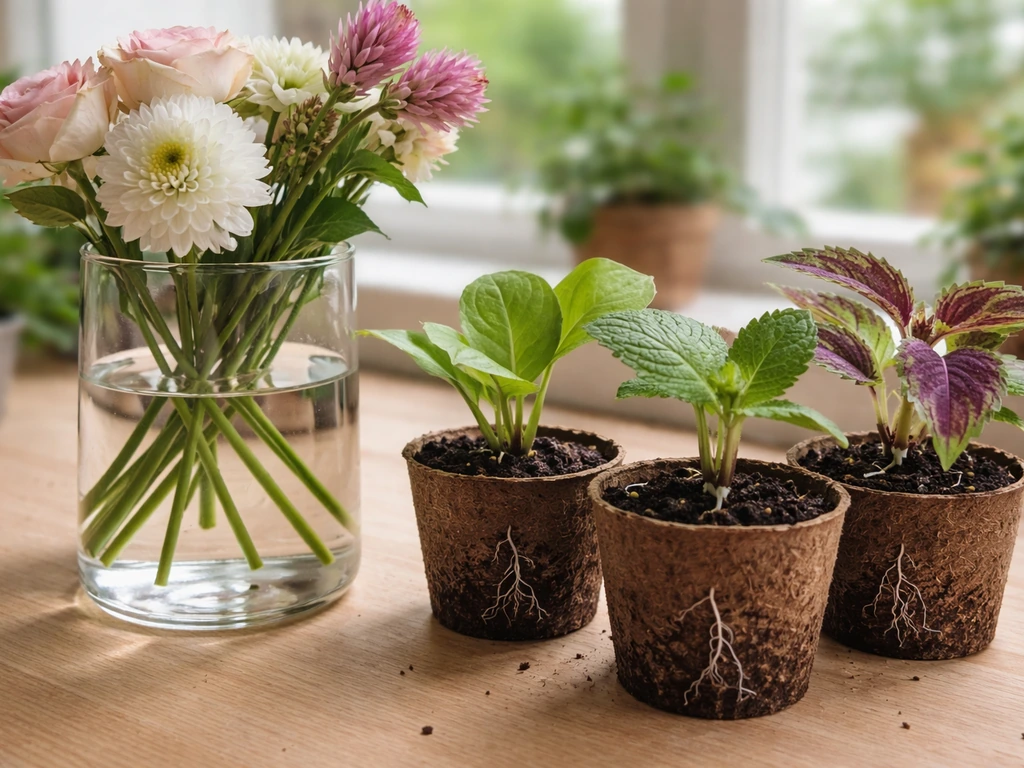
Can you really grow plants from cut flowers (and when it won't work)
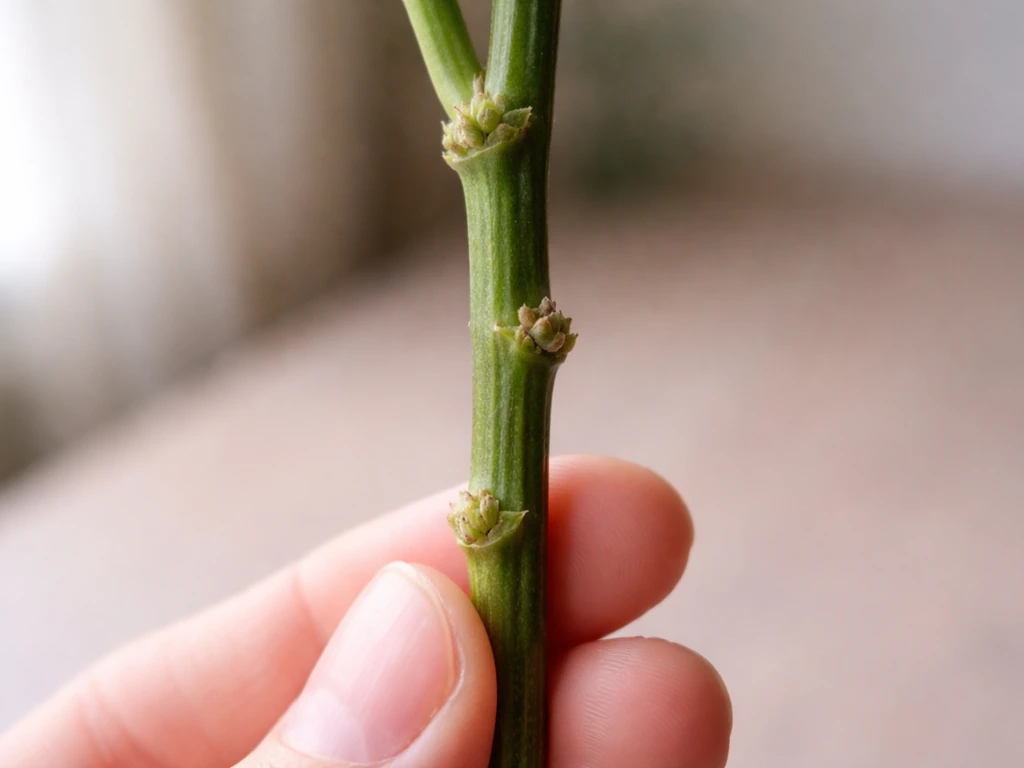
The biology here is straightforward. A stem cutting roots when cells near the nodes (the bumpy joints where leaves attach) are triggered to form adventitious roots. For that to happen, the stem needs to be alive, have at least one healthy node, and not be so stressed or chemically altered that it can't respond to rooting signals. Fresh garden cuttings taken at the right growth stage do this reliably. Commercial cut flowers are a different story.
Florists treat cut flowers with silver thiosulfate and other postharvest chemicals to block ethylene, which is the gas that causes wilting and aging. ISHS reports that silver thiosulfate is used as a postharvest anti-ethylene chemistry to manage ethylene effects in cut flowers such as roses and carnations.
These treatments are good at extending vase life but they also interfere with the auxin signaling that drives root formation. On top of that, stems bought in a shop have usually been cut at full bloom, which means the plant's energy is already locked into the flower rather than being available for root development. Removing that flower head helps, but by that point the stem is often too mature and too depleted to bounce back.
When it works, it tends to work because the stem is still relatively young and soft (what propagators call softwood or semi-hardwood), the flower bud has been removed, the species is naturally easy to root, and the cutting gets into a rooting medium quickly. Carnations and chrysanthemums are the bouquet flowers most commonly propagated this way, and both root in about 2 to 3 weeks under good conditions. Geraniums are even faster at 1 to 2 weeks. Hydrangea stems from cut arrangements can work but are more reliable when taken from branches that did not flower that year.
When it almost certainly won't work: the stem is fully woody, the flower is at peak bloom with no bud removal possible, the stem has been in preservative solution for more than a few days, the plant reproduces from bulbs or corms (tulips, dahlias, lilies), or the species simply does not root from stem cuttings at all. If you have a bouquet and you are not sure which category it falls into, spend two minutes checking the stems before you do anything else.
What to look for on cut stems to judge rooting chances
Before you grab the scissors, hold each stem up and look for these things. They will tell you within about thirty seconds whether a cutting is worth attempting.
- Nodes: look for the small bumps or joints where leaves or buds emerge from the stem. No nodes means no roots. You need at least one node, ideally two, that you can bury in the rooting medium.
- Stem firmness: gently squeeze the lower stem. If it is soft and pliable but not mushy or water-logged, that is a good sign. If it is completely hard and woody all the way up, rooting will take much longer and may not happen at all.
- Stem length: you want 3 to 6 inches of usable stem below the lowest set of leaves. Shorter than that and there is not enough stem to bury a node properly.
- Wilting: a lightly wilted stem can recover if you recut and hydrate it, but a severely wilted, limp, collapsing stem is already too stressed. Excessively wilted cuttings almost never root successfully.
- Flower stage: fully open blooms are bad news. An early bud or a stem with a bud that has not yet opened is far better, and you will be removing that bud anyway before rooting.
- Damage or disease: any black rot, mushy spots, or visible pests on the stem means skip it entirely. You need clean, healthy material.
If the stem passes these checks, you have something worth trying. Species that tend to pass include carnations, chrysanthemums, geraniums, lavender, and hydrangeas. Species that almost always fail the node or stem-type check include tulips, lilies, irises, and most tropical foliage used as filler.
How to propagate cut flowers as stem cuttings, step by step
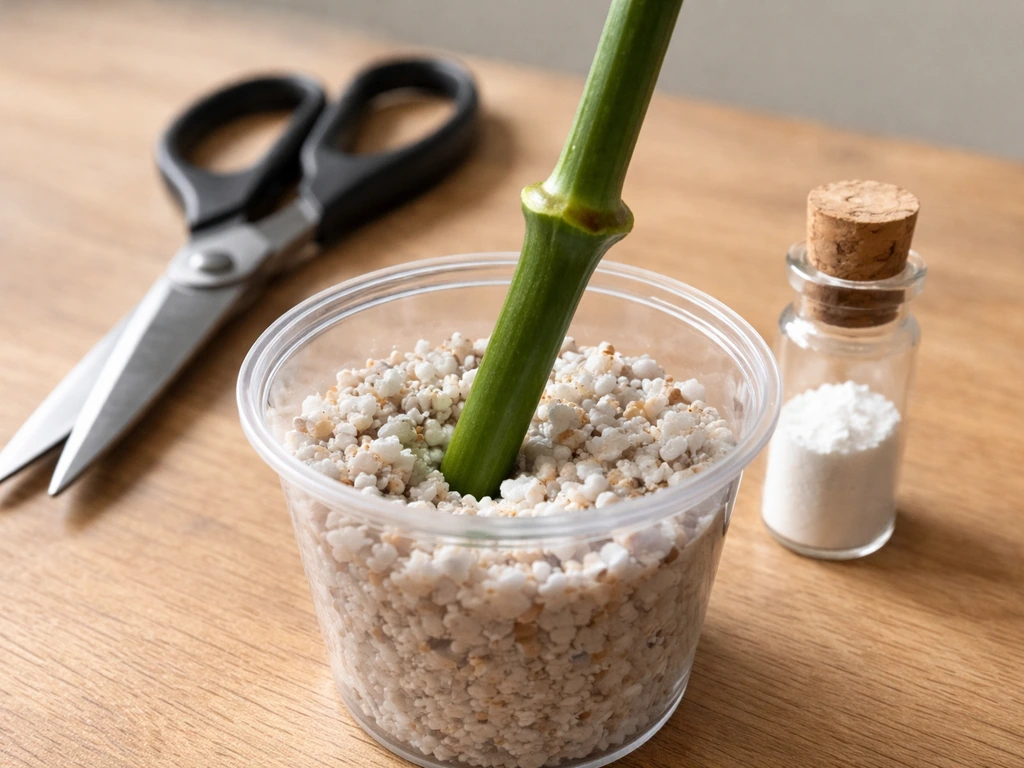
Work quickly once you decide a stem is worth trying. For that step, Purdue Extension recommends cutting a 2, 6 inch piece and making the bottom cut just below a node, where the leaf or bud attaches cut off a piece of stem 2–6 inches long and make the bottom cut just below a node. The longer a cut stem sits without roots, the less energy it has to redirect toward rooting.
- Recut the stem. Use clean, sharp scissors or a knife and make a fresh cut just below a node, angling it slightly to increase the surface area exposed to your rooting medium. Purdue Extension is clear that the cut should be just below the node, since that is where root cells develop.
- Remove the flower and any buds. This is non-negotiable. Flower buds pull energy away from root formation and can prevent rooting entirely even on otherwise easy species. Cut them off cleanly.
- Strip the lower leaves. Remove any leaves or side shoots that will end up below the soil or water surface. Leave two or three sets of leaves at the top so the cutting can still photosynthesize. For softwood cuttings (3 to 5 inches), target two nodes buried; for semi-hardwood stems (4 to 6 inches), do the same.
- Reduce leaf area if needed. If the remaining leaves are large, cut them in half. This reduces moisture loss through the leaves while the cutting has no roots to take up water. This matters most in dry indoor environments.
- Wound the base if the stem is slightly tough. Use your knife to scrape a thin sliver of outer stem tissue off the bottom inch or so on one or two sides. This wounding exposes more tissue to rooting hormone and encourages adventitious root formation.
- Apply rooting hormone. Dip the bottom inch of the stem into rooting hormone powder (IBA-based products are most common) and tap off the excess, or use a gel formula and coat the base. For easy-to-root species like geraniums and carnations, even a light dusting helps. For tougher stems, do not skip this step.
- Insert into your rooting medium. Use a pencil or skewer to make a hole first so you do not brush the hormone off when inserting. Push the stem in so at least one node, preferably two, is buried. Firm the medium gently around it.
- Label and date it. You will thank yourself in two weeks when you cannot remember which pot is which.
Where to root: water vs soil, light, temperature, and humidity
Water rooting vs rooting medium
Water rooting is tempting because it is easy to watch the roots develop, and it does work for some soft-stemmed flowers like geraniums. But roots formed in water are adapted to a wet, low-oxygen environment and often struggle when you transplant them into soil. For most cut flowers you are trying to propagate, a proper rooting medium gives better results and stronger root systems.
A 50/50 mix of perlite and peat (or perlite and coco coir) drains well, holds some moisture, and stays airy enough for roots to form. Penn State Extension notes that a pH of 6. 5 or lower is ideal for cuttings, and most of these mixes land in that range naturally. If you only have potting mix on hand, cut it with perlite to loosen it up.
| Method | Best for | Rooting time | Transplant difficulty | Notes |
|---|---|---|---|---|
| Water in a jar | Geraniums, coleus, soft-stemmed flowers | 7 to 14 days | Moderate (roots are fragile) | Change water every 2 days; no hormone needed but helps |
| Perlite/peat mix | Carnations, chrysanthemums, hydrangeas, lavender | 2 to 4 weeks | Easy (roots are soil-adapted) | Best all-round choice; use rooting hormone |
| Pure perlite | Most cuttings | 2 to 3 weeks | Easy | Good aeration; needs consistent moisture monitoring |
| Potting mix alone | Easy-rooting soft stems only | 1 to 2 weeks | Easy | Risk of compaction and rot; mix with perlite if possible |
Light, temperature, and humidity
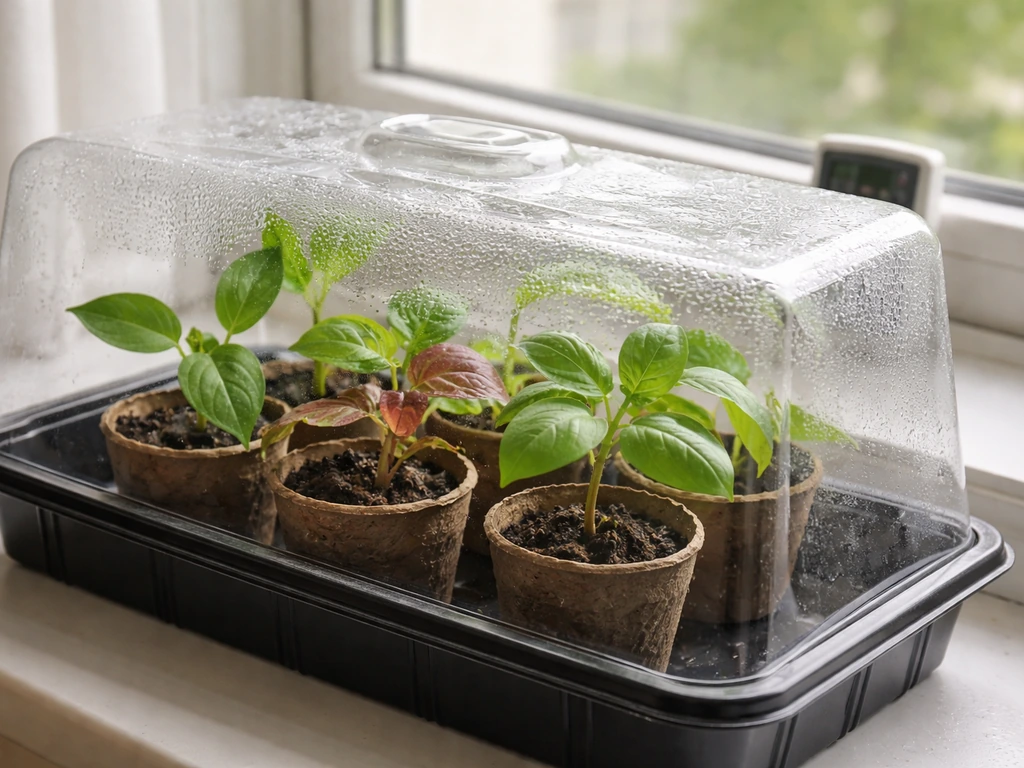
Bright indirect light is what you want, not direct sun. A cutting with no roots cannot replace moisture lost through its leaves fast enough to survive direct afternoon sun. A north or east-facing windowsill works well, or place pots a few feet back from a south-facing window. Temperatures between 65 and 75 degrees Fahrenheit are ideal for most ornamental flowers. Below 60 degrees, rooting slows significantly. Above 80 degrees, the cutting tends to lose moisture faster than it can manage.
Humidity is the factor most people underestimate. Until roots form, the cutting loses water through its leaves without any way to replace it. The solution is a simple humidity chamber: place a clear plastic bag loosely over the pot and secure it around the pot rim, or use a plastic bottle with the bottom cut off placed over the cutting. This keeps humidity high around the leaves without sealing in so much moisture that the stem rots. Open it briefly every day or two to let fresh air in. Once you see new growth, roots are forming and you can start leaving the cover off for longer stretches.
Aftercare: transplanting, timing, and getting to bloom
You can check for roots gently by giving the cutting a very light tug after 2 to 3 weeks. If there is resistance, roots have formed. A better method is to wait until you see new leaf growth at the top of the cutting, which is a reliable sign that roots are established below. Illinois Extension suggests waiting until roots are about an inch long before transplanting, which gives the root system a little buffer for the move.
When you are ready to transplant, water the rooting medium lightly first to loosen it, then lift the cutting out carefully with a spoon or your fingers. Pot it into a small container (4 to 6 inch pot) with regular potting mix. Do not jump straight to a large pot, which holds more moisture than young roots can use and risks rot. Keep it in indirect light for another week or two while the roots settle, then gradually introduce more light.
Timing matters for getting to bloom. A carnation rooted in late spring from a bouquet cutting, potted up in early summer, will typically begin flowering by late summer or early fall of the same year. A chrysanthemum rooted in summer may not bloom until the following season depending on your climate and the variety. Geraniums are faster and more forgiving, often blooming within a few months of a successful rooting. Hydrangeas rooted from cuttings typically need a full growing season before they flower, so think of that as a next-year project.
Once your rooted cutting is established in a pot and growing well, treat it like any young plant: regular watering, a balanced fertilizer at half strength every two weeks during the growing season, and a transition to outdoor conditions (hardening off) if you plan to plant it in the garden. If you are wondering whether to use Miracle-Gro on cut flowers, it is better to follow the rooting-medium and feeding tips for the type of cutting you have miracle grow. Move it outside gradually over 7 to 10 days, starting with an hour of outdoor time in a sheltered spot and building up from there.
If it doesn't root: your best alternatives
A failed cutting is not a failed season. Most of the flowers that are hardest to root from cut stems are actually very straightforward to grow from seed or transplants, and in many cases you will end up with a healthier, more vigorous plant than you would have gotten from a struggling bouquet stem.
Growing from seed
For cutting garden staples, seed is often the most practical starting point. Marigolds, snapdragons, zinnias, and wildflower mixes are all easy to start from seed and can go from packet to bloom in a single season. Carnations (Dianthus) grow reliably from seed and will flower in their first year if started indoors 8 to 10 weeks before your last frost date. If you are in hardiness zones 5 through 9, that typically means starting seeds indoors in late winter and transplanting after your last frost. Poppies and larkspur are best direct-sown in fall or very early spring since they need a cold period to germinate well.
Buying transplants and choosing the right varieties
If you want blooms this summer and do not have time to start from seed, buying transplants from a nursery is the fastest route. Look for geranium, chrysanthemum, and lavender starts, which are widely available and will give you something to grow on that is already adapted to putting down garden roots. When choosing varieties, pay attention to whether a label says 'cutting type' or 'garden type,' especially for carnations and mums, since commercial cut-flower varieties are sometimes bred for vase life rather than garden performance.
Good flower choices for a cutting garden you can actually propagate
If your goal is a cutting garden you can continually propagate and expand, build it around species that root easily and reliably: geraniums, chrysanthemums, carnations (Dianthus), lavender, and salvias. These are the flowers where taking cuttings actually makes sense as a regular practice. Hydrangeas are worth including if you have the space, keeping in mind that you will be more successful taking cuttings from non-flowering stems in early summer than from florist stems. For flowers like roses, dahlias, and peonies that are trickier to propagate from cuttings, growing from purchased bare-root plants or dividing existing clumps will save you a lot of frustration.
It is also worth knowing that some bouquet-related questions have their own nuances. Growing flowers from a dried bouquet, for example, is a completely different process from stem cutting propagation, and whether a specific stem can regrow depends a lot on whether you are working with the stem itself or with seeds harvested from a spent flower head. Growing flowers from a bouquet that has been in a vase is closely related to stem cutting success, but it depends heavily on how fresh the stems are and whether they still have healthy nodes Growing flowers from a dried bouquet. The more you understand how each species reproduces, the better your decisions will be about where to put your time and energy this growing season.
FAQ
How do I tell if the stems in my bouquet actually have nodes worth trying?
Look for small bumpy joints where leaves attach along the stem. Nodes that are dry, mushy, or missing any attached leaf scars are usually dead tissue and will not form roots. If the stem feels brittle when you gently bend it, skip it.
Should I remove all the leaves or keep some on a bouquet cutting?
Keep a few leaves if they are healthy, because they help the cutting stay alive while it roots. Remove leaves that are wilting or damaged to reduce rot risk. If you remove every leaf, the cutting can lose moisture too quickly before roots form.
What is the best time of day to take and set up a bouquet cutting?
Work in the cool part of the day, morning or evening, and get the cutting into the rooting medium quickly. Heat speeds up dehydration and makes wilting more likely before roots can replace water uptake.
Can I use rooting hormone (like IBA) on bouquet cuttings?
Yes, rooting hormone can help, especially for semi-hardwood cuttings or species that root more slowly. However, it cannot overcome preservative chemicals or fully woody stems, so it is most useful when the stem is already in the “worth trying” category.
Is it okay to propagate multiple stems in the same pot?
You can, but crowded cuttings increase the chance of rot and make it harder to separate roots later. If you do group them, keep spacing so leaves do not touch and use a well-draining medium so one failing cutting does not infect the rest.
How often should I water in the humidity chamber before roots form?
Water only enough to keep the medium lightly moist, then avoid letting it stay soggy. A bagged humidity setup slows evaporation, so frequent watering can suffocate roots and trigger stem rot. If the medium looks damp, skip watering that day.
What signs mean my cutting is rotting rather than rooting?
Rot often shows up as a brown or blackening stem near the base, a soft feel when you gently press it, and a bad smell. Rooting usually stays green and firm and eventually produces new leaf growth at the top.
Do bouquet cuttings need fertilizer before they root?
Usually no. During rooting, the cutting is relying on stored energy in the stem, and fertilizer can burn tender new tissue or worsen rot in a still-moist medium. Start feeding only after new growth indicates active rooting.
Can I transplant directly outdoors after roots start?
Not immediately. Even if roots form, young rooted cuttings are sensitive to sun and wind. Harden off gradually over 7 to 10 days in a sheltered spot, and avoid planting into harsh afternoon sun for the first week.
Why did one stem root but others from the same bouquet did not?
Differences in node quality, stem maturity, and how long each stem sat in the vase can create big results gaps. Also, some stems from bouquet arrangements are partially chemically treated or already past the “alive enough to respond” stage.
Is water propagation ever better than a rooting medium?
For some geranium-type cuttings, water can work, but roots formed in water often struggle when moved to soil or potting mix because they are adapted to low-oxygen conditions. If you want the best overall success rate for most bouquet stems, use an airy rooting medium from the start.
Can I regrow from a bouquet after the flowers have fully opened?
It is possible but odds drop because the plant has shifted energy into the bloom rather than root formation. If you try, focus on the youngest, least stressed stems and remove the flower heads promptly, but do not expect the same success rate as with fresh, bud-stage stems.
If I want flowers again this year, which bouquet choices are the fastest to bloom after rooting?
Geraniums are often the quickest route to seeing blooms within a few months after successful rooting. Carnations and chrysanthemums can bloom later in the same year depending on your timing and climate, while hydrangeas commonly need until the next growing season.
Next Articles
Can You Grow Flowers From a Bouquet? A Practical Guide
Learn if you can grow flowers from a bouquet, how to root stems or sow seeds, and what to expect.
Floret How to Grow Ranunculus: Step-by-Step Guide
Step-by-step Floret-style ranunculus guide: corm prep, planting, watering, frost care, troubleshooting, and harvest for
How to Grow Your Own Wedding Flowers Step by Step
Step-by-step guide to grow bouquet-ready wedding flowers, from planning and sowing dates to harvesting, conditioning, an