Yes, you can grow a new flower plant from a stem cutting, and it works remarkably well for many popular garden favorites like roses, geraniums, hydrangeas, and mums. The basic idea is simple: you snip a healthy stem, encourage it to grow roots, and eventually transplant it into the garden or a pot where it will grow and bloom just like the parent plant. It is not guaranteed every single time, but with the right stem, a clean cut, and a bit of patience, your success rate can be surprisingly high, even if you have never tried it before.
Can You Grow a Flower From a Stem? Step by Step

James Holloway
18 May 2026
When stem-cutting propagation actually works
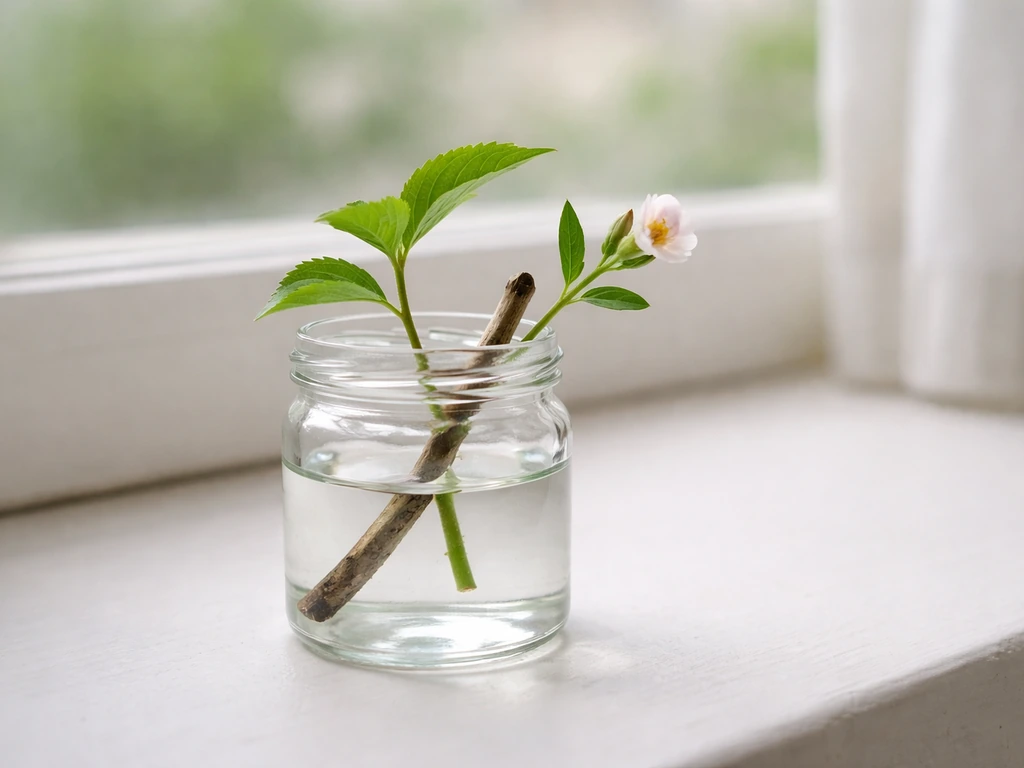
Stem-cutting propagation works because plant stems contain cells that, under the right conditions, can be triggered to produce roots. It is one of the most reliable ways to clone a plant you already love, and it is much faster than growing from seed. That said, it does not work equally well for every flower. The technique is most successful with plants that propagate vegetatively in nature, meaning they are already wired to sprout roots from stem tissue.
Flowers that root especially well from cuttings include roses, hydrangeas, geraniums (pelargoniums), garden mums, dahlias, fuchsias, salvias, and many perennial herbs with ornamental flowers. Annuals like petunias and impatiens can also root from cuttings, though it is less common to propagate them that way since seed is cheap and plentiful. True bulb flowers like tulips and true biennials like foxglove are poor candidates. If you are trying to re-grow something from a bouquet or a cut flower arrangement, the odds are lower but not impossible depending on the flower, which is worth exploring separately.
Timing matters enormously. blank" rel="noopener noreferrer">Most flowering plants root best from what are called softwood cuttings, which are new, flexible spring or early summer growth. blank" rel="noopener noreferrer">Semi-hardwood cuttings, taken from June through September when the stem has firmed up a bit, work well for shrubby plants like roses and hydrangeas. Hardwood cuttings taken in late fall or winter are the toughest to root and can take two to four months to show results, so for most home gardeners, spring and early summer is the sweet spot.
Picking the right stem for the job
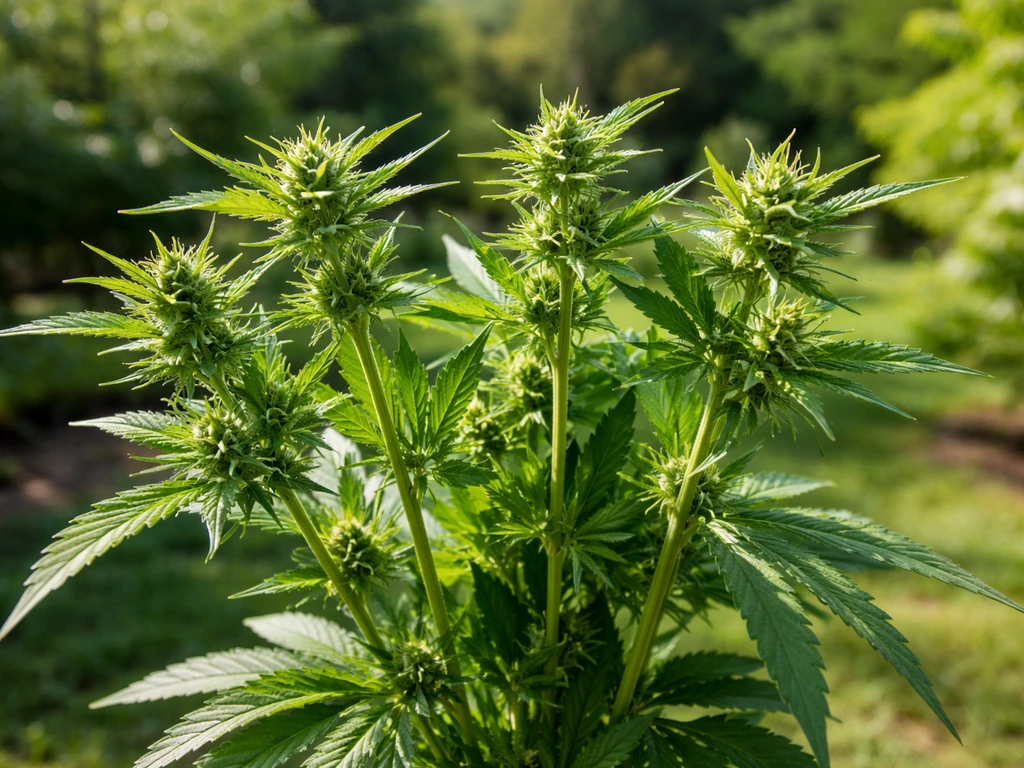
The stem you choose will make or break the whole process. Start with a healthy parent plant that is actively growing and completely free of disease, pests, or stress. A stressed plant produces stressed cuttings, and stressed cuttings tend to rot or simply fail to root.
Look for stems that are vigorous and green but not spindly. For most flowering plants, you want a non-flowering shoot or one where you can easily remove any flower buds before rooting. This is important: a cutting that is putting energy into blooming or setting seed will not redirect that energy into growing roots. For hydrangeas specifically, the Illinois Extension recommends choosing a branch that did not flower at all this year. For geraniums, pinch off any flower buds before you even take the cutting.
- Roses: choose a stem that recently bloomed or is just finishing bloom, semi-hardwood works best in summer
- Hydrangeas: pick a non-flowering stem from this year's growth, ideally in early to midsummer
- Garden mums: take cuttings in spring or early summer from young, actively growing shoots
- Geraniums: select a firm, healthy stem from a plant that has not been stressed by heat or drought
- Dahlias: softwood cuttings from new basal growth in spring root very readily
How to take the cutting correctly
Get your scissors or pruning shears clean and sharp before you start. Dirty or dull blades can crush stem tissue and introduce disease right at the wound, which is the last thing you want when you are trying to encourage root growth.
- Cut a stem segment that is 3 to 6 inches long and includes at least two nodes (the little bumps or joints where leaves emerge). The nodes are where roots will form.
- Make your cut just below a node. Cutting at a slight angle is worth doing because it exposes a larger wounded surface area, which can improve rooting when you use rooting hormone.
- Remove all leaves from the bottom half of the cutting. You want one to three leaves at the top to allow photosynthesis, but nothing lower down that will sit in your rooting medium and rot.
- If any flower buds or open blooms are present, remove them completely. Flowers drain energy your cutting needs for root production.
- If the remaining leaves are large (like with hydrangeas), cut them in half crosswise to reduce moisture loss while roots are forming.
Work quickly once you cut. Stems begin to lose moisture immediately, so try to move from cutting to potting within a few minutes. If you need a short delay, wrap the cutting loosely in a damp paper towel.
Setting up your rooting station
Rooting medium
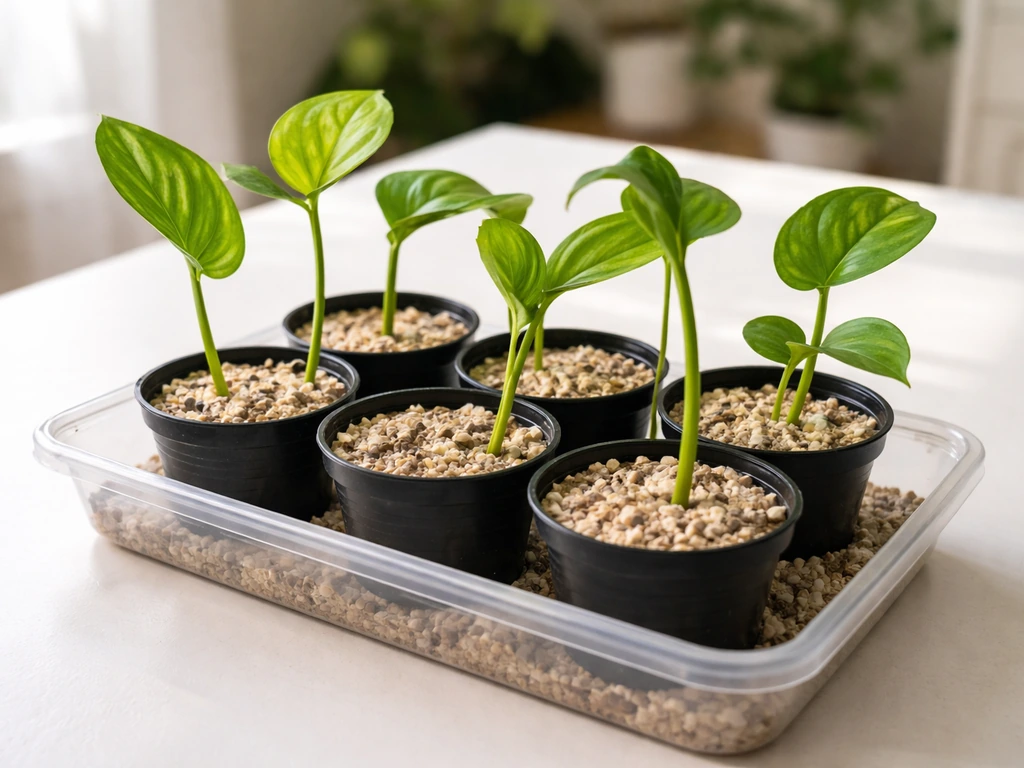
Do not use regular potting soil for rooting cuttings. It holds too much moisture and not enough air, which leads to rot before roots even have a chance to develop. You want a loose, well-draining, sterile medium. Good options include straight perlite, straight coarse sand, vermiculite, or a blend. A mix of roughly 60% perlite and 40% vermiculite works well because it balances drainage and moisture retention. For mums, coarse sand or perlite alone is a classic choice. For geraniums, a perlite and sphagnum peat moss blend gives good results. Fill a small pot or tray, moisten the medium so it feels damp but not waterlogged, and use a pencil or stick to poke a hole before inserting the cutting so you do not scrape off the rooting hormone.
Rooting hormone
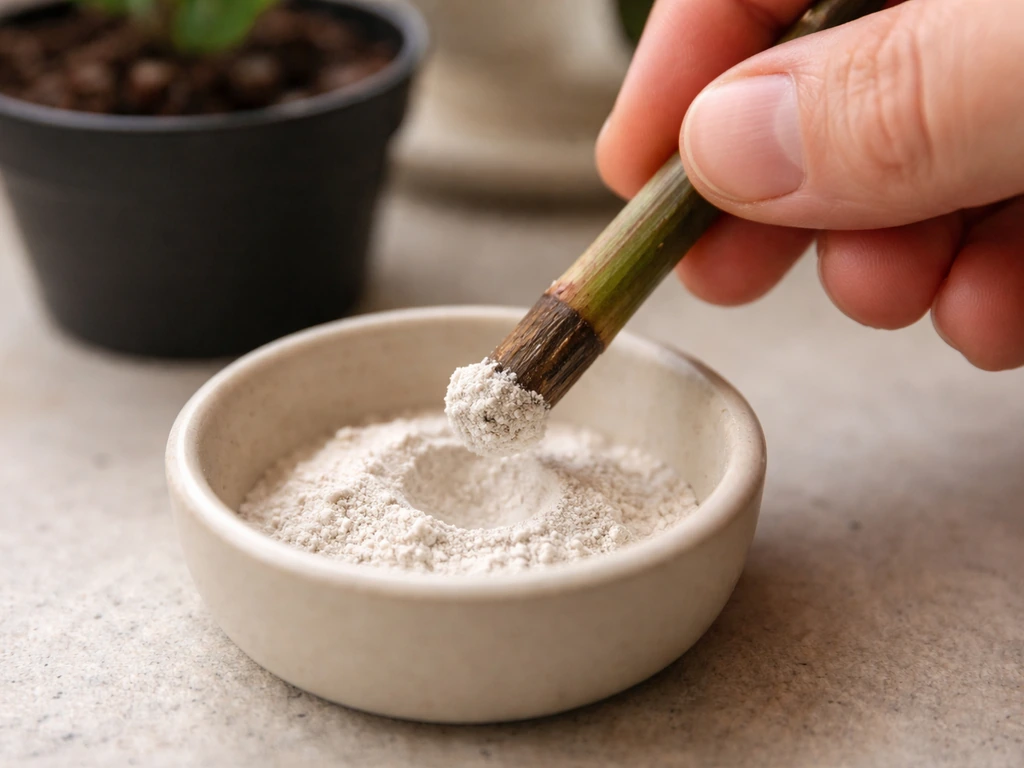
Rooting hormone is optional but genuinely helpful, especially for plants that can be slow to root like roses and woody-stemmed flowers. The active ingredients are usually IBA (indole-3-butyric acid) or NAA (naphthaleneacetic acid), which encourage cells at the wound site to develop into root tissue. For most flowering plants, a standard low-strength powder or gel works fine. Dip the bottom inch of the cutting into the powder, tap off any excess, and get it into the medium promptly. For semi-hardwood or hardwood cuttings from more stubborn plants, a medium-strength formula will give better results than the basic beginner formulation.
Humidity and warmth
Cuttings do not have roots yet, so they cannot pull moisture from the medium. They rely on the moisture already in their leaves and stems, which means keeping humidity high is critical until roots form. The easiest way to do this is to place a clear plastic bag loosely over the pot or use a plastic dome (the kind that comes with seed-starting trays). This creates a mini greenhouse effect. Keep the setup somewhere warm, ideally where the rooting medium stays around 75 to 80 degrees Fahrenheit. A seedling heat mat placed under the pot is the simplest way to hit that target consistently. Warmth at the root zone speeds things up noticeably.
Keeping your cuttings alive while they root
Light and watering
Place your cuttings in bright, indirect light. Direct sun through plastic or a dome will cook the leaves quickly and kill the cutting before roots even start. A north or east-facing windowsill, or a spot a few feet back from a south-facing window, works well. If you are using grow lights, keep them on a timer for 14 to 16 hours and position them far enough away that no heat builds up under the dome.
For watering, mist the inside of the bag or dome every day or two and check the medium every few days. It should feel consistently damp but never soggy. If you squeeze a handful and water drips out, it is too wet. If it feels dry and crumbly, mist the medium lightly. Overwatering is the number one killer of cuttings, so when in doubt, err on the side of slightly drier.
How long does rooting take?
Softwood cuttings from fast-rooting plants like geraniums and dahlias can show roots in as little as one to two weeks under warm, humid conditions. Hydrangeas typically root in two to three weeks. Roses take about six to eight weeks before they are ready to transplant. Semi-hardwood cuttings from shrubby plants may need longer, and hardwood cuttings can take two to four months. Patience is genuinely part of the process here.
Checking for roots and troubleshooting problems
After two to three weeks, check for root development by very gently sliding your hand under the cutting and lifting slightly. If you feel resistance, roots are forming. Another approach is to use a transparent cup so you can see when fine root hairs appear at the bottom, which is how some rose propagators track progress. Do not check obsessively though. Every time you disturb the cutting you risk snapping fragile new roots.
| Problem | Likely Cause | Fix |
|---|---|---|
| Cutting goes limp and soft | Rot from overwatering or stem sitting too wet | Remove the cutting, trim any rotted tissue, let it dry briefly, and restart with drier medium |
| Leaves yellow and drop | Normal to lose a leaf or two, but mass yellowing means too little light or too much heat under the dome | Improve indirect light and vent the dome for an hour daily |
| No roots after 4+ weeks | Wrong stem type, no rooting hormone, or medium too cold or too dry | Try again with rooting hormone, check medium temperature, and add a heat mat |
| Cutting looks fine but wilts badly when dome is removed | Roots still too underdeveloped to support the plant | Replace dome and give it another week or two before hardening off |
| Mold on the medium or leaves | Too much humidity with too little airflow | Vent the dome for 30 minutes daily and remove any dead leaf material immediately |
Transplanting and growing your cutting to bloom
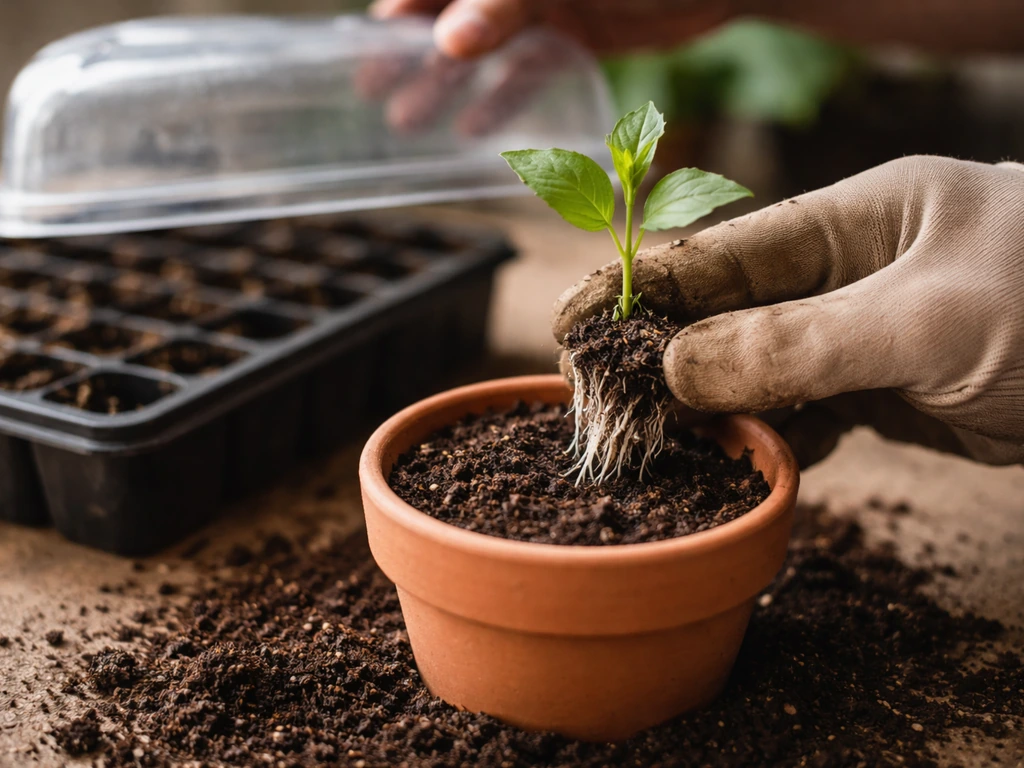
Once your cutting has a solid root system (roots that are at least an inch long and branching slightly), it is ready to move out of the rooting medium and into real potting mix or garden soil. Do not rush this step. A cutting with only one or two tiny root threads will struggle badly after transplanting.
Start by hardening off the cutting over a few days. Begin opening the dome or bag for longer periods each day, going from 30 minutes the first day up to fully open by day four or five. This gradually gets the plant used to lower humidity levels without shocking it. Once it is handling open air without wilting, it is ready to transplant.
For most rooted cuttings, transplant first into a 4-inch pot with good quality potting mix rather than directly into the garden. This gives you more control over moisture and lets the plant build a stronger root system before facing outdoor conditions. Water it in gently, keep it in bright indirect light for the first week, and then gradually introduce it to more direct sun. For roses, mums, and geraniums rooted in spring or early summer, you can typically move them into a larger container or garden bed within four to six weeks of transplanting, as long as outdoor temperatures are consistently above 50 degrees Fahrenheit at night.
Feed your young plant lightly once you see new leaf growth. A balanced, diluted liquid fertilizer at half strength every two weeks is plenty at this stage. Heavy feeding before the root system is established can burn the plant. Once it is actively growing and clearly settled in, you can move to a regular feeding schedule.
Bloom timing after rooting depends on the plant. Geraniums rooted in early spring will often flower by midsummer. Roses taken as cuttings in summer may give you a few blooms by late summer or fall of the same year, but often the first real show comes the following season. Garden mums propagated in spring will bloom on their usual fall schedule. Think of the first growing season as establishment year and celebrate the fact that you created a whole new plant from a single stem. That is genuinely worth getting excited about.
If you find yourself enjoying this process, it opens up a lot of possibilities. Propagating from cuttings is closely related to working with cut stems from bouquets or floral arrangements, which follows many of the same principles but with a few extra challenges around stem freshness and conditioning. You can also ask about whether Miracle-Gro works on cut flowers, since the feeding approach differs from rooting and transplanting cuttings Miracle-Gro on cut flowers. If you are wondering, can you grow flowers from cut flowers too, this same cutting-and-rooting approach can help you try with stems from bouquets cuttings is closely related to working with cut stems from bouquets. Either way, once you root your first cutting successfully, you will almost certainly want to do it again.
FAQ
Can you grow a flower from a stem in water instead of rooting medium?
Sometimes, a few plants will start root tips in water, but it often increases rot and weak roots because the cutting lacks the airy, sterile medium that discourages fungus. If you try water anyway, use clean water, change it regularly, keep the container bright but not sunny, and move to a proper potting mix as soon as fine roots appear.
How long should I keep the plastic bag or dome on after I take the stem cutting?
Keep humidity high until you see clear signs of rooting, then transition gradually. A good rule is to start hardening off once roots are at least about an inch long or when the cutting shows strong new growth, opening the cover over several days so leaves do not wilt.
What if my cutting turns brown or black near the cut end?
That usually indicates rot. Cut away any mushy tissue with sterile blades, let the cutting dry briefly, and restart in a drier, more airy medium. Also check that the cutting is not too wet inside the dome, because waterlogged conditions are the most common rot cause.
Should you remove leaves before rooting?
Often yes, but keep enough foliage for the cutting to survive. A common approach is to remove lower leaves that would sit in the rooting medium, and if the remaining leaves are large, trim them to reduce moisture loss. Do not remove all leaves, since the cutting still needs energy from stored resources while roots form.
Can I use any stem from a store-bought plant or should it be from my garden?
For best results, use healthy, actively growing stems. Store-bought plants can work if they are not in dormancy and the stems are not stressed or disease-prone, but avoid cuttings from plants that look wilted, yellowed, or recently treated heavily with chemicals unless you can tell the plant is recovering.
Do flowering buds have to be completely removed before rooting?
They should be removed or at least prevented from continuing to develop. Even if you do not remove every bud, take off any buds or flowers that are actively trying to bloom, because the cutting will spend energy on reproduction instead of root formation.
What causes cuttings to fail even when the stem looks healthy?
The most frequent issues are dull or dirty cutting tools, cutting too late after harvesting (stem dries out), using regular potting soil that stays too wet, and exposing the cuttings to direct sun under the dome. Also confirm the rooting temperature is warm enough, since many cuttings stall if the root zone stays cool.
When can I plant the rooted cutting outdoors, and how warm is warm enough?
Wait until nights are consistently above about 50°F (10°C) and the plant has finished hardening off. If you transplant earlier, slow growth and leaf drop are common. If your nights dip, keep it in a pot a bit longer so you can move it indoors.
Can you reuse the same rooting medium for another cutting?
It is better not to. Rooting mixes can accumulate fungus and become overly wet or compact over time. Discard used medium, sanitize pots and tools, and start fresh with sterile, well-draining medium for the next attempt.
How do I know the cutting has rooted without damaging it?
Avoid repeated checking. Once you suspect rooting based on the plant type and timeframe, lift very gently from the side to feel for resistance, or use a clear cup or pot so you can spot fine root hairs at the bottom without pulling the cutting up and down repeatedly.
Next Articles
Can You Grow Flowers From Cut Flowers? How to Succeed
Learn when you can regrow cut-flower stems into new plants and follow step-by-step rooting and aftercare tips.
Can You Grow Flowers From a Bouquet? A Practical Guide
Learn if you can grow flowers from a bouquet, how to root stems or sow seeds, and what to expect.
Floret How to Grow Ranunculus: Step-by-Step Guide
Step-by-step Floret-style ranunculus guide: corm prep, planting, watering, frost care, troubleshooting, and harvest for