Yes, you can grow new mums from dried flowers, but only if what you have contains actual seed. Dried petals, shriveled ray florets, or the papery leftovers of a spent bloom won't sprout no matter what you do. What you're looking for is the seed head at the center of the dried flower, and specifically the small, slender achenes (seed-containing fruits) that form when the disc florets get fertilized.
Can You Grow Mums From Dried Flowers? Seed Steps Today

James Holloway
6 Jun 2026
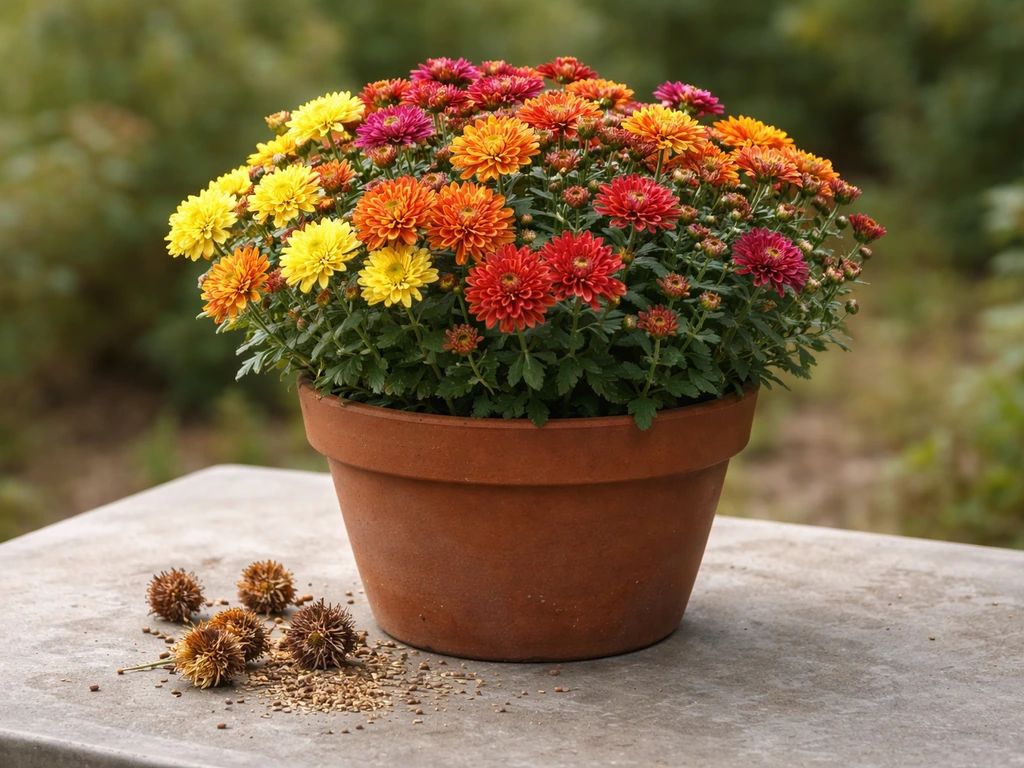
If your dried mum has those, you've got a real shot at growing new plants from them. If you are wondering can you grow a flower from a stem, note that mums are usually about seed from a dried bloom rather than propagating from a stem. If all you have are petals, you won't.
Seed vs. petal: what you're actually working with
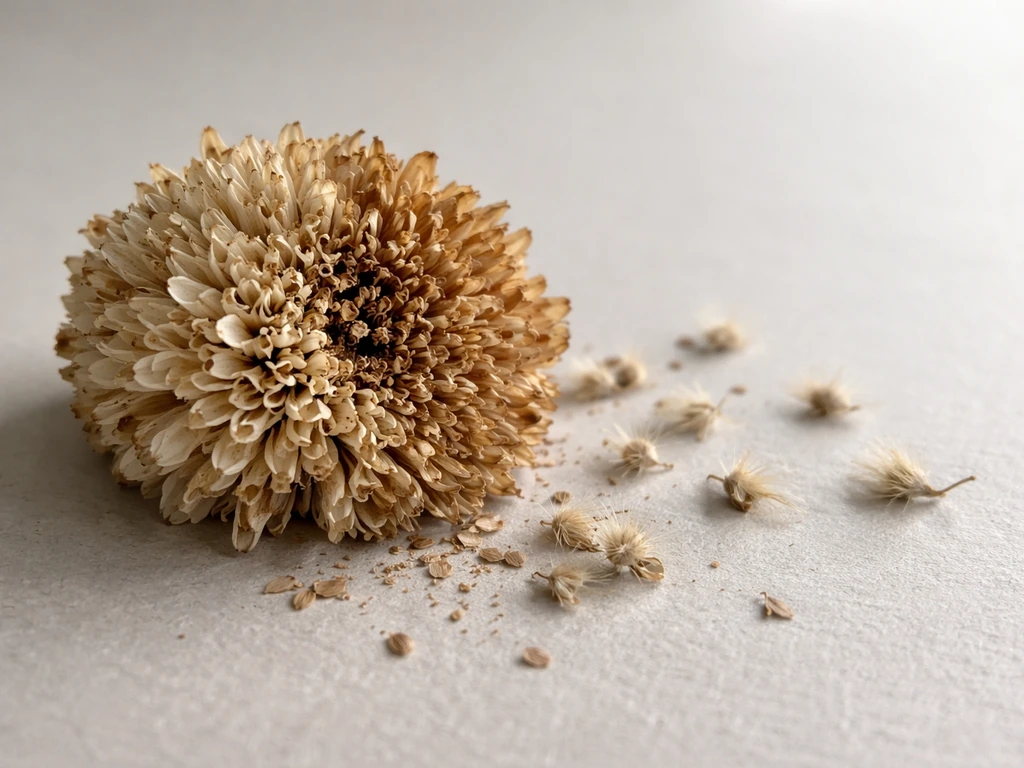
This is the part most people get confused about, so it's worth taking a minute. A chrysanthemum bloom is actually a dense cluster of many individual tiny flowers called florets. The showy petals around the outside are ray florets, and they're mostly decorative. The tightly packed center is made up of disc florets, and those are the ones that can produce seeds. Each fertilized disc floret develops into a small, narrow achene, which is the actual seed unit. It looks a bit like a tiny sliver of grain, pale to tan in color, and sits tucked in the dried center of the bloom.
So when someone asks if they can grow mums from dried flowers, the question really becomes: did those disc florets get fertilized and set seed before the bloom was cut or dried? If the mums were grown in a garden where insects could pollinate them, and the blooms were left on the plant long enough to mature, there's a reasonable chance you have viable seed. If they came from a florist bouquet that was cut when freshly open, the odds drop considerably. Florists cut mums early, well before seed set, and many commercial mum varieties are grown in controlled greenhouse conditions that limit natural pollination.
How to check your dried mum for viable seed
- Gently pull apart the dried center of the bloom with your fingers or tweezers.
- Look for small, narrow, seed-like structures, pale tan or straw-colored, about 2–3mm long.
- Try the float test: drop a few into a cup of water. Seeds that sink after a minute or two are more likely to be viable; floaters are often empty or hollow.
- If the center is just dry, fluffy chaff with nothing dense inside, you likely don't have set seed.
- Keep in mind that older dried flowers lose viability quickly. Chrysanthemum seeds from the Asteraceae family show sharp germination declines after just one to two years, so freshness matters.
It's also worth knowing that many modern hybrid mums sold at garden centers are bred for appearance, not seed production, and they may produce very little viable seed even when pollinated. Open-pollinated or heirloom varieties give you a much better chance. If you're starting from a garden mum that you grew yourself last fall, left to dry on the plant, and harvested the seed head before winter, you're in the best possible position.
How to grow mums from seed at home
Once you've confirmed you have actual seed, the process is pretty approachable. Mum seeds don't need anything fancy: no soaking, no special pretreatment in most cases. The main things they want are warmth, consistent moisture, and light.
When to start
Start mum seeds indoors 8 to 10 weeks before your last expected frost date. In most of the US, that lands you somewhere between late January and early March for a spring transplant. If you're in a warmer zone (Zone 7 and south), you could push that a bit earlier. The goal is to get seedlings big enough to transplant outdoors in late spring so they have the entire summer to build up before their short-day flowering window kicks in during fall.
Setting up your containers and soil
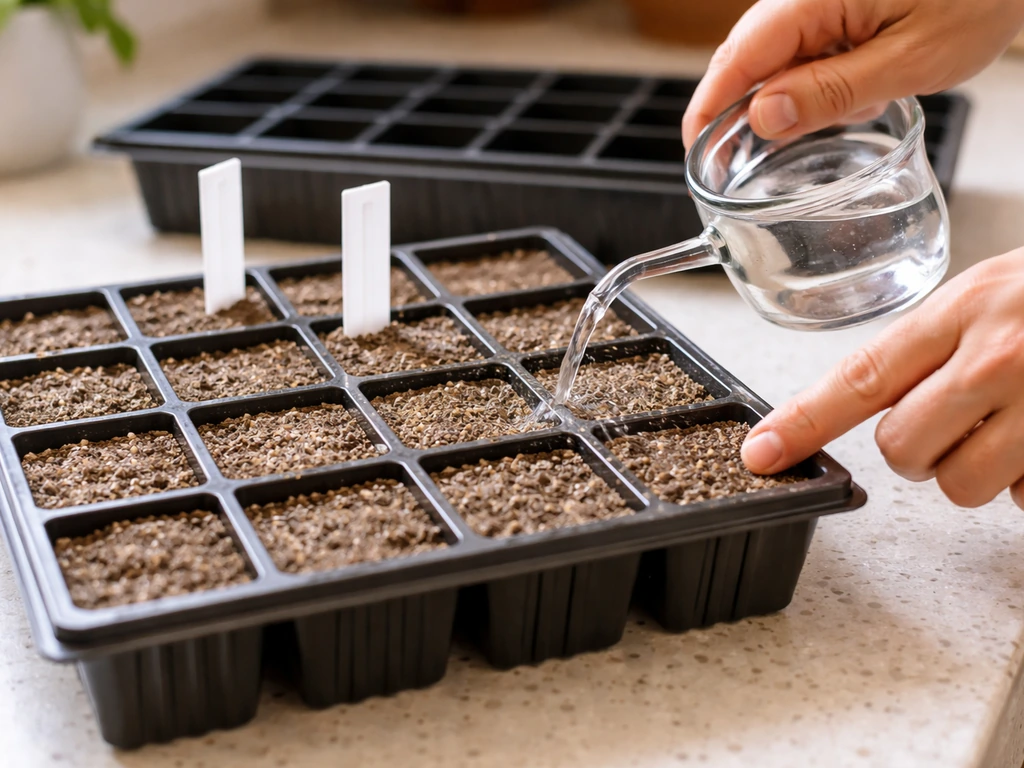
Use a fresh, sterile seed-starting mix, not regular garden soil or old potting mix. Clean trays or small cell packs work well. Fill to about half an inch from the top, water the mix until it's evenly moist but not soggy, and let it settle before sowing. A bottom tray with drainage holes matters here: mum seedlings are prone to damping off if they sit in standing water.
Sowing the seeds
Mum seeds need light to germinate, so don't bury them. Press them lightly onto the surface of the moist mix so they make good contact with the soil, then cover with just the thinnest dusting of vermiculite, barely enough to hold moisture around the seed. You're not trying to block light, just keep the seed from drying out. One or two seeds per cell is fine. If you're sowing in a flat, scatter them thinly and plan to thin or prick out later.
Light and temperature
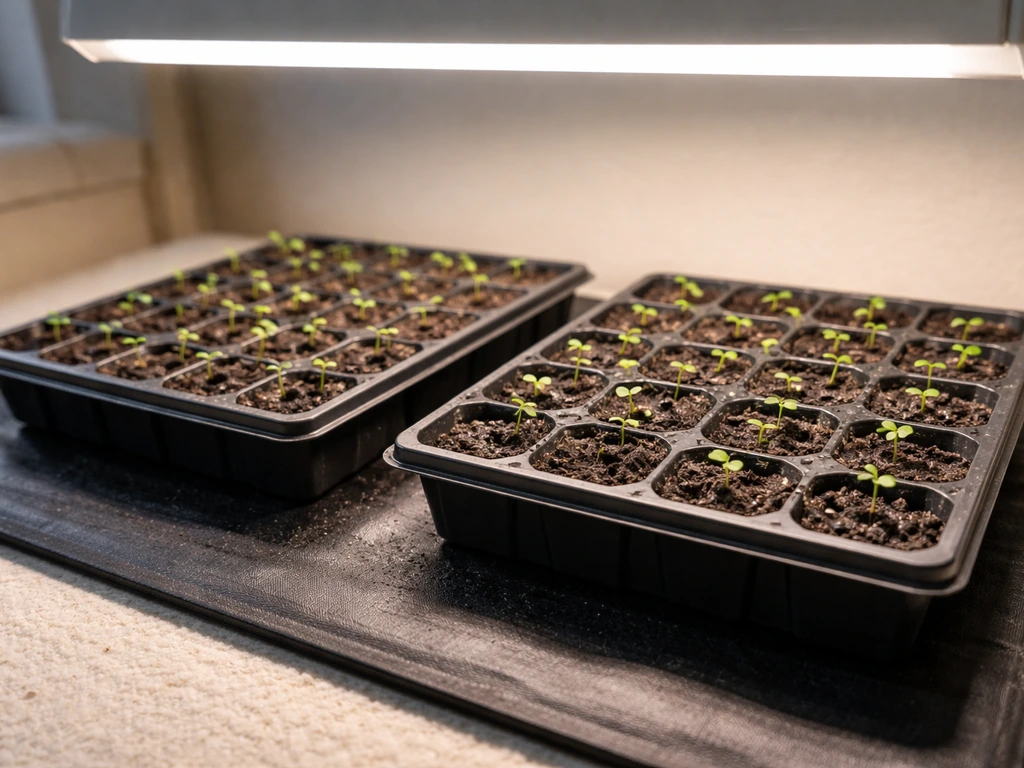
Keep your seed trays somewhere warm, around 65 to 70°F is ideal. Bottom heat from a seedling heat mat speeds things up nicely. As soon as seeds are sown, they need bright light: a sunny south-facing window works, but a grow light placed 2 to 3 inches above the tray works even better for consistent results. Expect germination in 10 to 18 days if your seeds are viable and conditions are right. If nothing has happened by day 20, the seed is probably not viable.
Watering during germination
Keep the surface of the mix consistently moist but not wet. A spray bottle is your best friend here: overhead watering from a can can wash the surface-sown seeds around or compact the mix. Mist the surface once or twice a day, or use a humidity dome loosely placed over the tray to hold moisture in. Once you see seedlings emerging, remove the dome and back off on misting slightly to reduce fungal risk.
Cold stratification and transplanting
Most garden chrysanthemum seed does not require cold stratification before sowing. Reputable sources are pretty consistent on this: you can sow and expect germination without any cold pretreatment. That said, if you're working with wild-collected or species chrysanthemum seed (rather than cultivated garden mum seed), a 3 to 4 week cold stratification at around 40°F in a damp paper towel inside the refrigerator can improve germination rates. When in doubt, try half your seeds without stratification and half with, and see what happens.
Transplanting comes once your seedlings have two to three sets of true leaves and nighttime temperatures outside are consistently above 50°F. Before moving them out, harden them off over 7 to 10 days: start by setting the tray outside in a sheltered, partly shaded spot for an hour, then gradually increase outdoor exposure each day until they can handle a full day of sun without wilting. Skipping hardening off is one of the most common reasons transplanted seedlings fail, so don't rush this step.
When planting into the garden or a larger pot, space mums about 18 to 24 inches apart. They get bushy. Plant at the same depth they were in the seed tray, water in well, and give them a few days of shade cloth or dappled shade if the weather is immediately hot and sunny.
Getting from seedlings to actual blooms
Growing mums from seed to bloom takes patience, and understanding a few key things about how mums work will save you a lot of frustration.
Pinching for bushier plants
Pinch your mum seedlings back once they reach about 6 inches tall by snipping off the top inch or two of each stem. Do this every time a stem reaches about 6 inches until mid-summer (around early to mid-July in most zones). Pinching encourages branching, which means more stems and more blooms. If you skip this step, you'll often end up with leggy, single-stemmed plants with just a handful of flowers at the top. Stop pinching by late July so the plant has time to set buds before fall.
Feeding schedule
Apply a balanced fertilizer (something close to a 10-10-10 or similar ratio) in mid-June once the plants are established and actively growing. When you start seeing buds form in July, switch to a half-strength liquid balanced feed applied every 7 days to support bud development without pushing too much leaf growth. Back off on feeding once buds are opening.
The short-day bloom trigger
Here's the key thing about mums that trips up a lot of beginners: mums are short-day plants, meaning they only start forming flower buds when nights become long enough, typically as daylength drops below about 13 hours in late summer and fall. If you're in most of North America, this starts happening naturally in August and September, and blooms follow 6 to 10 weeks later. You can't rush this with fertilizer or water. What you can do is make sure your plants are large, healthy, and well-pinched before that window arrives so they're ready to put on a good show. Garden mums grown from seed and transplanted in spring should bloom naturally in fall without any special intervention.
When things go wrong: common problems and fixes
No germination
If nothing sprouts after 20 days, the most likely culprit is non-viable seed. Seeds from unknown-age dried flowers, from heavily hybridized florist varieties, or from blooms that never set seed in the first place simply won't germinate no matter how good your conditions are. Check your setup: are seeds surface-sown with good light? Is the mix staying consistently moist? Is the temperature warm enough? If all those boxes are checked and you still have nothing, chalk it up to seed quality and source fresh seed from a reliable supplier. It's not a technique failure, it's just the reality of working with unknown seed.
Damping off
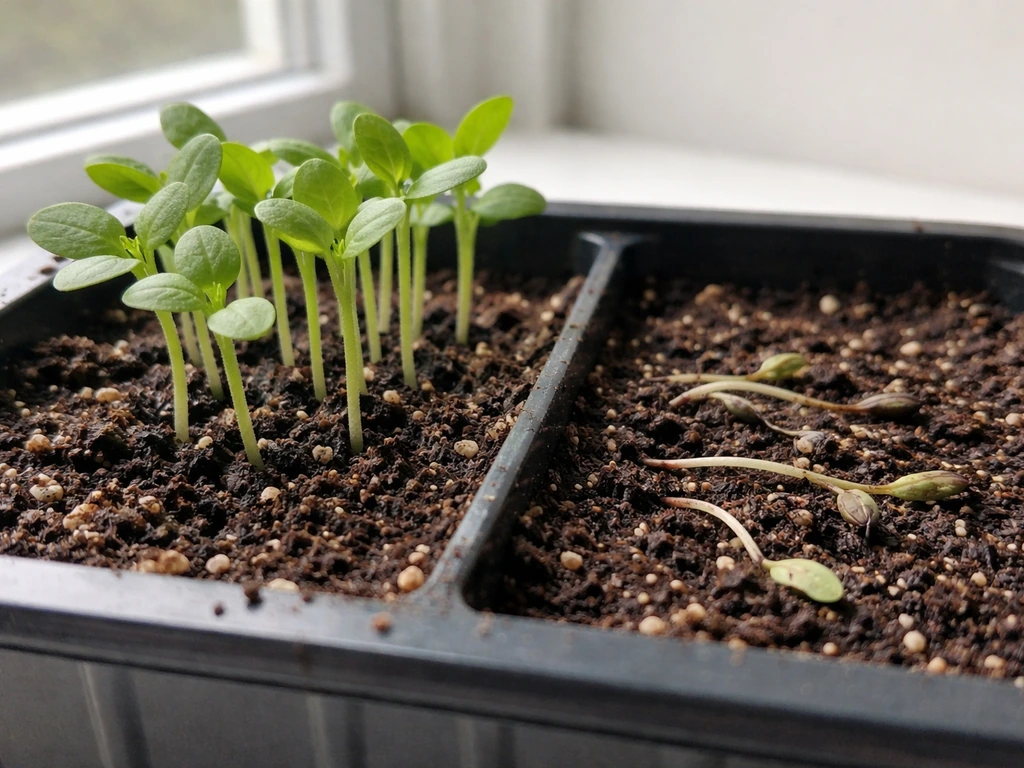
Damping off is that frustrating condition where seedlings sprout, look great for a few days, then suddenly collapse at the soil line and die. It's caused by fungal pathogens that thrive in wet, poorly ventilated conditions. Prevention is far easier than cure: always use fresh sterile seed-starting mix (never reused mix or garden soil), water from the bottom whenever possible, keep airflow moving around your seedlings with a small fan, and avoid letting trays sit in standing water. If damping off hits a tray, remove affected seedlings immediately and reduce watering. There's no real recovery once a seedling collapses.
Leggy seedlings
Leggy, stretched-out seedlings with long gaps between leaves almost always mean not enough light. Mums need strong, direct light from germination onward. If you're using a grow light, lower it to within 2 to 3 inches of the seedlings. If you're using a window, move to your brightest south-facing spot or supplement with a grow light. Leggy seedlings can sometimes be salvaged by burying the stem deeper when transplanting, but it's much better to fix the light issue early. A seedling that starts strong and compact will build a better root system and bloom more reliably.
Seed failures from dried flower sources
If you tried everything above and got nothing, don't give up on growing mums from seed. The issue is almost certainly the seed source, not your technique. Dried flowers from bouquets or florist arrangements are genuinely poor candidates for seed saving (you can read more about the broader challenges of trying to grow flowers from cut bouquet material, which applies here too).
If you're wondering about inputs like Miracle-Gro on cut flowers, it helps to know that feeding cut blooms is different from supporting living seeds or seedlings. If you have actual seed, you can follow the same at-home steps to start it and grow new mums from cut flowers grow flowers from cut flowers.
In general, bouquet material is rarely ideal for seed saving, so learning how it compares can help you plan a better approach grow flowers from a bouquet. Your best results will come from seed saved from your own open-pollinated garden mums, harvested in fall once the seed head is fully dry and brown, or from purchased chrysanthemum seed from a reputable supplier.
Starting with known-viable seed and the steps above, you'll find mums are actually quite beginner-friendly to grow from scratch.
| Problem | Most Likely Cause | Fix |
|---|---|---|
| No germination after 20 days | Non-viable or very old seed | Source fresh seed; verify surface-sowing and moisture |
| Seedlings collapse at soil line | Damping off (fungal) | Use sterile mix, improve airflow, water from below |
| Tall, stretched seedlings | Insufficient light | Lower grow light to 2–3 inches; move to brighter spot |
| Plants don't bloom | Not enough summer growth or short-day trigger missed | Start earlier, pinch through July, let fall days trigger bloom |
| Very low germination rate | Hybrid or unfertilized dried flower source | Use open-pollinated garden mum seed or purchased seed |
Growing mums from seed you harvested yourself is genuinely satisfying, and once you understand what you're actually working with (tiny achenes, not petals), the whole process makes a lot more sense. Start with honest seed assessment, give those seeds the light and warmth they need, pinch your plants consistently through summer, and let fall's shorter days do the flowering work for you. Even if your first batch from dried flowers doesn't germinate, you'll know exactly why and exactly what to do differently next time.
FAQ
How can I tell if my dried mum has real seed or just petals?
Look for the narrow, tan-to-pale slivers in the dried center (achenes). Ray petals and the fuzzy outer “florets” will not contain seed. If you rub the dried center and only get powdery bits or empty husks, those are not viable seed.
Can I grow mums from dried flowers if they came from a florist bouquet?
Yes, but only if they contain intact, fertilized achenes. If the bouquet was cut before seed set, there may be nothing inside the center to sprout. Also, seeds from many hybrid florists’ varieties often germinate poorly or produce plants unlike the original.
Do older dried mums still have seed that will grow?
Seed viability can drop fast, especially if the dried material got warm or humid. If your dried bloom is older than a year, treat it as “iffy,” and plan to germinate a larger number of seeds so you still get enough seedlings.
What is the most common reason mum seeds fail to germinate?
Mum seeds are surface-sown, so burying them too deep is a common failure. Press them onto the mix for good contact, then cover with only a very thin dusting (enough to prevent drying, not enough to fully shade the seed).
How do I prevent damping off when starting mums?
If the surface stays wet, damping off becomes much more likely. Water from below when you can, keep airflow around the tray, and mist lightly instead of soaking. If seedlings collapse, remove the affected ones immediately and reduce moisture.
My seeds did not sprout by day 20, are they definitely dead?
If you see no sprouts by day 20, do a quick viability check by cutting a few achenes in half with a fingernail or razor. If they are completely empty or look dry and hollow, odds are low. If they look filled but never sprout, revisit light, warmth, and moisture first.
Why are my mum seedlings tall and floppy?
If you get sprouts that are leggy and weak, it usually means insufficient light. Move a grow light closer (about 2 to 3 inches) or use a brighter window, then transplant a little deeper only once you have sturdy roots.
Do mum seeds need cold stratification if they’re from dried flowers?
Stratifying is optional for most cultivated garden chrysanthemum seed, but it can help certain types. If you are using wild-collected or species-type seed, try a split test (half stratified, half not) so you can see whether it improves germination for your specific seed lot.
Will seedlings grown from dried mum seed look like the original plant?
Don’t expect the same cultivar from saved seed. Many florist and hybrid mums are bred for flower form, and seed-grown plants can differ in height, bloom time, and flower size. For the most predictable results, use seed from open-pollinated garden mums.
When should I stop pinching mums to avoid reducing fall blooms?
Pinch timing affects branching and bloom quality. If you pinch too late, the plant may have less time to form buds before the short-day flowering window. Stop pinching around late July so buds can set and develop for fall bloom.
Can I use a humidity dome for mum seedlings?
Yes, but avoid turning the tray into a swamp. A humidity dome can help early, then remove it as soon as seedlings emerge and shift to gentle misting to keep the surface slightly moist but not saturated.
Can I transplant outside as soon as seedlings have true leaves?
If nights are cold, wait to transplant until temperatures are reliably above about 50°F. Cold snaps after transplanting can stunt growth or cause failure to establish, even if the seedlings looked healthy indoors.
What conditions on the plant improve the chances of getting viable seed from mums?
If your dried blooms were harvested too early, the center may not contain fertilized achenes. For future attempts, the best seed comes from blooms left on the plant until the seed head is fully dry and brown, then harvested after it dries further.
Next Articles
Can You Use Miracle-Gro on Cut Flowers in a Vase?
Can you use Miracle-Gro on cut flowers in a vase? Get clear dos and safer alternatives to keep bouquets fresh.
Can You Grow a Flower From a Stem? Step by Step
Learn can you grow a flower from a stem with step-by-step cuttings, rooting conditions, transplanting, and troubleshooti
Can You Grow Flowers From Cut Flowers? How to Succeed
Learn when you can regrow cut-flower stems into new plants and follow step-by-step rooting and aftercare tips.