Yes, you can absolutely grow flowers in a raised bed, and honestly, a raised bed might be the best possible place to grow them. The improved drainage, warmer soil, and easy access make raised beds especially well-suited for cut flowers like zinnias, snapdragons, marigolds, calendula, and wildflower mixes. Whether you're starting from seed or transplanting, a well-built raised bed gives you control over your growing conditions in a way that in-ground planting rarely does.
Can You Grow Flowers in a Raised Bed For Cutting

James Holloway
29 May 2026
Why raised beds actually work really well for flowers
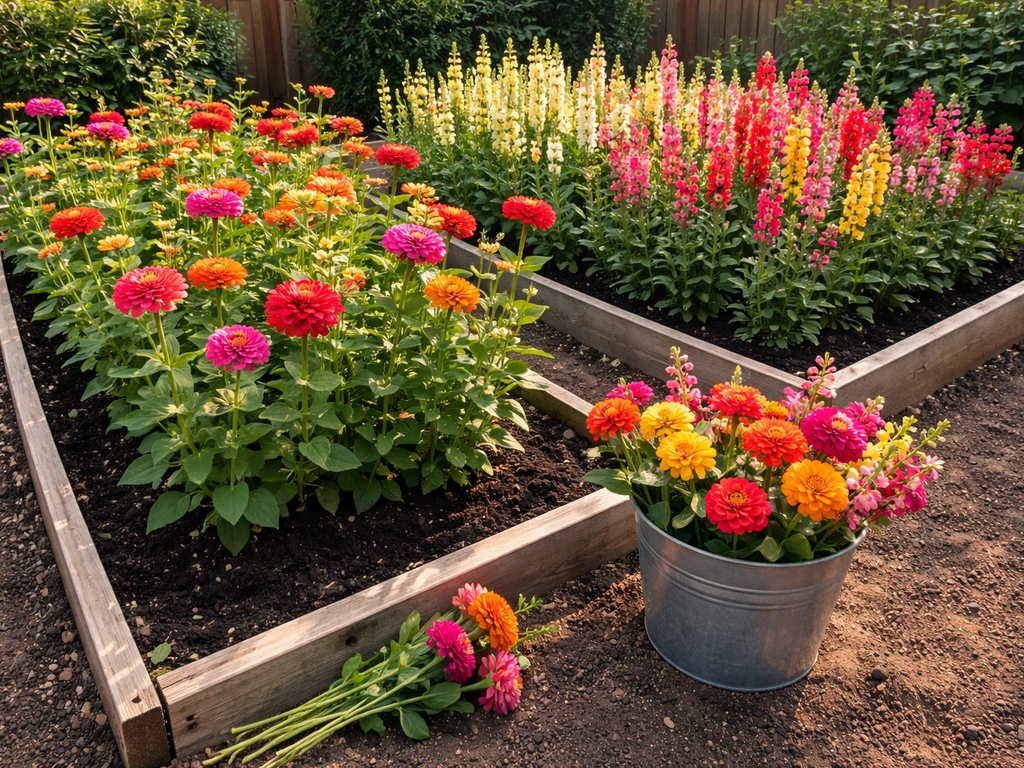
A lot of gardeners think of raised beds as a vegetable thing, but they're fantastic for cut flowers too. Here's the real reason: flowers like zinnias, snapdragons, and calendula are surprisingly picky about drainage. Waterlogged roots are one of the quickest ways to lose a plant, and raised beds fix that problem by design. The soil sits elevated above ground level, water moves through it freely, and roots get the oxygen they need to thrive. Research from West Virginia University Extension confirms that raised beds provide improved soil drainage and warmer soil temperatures, which gives you an earlier start to the season and a longer growing window compared to poorly drained in-ground sites.
There's also the practical side of managing a cutting garden. When your flowers are in a raised bed, you can reach every plant without stepping into the soil and compacting it. The standard recommendation is to keep beds no wider than 4 feet so you can reach across from either side without straining. That might sound like a small detail, but when you're harvesting stems every few days all summer, it matters a lot. You'll also have far fewer weeds competing with your flowers, especially if you prep the site well before building.
How to set up a raised bed for cut flowers
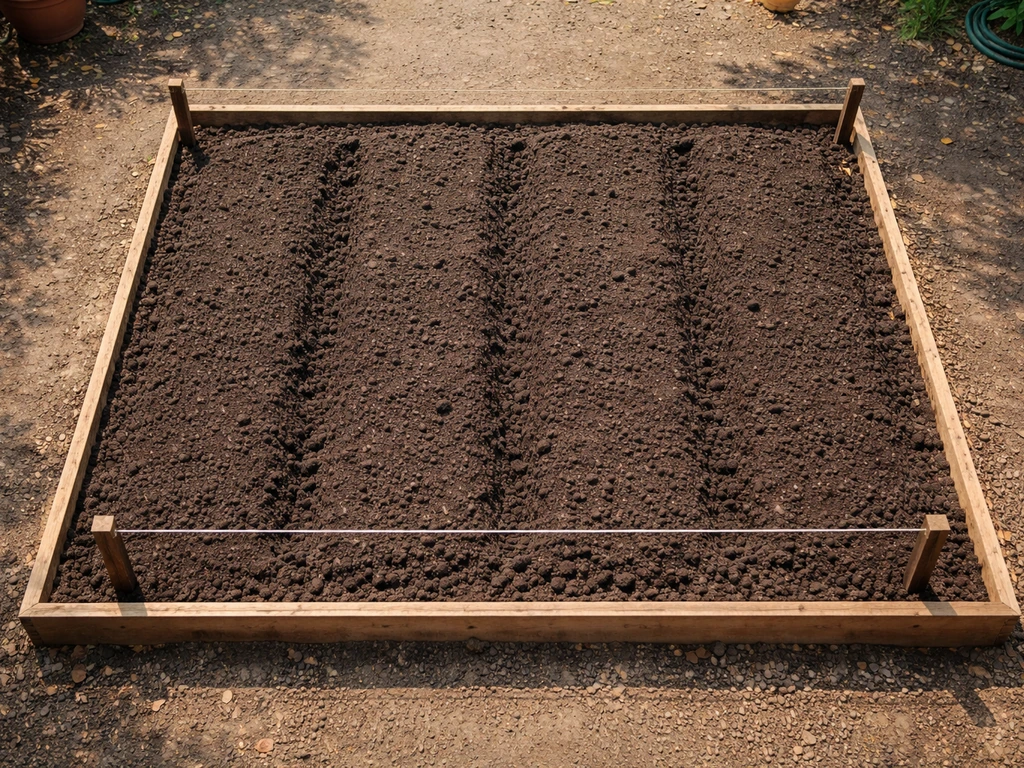
Getting the setup right before you plant is worth the extra hour or two. Start with location. Cut flowers need at least 6 hours of direct sunlight per day, and more is better for high-producing varieties like zinnias. A south- or east-facing spot that gets sun from morning through afternoon is ideal. If you put the bed in too much shade, you'll get leggy stems and fewer blooms, no matter what you do with soil and fertilizer.
For bed dimensions, aim for 4 feet wide and whatever length your space allows. A 4x8 foot bed gives you a solid cutting garden that can handle 3 or 4 different flower types at once. Depth matters too: 12 inches deep is a good minimum for most cut flowers, and 16 to 18 inches gives deeper-rooted plants like snapdragons room to really establish themselves. Knowing the right bed depth helps you estimate how much soil you need to fill it how much soil do flowers need to grow. When you're building the bed, lay landscape fabric or cardboard beneath it to suppress weeds before they become a problem. It's much easier to handle this once at the start than to deal with grass and weeds creeping in all season.
Sunlight and drainage are the two non-negotiables. Everything else you can adjust as you go, but a shady or waterlogged bed will fight you all season no matter what flowers you choose.
Choosing the right flower varieties for your cutting bed
Not every flower is equally well-suited for cut-flower production in a raised bed. You want varieties that produce long stems, bloom repeatedly or over a long window, and respond well to cutting by pushing out more flowers. Here are the ones I'd prioritize, especially for a first cutting bed.
- Zinnias: The easiest, most rewarding cut flower for a raised bed. They love the excellent drainage a raised bed provides, which actually helps prevent the fungal issues that plague them in heavy ground soil. Choose cut-flower varieties with longer stems, like 'Benary's Giant' or 'Oklahoma' series, rather than compact bedding types.
- Snapdragons: These are a raised-bed favorite because they bloom in cooler weather and add height and drama to arrangements. They take around 80 to 100 days from seed to first harvest in spring, or 70 to 80 days for a late-summer/fall crop, so timing your sowing matters.
- Calendula (pot marigold): One of the most beginner-friendly cut flowers available. It blooms in as little as 45 to 60 days from direct sowing, keeps producing until the first hard frost, and deadheading consistently keeps new buds coming all season.
- Marigolds: Cheerful, pest-deterring, and genuinely great for cutting. African marigold varieties with large blooms and tall stems work better for bouquets than the compact French types.
- Wildflower mixes: A loose wildflower mix works surprisingly well in a raised bed if you choose one designed for cutting. Just know that wildflowers prefer lean soil (no extra fertilizing needed) and need good drainage during establishment, which a raised bed handles perfectly.
- Poppies: Excellent for cutting but they're one-and-done bloomers, so they're best combined with repeat bloomers like zinnias or calendula to keep the bed productive all season.
If you have a small bed, I'd suggest starting with zinnias and calendula. Between the two, you'll have blooms from early summer until frost, and both are extremely forgiving for beginners. Add snapdragons once you get comfortable with timing your sowings.
Soil, drainage, and amendments that actually help flowers bloom
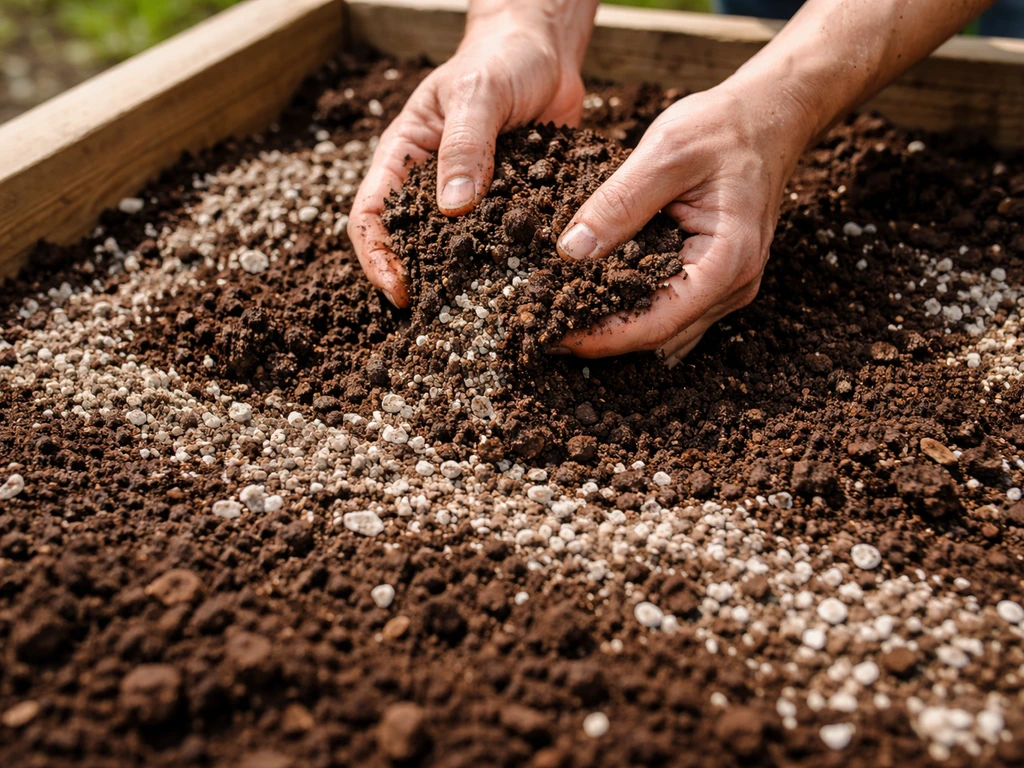
The soil mix you put in your raised bed will make or break your cutting garden. The good news is that the right mix isn't complicated. A reliable starting point recommended by University of Minnesota Extension is roughly 50 to 67 percent topsoil blended with 33 to 50 percent plant-based compost by volume. If you are wondering can you grow flowers in compost, the key is mixing it with other materials so it drains well and does not overwhelm the plants with nutrients. This gives you a mix that holds moisture without staying soggy, drains well, and provides baseline nutrients without being so rich that plants produce all foliage and few blooms.
To improve texture and drainage further, especially if your topsoil is heavy, you can incorporate perlite or coarse vermiculite (about 10 to 15 percent of total volume). Some gardeners also add a small amount of coarse sand. What you want to avoid is filling the bed with pure potting mix, which dries out too fast, or pure compost, which can be too nutrient-dense and actually suppresses flowering in some plants. Wildflowers, for example, do better in leaner soil with less fertility.
For pH, most cut flowers are happy in a range of 6.0 to 7.0. Zinnias specifically tolerate a wider range of 5.5 to 7.5. If you're using quality topsoil and compost, you'll usually land in the right range without adjusting. If you're unsure, a basic soil test kit from a garden center will tell you where you stand.
One thing worth noting: if you're growing wildflowers alongside heavier feeders like zinnias, consider giving them separate sections of the bed or even a dedicated smaller bed. Wildflowers genuinely don't want the rich, amended soil that zinnias thrive in, and mixing them in the same heavily amended space can lead to disappointing results with your meadow-type varieties.
When and how to plant: seeds vs. transplants
Timing your plantings is one of the most important things you can do for a productive cutting bed, and it's also one of the areas where gardeners most often go wrong. The basic rule is: cool-season flowers (snapdragons, calendula, poppies) go in early, and warm-season flowers (zinnias, marigolds) go in after your last frost date.
Starting seeds indoors vs. direct sowing
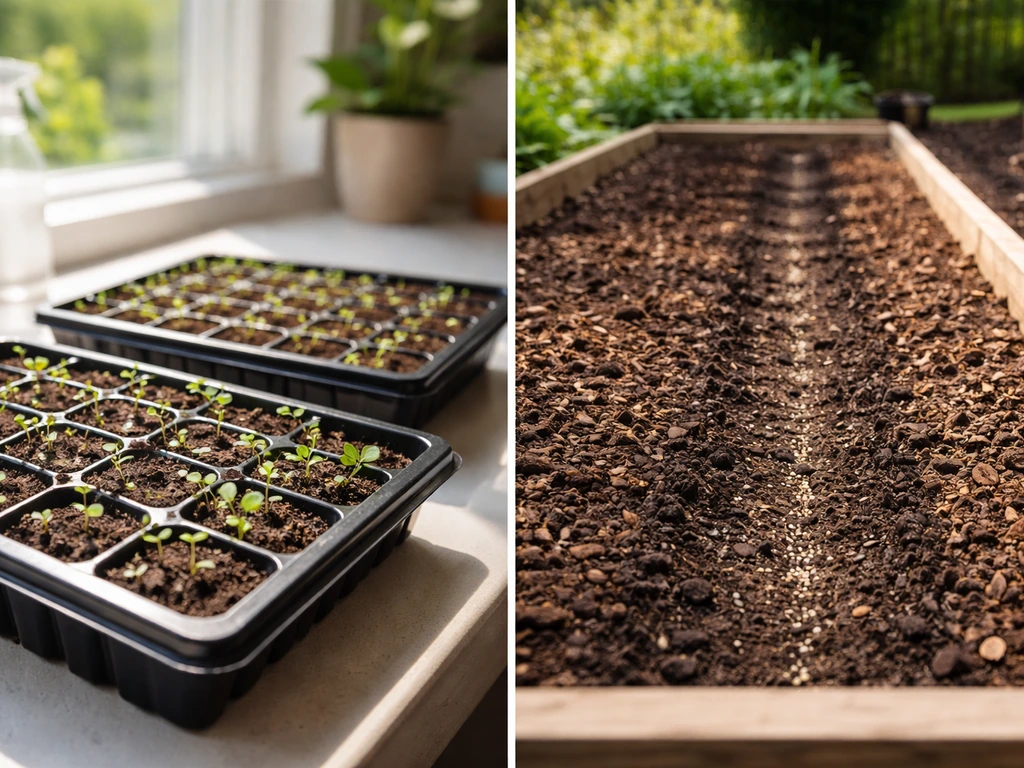
Snapdragons are best started indoors 8 to 10 weeks before your last frost date. They're slow to germinate and establish, and starting them inside gives you a head start that directly translates to earlier blooms. Use a sterile, soilless seed-starting mix for this (Penn State Extension confirms these mixes are generally free of the damping-off fungi that can kill seedlings), sow shallowly, and keep the mix moist but not wet. If you want to skip traditional soil entirely, a soilless approach is also the foundation of growing flowers without soil soilless seed-starting mix. Never overwater seedlings or plant seeds too deep, as both conditions encourage damping-off.
Zinnias and marigolds, on the other hand, really prefer direct sowing once the soil has warmed to at least 60°F and all frost risk has passed. If you want to skip seeds altogether, try propagation methods like cuttings or dividing perennials instead direct sowing. They germinate quickly (usually 5 to 7 days) and don't love being transplanted, so starting them indoors often just causes unnecessary root disturbance. Sow zinnia seeds about 1/4 inch deep, and thin to final spacing once seedlings are 3 to 4 inches tall.
Calendula is one of the most flexible. You can direct sow it in spring after the last frost at about 1/4 inch depth, or start it indoors 4 to 6 weeks early for earlier blooms. It also tolerates light frost, so it can go in a bit earlier than zinnias if you're in a climate where spring temperatures swing.
| Flower | Start Method | Timing | Days to First Bloom |
|---|---|---|---|
| Snapdragon | Start indoors | 8–10 weeks before last frost | 80–100 days from sowing |
| Zinnia | Direct sow | After last frost, soil 60°F+ | 60–75 days from sowing |
| Calendula | Direct sow or indoors | After last frost (or 4–6 wks early) | 45–60 days from sowing |
| Marigold (African) | Direct sow or indoors | After last frost | 50–70 days from sowing |
| Poppy | Direct sow | Early spring (needs cold stratification) | 60–90 days from sowing |
Caring for your flowers from seedling to full bloom
Watering
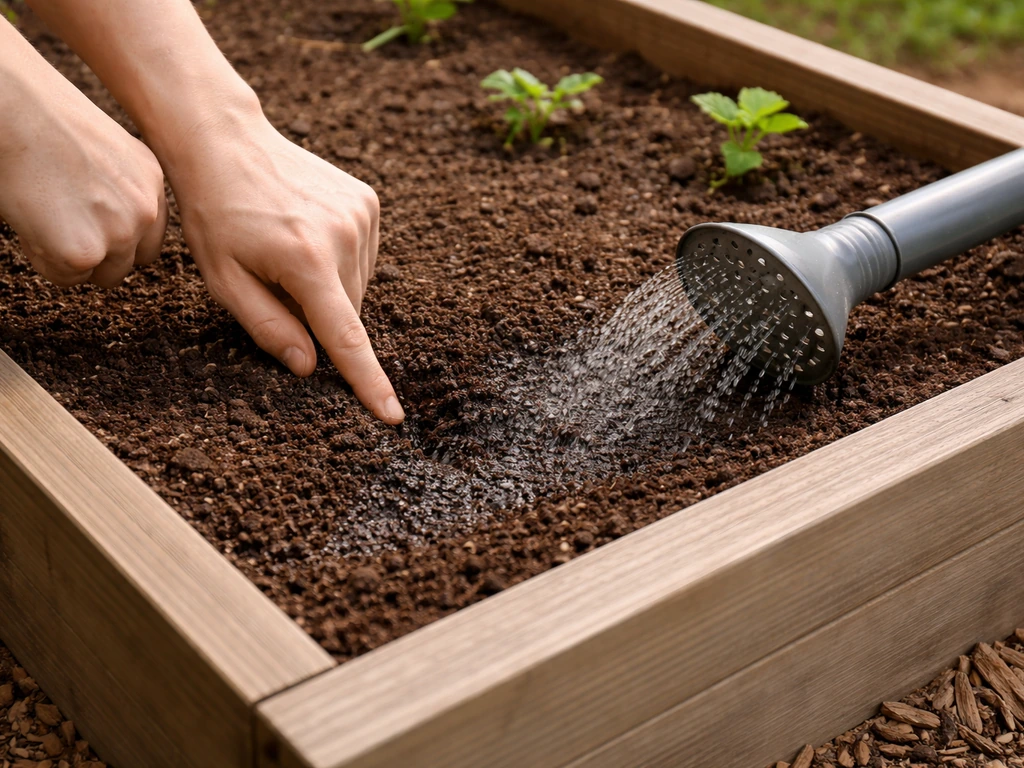
Raised beds dry out faster than in-ground beds, especially in hot weather, so watering needs a bit more attention. The best method is to check the soil at 2 to 4 inches deep before watering. If it's dry at that depth, water thoroughly. If it's still moist, hold off. Alabama Cooperative Extension recommends drip irrigation for raised beds because it delivers water directly to the root zone, reduces evaporation, and keeps foliage dry, which cuts down on fungal disease risk. If you're watering by hand, water at the base of plants, not over the top, for the same reason.
Feeding
A well-amended soil mix handles most of your feeding needs in the early season. Once plants are actively growing, a balanced fertilizer (roughly 10-10-10 or a similar ratio) applied every 3 to 4 weeks supports steady flowering. For zinnias specifically, nitrogen supports vigorous leafy establishment early on, phosphorus promotes root development and bloom initiation, and potassium contributes to overall plant health. Avoid going too heavy on nitrogen once plants are established, as that pushes foliage at the expense of flowers. Wildflower varieties and poppies are exceptions: they really don't need supplemental fertilizing and often perform better with none.
Thinning and spacing
Thinning is one of those tasks that beginners hate doing but almost always wish they'd done sooner. Crowded plants compete for light and air circulation, which sets the stage for powdery mildew, one of the most common problems in a raised-bed cutting garden. The Chicago Botanic Garden specifically links dense planting and poor airflow to powdery mildew outbreaks. General spacing guidelines: zinnias at 9 to 12 inches apart, snapdragons at 6 to 9 inches, calendula at 8 to 12 inches, and marigolds at 10 to 12 inches. It feels counterintuitive to thin plants you've worked to grow, but the ones that remain will be bigger, healthier, and more productive.
Harvesting your cut flowers and keeping plants producing
When and how to cut
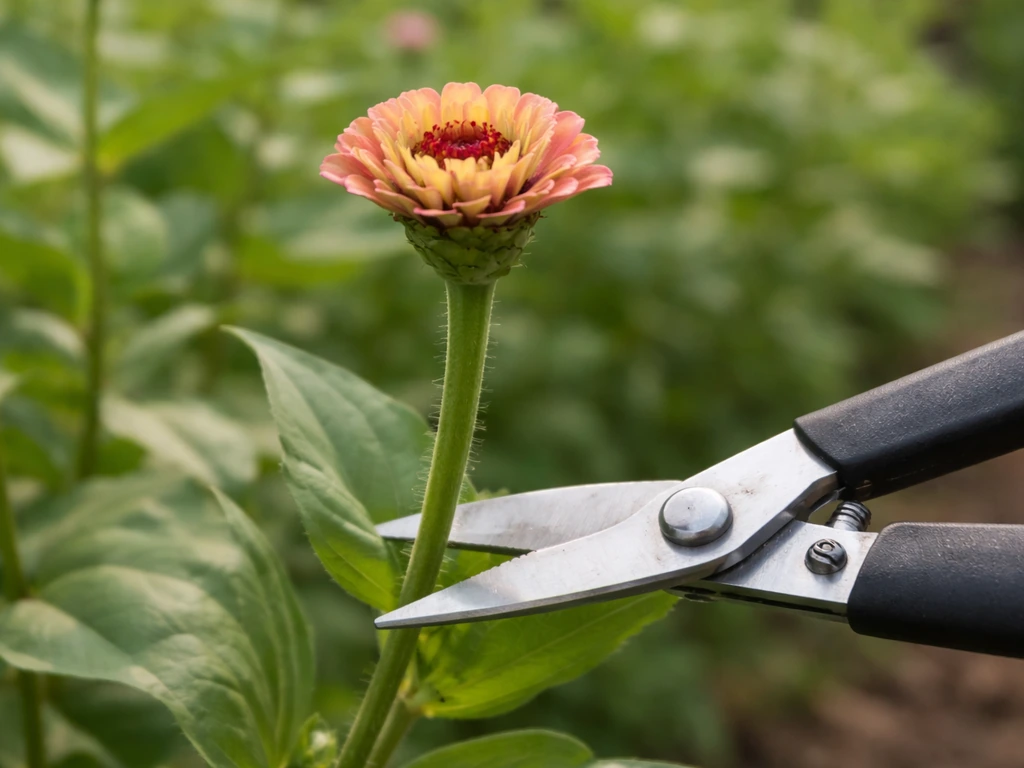
For most cut flowers, the key is to harvest before the bloom fully opens. For zinnias, cut when the bloom is just beginning to open and the petals are starting to unfurl but the center isn't fully exposed yet. For calendula, harvest when the blooms are about 50 percent open. Snapdragons are ready when roughly one-third to one-half of the florets along the spike have opened. Cutting too early means short vase life; cutting too late means shorter stems and a plant that's already putting energy into seed production instead of new blooms.
Always cut stems at a diagonal with clean, sharp scissors or pruners. A diagonal cut increases the surface area for water uptake and keeps the stem from sitting flat against the bottom of your vase. Cut early in the morning when stems are fully hydrated, place them in cool water immediately, and get them into a cool spot or indoors as soon as possible. Strip any leaves that would sit below the waterline.
Deadheading and keeping plants blooming
Regular harvesting and deadheading are essentially the same act in a cutting garden, and both signal the plant to keep producing flowers. For zinnias and calendula, this works beautifully: the more you cut, the more blooms you get. Deadhead or harvest every 2 to 3 days during peak summer to keep plants from going to seed. Homes & Gardens also recommends cutting deadheaded spent zinnia flowers throughout the growing season to keep them producing deadhead or harvest every 2 to 3 days during peak summer. If you let spent blooms sit on the plant, production slows down noticeably within a week or two. Calendula in particular is remarkably productive from early summer right through the first hard frost when you keep it regularly deadheaded.
Succession planting for nonstop blooms
One of the biggest advantages of a raised bed cutting garden is how easy it is to run succession plantings. Instead of sowing all your zinnias at once, sow a new small batch every 2 to 4 weeks from your last frost date through mid-summer. Zinnias have a productive bloom window of roughly 60 to 75 days per planting, so staggering your sowings means you always have something at peak production. When an early sowing starts to wind down in late summer, your mid-summer planting is hitting its stride.
For snapdragons, Cornell High Tunnels recommends planning two planting windows: one for early spring harvests and one mid-summer sowing for a fall crop. This pairs really well with a raised bed because the warmer soil in spring gives your early sowing a better start, and the fall crop benefits from the bed's good drainage heading into cooler, wetter conditions.
A simple succession plan for a 4x8 raised bed might look like this: fill half the bed with an early cool-season planting of snapdragons and calendula, then fill the other half with zinnias after last frost. As the cool-season crops finish up in early summer, pull them and direct-sow a second round of zinnias or marigolds in that space. By mid-July you've essentially got two overlapping crops running simultaneously, and your cutting bed stays productive from late spring all the way to frost.
If you're interested in going even further with soil-specific challenges or alternative growing setups, the principles here connect closely to topics like growing flowers in clay soil, which shares the same drainage-first logic, and the broader question of how much soil depth flowers actually need to root properly. Both are worth exploring as you expand your cutting garden year after year.
FAQ
Can you grow flowers in a raised bed if you don’t have full sun all day?
Yes, but plan for fewer and later blooms. Aim to place the bed where you get at least 6 hours, morning sun is especially helpful, and you should expect leggier stems if you’re consistently below that threshold. If your yard stays shaded, prioritize plants known to tolerate partial shade better, and consider lighter, faster-draining soil so the bed doesn’t stay wet in cool conditions.
How deep does a raised bed need to be for different cut flowers?
A 12-inch depth works for many cut flowers, while deeper-rooted types like snapdragons generally do better at 16 to 18 inches. If you’re unsure, check the mature root depth listed for your specific variety, and also factor in how much soil you will lose over time as the mix settles.
What’s the best way to prevent weeds in a raised bed before planting?
Use barrier material under the bed before filling, and keep it tight to the soil so weeds cannot wedge in at the edges. After planting, add a thin layer of mulch between rows once seedlings are established, mulch only around plants, not directly on stems, to avoid trapping moisture against foliage.
Do I need to adjust soil pH in a raised bed?
Often you can skip adjustments if you’re using quality topsoil blended with compost. If your soil test shows pH outside the roughly 6.0 to 7.0 range, correct it before planting and retest if you make significant changes. Don’t overcorrect, small errors can be worsened by adding high amounts of lime or sulfur.
Can I use pure compost or potting mix in a raised bed for flowers?
It’s usually a mistake. Pure potting mix tends to dry out quickly and can stress plants between waterings, pure compost can be overly rich and may reduce flowering for some species. A better approach is a blended mix that retains moisture but still drains well, then fine-tune texture with perlite or coarse vermiculite if your soil is heavy.
How often should I water a raised bed cutting garden?
Check soil moisture at 2 to 4 inches deep, water thoroughly only when that layer is dry. In hot weather, daily checks may be needed even if you’re using drip irrigation. A common error is watering on a schedule, instead of based on depth moisture, which can lead to root stress or fungus-prone dampness.
Is drip irrigation worth it for raised bed flowers?
It’s one of the easiest ways to keep foliage drier while reliably watering the root zone. Drip also helps you maintain consistent moisture during bloom cycles, which is important for steady cutting production. If you water by hand, aim the stream at the base and avoid splashing leaves, especially in the morning when humidity is high.
Should I start all flower seeds indoors in a raised bed?
Not always. Warm-season flowers like zinnias and marigolds usually do better when direct-sown after the soil warms and frost risk is gone, they don’t love transplanting. Cool-season options like snapdragons benefit from indoor starts because they germinate slowly and establish better with a head start.
My seedlings are dying, what’s the most likely cause?
Damping-off is a common culprit, it usually comes from keeping seed-starting mix too wet or using contaminated soil. Use a sterile soilless seed-starting mix for indoor starts, keep moisture consistent but not soggy, improve airflow, and remove weak seedlings promptly if you see collapse.
How do I thin seedlings without ruining my planting?
Thin once seedlings have enough size to distinguish weak ones from strong ones, then snip unwanted plants at soil level rather than pulling to avoid disturbing neighbors. Use thinning spacing targets for your variety, for example zinnias typically need wider spacing for airflow, closer spacing often leads to powdery mildew issues in humid weather.
What fertilizer approach works best for repeated cut flowers?
Use a balanced fertilizer periodically while plants are actively producing, but avoid heavy nitrogen once blooming starts because it can drive leaf growth at the expense of flowers. If you’re growing wildflowers or poppies in the same bed, reconsider fertilizing strategy, these often perform best with little to no supplemental feeding.
How can I prevent powdery mildew in a raised bed?
Focus on airflow and spacing first, crowded plants dry more slowly and are more prone to fungal issues. Water at the base instead of overhead, and harvest often to reduce dense, aging foliage. If mildew shows up, remove badly affected leaves early rather than waiting for it to spread.
When should I harvest for longest vase life?
Harvest early in the day when stems are hydrated, cut stems diagonally with clean pruners, and place them in cool water immediately. Don’t wait for full opening, especially for zinnias, because fully opened blooms often shorten vase life and the plant shifts energy toward seed.
How do I deadhead or harvest without confusing the plant?
In most cutting gardens, harvesting and deadheading are the same job, you remove spent blooms frequently so the plant keeps producing. For heavy bloomers like calendula, stay on a tight rhythm, every 2 to 3 days during peak summer, so the plant doesn’t ramp up seed production.
Can I succession plant flowers in the same raised bed without resetting the soil?
Yes, you can succession plant by sowing new batches every few weeks and pulling out finished plants promptly. Refreshing is still helpful, if a season’s soil gets exhausted, add compost on top in small amounts before replanting. Avoid mixing wildflowers into heavily amended zones, separate sections if your crop mix includes both types.
What’s the simplest plan for a beginner raised bed cutting garden?
Start with a straightforward combination, zinnias and calendula for reliable, long bloom windows, then add snapdragons once you’re comfortable timing indoor starts and transplanting avoidance. Keep the bed at about 4 feet wide for reach, prioritize sun and drainage, and plan to harvest frequently to trigger continuous flowering.
Next Articles
How to Grow Flowers in Clay Soil: Step-by-Step Guide
Step-by-step fixes for heavy clay: diagnose drainage issues, prep beds, plant seeds or transplants, water, mulch, and tr
Floret How to Grow Ranunculus: Step-by-Step Guide
Step-by-step Floret-style ranunculus guide: corm prep, planting, watering, frost care, troubleshooting, and harvest for
How to Grow Your Own Wedding Flowers Step by Step
Step-by-step guide to grow bouquet-ready wedding flowers, from planning and sowing dates to harvesting, conditioning, an