
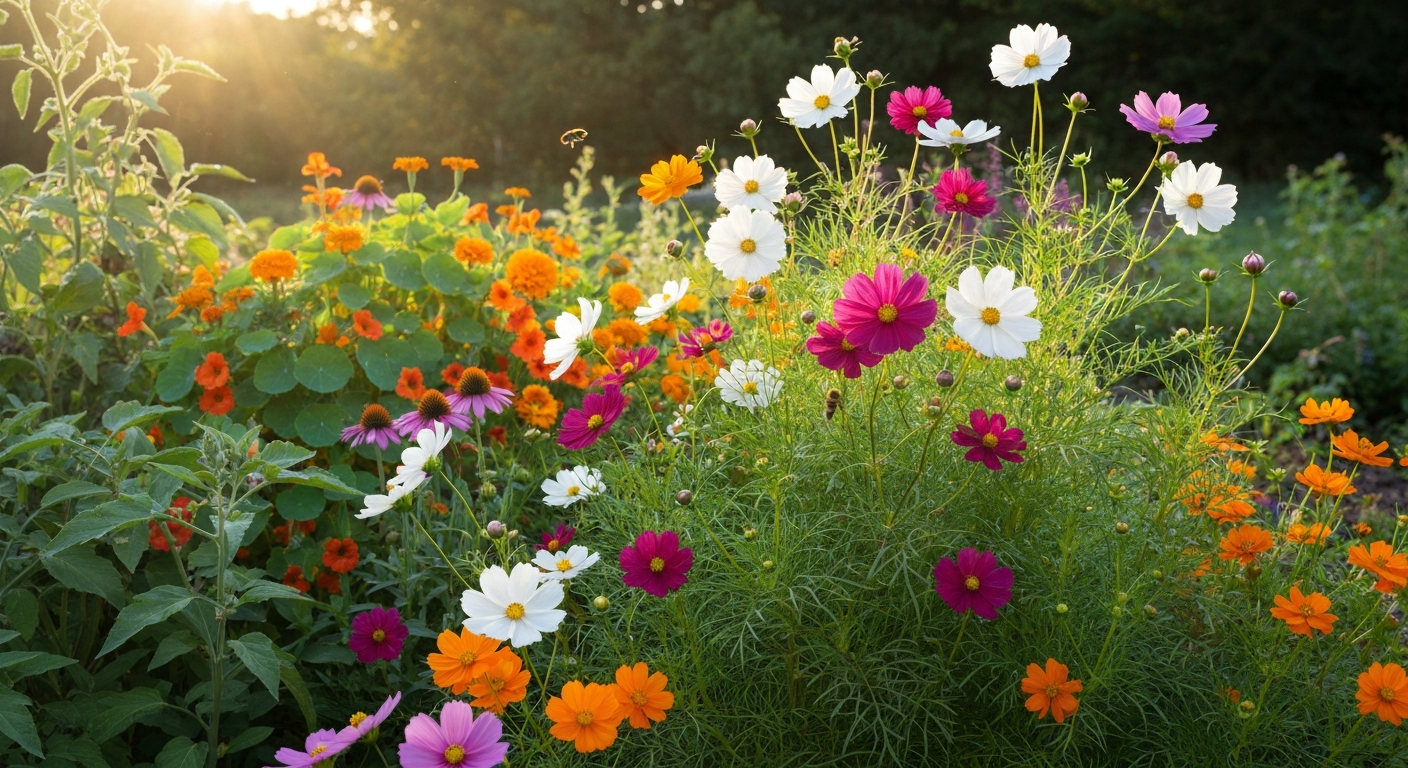
Cosmos is one of the easiest flowers to pair with other plants because it gets along with almost everything. The best companions are marigolds, zinnias, snapdragons, poppies, coneflowers, salvias, nasturtiums, and sunflowers, plus a handful of pollinator-friendly vegetables like tomatoes and beans. Planted together, these combinations extend your bloom season from early summer right through hard frost, attract a steady stream of beneficial insects, and make one of the prettiest cutting gardens you can grow from seed.
What to Grow with Cosmos: Companion Plants, Timing & Plans

James Holloway
27 Jul 2026
Why pairing plants with cosmos actually matters
I used to plant cosmos in their own tidy rows and wonder why my garden felt a little flat by August. Once I started mixing them with companions, everything changed: longer bloom windows, fewer aphid explosions, and borders that looked genuinely designed rather than thrown together. This guide is for anyone who has grown cosmos on their own and wants to do more with them, but it works just as well if you are sowing your very first packet of seeds. I will walk you through which plants to combine, where to put them, when to sow, and how to keep the whole combination looking good from spring prep through autumn cutting.
Cosmos at a glance: species, habits, and varieties worth growing
Most of what you will find at a garden center or in a seed catalogue falls into two species: Cosmos bipinnatus (garden cosmos or lace cosmos) and Cosmos sulphureus (sulphur cosmos). C. bipinnatus is the tall, feathery-leaved one with white, pink, and magenta flowers, it grows anywhere from 2 to 4 feet tall and produces the long, graceful stems that are perfect for cutting. C. sulphureus is shorter and stockier, blooms in vivid oranges, yellows, and reds, and tends to reseed more aggressively. If you want cut flowers, lean toward C. bipinnatus. If you want compact mounding color in a bed or container, C. sulphureus is your friend.
For C. bipinnatus, 'Versailles Mix' is a reliable cut-flower series with strong single flowers and excellent stem length. 'Double Click' gives you semi-double and fully double blooms that look fancier than the price of the seed packet suggests. For C. sulphureus, 'Bright Lights' is a warm mixed orange-and-yellow blend, and 'Diablo' pushes into deep orange-red territory. Both are worth growing together for color range.
A note on chocolate cosmos
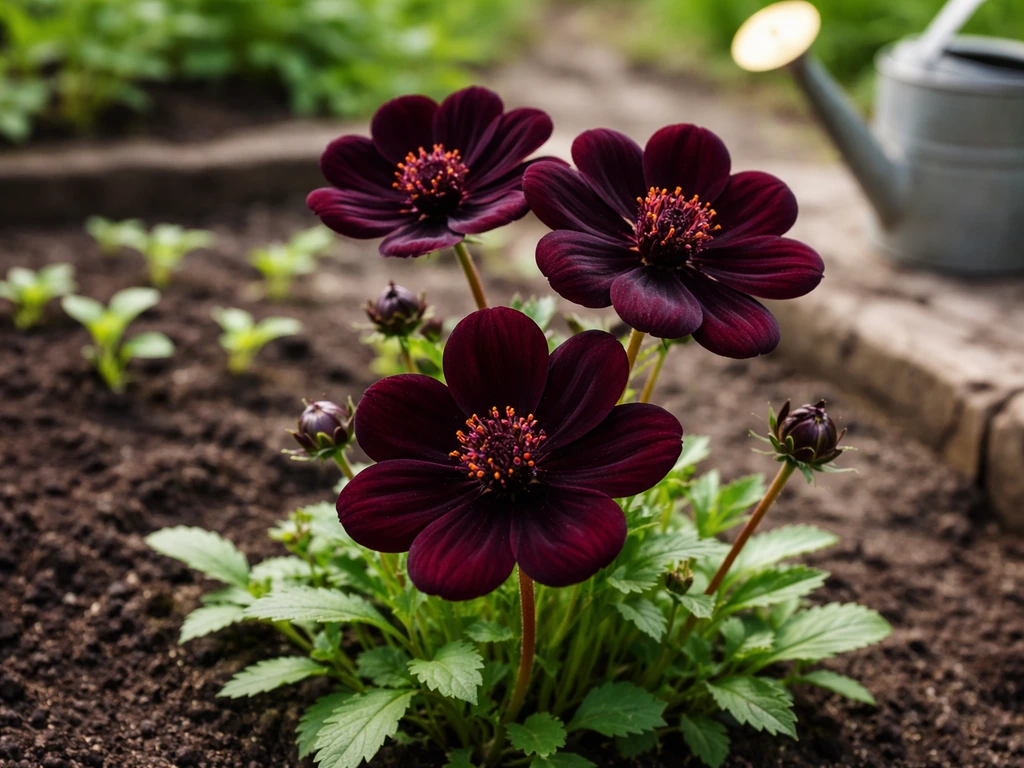
Chocolate cosmos (Cosmos atrosanguineus) deserves its own mention because it comes up in every conversation and causes a lot of confusion. It is a different species entirely: deep burgundy-maroon flowers with a faint chocolate scent, and it is almost always grown from tubers rather than seed. Seed-grown plants are difficult to produce true to type and results are unreliable. If you see 'chocolate cosmos' seeds offered cheaply, be skeptical. For the real thing, buy named tuber divisions from a reputable supplier. For gamers, we also have a separate guide on how to grow black flowers Animal Crossing that covers the game's mechanics and tips. It is genuinely beautiful but it is not a direct substitute for the annual cosmos in the combinations below. (And if you arrived here looking for ACNH black cosmos or black flower breeding mechanics in Animal Crossing, that is a completely separate topic from real-world gardening, the game uses its own color genetics system that has nothing to do with these species.)
The best companions for cosmos
Here is the honest shortlist: plants I have grown alongside cosmos with consistently good results. Each one shares cosmos' preference for full sun and moderately lean, well-drained soil, and most of them contribute something extra beyond just looking good.
- Marigolds (Tagetes patula and T. erecta): excellent light and water compatibility, attract beneficial insects, and produce compounds that can deter some soil pests near vegetables. French marigolds are particularly good in mixed borders and vegetable-adjacent plantings.
- Zinnias: bold, flat flower forms that contrast beautifully with cosmos' airy texture. Both love heat and full sun. Watch for powdery mildew in humid summers — give zinnias plenty of airflow and water at the base rather than overhead.
- Snapdragons: cool-season bloomers that peak in spring and early summer, handing the relay to cosmos as temperatures climb. Planting both gives you near-continuous color from April through October.
- Poppies (California poppy and annual Papaver): poppies prefer lean, dry soil and bloom early, then fade just as cosmos starts gaining momentum. The timing stagger is almost perfect for a succession-like effect from a single direct sow.
- Coneflowers (Echinacea): perennial companions that anchor a mixed planting with sturdy upright form. Their mid-to-late summer bloom overlaps with cosmos at prime time, and pollinators move freely between both.
- Salvias (annual and perennial species): tubular salvia flowers attract a different range of pollinators (especially hummingbirds and long-tongued bees) than the open disc of cosmos, so pairing them broadens your beneficial visitor count significantly.
- Nasturtiums: easy to direct sow in lean soil, nasturtiums act as a trap crop — aphids preferentially colonize them rather than your cosmos and other nearby plants, drawing in ladybirds and hoverflies that then clean up the aphid population.
- Sunflowers: tall structural anchors that bloom slightly earlier than cosmos and carry pollen and nectar resources into late summer when other plants are flagging. Place them at the back of the border; cosmos fills in front.
- Cutting-garden staples (scabiosa, ammi, nigella, lisianthus): these all share cosmos' preference for full sun and thrive when direct sown or transplanted at the same time. They add texture and filler greenery that makes mixed bouquets far more interesting.
- Pollinator-friendly vegetables (tomatoes, beans, cucumbers): not traditional bed companions, but planting cosmos around the edges of a vegetable patch draws in pollinators that improve fruit set. Marigolds alongside both cosmos and tomatoes add pest-deterrent value in the same pass.
Soil, sun, and site: what the combination needs
Cosmos is one of those plants that actually performs worse when you try too hard. Rich, heavily amended soil produces tall floppy plants with more leaves than flowers. Cosmos prefers full sun, well‑drained soil and tolerates a wide soil texture range; recommended soil pH is broadly neutral to slightly alkaline (about pH 6.0–8.0); avoid overwatering and high nitrogen fertility because rich fertility produces tall, floppy plants with fewer blooms. The sweet spot is well-drained soil with a pH somewhere between 6.0 and 8.0, neutral to slightly alkaline, and minimal added nitrogen. If your soil is heavy clay, work in some grit or coarse sand for drainage rather than rich compost. Most of the companions listed above (marigolds, nasturtiums, poppies, salvias) share this preference for lean conditions, which makes them genuinely easy to grow together without needing different soil preparation zones.
Full sun is non-negotiable: aim for at least six hours of direct sun, eight is better. Cosmos and zinnias both stretch and thin out in partial shade, producing fewer flowers and weaker stems. Avoid low-lying spots where water sits after rain, that is the fastest route to root rot and gray mold, especially in late-season plantings. A slight slope or raised bed solves both drainage and airflow problems at once.
Spacing and placement: tall varieties, dwarf varieties, and everything in between
The classic mistake in a mixed cosmos planting is putting everything at the same height and ending up with a wall that blocks itself. Think in layers. Standard C. bipinnatus reaches 3 to 4 feet, so it belongs at the back of a border or in the middle of an island bed. Tall sunflowers go behind or beside cosmos at the back. C. sulphureus varieties top out around 18 to 24 inches and work well in the middle layer alongside mid-height salvias and marigolds. Nasturtiums, dwarf marigolds, and low-growing poppies fill the front edge.
For plant spacing, thin or transplant cosmos to 9 to 12 inches (23 to 30 cm) apart. I tend toward the wider end of that range, 12 inches gives each plant more airflow and produces stronger, less tangled stems that are actually easier to cut. Zinnias want similar spacing. Coneflowers, if you are adding perennial anchors, need about 18 to 24 inches between plants because they will come back larger each year.
| Plant | Height | Placement in border | Spacing |
|---|---|---|---|
| Sunflowers (tall) | 5–8 ft | Back row | 18–24 in |
| Cosmos bipinnatus | 3–4 ft | Back to mid | 9–12 in |
| Coneflowers | 2–3 ft | Mid border | 18–24 in |
| Salvias (tall annual) | 2–3 ft | Mid border | 12–18 in |
| Zinnias | 18–30 in | Mid to front | 9–12 in |
| Cosmos sulphureus | 18–24 in | Mid border | 9–12 in |
| Marigolds (French) | 8–12 in | Front edge | 6–9 in |
| Nasturtiums | Trailing/6–12 in | Front edge/spillover | 9–12 in |
| Poppies (California) | 12–18 in | Front to mid | 6 in (thin to 9 in) |
Seed starting and planting timeline, step by step
Cosmos is forgiving about timing but rewards a little planning. The soil needs to be above 60°F (16°C) before you direct sow, below that, germination is patchy and slow. Seeds germinate in about 7 to 10 days at 68 to 72°F (20 to 22°C). If you want earlier blooms or are growing cosmos as a cut flower, starting transplants indoors 5 to 7 weeks before your last frost date gives you a head start. For most of zones 5 to 7 in the US, that means starting indoors in late March to early April and transplanting out in mid to late May.
- Calculate your last frost date and count back 5–7 weeks. That is your indoor sow date for cosmos transplants.
- Fill cell trays or small pots with a peat-free seed-starting mix. Sow cosmos seeds on the surface and press lightly — they need light to germinate, so do not bury them more than about 1/4 inch.
- Keep the tray at 68–72°F. A heat mat helps in early spring. Expect germination in 7–10 days.
- Once seedlings show their first true leaves, thin to one per cell. Grow on in a bright spot (a south-facing windowsill or under grow lights for 14–16 hours per day).
- Harden off transplants over 7–10 days by moving them outdoors for increasing periods, starting with a sheltered spot in morning sun.
- Transplant out after your last frost date when soil has warmed. Space 9–12 inches apart. Water in gently — cosmos does not need heavy feeding at planting.
- For direct sowing: wait until after last frost and soil is above 60°F, then scatter seeds and rake lightly. Thin seedlings to 9–12 inches when they reach 3–4 inches tall.
- Sow companion flowers on their own schedules: poppies and snapdragons go in earlier (some can handle light frost), nasturtiums and zinnias go in at the same time as cosmos after last frost.
Succession planting for flowers all season long
Here is something worth knowing about cosmos: it is technically a short-day plant, which means very young plants that go out into long summer days can take a while before they commit to heavy flowering. Sowing in one big batch and waiting often means a slow start followed by a flush, then a gap. Succession sowing solves this almost completely. The goal is to stagger sowings every 3 to 4 weeks so you always have plants at different stages of development, and the blooms keep coming rather than peaking all at once.
For a typical zone 5 to 6 garden (last frost around mid-May), here is how I structure my cosmos succession. Adjust the calendar forward or back by 2 to 3 weeks depending on your zone.
| Sowing date (approx.) | Method | Expected first bloom | Notes |
|---|---|---|---|
| Late March / early April | Indoors, transplant out mid-May | Late June | Earliest harvest batch; prioritize cutting varieties like 'Versailles' |
| Mid-April | Indoors, transplant out late May | Mid-July | Main succession batch; mix C. bipinnatus and C. sulphureus |
| Late April / early May | Direct sow after last frost | Late July – early August | Fills gaps left by early crops; also sow nasturtiums and zinnias here |
| Late May | Direct sow | Mid-August through September | Best for late-season cutting and pollinators into autumn |
| Early June (zones 7–9) | Direct sow | September through October | Extended season batch; use in warmer climates where frost is late |
The companion flowers slot naturally into this calendar. Sow snapdragons and poppies in early spring (they tolerate light frost and appreciate the cool start). Direct sow nasturtiums and zinnias alongside your late April/early May cosmos batch. Marigolds can go in at the same time as cosmos transplants. Sunflowers, if you are growing tall varieties, get direct sown in mid-spring so they have time to build height before cosmos arrives at their feet. If you are growing coneflowers as perennial anchors, plant those separately in spring and let cosmos fill around them as the season progresses. For more ideas on what to grow with coneflowers, see our companion planting suggestions.
Container combinations: making it work in pots
Cosmos can absolutely grow in containers, but you need to be realistic about size. A standard 12-inch pot is workable for one C. sulphureus plant with a few nasturtiums trailing over the edge, but for a genuinely impressive container planting with C. bipinnatus, go for at least an 18-inch diameter pot, ideally 24 inches or a large half-barrel. The bigger the pot, the less often you will need to water, and root space directly affects stem length and flower production.
Use a well-draining potting mix, not straight compost, which holds too much water and encourages root rot. I mix standard multipurpose compost with about 20 to 25 percent perlite or coarse grit. Avoid adding slow-release high-nitrogen fertilizer at planting; cosmos in a pot needs slightly leaner conditions than most container plants to flower well rather than go leafy.
Watering is the key management task in a container. Let the top inch of mix dry out between waterings, then water thoroughly until it drains from the bottom. In midsummer heat, a large pot may need water every day; check by feel rather than by schedule. Avoid wetting the foliage, water at the base to reduce powdery mildew risk, especially on zinnias if you are combining them in the same large pot.
Container companion combos that actually work
- Large container (24 in+): two C. bipinnatus plants ('Double Click' or 'Versailles') at the back, two French marigolds at the front, one trailing nasturtium to spill over the rim. Full sun only.
- Medium container (18 in): three C. sulphureus plants ('Bright Lights') with a compact salvia (such as Salvia farinacea 'Victoria Blue') in the centre. Excellent pollinator magnet on a patio.
- Hanging basket or small pot (12–14 in): stick to C. sulphureus dwarf types alone, or pair with a compact trailing nasturtium. Cosmos bipinnatus gets too tall and top-heavy for small pots.
- Cutting-garden trough (12 in deep x 24 in wide): sow a row of 'Versailles Mix' cosmos with scabiosa or ammi alongside for mixed bouquet material. Harvest frequently to keep plants productive.
Pollinators and pest management in a mixed planting
One of the underrated benefits of growing cosmos with companions is the genuine impact on your garden's insect ecosystem. Cosmos bipinnatus is documented as a strong attractor of honeybees, sweat bees, bumblebees, hoverflies, and butterflies because of its combined nectar and pollen reward. Food for Pollinators (PMC) and NC State Extension report that Cosmos bipinnatus produces both nectar and substantial pollen rewards and is frequently recorded attracting honey bees, sweat bees, bumble bees, syrphid flies, and butterflies Food for Pollinators (PMC) and Cosmos — NC State Extension Plant Toolbox. Add salvias for tubular-flower specialists, sunflowers for early and late season pollen, and coneflowers for late-summer bumblebees, and you are supporting pollinators across almost the entire growing season. This matters practically, not just ecologically: better pollinator activity improves fruit set on any vegetables nearby.
Pest pressure in a cosmos planting is real but manageable. Aphids are the most common issue, nasturtiums earn their place specifically because aphids colonize them first, acting as a living trap crop. Once aphids concentrate on nasturtiums, hoverflies and ladybirds move in to feed, and the problem often resolves itself without spraying. Other pests to watch for include thrips (which cause silvery streaking on petals), leafhoppers, and the occasional Japanese beetle. Slugs and snails are a risk on young seedlings, especially after transplanting. For all of these, good airflow through proper spacing is the first and most effective line of defense. Remove damaged material, water at the base, and reach for insecticide only as a last resort.
A word on marigolds and nematode control: you will often read that marigolds repel nematodes, and there is genuine science behind it. But the effect only works reliably when marigolds are grown as a dense cover crop and properly incorporated into the soil before planting vegetables, a few scattered marigolds between cosmos plants will not do it. Treat marigolds as a pest deterrent for above-ground insects (they are genuinely effective there) and as a companion for beneficial insect activity, not as a reliable nematode treatment in a mixed flower border.
Cutting cosmos: when and how to harvest
For the longest vase life, cut cosmos when the first petals are just starting to open or when the bud is showing full color but not yet fully reflexed. Fully open flowers will only last a day or two in a vase. Harvest in the early morning when stems are most hydrated, cut at an angle, and plunge immediately into clean water. Vase life runs about 4 to 6 days in plain water and can be extended a day or two with floral preservative. If you have a cool spot (36 to 40°F, or 2 to 4°C), conditioning stems there overnight before arranging genuinely makes a difference. The most important cutting habit is to keep cutting: regular harvesting signals the plant to keep producing, and cosmos that gets left to set seed will slow down dramatically. Deadhead or cut every few days to keep the flush going.
FAQ
What is the best companion mix to plant with cosmos for a cutting garden?
Choose long-stem Cosmos bipinnatus for cut flowers and pair with zinnias (tall single types), snapdragons, coneflowers (Echinacea), salvias, and sunflowers. Plant in blocks or staggered rows so tall plants (sunflowers, coneflowers) form a backdrop, cosmos in the mid-row for long stems, and shorter zinnias/snapdragons in front. Use lean, well-drained soil and full sun. Start cosmos seed indoors 5–7 weeks before transplanting or direct-sow after last frost; plant at 9–12 in (23–30 cm) spacing to encourage straight stems and good airflow. For deeper how-to guides, see internal links: marigolds, poppies, snapdragons, and cutting-garden flowers.
Which cosmos species and varieties are best for cutting versus mass displays?
For cutting: Cosmos bipinnatus varieties such as ‘Versailles Mix’, the ‘Double Click’ series, or long-stem mixes (choose single or semi-double forms for best vase life). For brighter, earlier displays and quick reseeding: Cosmos sulphureus varieties like ‘Bright Lights’ or ‘Diablo’. Cosmos bipinnatus gives the long stems and airy heads favored in bouquets; C. sulphureus is shorter, bushier and great for mixed borders and containers.
When should I sow cosmos seed (timing, seed-starting and succession plans)?
Seed-starting timeline: - Indoors: sow 5–7 weeks before your average last frost date. Transplant after hardening off when soil temps are consistently ~60°F (16°C) or higher. - Direct sow: after last frost when soil is ≥60°F (16°C); germination ~7–10 days at 68–72°F (20–22°C). Succession: sow or transplant every ~10–14 days for staggered blooms and a steadier cutting supply throughout summer and into fall. In warm climates, start late-winter transplants for early spring blooms and continue successions into midsummer.
How should I space cosmos in beds and containers?
Bed spacing: 9–12 in (23–30 cm) between transplants for cutting varieties; increase spacing for larger varieties or to reduce floppiness. Row spacing: 18–24 in (45–60 cm) where back-row sunflowers or coneflowers are included. Containers: use at least 12–16 in (30–40 cm) diameter for groups of dwarf or C. sulphureus plants; give each plant ~6–8 in (15–20 cm) separation in containers to avoid overcrowding. Adequate spacing improves airflow and reduces disease.
What soil and site conditions do cosmos and companions need?
Cosmos and the recommended companions prefer full sun and well-drained soil. Soil can be lean to moderately fertile (pH roughly 6.0–8.0). Avoid high nitrogen; rich soil produces lush foliage and fewer blooms. If soil is heavy clay, amend with compost and grit for drainage or plant on a raised bed. Most companions listed (marigolds, zinnias, snapdragons, poppies, salvias, nasturtiums, sunflowers, coneflowers) share these light and drainage needs, making them compatible in mixed borders or cutting beds.
What are practical sample bed and border layouts with cosmos?
Three practical layouts: 1) Cutting-bed block: center rows of tall sunflowers (back), middle rows of cosmos bipinnatus (long stems), front rows of zinnias and snapdragons for easy access to blooms. 2) Mixed border: repeat a 4-ft (1.2 m) module—sunflowers/ coneflowers at back, cosmos mid-height, nasturtiums and low poppies at edge—plant multiple modules along border. 3) Container cutting mix: one tall support (dwarf sunflower or salvia stake), 3–4 cosmos sulphureus or dwarf bipinnatus, and 2–3 trailing nasturtiums for color and pest management. Space and stagger bloom timing with succession plantings every 10–14 days.
Next Articles

What to Grow with Coneflowers: Companion Flowers & Design
What to grow with coneflowers: companion plants, planting schedule, design tips, and pest care for vibrant beds.
How to Grow Black Flowers From Seed to Bloom
Step-by-step guide to grow near-black blooms from seed to flowering, with soil, light, watering, and troubleshooting.
Linaria 'Fairy Bouquet' How to Grow: Seed to Cut Flowers
Grow Linaria 'Fairy Bouquet' from seed to vase: step‑by‑step sowing, care, cutting, seed saving & troubleshooting.