To grow flowers in Animal Crossing: New Leaf, buy seed bags from Leif's Garden Shop on Main Street, plant them in open ground, and water them every day with your watering can. That's the core loop. Do that consistently and you'll have flowers blooming and multiplying within a few in-game days. Once you've got the basics down, you can start breeding hybrid colors by pairing specific flower varieties next to each other and keeping up with daily watering. The whole system rewards patience and a bit of planning, and this guide walks you through every step.
How to Grow Flowers in Animal Crossing New Leaf

James Holloway
30 Apr 2026
Getting Your First Flowers to Grow
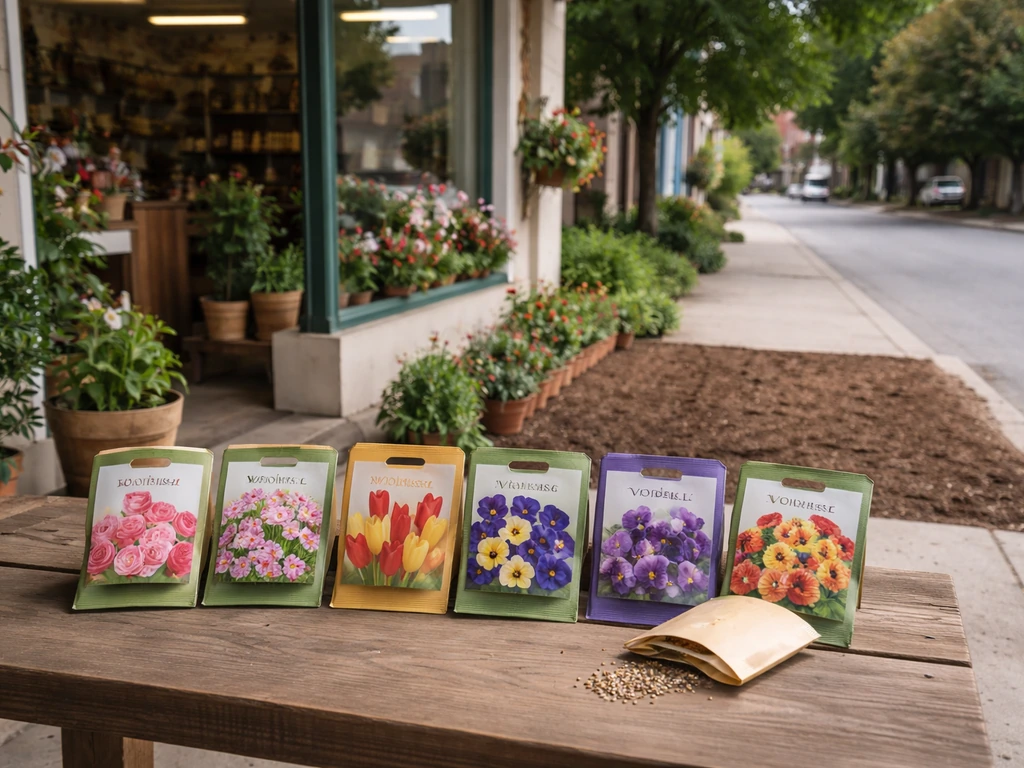
Your first stop is Leif's Garden Shop (also called the Garden Center) on Main Street. He sells seed bags for six different flower species: roses, cosmos, tulips, pansies, violets, and lilies. Each species comes in red, yellow, and white at the shop, and those three basic colors are your starting gene pool for everything that comes later. You can typically buy two flower bags per day, so plan your visits accordingly.
Once you have seeds, find a clear patch of ground in your town and plant them. The game doesn't require you to till the soil in a special way; just face an open spot, open your inventory, and plant. For the cleanest results, plant in rows with a little space between each flower. Immediately after planting, water every seed bag you just put in the ground. For the same kind of daily attention and care, follow a crocus how to grow routine in real life to keep your bulbs healthy water every seed bag you just put in the ground. A watered flower will show small water droplet sparkles during the day, which is the game's way of telling you it's been taken care of and doesn't need another watering until tomorrow.
You don't have to rely only on what you plant yourself. Your town can also gain a few wild flowers on its own each day, and villagers occasionally plant flowers too. StrategyWiki notes you might see roughly three to five new flowers appear in a day from these sources alone. This aligns with StrategyWiki’s gardening walkthrough for New Leaf, which describes how often wild flowers and villagers add new blooms each day blank" rel="noopener noreferrer">StrategyWiki notes you might see roughly three to five new flowers appear in a day from these sources alone.. That said, don't count on wild growth to build a serious flower garden. Planting intentionally gives you control over which colors end up next to each other, which matters enormously once you start breeding.
How to Grow More Flowers and Increase Your Total Count
The main way to multiply your flowers is through offspring. When you water a flower that has at least one same-species neighbor also planted nearby, the game can produce a new flower bud the following day. That new flower sprouts adjacent to the parents, giving you a free additional flower without spending any bells at the shop. Think of it like cuttings in real gardening, except the game handles all the propagation.
To take advantage of this, plant your flowers in pairs or small clusters rather than in isolated spots. Two red roses next to each other, both watered, have a chance to produce a new rose the next morning. Over a week of consistent watering, a pair can easily become five or six flowers. Once you've got extras, you can transplant them to new spots to set up breeding pairs elsewhere in your town. This is the fastest way to scale up your garden without spending bells every day at the shop.
Also worth knowing: the Gold and Silver watering cans let you water a larger area in one pass. The standard watering can covers a plus-shaped five-tile area centered on the flower you target. The gold watering can covers a nine-tile square. If you're managing a large garden, upgrading your watering can saves real time and makes it easier to keep everything watered daily without missing spots.
Making Flowers Grow Faster Day to Day
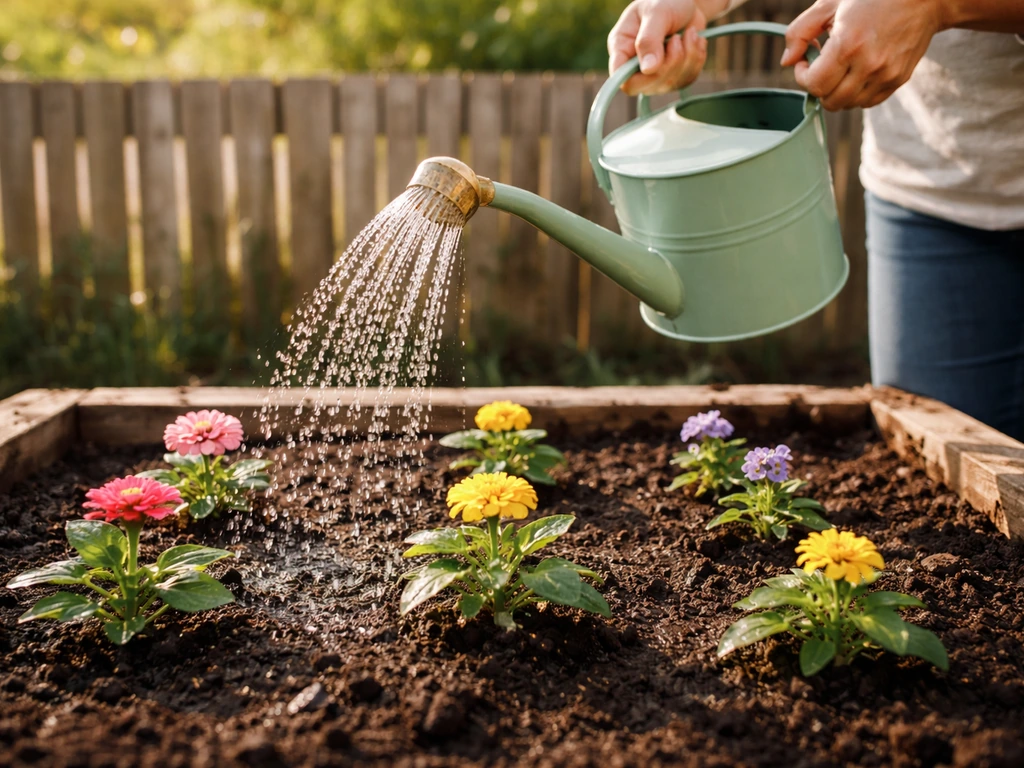
There's no magic speed-up button, but consistent daily watering is as close as it gets. Flowers that get watered every day have a chance to produce offspring every single morning when the game's day resets. Skip a day and you lose that day's potential offspring. In practice, the difference between watering every day and watering every few days is significant over the course of a week.
Here's the honest reality: the game runs on a daily cycle, so you're always going to be waiting at least one real-world day between planting and seeing results. What you can control is reducing wasted days. Water every flower, every day, without exception. Check for new sprouts each morning before doing anything else. Transplant overflow flowers quickly so they're set up in breeding pairs rather than sitting isolated somewhere they can't produce offspring.
One practical tip: if you want to keep your garden manageable and make progress visible, water in a consistent route each day so you don't miss patches. I like to start at one corner and move in rows, which also lets me spot new buds as I go. It makes the daily task feel less like a chore and more like checking on something you're actually invested in.
Growing Different Flower Types and Expanding Your Variety
Leif's shop covers the basics, but the six species he carries each have their own hybrid potential, and different species produce different rare colors. If you're also growing cleome spider flower in real life, give it full sun and keep the soil evenly moist while it establishes, then let it dry a bit between waterings. Roses are the most complex and can produce the widest range of hybrids, including blue and gold. Cosmos, tulips, pansies, violets, and lilies each have their own hybrid color trees. The game treats each species as a separate system, so a red rose bred with a yellow rose gives different results than a red cosmos bred with a yellow cosmos.
To expand your variety, start with one or two species and get comfortable with the breeding loop before branching out. Cosmos and tulips are beginner-friendly because their hybrid chains are shorter and the outcomes are easier to predict. Roses are worth tackling later once you understand how the genetics work, since reaching a blue rose requires several generations of careful pairing. Think of it like working your way up from easy annuals to more demanding perennials, the same approach that works in a real cutting garden.
If you want specific colors quickly, check what other players are offering online. You can visit another player's town and bring flowers home, which lets you skip early breeding steps and jump straight into a later generation. That said, understanding the genetics yourself means you can reproduce any color reliably rather than depending on trades.
How Hybrid Flower Breeding Actually Works
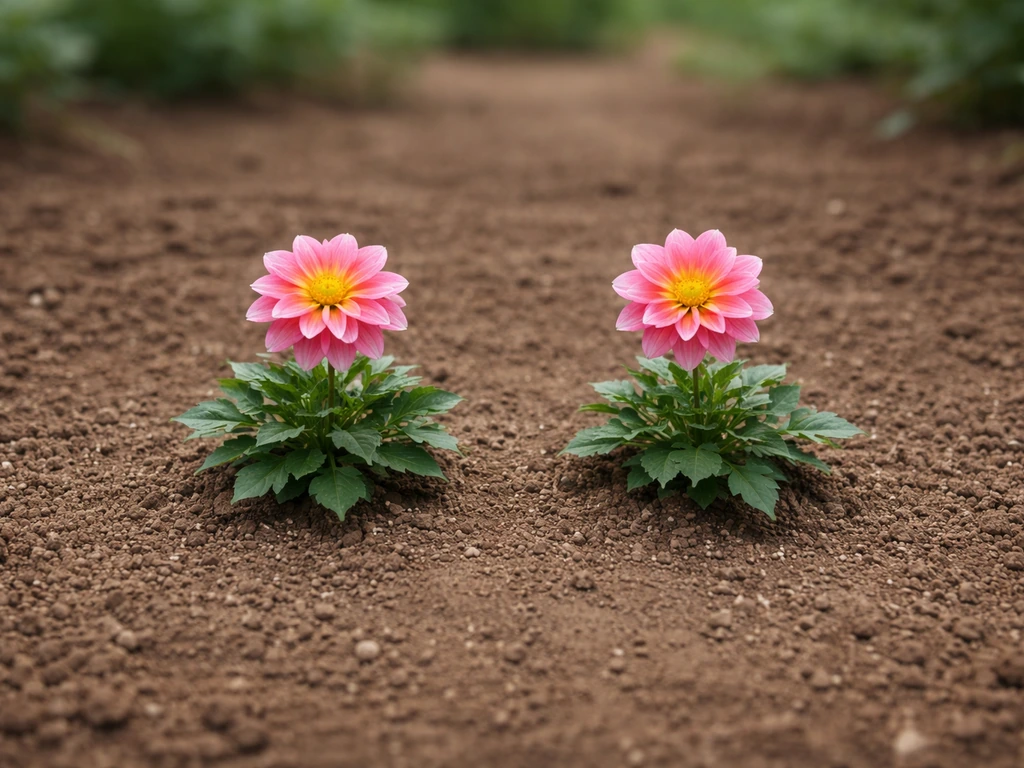
Hybrid flowers are colors that can't be bought at any shop. You get them by breeding two flowers of the same species together in a way that combines their underlying genetics into a new color. The visible color of a flower doesn't tell the whole story, because the game tracks hidden gene values that determine what offspring a flower can produce. Two flowers that look identical can actually have different genetic states and produce different results.
The practical setup is simple: plant two flowers of the same species directly adjacent to each other (touching, not diagonal), water both, and let the game's day cycle run. The offspring that appears nearby will reflect the combined genetics of the two parents. To keep outcomes predictable, don't let more than two flowers cluster together in a breeding spot. If three or more same-species flowers are touching, it gets harder to know which pair produced the offspring, and you lose track of which parent genetics are in play.
One important detail: the game recommends using flowers grown directly from seed packs, or flowers that were themselves just bred from a clean cross, as your breeding parents. A flower you've had sitting in your town for a while, mixed in with random neighbors, may have muddied genetics even if it looks like the right color. Starting with fresh seed-pack plants gives you a clean genetic baseline and more predictable hybrid outcomes.
Growing Rare Flowers: Specific Combos and What to Expect
Rare flowers in New Leaf are specific hybrid colors that require multi-step breeding chains. The most famous example is the blue rose, which can't be bred in a single step from shop-bought seeds. You need to first breed a special red rose (obtained by crossing purple and orange roses), then breed those special reds together to eventually produce a blue rose. It takes patience and multiple generations, but it's genuinely satisfying when it works.
The gold rose is another rare flower exclusive to New Leaf. To get one, you need to breed a black rose that was specifically watered with the gold watering can. The gold watering can itself requires you to have perfect town status and is obtained from the mayor's duties. Gamer Guides' New Leaf-specific guide also describes Perfect Town status as a prerequisite for obtaining the gold watering can, which is needed for making gold roses. So gold roses are genuinely late-game achievements that take real investment.
| Rare Flower | Species | Breeding Path Summary | Difficulty |
|---|---|---|---|
| Blue Rose | Rose | Breed purple + orange to get special red, then breed special reds | High (multi-generation) |
| Black Rose | Rose | Breed red + red from specific parent genetics | Medium |
| Gold Rose | Rose | Water a black rose with the gold watering can, then breed | Very High (requires gold can) |
| Orange Cosmos | Cosmos | Breed red + yellow cosmos | Low (one step) |
| Black Lily | Lily | Breed red + red from seed-pack reds | Medium |
| Purple Pansy | Pansy | Breed red + white pansies | Low (one step) |
For most players, the single-step hybrids like orange cosmos or purple pansies are the best place to start. They give you an early win, help you understand the pairing mechanics, and produce flowers you can use as parents in longer chains later. Don't jump straight to blue roses on day one; build up your understanding and your flower stock first. If you’re specifically aiming for cuckoo flower, follow the same hybrid breeding and daily watering setup, but use cuckoo-flower seed packs as your starting species and parent pairings blue roses.
Why Your Flowers Aren't Growing or Hybridizing
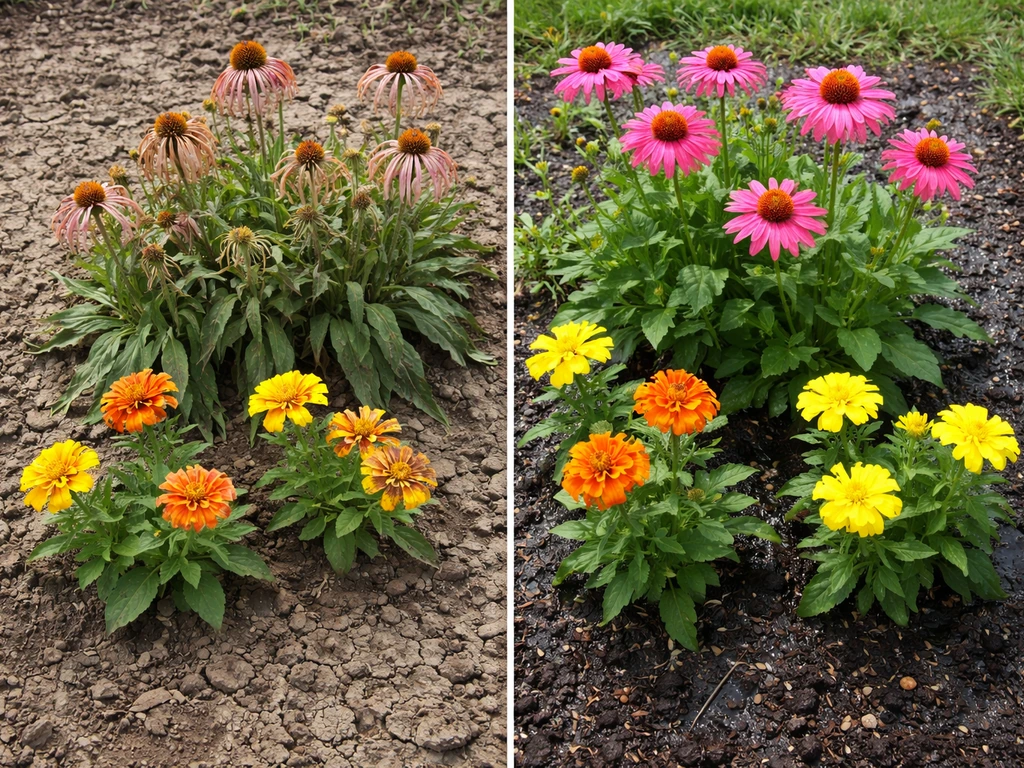
If new flowers aren't appearing, the most common reason is skipped watering. Even one missed day breaks the chain. Check every flower in your garden and make sure none have gone dry. It's easy to miss a cluster tucked in a corner or overlook a newly transplanted pair.
- Flowers weren't watered: this is the number one cause. Water every flower, every single day.
- Flowers aren't adjacent: breeding requires the two parent flowers to be directly touching, not just nearby. Check your spacing.
- Wrong species paired: roses won't breed with tulips. Both parents must be the same species.
- Too many neighbors: if a flower has three or four same-species neighbors, offspring can appear but the genetic results are unpredictable. Thin out your clusters.
- Using flowers with unclear genetics: if you're trying to breed a specific rare color and it's not working, your parent flowers may not have the right hidden gene values even if they look correct. Start fresh from seed packs and rebuild the chain.
- Not enough time: some hybrids have lower spawn chances than others. If you're doing everything right, keep going. A week of consistent watering usually produces results.
If hybrids specifically aren't forming despite correct pairing and daily watering, the most likely culprit is genetics. This is especially common with roses. Go back to fresh seed-pack plants, breed your first-generation intermediates cleanly, and work forward from there. It's a bit like starting seeds indoors in a controlled environment rather than direct-sowing and hoping for the best. The extra setup pays off.
A Simple Flower Layout Plan You Can Follow Right Now
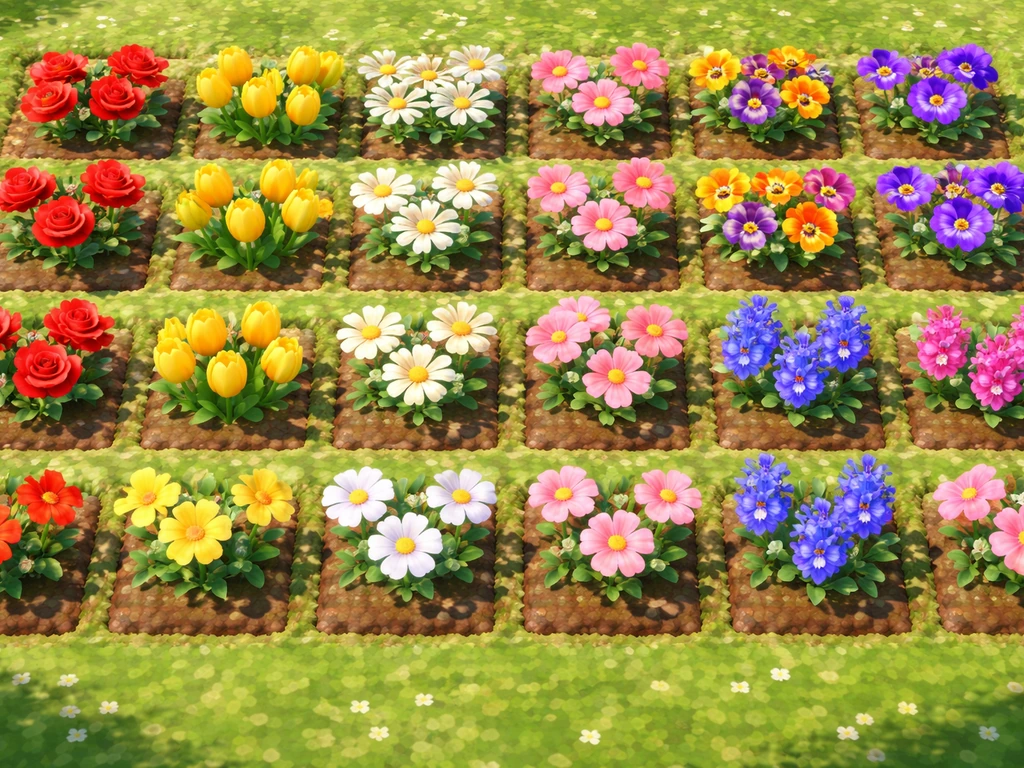
Here's a repeatable layout that works for both growing more flowers and breeding hybrids at the same time. Set aside a section of your town with a clear grid, ideally at least four tiles wide and as long as you want. This gives you organized rows that are easy to water and easy to monitor.
- Buy one red, one yellow, and one white seed bag of your chosen species from Leif's shop.
- Plant them in a row with one empty tile between each pair you want to breed: red | red | empty | yellow | yellow | empty | white | white.
- Water all planted flowers immediately after planting.
- Return the next morning and check for new buds in the empty spaces between pairs. Water all flowers again.
- When a new flower sprouts, note its color. If it's a hybrid color (one not sold in the shop), move it to a dedicated hybrid breeding row.
- In the hybrid row, pair the new hybrid flower with the correct partner based on what rare color you're working toward. Water both.
- Repeat the daily watering and check every morning. When your pairs produce extras, transplant them to extend your grid or trade with other players.
- Once you've unlocked the gold watering can, water any black roses with it before breeding them to unlock the gold rose path.
The key with this layout is keeping breeding pairs isolated from unintended neighbors. If a hybrid flower gets surrounded by random same-species flowers, you'll start getting unpredictable results. Treat each pair like its own little experiment with a clear goal. Label rows in your head or on a piece of paper if that helps. The same mindset that helps you keep track of different flower varieties in a real garden, knowing which seeds went where and what you're expecting from each, applies perfectly here.
Start simple, stay consistent, and celebrate every new color that pops up. Your first orange cosmos or pink tulip feels like a genuine achievement, and it should. From there, each generation of flowers opens up the next possibility, and before long you'll have a town full of colors you couldn't buy from any shop.
FAQ
Can I move flowers after they sprout, or will that ruin breeding?
Yes. If you transplant new sprouts, set them up immediately into the same-species pairs you want, then water them the same day. What matters most is that they are present when the daily cycle resets, otherwise you may lose that morning’s offspring check.
How do I prevent villagers’ and wild flowers from messing up my hybrid breeding?
If your town has wild flowers or villagers place flowers, avoid building breeding clusters near them. Even one “extra” same-species flower touching your pair can change what shows up next, so leave buffer tiles between your breeding grid and any random growth.
What’s the best way to organize my hybrids so I do not lose track of parents?
Plant hybrids in separate rows or sections and treat each target color like a controlled experiment. Don’t stack multiple generations in one tight blob, because over time you lose track of which flowers are the clean parents that produce the next step.
My hybrids look right but I am not getting the next color. How can I tell if it is a genetics problem?
Don’t rely on the look of the flower alone. Two flowers that appear identical can still have different hidden genetics, so when hybrids stop advancing, replace your pair with fresh seed-pack plants or newly bred “clean” parents from your own controlled cross.
Does upgrading to the Gold or Silver watering can change how often I need to water?
In a standard setup, you want to water every flower once per day, including new sprouts and freshly transplanted tiles. Upgrading the watering can reduces how many passes you need, but it does not replace the need for daily watering on each bloom.
If I skip watering one day, can I catch up, or is it permanently ruined?
When you only miss one day, offspring opportunities are paused rather than permanently destroyed, you can still recover by watering correctly going forward. The main cost is lost generations, so expect slower progress for about a week compared to perfect daily care.
What placement matters most for breeding, touching or just being nearby?
The offspring is produced based on adjacency, so use straight-touching placement. Make sure flowers are touching (not diagonal) and avoid gaps between the two parents, otherwise the game may treat them as separate groups.
How strict is the “do not let three or more touch” rule for breeding?
For predictable outcomes, limit the same-species contact area. Keep breeding spots to two touching parents, and if you have three or more same-species flowers touching, split them apart so you can identify which pair created the offspring.
Can I run multiple flower breeding projects at the same time in one garden?
Yes, you can start more than one breeding chain, but each chain needs its own isolated pairings. If you want multiple colors at once, dedicate separate rows and keep a small buffer from neighboring chains to prevent accidental same-species adjacency.
I planted seeds but no new flowers showed up next morning. What should I check first?
If you just planted new seeds and see nothing the next day, wait at least until the next reset after consistent watering. Also check that your plants are in open ground and positioned so your watering actually hits each tile, missing a corner tile is a common cause.
Next Articles
Cosmos Flower How to Grow: Step-by-Step From Seed
Step-by-step guide to grow cosmos from seed to bloom, including sowing, timing, care, pests, and troubleshooting.
Crocus How to Grow: Step-by-Step Planting and Care
Step-by-step crocus how to grow guide: choose varieties, plant corms, care, troubleshoot, and prep for next year’s bloom
How to Grow Plants from a Bouquet: Step-by-Step Guide for Beginners
How to grow plants from bouquet: step-by-step rooting, seed saving, bulbs, timelines and troubleshooting