Paperwhites are one of the easiest bulbs you can grow indoors, and they reward you fast. Plant them today and you can expect blooms in as little as 4 to 6 weeks, sometimes closer to 8 weeks if your home runs cool. No garden required, no complicated setup, and no special soil expertise. You literally drop the bulbs into water and gravel or pot them in soil, keep them watered, and wait. This is the same easy approach you can use when you’re setting up your paperwhites for Christmas blooms. That said, there are a few things that trip people up, including legginess, flopping stems, and bulbs that just sit there doing nothing. This guide covers all of it.
How to Grow Paperwhites Indoors: Step by Step Guide

James Holloway
18 Apr 2026
Picking good bulbs and nailing your timing
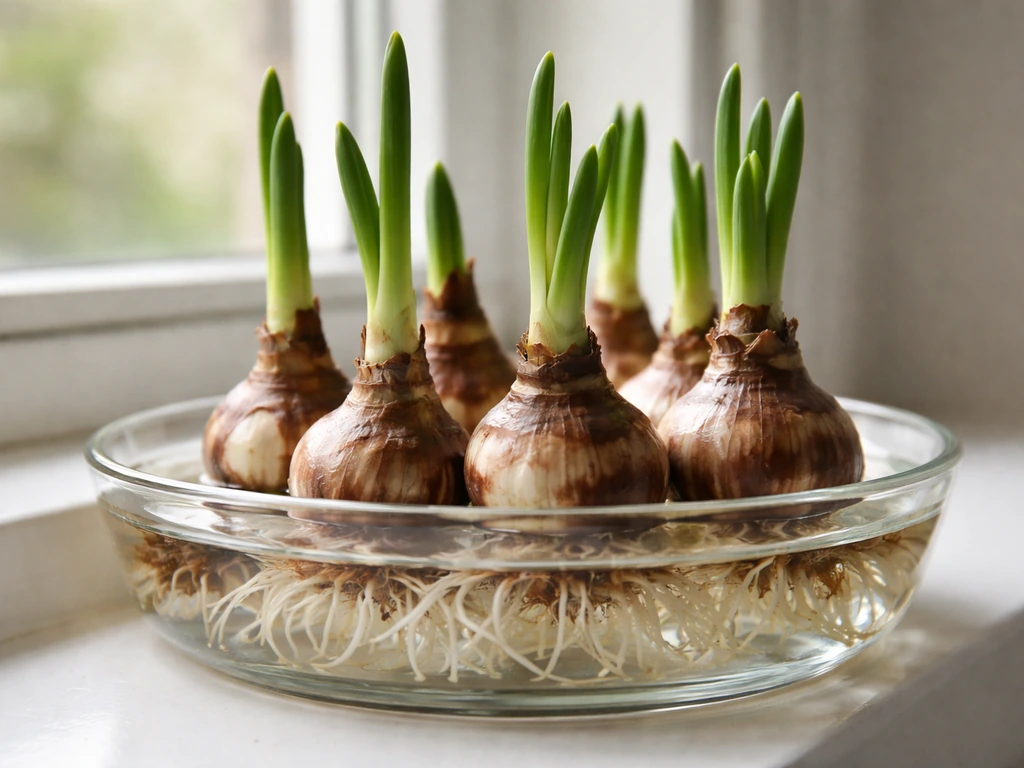
Start with the firmest, largest bulbs you can find. Squeeze them gently before buying. Soft spots or visible mold are deal-breakers. Bigger bulbs produce more flower stems and tend to be more vigorous, so if you're choosing between sizes at a garden center or ordering online, go large. In the UK, paperwhite bulbs are widely available at garden centers, DIY stores like B&Q, and online retailers from late summer through autumn. Look for them from September onward. In the US, you'll find them at nurseries and hardware stores from October onward.
Timing matters more than most people realize. Paperwhite bulbs are not frost-hardy like daffodils or tulips, so they don't need a cold period before forcing, which is exactly what makes them so easy indoors. You can plant them any time from mid-October onward. If you want a steady supply of blooms rather than one big flush, stagger your plantings about two weeks apart. Doing this from mid-October can keep flowers coming from Thanksgiving all the way through late March. That's a long run of cheerful winter blooms, and it costs almost nothing extra to plan for it.
What you need and which method to use
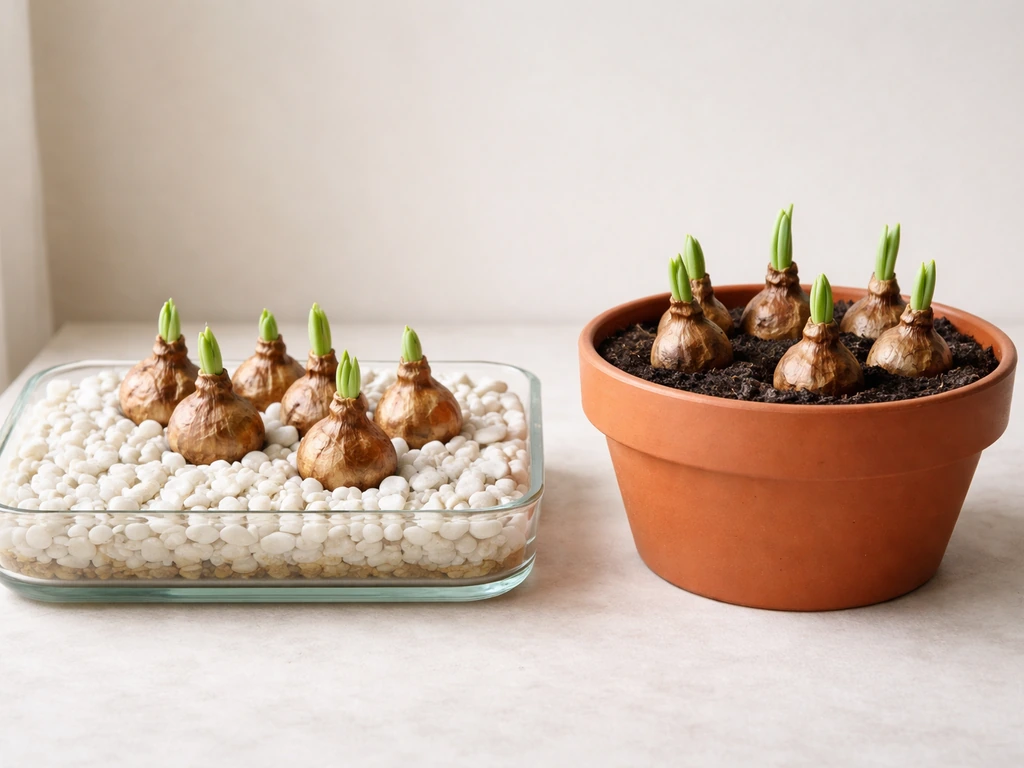
There are two main ways to grow paperwhites indoors: the water-and-gravel method (also called forcing in a tray or shallow container) and the pot-and-soil method. There are also many similar options for figuring out your setup, so if you want a wider plant plan, see how to grow paper flower plant. Both work well. The choice mostly comes down to what you have on hand and the look you're going for. Growing paperwhites in a jar or vase is a popular variation of the water method and looks great on a windowsill. To get the best results, focus on proper light and water so the bulbs start rooting and the stems stay sturdy how to grow paperwhites in a jar.
| Method | What you need | Best for | Bloom timeline |
|---|---|---|---|
| Water and gravel (tray/bowl) | Shallow dish, pebbles or decorative gravel, water | Minimalist look, no mess, easy setup | 4 to 6 weeks |
| Water and gravel (jar/vase) | Tall glass jar, pebbles, water | Display pieces, windowsills, gifts | 4 to 6 weeks |
| Pot with potting soil | 4- to 6-inch pot with drainage, standard potting mix | Beginners who prefer soil, slightly sturdier stems | 6 to 8 weeks |
For the water-and-gravel method, you need a container that's at least 3 to 4 inches deep. Fill it about halfway with pebbles, gravel, or even decorative stones. For the soil method, use a standard potting mix in a pot with drainage holes. Avoid garden soil, which compacts and can harbor pathogens. You'll also want a spot near a bright window, and ideally a cooler room to start the bulbs off. That's genuinely it for supplies.
How to plant them, step by step
- Choose your container and fill it halfway with gravel (for the water method) or potting mix (for the soil method).
- Set the bulbs in place with the pointed end facing up. Pack them in close together, about an inch apart. Paperwhites actually look better and support each other when crowded.
- For the water method: add water until it just barely touches the base of the bulbs. You do not want the bulbs submerged, just the roots reaching into water.
- For the soil method: position bulbs so the tip is just at or slightly below the soil surface, then water thoroughly.
- Move the container to a cool, dark or dimly lit space around 60 to 65 degrees Fahrenheit (about 16 to 18 degrees Celsius). A spare room, a basement, or a cool hallway works well.
- Leave them there for about two weeks, checking every few days to top up the water level.
- Once you see roots forming and green shoots pushing up an inch or two, move the container to your brightest windowsill.
UK growers, take note: indoor temperatures in British homes during autumn and winter often hover around 18 to 20 degrees Celsius (65 to 68 degrees Fahrenheit), which is actually ideal for this initial rooting phase. If your home runs warmer due to central heating, try to find a cooler windowsill or an unheated spare room for the first two weeks. UK light levels from November to February are quite low, so placing bulbs in the very brightest south-facing window you have will help significantly once the shoots emerge.
Keeping them happy as they grow
Light
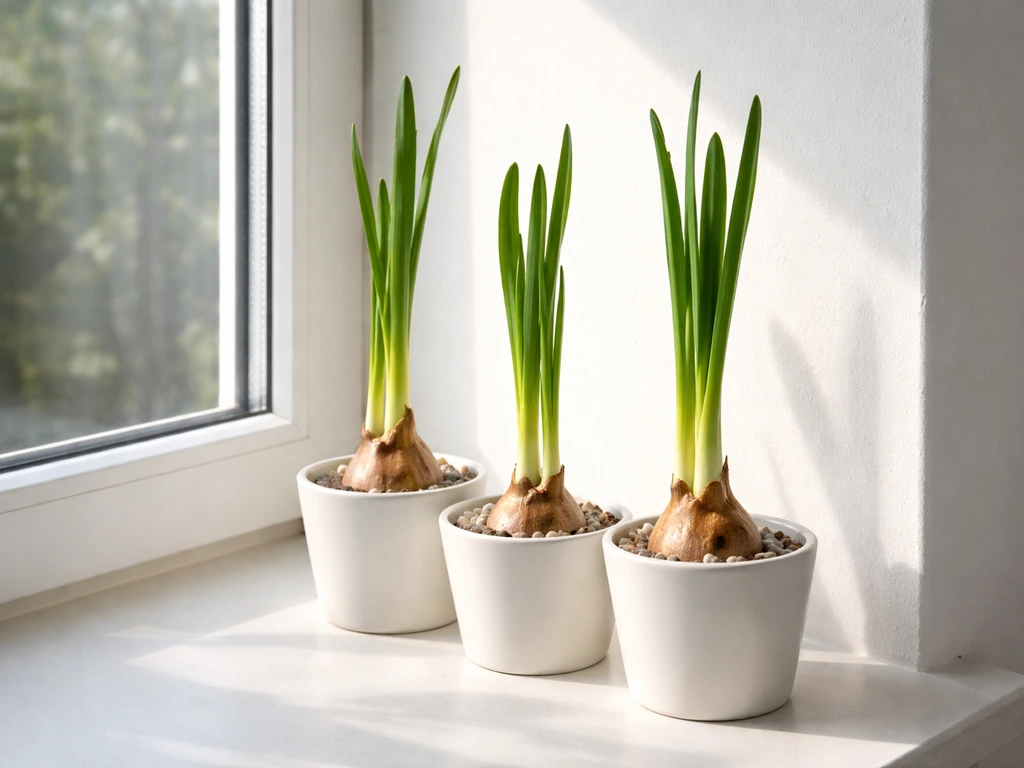
Once the shoots are a couple of inches tall, paperwhites need as much light as you can give them. A south-facing window is best. East or west-facing windows work but expect slightly leggier growth. In the UK especially, where winter daylight is limited, the brightest spot in your home makes a real difference. Rotating the pot a quarter turn every day or two keeps the stems growing upright rather than leaning toward the glass.
Temperature
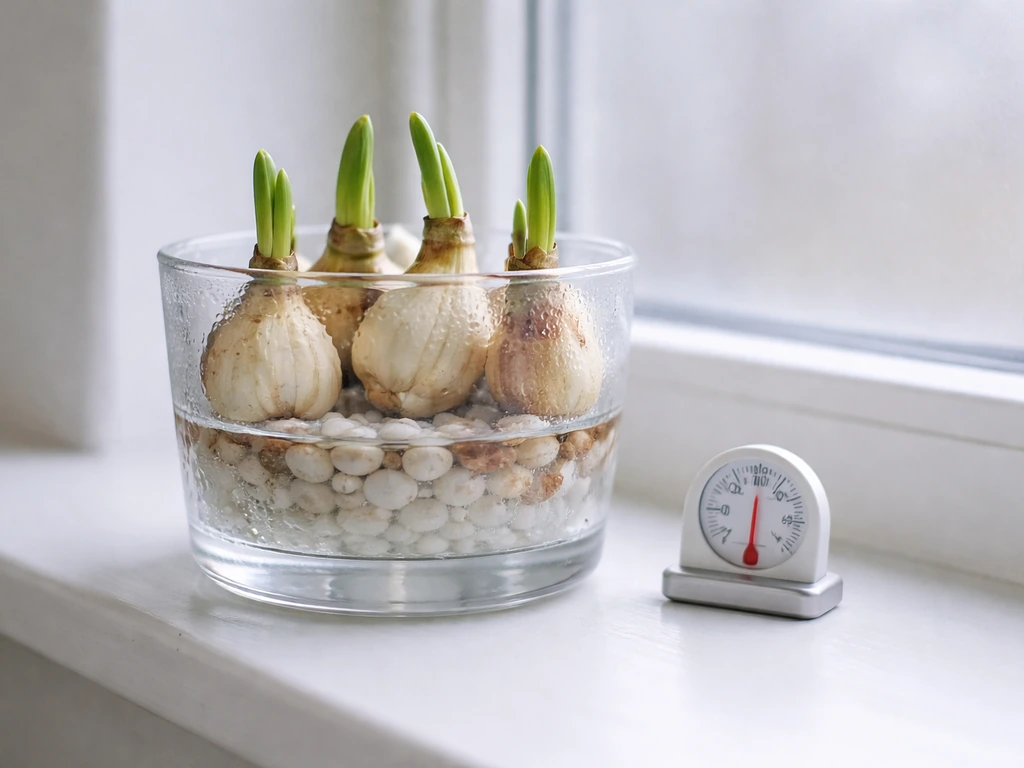
Cooler temperatures slow growth and extend the blooming period, which is a good thing. Try to keep the growing area between 60 and 65 degrees Fahrenheit (16 to 18 degrees Celsius). Avoid placing them near heat vents, radiators, or fireplaces. In UK homes with radiators under the windows, this can be a challenge. If that's your situation, place the pot on a small tray or trivet to raise it above the direct heat, or choose a different window.
Watering
For the water method, check every two to three days and top up so the water level stays just at the base of the bulbs. Don't let it drop so low that the roots dry out, and don't submerge the bulbs themselves or they'll rot. For the soil method, water when the top inch of soil feels dry. Paperwhites don't like sitting in soggy compost, so make sure your pot drains freely.
Stopping them from flopping over
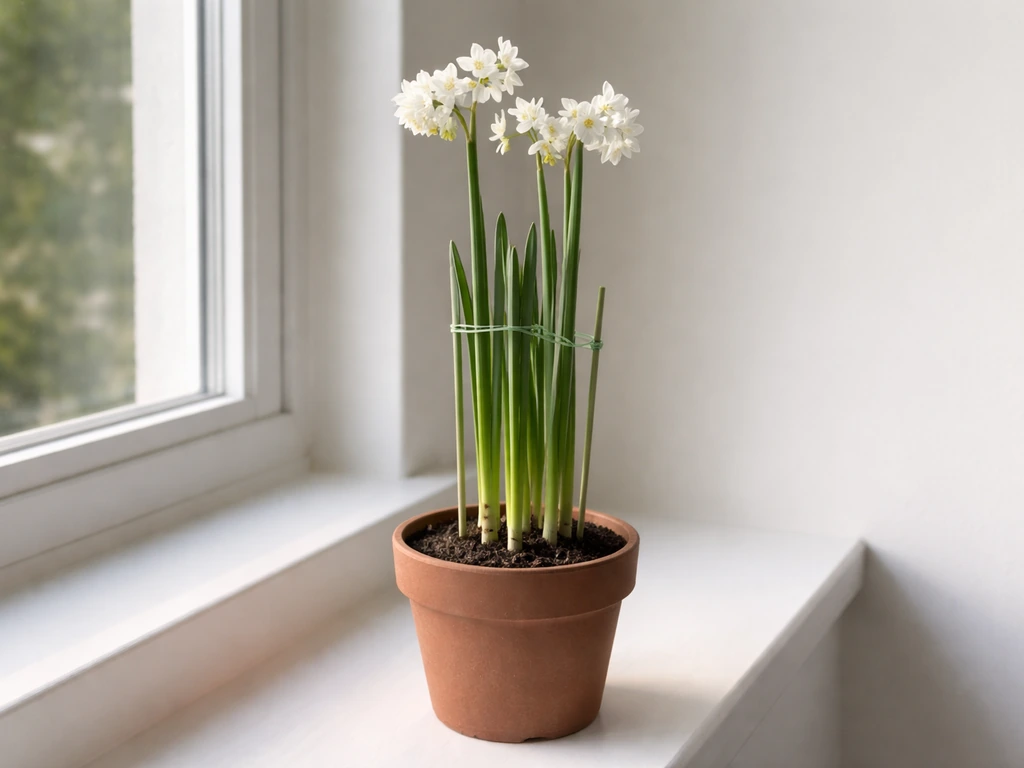
This is the most common complaint with indoor paperwhites: the stems shoot up fast, get tall and floppy, and eventually topple over or need propping. The main culprit is warmth combined with low light. Here's how to prevent it.
- Start bulbs in a cool, dim space for the first two weeks as described above. This slows early stem extension.
- Once moved to a bright window, keep temperatures on the cool side (under 65 degrees Fahrenheit / 18 degrees Celsius if possible).
- Maximize light exposure. The more light they get, the stockier the stems.
- Try the alcohol trick: once shoots are about 1 to 2 inches tall, replace the water with a diluted alcohol solution. Cornell University research found that a 4 to 5 percent alcohol solution stunts stem growth without affecting flower count or size. To make a 5 percent solution, mix one part plain rubbing alcohol (70 percent isopropyl) to 10 parts water, or use one part gin or vodka to 7 parts water. Use this in place of plain water for the rest of the growing period.
- If stems still get tall, use a rubber band, garden twine, or a decorative ribbon tied loosely around the bunch to corral them together. A tall glass vase also works beautifully as a natural support.
- Growing paperwhites in rocks with a taller container provides natural stem support from the sides, which is one reason that method is popular.
The alcohol method really does work. I was skeptical the first time I tried it, but the difference in stem height compared to my control pot was obvious. The flowers smelled just as good and there were just as many of them. It's become a standard step for me now.
When they'll bloom and what happens after
Expect flowers in 4 to 6 weeks from planting in a warm home, or closer to 6 to 8 weeks if your space is cooler. Cooler conditions are worth it because the blooms last longer once they open. A warm room will rush things along but the flowers fade faster. Once buds start showing, you're usually only days away from the first open blooms. The scent is strong and distinctive, somewhere between sweet and musky. Some people love it; others find it intense. If you're sensitive to fragrance, keep them in a well-ventilated room or a space you pass through rather than a bedroom.
Once paperwhites have finished blooming, the honest answer is to discard the bulbs. Unlike garden narcissus, forced paperwhite bulbs are essentially spent after one indoor performance. They won't reliably rebloom the following year, especially if grown in water. Some gardeners try planting exhausted bulbs outside in mild climates (USDA zones 8 to 11 or equivalent UK sheltered spots), but results are unpredictable and re-flowering takes years. For most people, especially in the UK where winters are cold, it's simply not worth it. Compost the bulbs and start fresh next season with new ones.
If something's going wrong
Bulbs not sprouting
If nothing's happening after two to three weeks, check a few things. Is the water level actually reaching the roots? Are the bulbs sitting in standing water (which can cause rot)? Is the room too cold, below about 55 degrees Fahrenheit (13 degrees Celsius)? Paperwhites don't need cold to break dormancy but they do need at least a moderate temperature to get growing. Move them somewhere slightly warmer and give it another week.
Weak, pale, or very slow growth
This usually means not enough light. Move the container to your brightest window immediately. If you're in the UK during the darkest weeks of December or January, a grow light on a timer (12 hours on, 12 hours off) can genuinely help. It's also worth checking that the bulbs were healthy to begin with: a soft, mushy bulb will never produce strong shoots.
Rotting bulbs
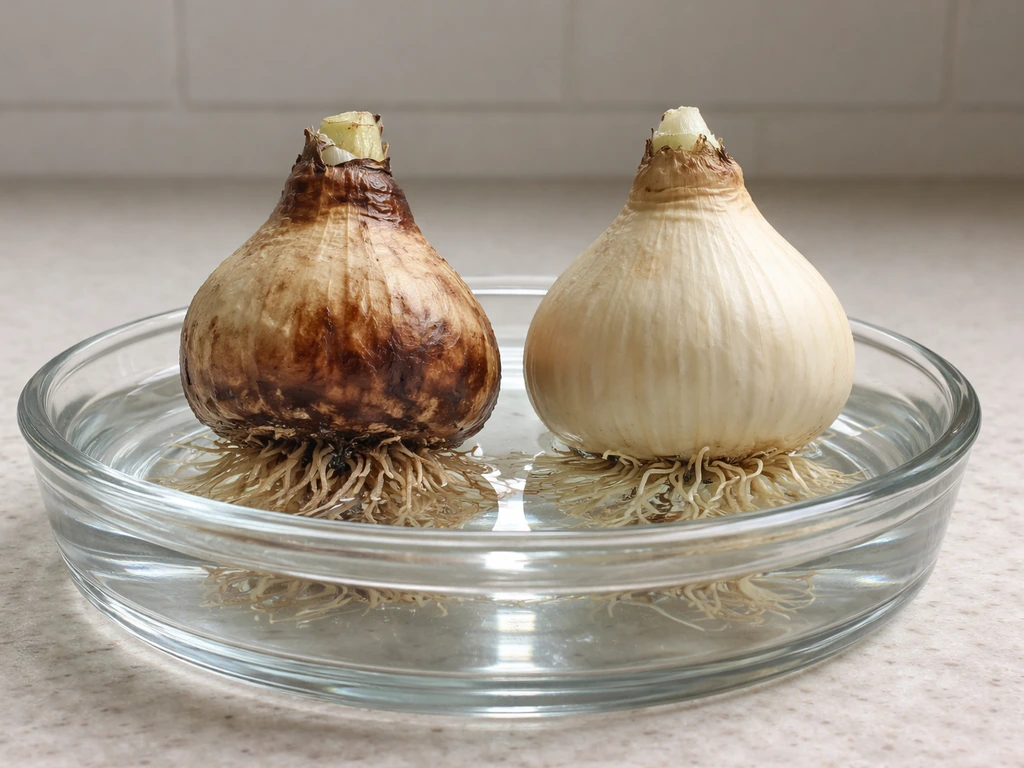
If a bulb goes soft and smells off, it's rotting. Remove it immediately before it affects its neighbors. This is almost always caused by too much water: bulbs sitting submerged rather than just their roots reaching into water. For the soil method, it's usually overwatering or a pot without drainage. Adjust accordingly for the remaining bulbs.
Pests
Paperwhites are relatively pest-resistant indoors because narcissus bulbs are toxic to most insects and mammals. That said, fungus gnats can show up in wet soil. Let the top of the soil dry out between waterings and use a yellow sticky trap to catch adults. You're unlikely to see aphids or spider mites on paperwhites, but if you do, a spray of diluted insecticidal soap handles them quickly.
The smell is overwhelming
The fragrance is real and strong. If it's too much for your space, simply move the pot to a room with better airflow or to a cooler spot. Cooler temperatures also slow the release of fragrance. If you find the scent genuinely unpleasant rather than just strong, look for lower-fragrance varieties next time. 'Inbal' is often cited as one of the less intensely scented paperwhite varieties.
Your quick-start checklist
- Buy firm, large bulbs from mid-October onward (UK: garden centers, B&Q, or online from September).
- Choose your method: water and gravel in a shallow dish or jar, or potting mix in a drained pot.
- Plant bulbs close together (about 1 inch apart), pointed end up, with water just touching the base or buried to the tip in soil.
- Start in a cool (60 to 65 degrees Fahrenheit / 16 to 18 degrees Celsius), dim spot for two weeks.
- Move to your brightest window once shoots are 1 to 2 inches tall.
- If using the water method, switch to a 5 percent alcohol solution at the 1 to 2 inch shoot stage to control height.
- Keep water levels consistent, temperatures cool, and rotate the pot regularly.
- Expect blooms in 4 to 8 weeks depending on temperature.
- After blooming, compost the bulbs and plan your next staggered batch.
FAQ
How deep should the water be when I grow paperwhites in gravel or stones?
Keep the water level just touching the very base of the bulbs, not covering the bulbs themselves. If the water creeps up into the bulb area, rot becomes more likely even if roots look okay at first, so check the level every couple of days.
Can I start paperwhites in a warm room and then move them to a cooler one later?
Yes. Warmth speeds rooting, then moving to a cooler spot after you see shoots can help keep stems shorter and extend bloom time. Do not move them suddenly from a very warm area to a cold draft, aim for a gradual change over a day or two.
My paperwhites are getting tall. Will propping solve the problem, or do I need to change conditions?
Propping helps temporarily, but it will not fix the cause (low light plus warmth). Move the container to the brightest window you have, rotate it regularly, and consider the alcohol step if you are seeing early rapid height gain.
What exact amount of alcohol do I use for the alcohol method?
Use rubbing alcohol (isopropyl alcohol) diluted so it is not strong enough to burn roots. A common practical approach is mixing it with water to create a mild solution, then pouring it carefully into the water reservoir so it reaches the gravel or base area, not the bulbs. If you tell me your setup (jar/vase/tray depth), I can suggest a safe starting dilution range.
Should I use distilled water or tap water for paperwhites?
Tap water usually works, but if your water is very hard or has a strong odor, distilled or filtered water can reduce odor buildup in closed vases. The bigger risk is leaving bulbs submerged, not water type.
How often should I rotate the pot, and does it really prevent leaning?
Rotate about a quarter turn every day or every other day once shoots are visible. That timing helps because paperwhites respond quickly to light direction, and leaning can become permanent if it happens for long stretches.
Can I grow paperwhites in a jar with no drainage holes?
You can, but only with the water-and-jar style setup where the bulbs sit above the water line. If you bury bulbs in water or allow water to rise into the bulb, rot is common. Use a narrow neck jar only if you can precisely control water level.
Why do some bulbs sprout but then stop growing?
Common causes are water not actually reaching the roots, bulbs being partially dried out, or temperatures staying too low (below roughly 13 C/55 F). Another frequent issue is unhealthy bulbs with soft spots, they may initiate growth but cannot sustain it.
How can I keep fungus gnats from becoming a problem in soil-grown paperwhites?
Let the top inch of compost dry between waterings and avoid constantly wet conditions. If you see adults, use yellow sticky traps immediately. Also, consider using a lighter, fast-draining potting mix so water does not stay trapped around the bulb.
Do paperwhites rebloom next year if I plant them outside?
Sometimes, but it is unpredictable. Forced paperwhite bulbs are often spent after one indoor cycle, especially those grown in water. If you want to try, plant in mild climates or sheltered spots and accept that it can take years for reliable flowers.
My paperwhite has a bad smell. What should I do right away?
Remove the affected bulb immediately to protect the neighbors. If the smell is sour or rotten, the cause is usually bulb tissue sitting too wet, most often submerged water or a soil pot without drainage, then adjust the remaining bulbs.
Can I reduce the strong fragrance if I do not want it in a bedroom?
Yes. Move the pot to a more ventilated common area or somewhere you do not sleep, and keep them cooler because cooler temperatures tend to slow fragrance release. If you want a long-term fix, choose lower-fragrance varieties next time.
Next Articles

How to Grow Wildflowers: Step-by-Step Guide for Success
Step-by-step how to grow wildflowers from seed to bloom with site prep, sowing, watering, and troubleshooting for any sp
How to Grow Duck Flower: Step-by-Step Care and Blooms
Step-by-step guide to grow duck flower from seed to blooms, with care tips, troubleshooting, and seasonal timing.
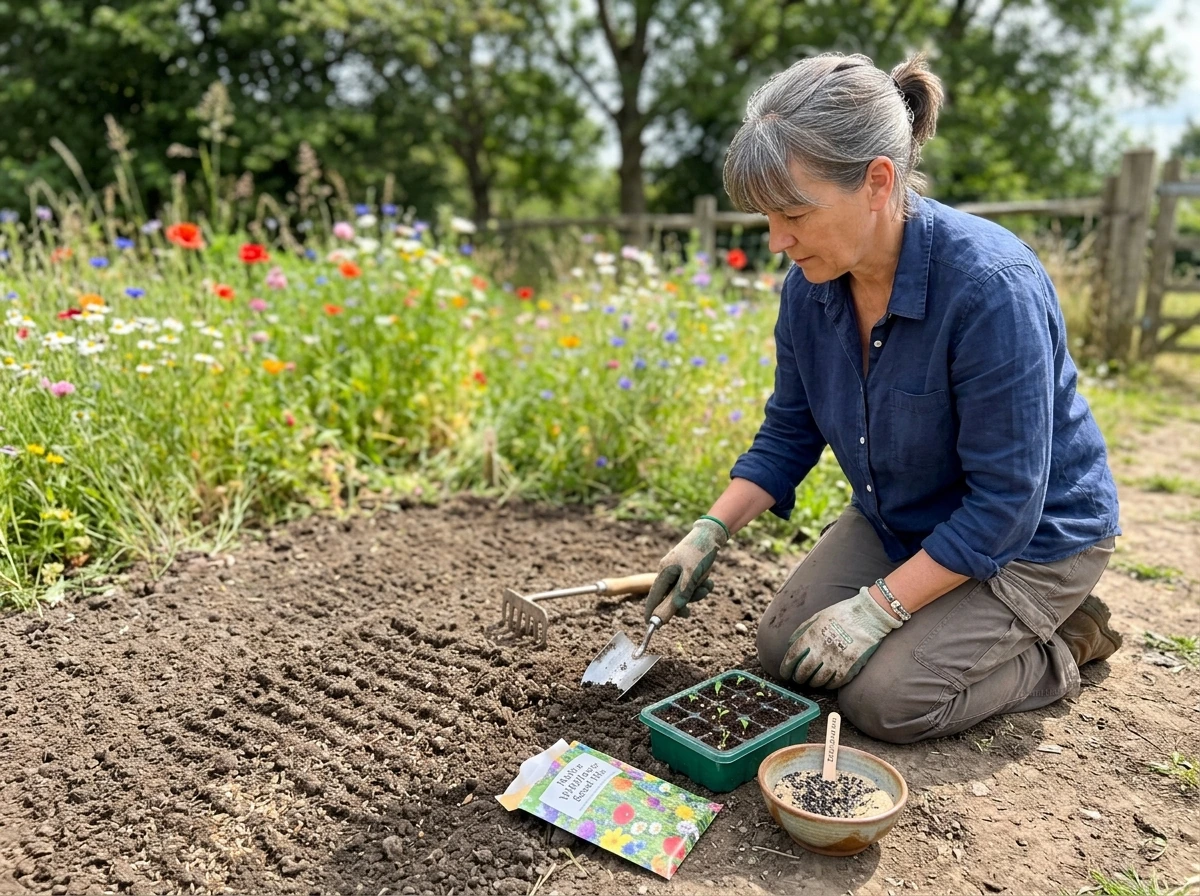
Wildflower Seeds How to Grow Them From Seed Step by Step
Step by step guide to grow wildflowers from seed: choose mixes, plant timing, soil prep, sowing, watering, and weed cont