To grow Texas wildflowers successfully, sow most species in fall (September through November depending on your region), prepare bare soil with good drainage and no competing turf, and choose species matched to your ecoregion. That single shift, planting in fall rather than spring, is the biggest thing separating a thriving wildflower meadow from a patch that never quite takes off. Everything else, soil prep, seed treatment, watering, is about reinforcing that foundation.
How to Grow Texas Wildflowers: Planting Calendar & Tips
James Holloway
30 Jul 2026
Why grow Texas wildflowers (and what they're actually good for)
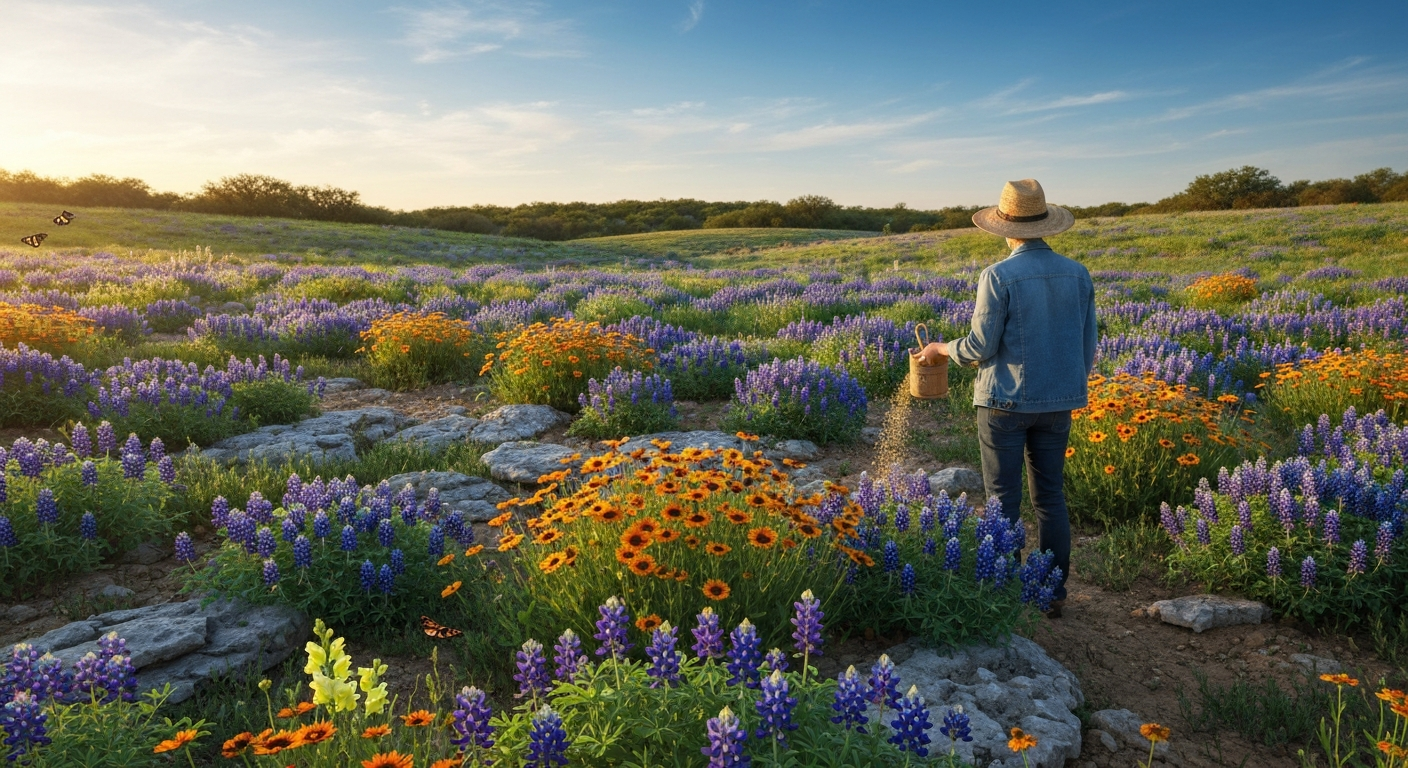
Texas wildflowers are genuinely low-maintenance once established, but they reward a little upfront effort with weeks of color, pollinators, and, in many cases, vase-ready blooms. For beginners, they're a fantastic entry point into growing from seed because you're working with plants that evolved under Texas conditions: drought, alkaline soils, intense summer heat, and unpredictable rainfall. You're not fighting the climate; you're leveraging it.
For cutting-garden hobbyists, several Texas natives, Indian blanket, coreopsis, and Mexican hat among them, produce stems long enough to cut and bring indoors. If you're interested in edible blooms or plants you can dry and preserve, Texas wildflowers cover those bases too. Scarlet sage petals and violet wood sorrel are edible, while species like strawflower and globe amaranth function as everlasting flowers that hold color when dried. If you want practical tips on planting and drying them, see a short guide on how to grow everlasting flowers. Native-plant advocates will appreciate that a well-chosen wildflower mix can support native bees, monarch butterflies, and other pollinators that are genuinely under pressure across the state.
Texas climates and planting zones: what your region means for wildflowers
Texas spans USDA Hardiness Zones roughly 6a in the northern Panhandle to 10a along the Rio Grande Valley and lower Gulf Coast. That's a huge range, and it matters for which species you choose and when you plant. Rather than relying on a single statewide rule, it helps to think in regional terms. The EPA Level III ecoregions and TPWD regional classifications give you a useful framework: the state breaks into roughly seven growing environments that each call for slightly different approaches.
| Region | USDA Zones (approx.) | Soil character | Key considerations |
|---|---|---|---|
| High Plains / Panhandle | 6a–7a | Sandy to loamy, deep, often alkaline | Coldest winters; earlier fall sowing (late Aug–Sept); short springs |
| North Texas | 7a–8a | Blackland Prairie clays, loamy; some caliche | Plant Sept–Oct; clay soils may need drainage amendment |
| Central Texas / Edwards Plateau | 7b–8b | Shallow limestone, rocky, well-drained | Prime bluebonnet country; excellent drainage; Oct–Nov sowing |
| East Texas / Pineywoods | 7b–9a | Acidic sandy/loamy soils | Higher rainfall; more species variety; Oct–Nov sowing |
| Gulf Coast | 9a–9b | Fine, sometimes saline or acidic coastal soils | Mild winters; later fall sowing (Oct–Nov); humidity and drainage critical |
| South Texas / Rio Grande Plains | 9a–10a | Sandy, loamy, sometimes saline | Very mild winters; wider planting window; drought tolerance essential |
| Trans-Pecos / West Texas | 6b–8b | Arid, coarse, shallow, low organic matter | Low rainfall; extreme heat; drought-adapted species only; plant at first fall rains |
Before you finalize your species list, it's worth looking up your specific address on the USDA Plant Hardiness Zone Map and, if you really want to get precise about frost dates and precipitation patterns, pulling the NOAA/NCEI 30-year climate normals for the nearest weather station. The NRCS Web Soil Survey can tell you the texture, drainage class, and pH of your actual parcel, which is far more useful than a regional generalization when you're amending soil.
Texas wildflower planting calendar: fall is when the magic starts
The single most important timing insight for Texas wildflowers is this: fall planting almost always outperforms spring planting. Seeds sown in fall benefit from winter rainfall, natural cold-moist stratification for species that need chilling, and a long slow establishment period before the heat arrives. Spring-sown seeds in Texas are racing against warming soil temperatures and often dry conditions; many simply go dormant or die before establishing. Texas A&M research supports this strongly, and it matches my own experience watching a fall-sown bluebonnet patch bloom in April while a same-species spring patch produced almost nothing.
| Region | Ideal fall sowing window | Spring sowing (if needed) | Notes |
|---|---|---|---|
| High Plains / Panhandle | Late August – late September | March (with irrigation) | Aim to get seeds in 6–8 weeks before first hard freeze |
| North Texas | September – October | Late February – March | Target soil temps of 50–65°F for germination |
| Central Texas / Edwards Plateau | October – November | February – March | Bluebonnets need Oct sowing for strong spring bloom |
| East Texas / Pineywoods | October – November | February – March | Higher humidity; watch for fungal damping-off in wet falls |
| Gulf Coast | October – December | February | Mild winters allow later sowing; drainage more critical than timing |
| South Texas | October – December | February | Very mild winters tolerate a wide fall window |
| Trans-Pecos / West Texas | September – October (at first fall rains) | March (with irrigation only) | Rain-triggered timing more reliable than calendar dates |
If you miss the fall window entirely, don't give up. A February or early March sowing with consistent irrigation can work for fast-establishing species like Indian blanket, plains coreopsis, and Mexican hat. Bluebonnets, however, are genuinely difficult to establish from a spring sowing; I've tried it multiple times and gotten sparse, late, and short-lived results. For those, wait for next fall.
Which wildflowers to grow: a curated Texas species list
Choosing species that match your ecoregion is more important than any other single decision. A plant that thrives on the limestone Edwards Plateau may struggle in East Texas's acidic sandy soils. The USDA PLANTS database, TPWD species accounts, and the Native Plant Society of Texas's regional recommended plant lists are all worth consulting before you buy seeds. Here's a practical starting list organized by growth type, with notes on edible and everlasting uses where relevant.
Reliable annuals
- Texas bluebonnet (Lupinus texensis): The signature Texas wildflower. Spring-blooming, full sun, well-drained alkaline soils. Best for Central, North, and South Texas. Needs scarification and fall sowing. Not suited to waterlogged East Texas clays.
- Indian blanket / firewheel (Gaillardia pulchella): Drought-tolerant, summer to fall bloom, bright red-and-yellow heads. Excellent cut flower. Thrives statewide in full sun. One of the easiest annuals from seed.
- Plains coreopsis (Coreopsis tinctoria): Fast-establishing, early spring bloom, tolerates a range of soils. Good for beginners and cutting gardens. Reseeds freely. Adaptable across most Texas regions.
- Mexican hat (Ratibida columnifera): Long summer bloom period, drought-hardy, upright stems good for cutting. Native across the central and western regions.
- Texas phlox (Phlox drummondii): Spring bloom, wide color range, excellent for mass plantings. Does best in sandy or loamy soils; less happy in heavy Blackland clay.
- Winecup (Callirhoe involucrata): Sprawling ground cover with vivid magenta cups, spring to early summer. Handles rocky, dry sites well.
Reliable perennials
- Black-eyed Susan (Rudbeckia hirta): Short-lived perennial that behaves like an annual in Texas. Seeding rate around 2 lb/acre. Reliable reseeder, long summer bloom. Good cut flower. Statewide adaptability.
- Engelmann's daisy (Engelmannia peristenia): Tough, drought-tolerant, yellow daisy from late spring through fall. Deep taproot; do not transplant once established. Central and West Texas.
- Purple coneflower (Echinacea purpurea): Perennial, summer bloom, excellent for pollinators and cutting gardens. Does best in North and Central Texas; less reliable in the extreme south.
- Mealy blue sage (Salvia farinacea): Texas native sage with long blue spikes, spring through fall. Full sun, well-drained. Reseeds and spreads. Good cut and dried flower.
- Autumn sage (Salvia greggii): Woody perennial sub-shrub, red to pink blooms late summer through fall. Heat and drought tolerant. Central and Trans-Pecos favorite.
- Zexmenia (Wedelia texana / Zexmenia hispida): Low-water perennial daisy, blooms most of the year in South and Central Texas. Handles rocky, alkaline soils.
- Drummond's phlox (Phlox drummondii): Can function as short-lived perennial in mild-winter areas of South Texas and Gulf Coast.
Edible and everlasting options
Several Texas wildflowers double as edible or everlasting flowers. Scarlet sage (Salvia coccinea) petals are edible and attract hummingbirds; violet wood sorrel (Oxalis violacea) produces edible leaves and flowers with a pleasantly tart flavor. For a practical guide to edible flowers you can grow for salads, teas, and garnishes, see our dedicated resource on edible flowers you can grow. For dried arrangements, globe amaranth (Gomphrena globosa), while not a Texas native, naturalizes well in Texas heat and holds color beautifully when dried, functioning as a true everlasting. Mealy blue sage also dries well on the stem. If you're interested in expanding into other edible or everlasting species beyond native wildflowers, those are rabbit holes worth exploring separately. See our guide on how to grow edible perennials for practical steps and species selection.
Site selection and soil preparation: getting the ground right
Most Texas wildflowers want full sun (6 or more hours per day) and well-drained soil. That second requirement is non-negotiable for species like bluebonnet and Indian blanket; standing water after rain is more likely to kill them than drought is. Before you do anything else, observe your site after a rainstorm. If water pools for more than an hour, you either need to choose different species or improve drainage with raised beds or amended soil.
Run a soil test 4 to 6 weeks before you plan to sow. Your local Texas A&M AgriLife Extension office can process samples, and the NRCS Web Soil Survey gives you a useful starting-point map of what's in the ground. The NRCS 'Texas General Soil Map with Descriptions, NRCS' summarizes regional soil patterns (e.g., Blackland Prairie loamy soils, Edwards Plateau shallow limestone/rocky soils, Coastal Prairies finer/saline or acidic soils, and Trans‑Pecos arid coarse/shallow soils) to help match wildflower species and site preparation to local conditions Texas General Soil Map with Descriptions — NRCS. Most Texas wildflowers prefer a soil pH of 6.0 to 7.5; Central Texas limestone soils are naturally alkaline and suit bluebonnets and salvias well without amendment. East Texas acidic sandy soils may benefit from lime if you're targeting species that prefer neutral conditions.
Site prep checklist
- Run a soil test and note pH, texture (sand/silt/clay ratio), and organic matter levels.
- Kill or remove existing vegetation. For turf areas, TxDOT and Texas A&M both recommend scalping the turf first, then either applying glyphosate per label (allow 2-week burn-down) or smothering with cardboard and compost.
- Cultivate shallowly, no more than 1/2 to 2 inches deep. Deep tilling brings up weed seeds and can disrupt the soil structure that wildflower taproots depend on.
- Break up any surface crust or clods so you have a firm, fine seedbed.
- On Blackland Prairie clay soils, work in 2 to 3 inches of coarse sand or fine gravel to improve drainage before seeding.
- On Trans-Pecos sandy soils, minimal amendment is usually needed; just ensure firm seed contact.
- Do not add high-nitrogen fertilizers. Excess nitrogen pushes foliage at the expense of flowers and can favor weeds over wildflowers.
Seed treatment and sowing: the steps that make or break germination
When seeds need a little help: scarification and stratification
Some Texas wildflower seeds have physical or chemical dormancy that slows germination unless you intervene. Bluebonnet (Lupinus texensis) is the main example most Texas gardeners encounter. Its hard seed coat prevents water uptake; without scarification, germination is slow and spotty. You can scarify by rubbing seeds briefly on fine sandpaper, nicking each seed with a nail file, or using hot water (not boiling; about 180°F) and soaking for 24 hours. One critical note from HortScience research: scarified bluebonnet seed loses viability faster than unscarified seed, so scarify only the amount you plan to sow immediately and store any remainder unscarified in a cool, low-humidity location.
Cold-moist stratification (wrapping seeds in a damp paper towel, sealing in a bag, and refrigerating for 30 to 60 days) benefits some perennials including purple coneflower and black-eyed Susan if you're sowing in late winter. For fall outdoor sowing, nature usually handles stratification for you during winter, which is one more reason fall planting is the lower-effort approach.
Broadcast vs. drill sowing, and seeding rates
For small home gardens, broadcasting by hand is the most practical method. To spread fine seeds evenly, mix them with dry sand at a ratio of 1 to 2 parts sand per 1 part seed by volume before broadcasting. This is a straightforward Texas A&M recommendation that genuinely works; the sand gives you visible coverage and prevents clumping. After broadcasting, use a lawn roller or the back of a rake to press seeds into firm contact with the soil surface. Do not bury them deeply; most wildflower seeds germinate best at a depth of 1/8 to 1/4 inch.
For larger areas, a hand-crank broadcast spreader or a no-till drill makes the job easier. NRCS practice standards for Conservation Cover (Practice 327) provide drill and broadcast seeding rate guidance if you're working at scale. For home garden purposes, here are approximate seeding rates for common species.
| Species | Approx. seeding rate (lb/acre) | Home garden equivalent (per 100 sq ft) | Notes |
|---|---|---|---|
| Texas bluebonnet (Lupinus texensis) | 10–20 lb/acre | ~0.25–0.5 oz | Scarify before sowing; fall only |
| Indian blanket (Gaillardia pulchella) | 4–6 lb/acre | ~0.1 oz | Easy; broadcast lightly, press in |
| Plains coreopsis (Coreopsis tinctoria) | 10 lb/acre | ~0.25 oz | Tiny seeds; mix with sand generously |
| Black-eyed Susan (Rudbeckia hirta) | 2 lb/acre | ~0.05 oz | Very fine seed; barely cover with soil |
| Moss verbena (Verbena tenuisecta) | 6 lb/acre | ~0.15 oz | Ground-covering; excellent gap filler |
| Mexican hat (Ratibida columnifera) | 3–5 lb/acre | ~0.1 oz | Light surface sowing; needs light to germinate |
After sowing, apply a light straw mulch (no more than 1/4 inch) to retain moisture and reduce crust formation. Avoid thick mulch that blocks light from reaching germinating seeds. Water gently to settle seeds without washing them off, then rely on rainfall as much as possible.
Establishing seedlings and planting perennials: the first-season rules
The most common mistake I see beginners make in year one is overwatering. Once seeds germinate, established wildflower seedlings prefer to dry out slightly between waterings. Check soil moisture 2 to 3 inches below the surface; if it's still damp, hold off. For fall-sown seeds, winter rainfall in most Texas regions provides enough moisture to carry seedlings through to spring without supplemental irrigation in most years. If you get an unusually dry November and December, one deep watering per week is usually sufficient.
For transplanting nursery-grown or container perennials (purple coneflower, mealy blue sage, autumn sage), the best planting windows in Texas are October through November and again in February through March. Fall planting gives perennials time to establish roots before summer heat; spring planting works but demands consistent irrigation through the first summer. Dig a hole twice the width of the root ball and at the same depth, water in well, and mulch around (not over) the crown with 2 to 3 inches of shredded hardwood or native cedar mulch. For more on establishing long-lived native species, see how to grow perennial wildflowers. For detailed guidance on planting and caring for long-lived garden perennials, see how to grow perennial wallflowers.
Weed control in year one
Weed pressure is the biggest establishment challenge for wildflowers, and it's worth being honest: the first growing season often looks weedy. Hand-pull identifiable weeds when they're small, but do it carefully to avoid disturbing seedlings. The key is learning to distinguish your wildflower seedlings from weeds early (seed packet photos and a good wildflower seedling ID guide help enormously here). Avoid herbicides once seeds are sown. Mulching the non-seeded paths and borders helps contain weed pressure without affecting the planting area.
Mowing, deadheading, and keeping the planting tidy
Mow or cut back a wildflower planting after the main bloom period fades, typically late spring for bluebonnets and early summer for most annuals, to allow seeds to ripen and fall back to the soil. Leave cut stems in place for a week before raking so seeds have time to drop. For cutting-garden use, deadhead spent blooms regularly on Indian blanket, coreopsis, and black-eyed Susan to extend the bloom period by several weeks. Deadheading these species every 5 to 7 days in peak season makes a real difference in stem production.
Dividing, propagating, and encouraging natural reseeding
Dividing perennials
Clump-forming perennials like purple coneflower and black-eyed Susan benefit from division every 3 to 4 years to maintain vigor. The best time in Texas is early fall (September to early October) or early spring (February to March) when temperatures are mild. Dig the entire clump, separate it into sections with at least 3 to 5 healthy crowns each, replant at the same depth, and water in thoroughly. Autumn sage (Salvia greggii) can be divided in fall or propagated from softwood cuttings taken in spring; take 4- to 6-inch tip cuttings, strip lower leaves, dip in rooting hormone, and set in a moistened perlite and peat mix.
Collecting and cleaning seed
Collect seed when seed heads are fully dry but before they shatter and fall. For bluebonnets, collect pods when they begin to turn yellow and rattle when shaken. Spread on a screen in a warm, dry location for 1 to 2 weeks. Clean seeds by rubbing through a coarse sieve to remove chaff, then store in paper envelopes inside a sealed container in a cool (below 50°F), low-humidity location. Refrigerator storage is fine for most species. Use collected seed within 1 to 2 years for best germination rates, and remember not to scarify bluebonnet seed until you're ready to plant.
Encouraging self-sow without invasive risks
Many Texas wildflowers reseed freely, which is one of their best qualities, but it's worth being thoughtful about it. All species in a home planting should be confirmed as native or non-invasive in your specific ecoregion before you allow them to spread. The USDA PLANTS database confirms native status by state and county. A couple of cautions: Verbena bonariensis, sometimes sold in wildflower mixes, is not native to Texas and can spread aggressively. Evening primrose (Oenothera speciosa), while native, can spread into turf and borders more aggressively than gardeners expect. Stick to regionally confirmed natives from the TPWD or NPSOT recommended lists, and you'll get rewarding reseeding without unwanted spread.
Common problems and how to fix them
- Seeds sown but nothing germinated: Most likely causes are planting too late in spring (soil too warm), seeds buried too deep, or lack of soil contact. Try again in fall with a properly prepared, firm seedbed.
- Seedlings emerging then dying: Classic damping-off fungal disease, common in East Texas and Gulf Coast plantings with high humidity and waterlogged soil. Improve drainage, reduce watering frequency, and avoid overhead irrigation on cloudy days.
- Lots of foliage, few flowers: Almost always caused by excess nitrogen in the soil or too much shade. Skip fertilizer entirely for native wildflowers; ensure 6+ hours of direct sun.
- Patchy or sparse stand: Usually means poor seed-to-soil contact, thick mulch blocking germination, or weed competition in year one. Overseed bare patches in fall and manage weeds more aggressively.
- Bluebonnets not blooming: Often a timing issue (spring-sown seed rarely blooms well) or seed coat dormancy. Scarify seed and sow in October. Also check soil drainage; waterlogged roots are a common bluebonnet killer.
- Aphids on bluebonnets and salvias: Common in spring. Knock off with a strong stream of water or apply insecticidal soap. Avoid broad-spectrum insecticides that harm the pollinators your planting is supporting.
- Deer browsing: A real issue in Hill Country and suburban areas near greenbelts. Physical barriers (wire mesh) around young transplants or a deer-repellent spray applied in fall can help. Once plants are established and blooming, deer pressure typically diminishes.
Texas vs. Florida: key differences if you've grown wildflowers elsewhere
If you've gardened in Florida before moving to Texas, or you're comparing advice from Florida wildflower guides, there are some important adjustments to make. For detailed, region-specific instructions on how to grow wildflowers in Florida, see the guide on how to grow wildflowers in Florida. Florida's wildflower establishment relies more heavily on spring and summer sowing windows because its climate is driven by a wet summer season rather than a wet cool season. In Texas, especially Central and North Texas, the cool-season moisture window from fall through early spring is the reliable establishment period, making fall sowing the backbone of the Texas approach. Florida's soils are predominantly sandy and acidic; Texas soils range from alkaline limestone to heavy Blackland clay to arid Trans-Pecos sand, and your species list and amendment strategy need to reflect that. Florida-specific species like coreopsis floridana and leavenworthia are not the same as their Texas counterparts, and a Florida wildflower seed mix is rarely appropriate for Texas conditions. Texas-native mixes from suppliers who source regionally are well worth the extra cost.
Pulling it all together: a simple first-year action plan
- August to September: Identify your region (use the table above), run a soil test, and order regionally appropriate seed from a Texas-native supplier.
- September to October (North/Central Texas) or October to November (Gulf Coast/South Texas): Clear the site, kill or remove turf, cultivate shallowly, and firm the seedbed.
- At sowing time: Mix seed with sand, broadcast evenly, roll or rake in for firm contact, apply a light straw mulch, and water gently.
- November through February: Monitor for weed seedlings and pull when small. Supplement with irrigation only during extended dry spells.
- February through April: Watch for germination and early growth. Resist fertilizing. Continue hand-weeding.
- April through June: Enjoy bloom. Cut stems for vases regularly to extend flowering. Allow seed heads to ripen on a portion of the planting.
- June to July: After bloom, mow down spent plants to soil level. Leave cuttings a week before raking so seeds drop back to the ground.
- August: Assess the planting, note thin areas, and plan any overseeding for the coming fall. Repeat.
Growing Texas wildflowers from seed is genuinely achievable for any gardener willing to follow regional timing and choose the right species. The fall sowing window is your most powerful tool, and a well-prepared, competition-free seedbed is your second. After your first successful spring bloom, you'll wonder why you ever wrestled with annuals that needed constant watering and feeding. Texas wildflowers are designed to thrive here; your job is mostly to get out of their way.
FAQ
When is the best time to sow wildflower seed in Texas, and how does timing vary by region?
Planting window: late summer through fall is best for most Texas wildflowers — generally September–November. Rationale: fall sowing lets seedlings establish with cooler temperatures, winter chilling, and seasonal rainfall so they bloom reliably in spring. Regional notes: Panhandle/High Plains and North Texas — sow early in the window (Sept–mid-Oct) before hard freezes; Central Texas/Edwards Plateau — mid-Sept–Nov; Gulf Coast/Pineywoods — mid-Oct–Dec (later sowings tolerated because winters are milder); Trans‑Pecos/West Texas — sow earlier in Sept–Oct to catch limited winter moisture. Spring sowing is possible only with reliable supplemental irrigation and cooler microclimates; in most Texas locations it gives poorer establishment because seedlings face hot, dry conditions before root systems develop.
Which wildflower species are reliable in Texas (annuals, perennials, edible and everlasting options)?
Curated, reliable species: Annuals (fast color, reseeding): Indian blanket (Gaillardia pulchella) — drought-tolerant; Texas bluebonnet (Lupinus texensis) — iconic spring display (requires fall sowing and dormancy/seed-treatment awareness); Mexican hat (Ratibida columnifera). Perennials (longer-lived, return/better for pollinators): Coreopsis spp. (Coreopsis tinctoria, C. lanceolata) — early spring; Black-eyed Susan (Rudbeckia hirta) — adaptable; Maximilian sunflower (Helianthus maximiliani) — tall prairie species. Everlasting/long-lasting cut flowers: Statice (Limonium spp. — regionally adapted forms), Sea lavender relatives where adapted; yarrow (Achillea millefolium) as a drying flower. Edible/culinary-safe blossoms (use verified cultivars and check safety): Borage (Borago officinalis) — edible, blue star blooms; calendula (Calendula officinalis) — edible petals; nasturtium (Tropaeolum majus) — edible leaves/flowers (more tender, summer annual). Notes: Verify county-level native status and local suitability using USDA PLANTS and TPWD; choose species to match your ecoregion (Coastal Prairie, Blackland, Edwards, Pineywoods, Trans‑Pecos).
How do I prepare a site for wildflower seeding in Texas (step-by-step checklist)?
Site-prep checklist: 1) Identify ecoregion/soil (use USDA Plant Hardiness Zone, NRCS Web Soil Survey, TPWD/PRISM data). 2) Soil test 4–6 weeks before planting (soil pH and fertility guide species choice; many wildflowers prefer low fertility). 3) Remove or kill existing vegetation (scalp turf, mow low, or use labeled herbicide glyphosate where appropriate and legal). 4) Lightly cultivate (disk or rake 1/2–2 inches maximum) to expose mineral soil and improve seed contact; avoid deep tillage that brings weed seed up. 5) Amend only when necessary: correct extreme pH or very poor drainage; most wildflowers do better on lean soils. 6) Firm the seedbed (roller or foot traffic) so seeds contact soil. 7) If broadcasting, mix seed with sand (1–2 parts sand : 1 part seed) to spread evenly. 8) Lightly cover seed (rake or drag to 1/8–1/4 inch) or leave on soil surface for species that require light; check species-specific requirements. 9) Mulch sparingly with weed-free straw if erosion is a risk; avoid thick mulch that blocks small seeds.
What seeding methods and seed treatments should I use (drill vs broadcast, scarification, cold stratification)?
Seeding methods: - Drill/hoe drill: best for large areas and consistent depth (1/8–1/4 inch); follow species-specific depth. - Broadcast: good for small or irregular areas; mix seed with sand for uniformity and then firm bed. - No‑till: seed into scalped turf with good seed-to-soil contact; use slice seeder or drill where possible. Seed treatments: - Scarification: many lupine/bluebonnet seedlots have hard seed coats; mechanical or hot-water scarification can improve germination but scarified seed is less storable — sow shortly after treatment and store under cool, dry conditions if not sowing immediately. - Cold stratification: some perennials (e.g., certain asters/penstemons) benefit from 30–60 days cold-moist stratification; fall sowing often provides natural stratification. - Pre-soaking: can speed imbibition for large seeds but increases risk of rot if not sown immediately. Timing guidance: fall sowing usually eliminates the need for artificial cold stratification; spring sowing may require stratification and irrigation to succeed.
How do I water and care for a newly seeded wildflower area versus established stands in Texas?
Newly seeded area (first season): - Keep surface moist until seeds germinate and seedlings root (light, frequent irrigation if natural rainfall is insufficient). - Avoid overwatering that encourages weeds and damping-off; morning waterings reduce disease risk. - After seedlings are 2–3 inches and well rooted, taper irrigation to encourage deeper rooting; in most Texas regions, rely on seasonal rainfall after establishment. Established stands (second season onward): - Most native wildflowers are drought-tolerant and need little supplemental irrigation except in prolonged drought or on irrigated cutting gardens. - Water deeply and infrequently if needed to maintain vigor. - Avoid high nitrogen fertilization — promotes weeds/elk growth and fewer flowers.
What are best practices for weed control, mowing, deadheading, and encouraging reseeding in Texas wildflower plantings?
Weed control: - Pre-plant: remove existing weed seedbank (scalp/mow and remove material); use herbicide per label for large sites. - Post-plant (year 1): hand-pull or spot-treat weeds when small; avoid broad blanket herbicide treatments that harm flowers. Mowing/overseeding: - Late-season mowing (after seed set, usually late summer/fall) can reduce woody encroachment; for roadside-style displays, TxDOT-style scalping before fall seeding improves establishment. - Over-seeding: thin areas can be over-seeded in the next fall to thicken stands. Deadheading/encouraging reseeding: - To promote continuous bloom and prevent all seed set at once, deadhead spent flowers selectively. - To encourage natural reseeding, leave seed heads on some plants and reduce fall clean-up; many annuals/perennials will self-sow if seed heads are left intact until dry.
Next Articles
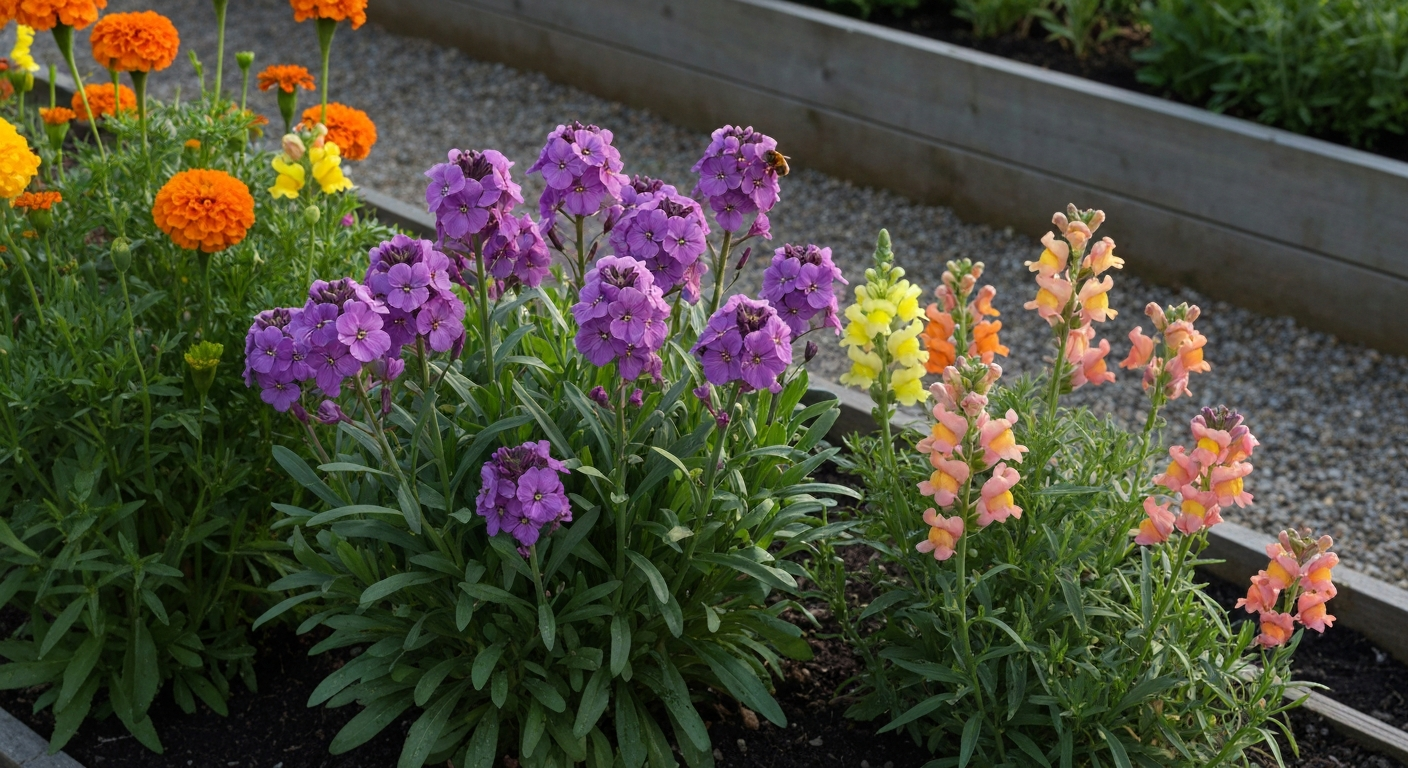
How to Grow Perennial Wallflowers: Seed to Year-Round Blooms
How to grow perennial wallflowers: seed-to-bloom calendar, best varieties, care, troubleshooting, and regional tips
Edible Flowers You Can Grow: Beginner Guide to Bloom
Beginner guide to edible flowers you can grow, with easy varieties and step-by-step seed-to-bloom growing tips.
How to Grow Edible Flowers Indoors at Home, Seed to Bloom
Step-by-step seed to bloom guide to grow edible flowers indoors in containers, with lighting, care, pests, and best vari