You can reliably grow more flowers by combining three things: choosing high-blooming varieties suited to your site, starting seeds (or transplants) on a schedule tied to your last frost date, and keeping up with deadheading, feeding, and succession sowing throughout the season. None of that is complicated once you have a working system, and this guide walks you through every step from tearing open a seed packet to harvesting armloads of blooms.
How to Grow More Flowers: Practical Seed-to-Bloom Guide

James Holloway
14 Jul 2026
What 'more flowers' actually means
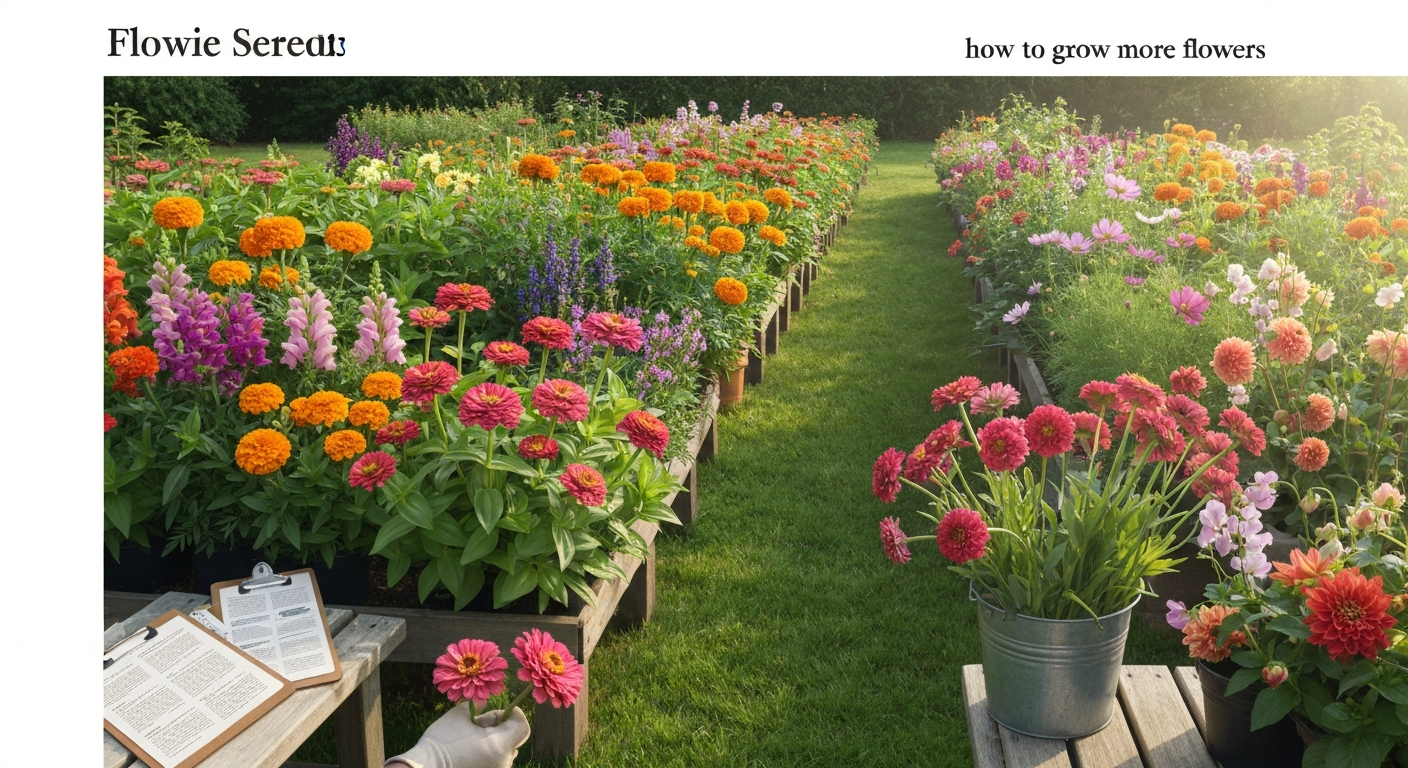
There are two different goals worth separating here. The first is more blooms per plant: getting a single marigold or snapdragon to produce twice as many flowers as it normally would. The second is more flowers across your whole garden: filling beds, containers, and cutting rows so something is always in peak bloom. Both are achievable, but they call for slightly different tactics. Pinching, feeding, and deadheading drive the first goal. Variety selection, succession planting, and smart timing drive the second. This article covers both.
The flower lifecycle at a glance
Before you can plan your season, it helps to know roughly how long each stage takes. Most ornamental flowers go through five stages: germination, seedling establishment, vegetative growth, flower bud formation, and peak bloom followed by seed set. The gap between sowing and your first open flower is called days-to-maturity (or days-to-flower), and seed companies like Johnny's Selected Seeds list this on every variety page. It is measured from the sowing date for direct-sown crops and sometimes from transplant date for crops usually started indoors, so read the label carefully.
| Flower | Stage | Typical Duration |
|---|---|---|
| Most annuals | Germination | 5–21 days depending on species and soil temp |
| Most annuals | Seedling to transplant size | 4–8 weeks indoors |
| Marigolds | Seed to first bloom (direct sow) | 45–55 days |
| Snapdragons | Seed to first bloom (from transplant) | 60–90 days |
| Zinnias | Seed to first bloom (direct sow) | 55–70 days |
| Poppies (annual) | Seed to first bloom (direct sow) | 60–90 days |
| Wildflower mixes | Seed to first bloom | 60–120 days (mix-dependent) |
| Perennials from seed | Seed to first bloom | Often 12–18+ months (may not bloom year one) |
Perennials are worth flagging separately because many beginners are surprised when they do not bloom in their first season. That is normal, not failure. The plant is busy building its root system. Year two is usually when the show starts. If you want blooms right away, lean on annuals for your first season and add perennials as a long-term investment.
Choosing varieties that actually produce more blooms
Variety selection is probably the single biggest lever most gardeners under-use. Not all marigolds are equal: a dwarf French marigold will produce dozens of small blooms per plant while a large African type produces fewer but much bigger flowers. Neither is wrong, but they serve different goals. Here is how I think about picking varieties for maximum output.
Annuals for sheer volume
Annuals live to set seed, which means they are genetically motivated to keep producing flowers all season as long as you prevent them from completing that cycle (more on deadheading later). Zinnias, marigolds, cosmos, and bachelor's buttons are workhorses for this reason. Look for variety trial results from your region: university programs like the University of Minnesota's NCROC annual flower trials publish yearly top-performer lists based on real-field evaluations of uniformity, health, and bloom duration. Those lists are free and searchable. I cross-reference them every winter when I am ordering seeds.
Pollinator-friendly and bee-friendly choices
Single-flowered varieties almost always attract more pollinators than doubles, and many gardeners find that beds with active pollinator traffic actually set better seed and have healthier plants overall. Borage, phacelia, and single-form echinacea are standouts. If you are specifically after bee-friendly selections, look at open-pollinated single-petal types rather than fully double cultivars, which often have reduced nectar and pollen access. The Bee's Friend flower (Phacelia tanacetifolia) is worth growing specifically for this purpose.
Hybrid vs. open-pollinated varieties
Hybrid (F1) varieties are bred for specific traits like uniform bloom time, disease resistance, or extra flower production, and many outperform open-pollinated types in controlled trials. The tradeoff is that you cannot save seed reliably: offspring from F1 plants are genetically unpredictable. Open-pollinated and heirloom types let you save seed year to year and often have more complex fragrance and color variation. My honest take: use hybrids for cutting rows and containers where performance matters most, and grow open-pollinated types in naturalistic beds where you want to seed-save and let plants self-sow. For a deeper look at making the most of hybrid seed, the guidance on how to grow hybrid flowers covers that tradeoff in full.
Cutting garden staples to prioritize
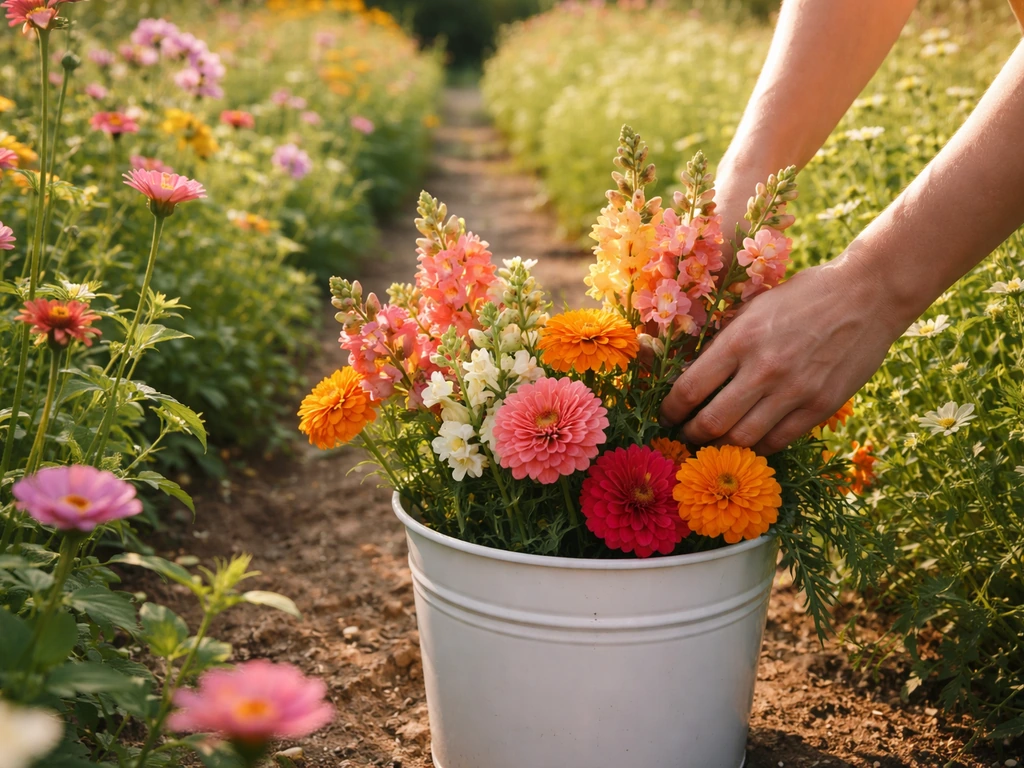
Cutting garden flowers are bred to produce long stems and to rebloom aggressively after harvest. Adding even a small cutting row of lisianthus, celosias, dahlias, or sweet peas will give you more blooms to show off indoors while simultaneously signaling the plant to produce more. They are a good investment of bed space for anyone who wants volume.
Seeds vs. transplants: which should you choose?
One thing worth knowing upfront: starting seeds indoors does not shorten the total time from seed to flower in most ornamentals. It shifts the calendar. Your snapdragons will still need roughly the same number of days to develop; you are just doing the early weeks inside under lights rather than outdoors in the bed. What transplants do give you is a head start on the season, getting plants into the ground as soon as conditions allow rather than waiting for soil to warm enough for direct sowing.
| Method | Pros | Cons | Best for |
|---|---|---|---|
| Starting from seed indoors | Lower cost per plant, huge variety selection, control over timing | Requires equipment (lights, heat mats), takes 4–8 weeks, risk of leggy seedlings | Snapdragons, lisianthus, petunias, slow-maturing annuals |
| Direct sowing outdoors | No transplant shock, easy, best for tap-rooted species | Weather-dependent, slower early establishment, needs thinning | Zinnias, marigolds, poppies, sunflowers, bachelor's buttons, wildflowers |
| Buying transplants | Saves time, instant visual impact, reliable for tricky species | Expensive at scale, limited variety selection, possible root-bound plants | Perennials, difficult-to-germinate species, late-season gap filling |
My general rule is to direct sow anything that resents root disturbance (poppies, larkspur, bachelor's buttons) and start indoors anything with a long development window or that needs specific warmth to germinate reliably (petunias, snapdragons, lisianthus). For a species-by-species breakdown of which flowers respond best to each approach, the guide on beautiful flowers and how to grow them goes into much more depth.
Planning your beds and season before you sow a single seed
Spending 30 minutes sketching your garden before ordering seeds will save you a full season of frustration. Here is the process I use every year.
Do a quick site survey
Walk your garden at 10am and 2pm on a sunny day and note which areas get full sun (6 or more hours of direct sun), partial sun (3–6 hours), and shade. Most flowering annuals want full sun. Even one extra hour of shade per day can meaningfully reduce bloom count. Also look for microclimates: a south-facing wall can push your effective growing zone half a zone warmer, letting you start earlier or grow marginally tender species. A low spot that holds cold air can be frost-prone even when the rest of the garden is fine.
Sketch your beds and assign crops
You do not need a scale drawing. A rough sketch on graph paper works perfectly. Group tall plants to the north so they do not shade shorter ones. Leave a dedicated cutting row if you want harvest-to-rebloom crops. Mark any containers separately because they need different watering and fertilizer management than in-ground beds.
Build a succession strategy
Succession planting means sowing the same (or complementary) species in staggered intervals so blooms do not all arrive and fade at once. For zinnias, I sow every three weeks from last frost through midsummer. For sweet peas, I do an early spring sow and a late-summer sow for fall blooms. Johnny's Selected Seeds suggests succession-sow intervals of one to three weeks for many cut-flower crops, which is a good baseline to work from. The key is to plan these dates on paper before the season starts, or you will forget in the rush of spring.
Sample sowing, transplanting, and bloom calendars
These timelines assume a last spring frost date of May 15 (roughly USDA Zone 5b). Adjust the anchor date for your own zone using a frost-date calculator, then shift all the other dates by the same number of weeks. The University of Maine Extension and other land-grant programs publish free frost-date tools for this purpose.
| Flower | Start Indoors | Direct Sow / Transplant Out | Expected Peak Bloom | Notes |
|---|---|---|---|---|
| Snapdragons | Feb 15 (12 wks before last frost) | Transplant out Apr 15 (frost-tolerant) | June–July | Pinch at 6 in for branching |
| Marigolds (French) | Mar 15 (8 wks before last frost) | Transplant out May 15 OR direct sow May 15 | July–Oct | Fast from direct sow; deadhead for continuous bloom |
| Zinnias | Not recommended indoors | Direct sow May 15, again Jun 5, Jun 25 | Aug–Oct (staggered) | Succession sow every 3 wks |
| Annual poppies | Not recommended indoors | Direct sow Apr 1 (needs cool soil) | Jun–Jul | Scatter-sow; do not transplant |
| Sweet peas | Feb 15 (12 wks before last frost) | Transplant out Apr 15 | Jun–Jul | Re-sow Aug 1 for fall flush |
| Cosmos | Not recommended indoors | Direct sow May 15 | Aug–frost | Thin to 12 in; self-sows readily |
| Wildflower mix | Not recommended | Direct sow Apr 1–May 1 | Jun–Sep (staggered) | Includes both cool- and warm-season species |
For Zone 7 (last frost around April 15), shift the indoor start dates three to four weeks earlier and the outdoor sow dates three to four weeks earlier as well. For Zone 3 (last frost around June 1), push everything about two weeks later. The logic is always the same: count backward from your last frost date using the species-specific indoor start window printed on the seed packet.
Starting seeds indoors: the full process
Indoor seed starting has a reputation for being fiddly, but it really comes down to four things: the right timing, a quality germination mix, enough light, and not rushing the hardening-off process. Miss any one of those and you will have problems. Nail all four and you will have stocky, ready-to-plant seedlings every time.
Step 1: Calculate your sow date
Find your average last spring frost date (USDA zone maps and extension frost calculators are the most reliable sources). UMaine Extension, seed‑starting / frost‑date guidance (references Johnny’s calculators) provides local last‑frost lookups and recommends using frost‑date calculators to set indoor sow dates and hardening‑off windows UMaine Extension — seed‑starting / frost‑date guidance (references Johnny’s calculators). Then find the species-specific 'weeks before last frost' recommendation on your seed packet. Count backward from your frost date to land on your indoor sow date. For snapdragons that is typically 10–12 weeks before last frost. For marigolds it is 6–8 weeks. Write these dates in a calendar or a spreadsheet before you start, because February is easier to navigate when you made the plan in December.
Step 2: Choose a proper germination mix
Use a purpose-made seed-starting mix, not garden soil or potting compost. Seed-starting mixes are fine-textured, low in fertilizer (which can burn seedlings), and drain quickly to prevent damping off. Fill trays or cell packs to within half an inch of the top, water thoroughly, and let them drain before sowing.
Step 3: Sow at the right depth and temperature
A general rule is to sow seeds at a depth of roughly two times their diameter. Tiny seeds like petunias and snapdragons go on the surface and are pressed gently in but not covered, because they need light to germinate. Most ornamentals germinate best at soil temperatures between 65 and 75°F (18–24°C). A heat mat set to 70°F under your trays will dramatically improve germination speed and uniformity, especially for warm-season species like zinnias or marigolds started early.
Step 4: Provide enough light
This is where most indoor seed starts fail. A sunny south-facing windowsill in February provides far less light than seedlings need, and the result is stretched, leggy plants that never perform well. A basic two-tube fluorescent or LED shop light hung 2–4 inches above the tray, running 14–16 hours per day, will produce far stockier seedlings than any windowsill. As seedlings grow, raise the light to maintain that 2–4 inch gap. Photoperiod matters too: most bedding-plant annuals are day-neutral, meaning they will flower regardless of day length, but keeping lights on for 14–16 hours gives them the energy they need for strong early growth. Photoperiod (day length) is a primary control of flowering, plants are classed as short‑day, long‑day, or day‑neutral, and extension resources explain how daylength and night‑interruptions can induce or delay flowering depending on species; see Timepieces in our Plants (Penn State Extension).
Step 5: Water and feed correctly
Water from the bottom by setting trays in a shallow tray of water and letting the mix wick it up, then remove after 20–30 minutes. This keeps the surface drier and reduces damping off. Once seedlings have their first true leaves, begin feeding with a dilute balanced liquid fertilizer at roughly half the label rate once a week. Avoid high-nitrogen feeds at this stage: the goal is root and stem development, not a flush of soft leafy growth.
Step 6: Harden off before transplanting
Do not move seedlings straight from your grow lights to full outdoor sun. Spend 7–14 days gradually exposing them to outdoor conditions: start with one to two hours in a sheltered, partly shaded spot and work up to full sun and wind over two weeks. Rushing this step is one of the most common reasons newly planted seedlings stall or die. Hardened-off transplants establish weeks faster than ones that went through transplant shock.
Direct sowing outdoors for bigger, better blooms
Many of the best-performing annuals do not want to be started indoors at all. Poppies, larkspur, bachelor's buttons, sunflowers, and zinnias all develop stronger root systems when they germinate in place. The key is preparing the soil well and sowing at the right time and depth.
Soil preparation
Get a soil test before amending anything. Oregon State University Extension's Soil Test Interpretation Guide is a standard reference for understanding what pH, phosphorus, and potassium numbers actually mean and what to do about them. Washington State University Extension guidance recommends testing ornamental beds every two to four years and lists example N, P2O5, and K2O application ranges for garden flowers. Without a test you are guessing, and guessing leads to either under-feeding (poor bloom production) or over-feeding with nitrogen (lush leaves, few flowers). Most ornamentals prefer a soil pH of 6.0 to 7.0. If your pH is outside that range, no amount of fertilizer will fix the problem because plants cannot access nutrients efficiently in pH-corrected soils.
Work 2–4 inches of compost into the top 8–10 inches of soil before sowing. This improves drainage in heavy clay, water retention in sandy soil, and adds a slow baseline of nutrients. If your soil test indicates phosphorus or potassium deficiencies, incorporate a balanced granular fertilizer at planting per the test recommendations. Apply 2–4 inches of organic mulch around (not directly against) plants after they are established to stabilize soil moisture and temperature and reduce weed competition. Penn State Extension research supports mulching as a practical way to moderate heat stress and maintain consistent moisture, both of which support steady blooming.
Sow depth and seed-to-seed spacing
Sow at the depth recommended on the packet, which is usually one to two times the seed's diameter. Tiny seeds (poppies, wildflowers) are scattered on the surface and raked in lightly. Larger seeds (sunflowers, zinnias) go in at about half an inch. Space seeds closer together than final spacing recommends, then thin to correct spacing once seedlings are 2–3 inches tall. This is the step most beginners skip, and it is a mistake: overcrowded seedlings compete for light, water, and nutrients, and you end up with fewer, smaller flowers on weaker plants.
Timing for direct sowing
Cool-season direct-sown flowers (poppies, larkspur, bachelor's buttons, sweet alyssum) can go in 4–6 weeks before your last frost date when soil temperatures are between 45 and 60°F. Warm-season species (zinnias, cosmos, marigolds, sunflowers) should wait until after your last frost date and soil temps have reached at least 60°F, ideally 65°F. Sowing warm-season seeds into cold soil leads to slow, patchy germination and sometimes rot. A soil thermometer costs about five dollars and is worth every penny.
Thinning to improve yield
Thin to final spacing with scissors at soil level rather than pulling, which disturbs neighbors. Final spacing matters more than most beginners realize: a zinnia thinned to 12 inches will produce significantly more and larger blooms than one crammed at 4 inches. It feels wasteful to thin, but the plants you keep will reward you. Seed the thinned seedlings into a pot if you cannot bear to lose them.
Feeding your flowers to maximize blooms, not leaves
The biggest fertilizer mistake I see in flower gardens is applying too much nitrogen. Extension guidance from NC State, UGA, and others is consistent on this: excessive nitrogen drives vegetative growth (lush leaves, tall stems) at the direct expense of flower production. For ornamentals, a balanced complete fertilizer with a moderate nitrogen level and a ratio roughly in the range of 3:1:2 or 4:1:2 (N:P:K) is what most extension guides recommend, combined with soil-test-based P and K adjustments.
For in-ground beds, a controlled-release granular fertilizer (CRF) incorporated at planting typically provides season-long nutrition without the risk of nitrogen surges. Research shows CRFs reduce nutrient leaching and sustain bloom quality through the season, which is exactly what you want. For containers, most extension guidance recommends either a regular low-strength soluble feed (around 50–150 ppm nitrogen) every one to two weeks, or a label-rate CRF at planting, or a combination of both. Containers dry out and flush nutrients faster than beds, so they need more frequent attention. When a plant is actively blooming and you want to keep the flush going, a weekly half-strength water-soluble feed with moderate phosphorus (which supports flower development) works well as a boost.
Pinching, deadheading, and staking for more blooms per plant
This is the hands-on work that pays off most directly in bloom count. It takes five minutes a day in a small garden and makes a visible difference within two weeks.
Pinching for branching
When a young plant reaches about 6 inches tall, pinch out the growing tip (the top inch or so with your fingers or scissors). This redirects the plant's energy into side branches, each of which will produce its own flower stem. A pinched snapdragon that develops four branches produces four times the blooms a single-stem plant would. Basil growers do this instinctively; flower growers should too. Species that respond well to pinching include snapdragons, zinnias, dahlias, cosmos, sweet peas, and chrysanthemums. Poppies and direct-sown wildflowers generally should not be pinched.
Deadheading to prevent seed set
Once a flower sets seed, the plant's biological goal is achieved and it slows or stops producing new flowers. Removing spent blooms before seed ripens tricks the plant into continuing to flower. For marigolds, zinnias, and cosmos, deadhead every 3–5 days during peak season. Use scissors or clean pruners and cut back to just above the next leaf node or side bud. For cutting-garden crops like dahlias and lisianthus, harvesting stems to bring indoors achieves the same thing: the act of cutting signals the plant to produce replacement stems.
Staking to protect blooms
Tall flowers like dahlias, delphiniums, and large sunflowers need support or a single storm will snap stems and end your bloom season early. Stake at planting time so you are not fighting a root system later. Bamboo canes and soft ties work for single stems; wire hoops or cage supports work better for bushy plants like peonies or asters.
Watering smarter for consistent flowering
Both drought stress and overwatering reduce flower production. Drought stress pushes plants into early seed set (they rush to reproduce before dying), which cuts your bloom season short. Chronic overwatering suffocates roots and leads to root rot, nutrient deficiency, and reduced flowering. For in-ground beds, a deep watering of about 1 inch per week (from rain or irrigation) and a layer of organic mulch to retain moisture between waterings is the straightforward baseline. For containers in summer heat, you may need to water daily, and a rough rule of thumb from nursery production guidance is roughly 0.6 inches per day in peak summer heat. Monitor weight or check soil moisture 2 inches down: if it is dry, water thoroughly; if it is still moist, wait.
Troubleshooting: why your flowers might not be blooming
If plants look healthy but refuse to bloom, or bloom once and stop, there is usually a specific cause. Here are the most common ones and what to do about each.
- Too much nitrogen: lush green growth, few or no flowers. Reduce or stop nitrogen feeding and wait for the plant to shift energy back to reproduction.
- Not enough sun: most flowering annuals need 6+ hours of direct sun per day. Plants in partial shade produce fewer, smaller flowers. Move containers or reassign beds.
- Wrong timing: some species are photoperiod-sensitive and will not flower until day length reaches a specific threshold. Chrysanthemums, for example, are short-day plants that need long nights to flower. Check whether your species has a day-length requirement.
- Root-bound containers: a pot-bound plant diverts all energy to survival, not reproduction. Repot into the next size up and resume feeding.
- Over- or under-watering: both cause stress that suppresses flowering. Consistent, appropriate moisture is the goal.
- Premature seed set: if you missed deadheading and seeds formed, the plant will slow flowering. Remove all seed heads and resume deadheading.
- Poor soil pH: nutrients become unavailable outside the 6.0–7.0 range even if fertilizer was applied. Test and amend before the next season.
If you have eliminated all of the above and your flowers still refuse to perform, the guide on why flowers won't grow covers a broader troubleshooting framework that includes pest and disease factors worth checking through. See the guide 'why won't my flowers grow' for a broader troubleshooting checklist covering pest, disease, and environmental diagnostics. For step-by-step instructions tailored to small, pocket-sized planting systems, see How to grow flowers in Pocket Bees. For step-by-step tips on growing flowers without overwatering or starving them of nutrients, see how to grow flowers don't starve.
Pest and disease control basics
Healthy, well-fed plants in good soil are your first line of defense. Most pest and disease problems escalate in stressed plants. That said, a few common issues are worth knowing: aphids cluster on soft new growth (particularly on rose family plants and nasturtiums), thrips damage petals and reduce flower quality in dahlias and roses, and powdery mildew on zinnias and phlox is almost universal in humid climates by late summer. For aphids, a strong jet of water or insecticidal soap spray is effective. For powdery mildew, good air circulation (proper plant spacing and not overhead watering) is preventive, and removing affected foliage early slows spread. Slugs and snails hit young seedlings hardest, so use barriers or bait around newly transplanted starts. Always identify the specific problem before applying any product: misapplied pesticides can harm the pollinators you are trying to attract.
Quick-reference checklists by flower type
Marigolds
- Direct sow after last frost or start indoors 6–8 weeks before last frost.
- Thin to 8–12 inches apart for French types, 12–18 inches for African types.
- Deadhead every few days to prevent seed set and keep blooms coming until frost.
- Feed with balanced fertilizer; avoid excess nitrogen.
- Full sun is non-negotiable: less than 6 hours = noticeably fewer flowers.
Wildflowers
- Prepare a weed-free seedbed: wildflowers lose badly to weed competition in the first month.
- Direct sow cool-season types in early spring (or fall in mild climates); warm-season types after last frost.
- Do not fertilize heavily: most wildflowers native to disturbed or poor soils will go to leaf in rich, heavily amended beds.
- Allow some plants to set seed for self-sowing in subsequent years.
- A light mow or cut-back after first bloom flush often stimulates a second wave.
Poppies (annual types)
- Direct sow only: poppies have a taproot and do not transplant well.
- Sow in early spring into cool soil, even before last frost in many zones.
- Surface scatter and rake lightly; do not cover seeds deeply.
- Thin to 6–9 inches when 2 inches tall.
- Collect seed heads when ripe if you want to re-sow, or leave to self-sow naturally.
Snapdragons
- Start indoors 10–12 weeks before last frost; snapdragons are cool-season and can tolerate light frost.
- Transplant out 2–4 weeks before last frost for an extended cool-season bloom window.
- Pinch the growing tip at 6 inches for a bushy plant with multiple spikes.
- Harvest or deadhead spent spikes back to the next side shoot for regrowth.
- Expect a summer pause in heat; plants often rebloom in the cooler temperatures of early fall.
Cutting garden staples (zinnias, dahlias, lisianthus)
- Zinnias: direct sow after last frost, thin to 12 inches, succession sow every 3 weeks, harvest stems at 'vase stage' (when a stem is firm when shaken) to trigger reblooming.
- Dahlias: start tubers indoors 4–6 weeks before last frost, transplant when ground is warm, pinch at 12 inches, stake early, deadhead or harvest regularly for maximum stem production.
- Lisianthus: start indoors 16–20 weeks before desired bloom (one of the longest lead times of any annual); use pelleted seed for easier sowing; needs consistent warmth (75°F) to germinate.
Seed saving: what to keep in mind
Saving seed from open-pollinated and heirloom varieties is one of the most satisfying parts of flower growing, and it is largely free seed for next year. Let a few plants go fully to seed, harvest when the seed heads are dry and brown, and store in a cool, dry, dark place in labeled paper envelopes. The catch is hybrid (F1) seeds: plants grown from saved F1 seed will not reliably reproduce the parent's traits. You may get interesting variation, but you will not get the same plant. For reliable performance from hybrids, buy fresh seed each year. This is not a scam by seed companies; it is just how F1 genetics work.
Putting it all together: a simple season framework
The gardeners I know who grow the most flowers are not doing anything magical. They plan on paper before ordering seeds, they start the long-lead crops indoors on schedule, they thin ruthlessly and deadhead consistently, and they sow again every few weeks so there is always something coming up behind what is already blooming. For a practical, step-by-step plan, see how to grow the best flowers. That is the whole system. It takes less time than most people expect once it becomes a habit. Start with three or four species you genuinely love, get those right, and add more each year as your confidence builds. Every season teaches you something new, and even the seasons that do not go to plan leave you with more knowledge than you started with.
FAQ
What’s the single most important step to reliably get more blooms per plant and across the garden?
Choose well-performing varieties for your region and give them the right soil and light. Use trial-verified or local extension-recommended cultivars (RHS/land‑grant trial lists or reputable seed/plug suppliers). Match species' light and day‑length needs, correct soil pH/nutrients from a soil test, and place plants where they’ll get the recommended sun (full sun for most annuals and many perennials). Good genetics + correct site = biggest difference in flower quantity.
Should I start from seed or use transplants to get more flowers faster?
It depends. Direct-sowing avoids transplant shock and can be easiest for fast‑maturing, direct‑sown annuals (e.g., many wildflowers, poppies). Starting seeds indoors gives an earlier planting date only if you harden off and transplant at the right time; days‑to‑flower are often reported from sowing so indoor starts don’t always shorten time to bloom. Use transplants for slow‑maturing or frost‑sensitive crops to get a head start, and follow supplier days‑to‑flower guidance.
How do I build a seed‑starting schedule that reliably times blooms?
Work backward from your local last frost date. Use species‑specific indoor sow intervals (weeks before last frost) from seed suppliers or extension guidance. Include a hardening‑off window of 7–14 days. For succession sowing, repeat direct or indoor sowing at recommended intervals (often 1–3 weeks for many annual cut‑flowers) to maintain continuous blooms.
What soil tests and amendments are necessary to increase flower production?
Get a basic garden soil test for pH, phosphorus (P) and potassium (K). Follow extension recommendations for lime to correct pH and for P/K rates. Use the soil test to set nitrogen programs—avoid excess N that favors foliage over flowers. Test every 2–4 years or when establishing new beds.
What fertilizer strategy encourages blooms without excessive leafy growth?
Provide balanced baseline nutrition and avoid high N surges. Use controlled‑release fertilizer (CRF) at planting for steady supply or low‑strength soluble feeds (about 50–150 ppm N) at regular intervals. Follow soil‑test P and K guidance. Choose formulas with moderate N and relatively higher P for bloom promotion, and avoid heavy late-season N applications that suppress flowering.
How should I water and mulch to help flowers set and last?
Stabilize soil moisture with 2–4 inches of organic mulch in beds and monitor container moisture by weight or sensors. For containers, avoid chronic overwatering; irrigate more frequently in heat but in measured volumes. Regulated deficit irrigation can reduce excessive vegetative growth and improve bloom quality—don’t keep substrate constantly saturated.
Next Articles
How to Grow Flowers for Pocket Bees Step by Step
Step-by-step guide to grow pocket-bee friendly flowers from seed to bloom with year-round planting and maintenance.
Floret How to Grow Ranunculus: Step-by-Step Guide
Step-by-step Floret-style ranunculus guide: corm prep, planting, watering, frost care, troubleshooting, and harvest for
How to Grow Your Own Wedding Flowers Step by Step
Step-by-step guide to grow bouquet-ready wedding flowers, from planning and sowing dates to harvesting, conditioning, an