You can grow almost any flower from seed at home with a packet of seeds, a container of moist seed-starting mix, and a warm, bright spot. The process breaks down into four stages: choosing the right seed for your conditions, sowing it correctly (indoors or straight outside), keeping seedlings alive through germination, and growing them on to bloom. Do those four things well and you will have flowers. Skip a step or get the timing wrong and you will have a pot of nothing, which is why most seed failures happen, not because seeds are hard, but because one key detail was off.
How to Grow Flowers From Seed at Home: Step-by-Step
James Holloway
3 Jul 2026
Choosing the right flower seeds for your conditions
The single most useful thing you can do before buying a single packet is to know your USDA Plant Hardiness Zone. You can find yours in seconds by entering your ZIP code into the USDA Plant Hardiness Zone Map's Quick Zip Code Search at planthardiness.ars.usda.gov. Your zone tells you how cold your winters get, which determines which perennials can survive in the ground year to year, and more practically for seed starting, it helps you work backwards from your last frost date to set a sowing calendar.
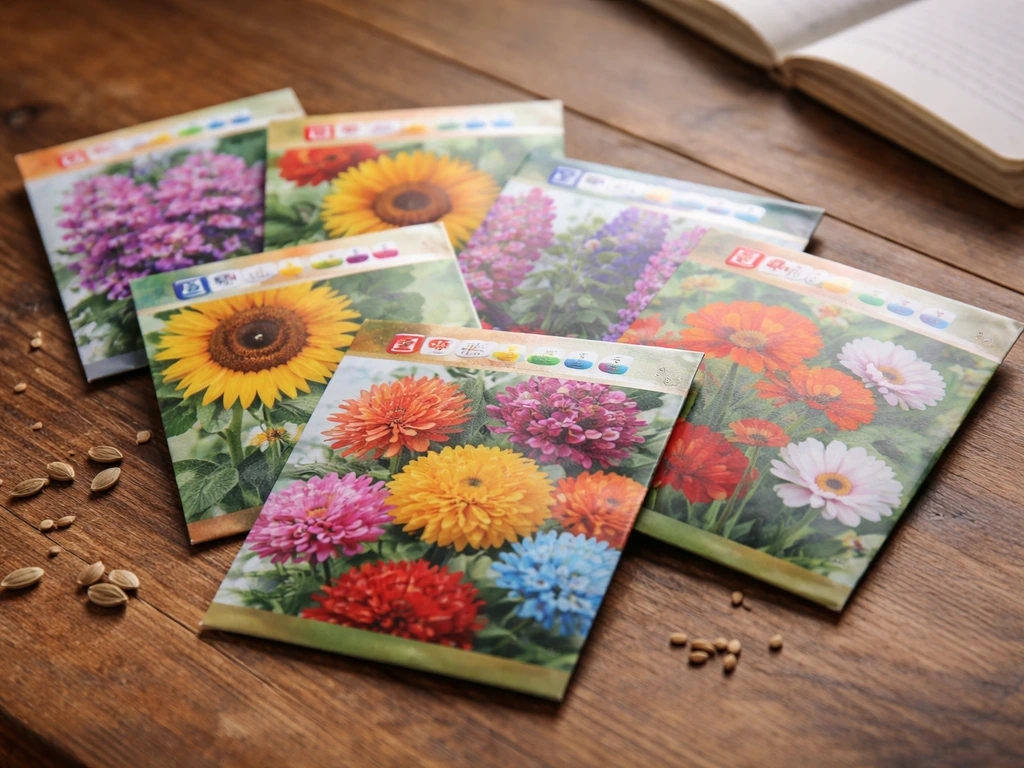
Once you know your zone, read the back of every seed packet before you buy. A good packet tells you: days to germination, days to bloom, whether the seed needs to be started indoors or can be direct-sown, and whether it needs cold stratification (a cold, moist period to break dormancy). Some wildflower species and certain perennials need stratification; most popular annuals like marigolds, zinnias, and snapdragons do not. If stratification is required and you skip it, the seeds simply will not sprout.
For beginners, the fastest wins come from easy-going annuals. Marigolds germinate in 5 to 7 days and bloom about 50 days after sowing. Zinnias are similarly quick. Sunflowers are nearly foolproof. Snapdragons take longer (10 to 14 days to germinate, 12 to 16 weeks to bloom) but reward patience with long cutting-garden stems. Poppies are best direct-sown because they hate root disturbance. Wildflower mixes are low-effort and forgiving. Once you have a few seasons under your belt, you can move on to more particular varieties like strawflowers, lisianthus, or the dramatic swan flower.
| Flower | Germination (days) | Weeks to bloom | Best sowing method | Notes |
|---|---|---|---|---|
| Marigold | 5–7 | 7–8 weeks | Indoors or direct sow | Easiest beginner choice |
| Zinnia | 5–7 | 8–10 weeks | Direct sow | Dislikes root disturbance |
| Snapdragon | 10–14 | 12–16 weeks | Indoors (needs light to germinate) | Press seeds onto soil surface, do not cover |
| Poppy | 10–20 | 8–10 weeks | Direct sow (needs cold) | Scatter in autumn or early spring |
| Sunflower | 7–10 | 8–12 weeks | Direct sow or indoors | Needs full sun; grows fast |
| Wildflower mix | 7–21 | 8–14 weeks | Direct sow | Scatter and barely rake in |
| Strawflower | 5–7 | 10–12 weeks | Indoors | Needs warmth; press onto surface |
| Lisianthus | 14–21 | 20–28 weeks | Indoors (early) | Long lead time; worth it for cut flowers |
Seed-starting setup: containers, soil, light, and temperature
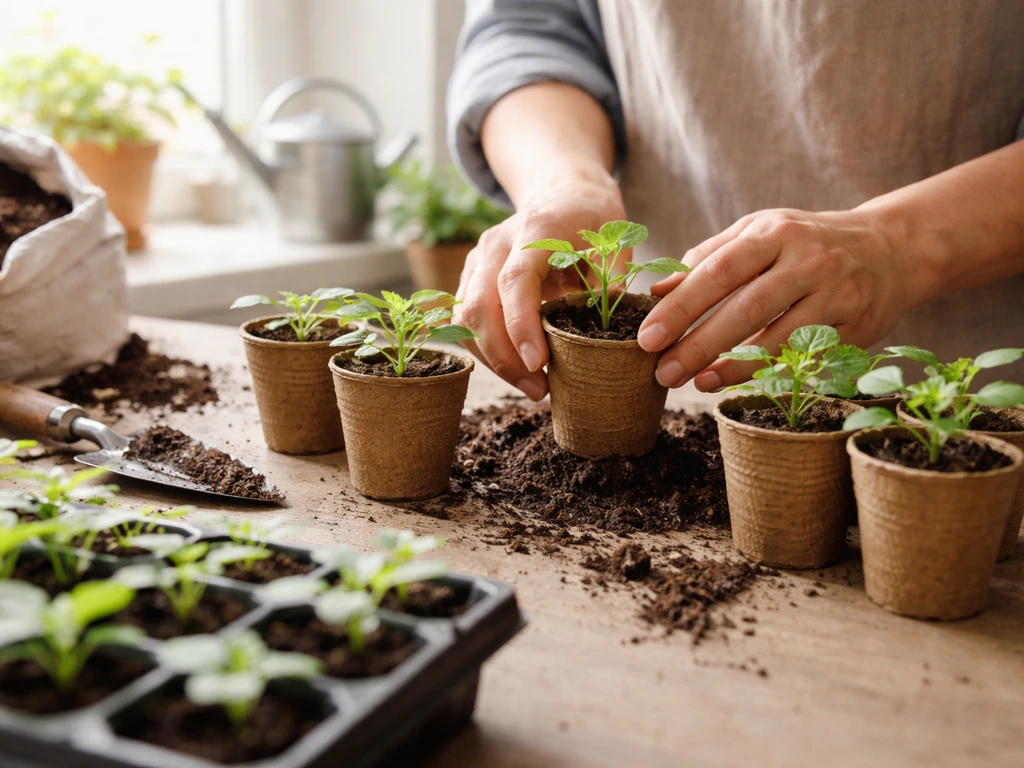
Seed-starting mix is not optional. Garden soil compacts in containers, starves seedlings of oxygen, and introduces disease. A purpose-made seed-starting mix is fine-textured, drains well, and holds just enough moisture to keep seeds consistently damp without waterlogging. Fill your containers, firm the mix lightly, and water it before you sow, not after, so you do not dislodge seeds with a stream of water.
Any container with drainage holes works: cell trays, yogurt pots with holes poked in the base, shallow seed trays, or biodegradable peat or coir pots that you plant directly in the ground later (particularly good for poppies and other flowers that resent transplanting). Bigger cells mean roots have more room to develop before transplanting, which reduces transplant shock. For very small seeds like snapdragons, a shallow tray is easiest.
Temperature matters more than most beginners expect. Most annual flower seeds germinate best between 65 and 75°F (18 to 24°C). A heat mat set to 70°F speeds germination dramatically, especially for slow starters like snapdragons and lisianthus. Once seeds sprout, remove them from the heat mat immediately and move them to your brightest light source. Seedlings that stay too warm without enough light go leggy fast.
Light is the most commonly underestimated factor for indoor starting. A south-facing windowsill in January or February rarely provides enough intensity. A basic two-bulb T5 grow light positioned 2 to 4 inches above the seedling tops, running 14 to 16 hours a day, will give you stocky, sturdy plants. If your seedlings are leaning hard toward the window or stretching out thin within a week of sprouting, that is a light problem, not a watering problem.
Sowing flower seeds indoors vs. outdoors
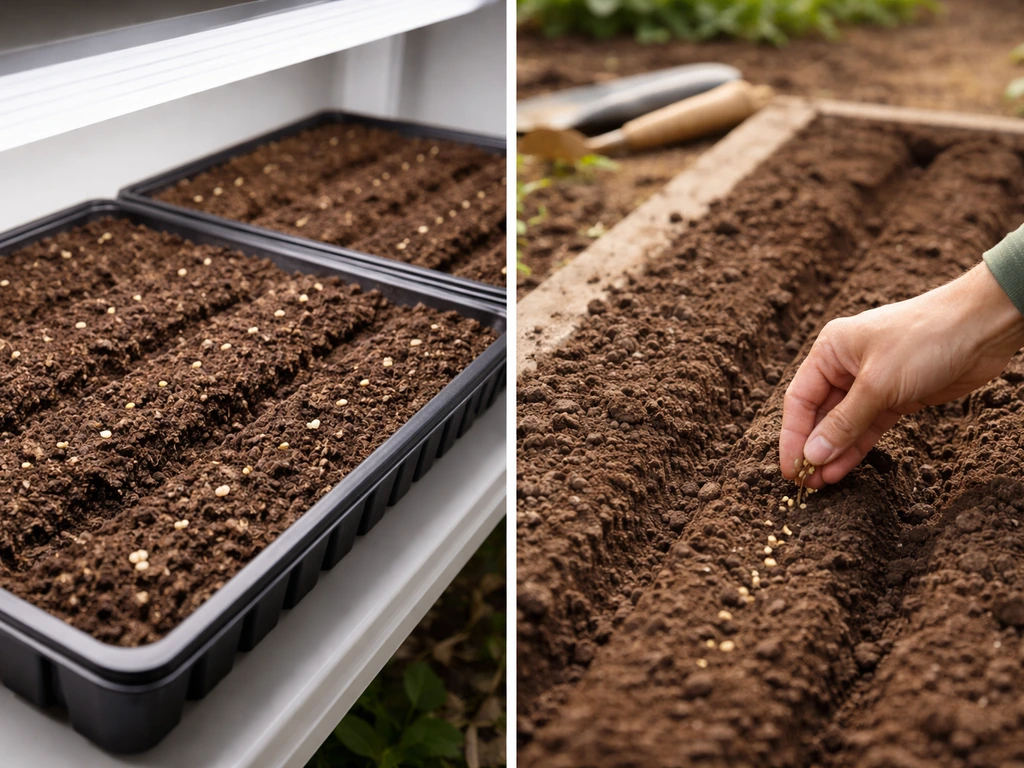
Whether you start seeds indoors or sow them directly outside depends on three things: the flower's preference (some hate transplanting), your last frost date (you need a long enough season), and how much setup you want to manage. Here is how to do both correctly.
Starting seeds indoors
- Count back from your last frost date using the seed packet's 'weeks to transplant' guidance. Most flowers want 6 to 10 weeks of indoor time. For snapdragons, start 10 to 12 weeks before last frost. For marigolds, 6 to 8 weeks is enough.
- Fill containers with pre-moistened seed-starting mix to about half an inch below the rim.
- Check the packet for sowing depth. A reliable rule: sow seeds at a depth of roughly twice their diameter. Tiny seeds like snapdragon and lobelia go on the surface and are not covered at all — they need light to germinate.
- Sow 2 to 3 seeds per cell to account for any that do not sprout. You will thin to one seedling later.
- Label every container with the variety name and date. You will forget otherwise.
- Cover the tray loosely with a humidity dome or plastic wrap to keep moisture in until germination. Check daily and remove the cover as soon as the first sprouts appear.
- Keep the soil consistently moist but not wet. Bottom-watering (setting the tray in a shallow dish of water and letting it soak up from below) is the most reliable method and avoids disturbing seeds.
Direct sowing outdoors
- Wait until soil temperature reaches at least 60°F for most annuals. Cold soil slows or prevents germination. A cheap soil thermometer takes the guesswork out of this.
- Prepare the bed by loosening the top 2 to 3 inches and raking it smooth. Remove any clumps or stones that small seeds could hide under unevenly.
- Sow at the correct depth (again, check the packet). Poppies and wildflowers are often scattered on the surface and gently raked in. Zinnias and sunflowers go about a quarter inch deep.
- Water gently with a fine rose or misting nozzle immediately after sowing and keep the surface consistently moist until seedlings are established. This is where most direct-sow failures happen: the bed dries out between waterings during the critical first week.
- Thin seedlings to the recommended spacing once they have their first true leaves. Crowded seedlings are weak seedlings.
Germination care: keeping seedlings on track
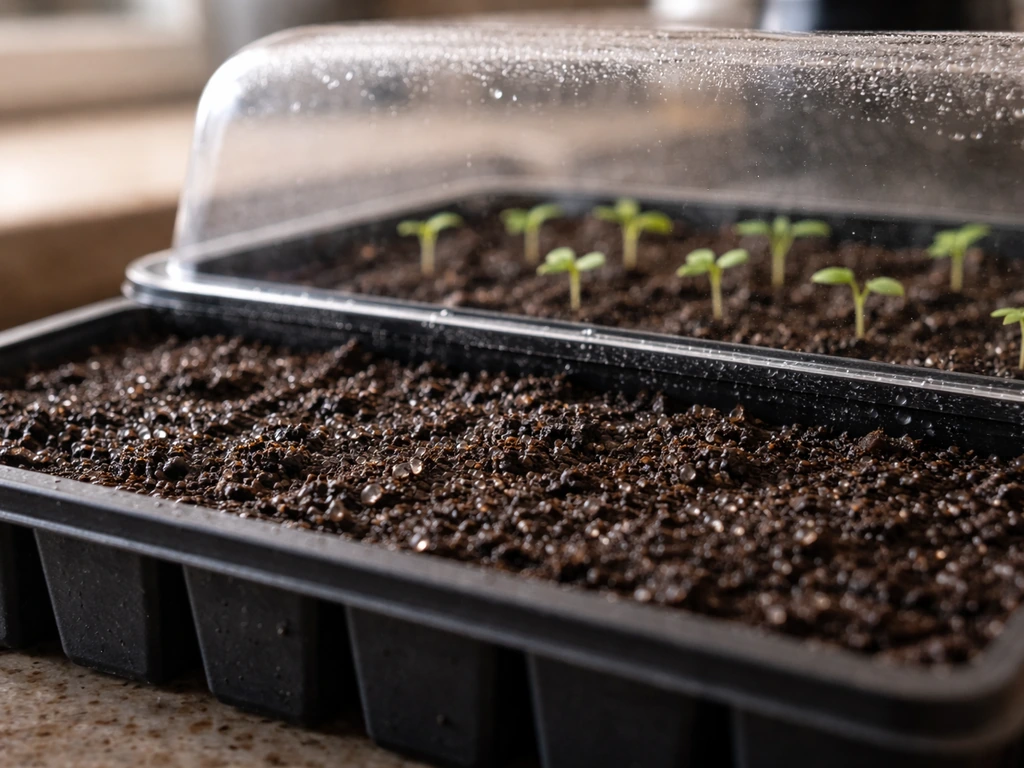
Germination is the most delicate phase. Seeds need water and oxygen in the right balance to sprout, the soil should feel like a wrung-out sponge: moist but not dripping. To germinate, many seeds must meet specific requirements for water, oxygen, temperature, and light, and seedling emergence depends on matching those needs [Seeds need water and oxygen in the right balance to sprout](https://extension. psu.
edu/seed-and-seedling-biology). Seed germination depends on having available [water and oxygen](https://www. extension. uga.
edu/publications/detail. html? number=B1432), along with the right temperature and light conditions. Overwatering suffocates seeds by pushing out the oxygen they need.
Underwatering and they dry out and die. Check moisture daily by pressing a finger into the surface. If it feels dry a quarter inch down, water. If it still feels damp, leave it.
Once seedlings have emerged and the humidity dome is off, airflow becomes critical. Stagnant humid air around seedling stems is the direct cause of damping off, a fungal condition where stems pinch at the soil line and seedlings topple over dead. A small fan running on low for a few hours a day is enough to prevent it. Airflow also strengthens stems by simulating outdoor wind, which is exactly what you want before transplanting.
Thin seedlings ruthlessly once they have their first true leaves (the second set, which look like the actual plant leaves rather than the initial rounded seed leaves). If you sowed 3 seeds per cell, snip the two weakest at soil level with scissors, do not pull them, which would disturb the roots of the survivor. One strong seedling per cell grows better than three competing ones. This is the step most beginners skip, and they end up with a tangle of weak stems.
Before transplanting indoor-started seedlings outside, harden them off over 7 to 10 days. Start by putting them in a sheltered spot outdoors for 1 to 2 hours, then gradually increase exposure over the week until they are spending full days outside. Skipping hardening off and planting directly from a warm indoor setup into bright sun and wind is the fastest route to transplant shock. The leaves may bleach, curl, or drop, and the plant can take weeks to recover.
Growing on to bloom: feeding, sun, spacing, and basic pest and disease prevention
Once seedlings are in the ground or a larger pot and past transplant adjustment, growth picks up quickly. Full sun (at least 6 hours of direct light daily) is non-negotiable for most flowering annuals. Less light means fewer flowers. If you are growing in containers on a partly shaded balcony, choose varieties labeled for part shade: impatiens, begonias, and some nasturtiums perform reasonably well.
Spacing is one of those instructions people always ignore and then regret. Crowded plants compete for water, light, and airflow, producing fewer blooms and more disease. Follow packet recommendations. As a general guide: marigolds need 8 to 12 inches, zinnias 12 to 18 inches, sunflowers 18 to 24 inches. It looks sparse when you first plant, but it fills in fast.
Start feeding about 2 weeks after transplanting or once direct-sown seedlings have 4 to 6 true leaves. A balanced liquid fertilizer (something like a 10-10-10 or 5-5-5 ratio) every 2 weeks supports steady growth. Once plants are budding, switch to a lower-nitrogen, higher-phosphorus formula to encourage blooms rather than foliage. Liquid seaweed or fish emulsion work well as low-intensity alternatives throughout the season.
For pest and disease prevention, keep it simple. Inspect the undersides of leaves weekly for aphids, spider mites, and whitefly. A strong spray of water knocks off most soft-bodied pests. Neem oil spray works well as a preventative and mild treatment. Remove any yellowing, damaged, or diseased leaves as soon as you spot them rather than waiting. Deadhead spent blooms to extend the flowering season and reduce the risk of fungal problems in humid weather.
Troubleshooting: why seeds fail and what to do about it
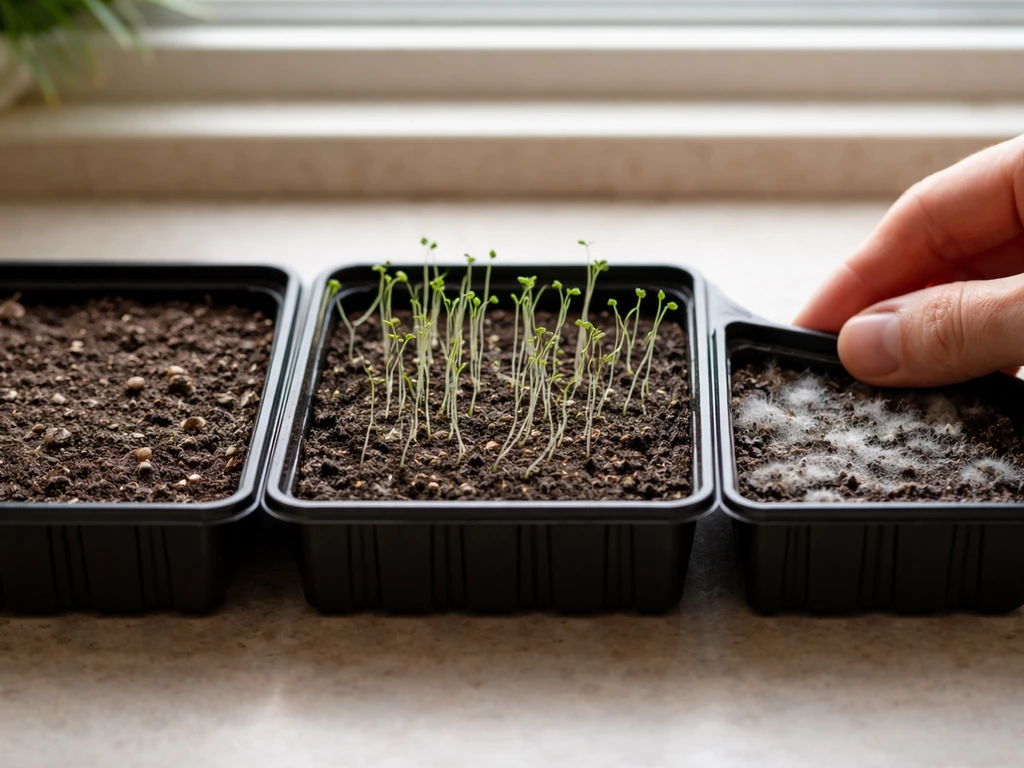
Most seed failures trace back to a handful of very fixable causes. Here is an honest rundown of what goes wrong and what to try.
| Problem | Most likely cause | Fix it |
|---|---|---|
| No germination after 3+ weeks | Wrong temperature, soil too dry or too wet, seeds too old, sown too deep | Check soil temp (aim for 65–75°F), verify seed age (most annuals are viable 1–3 years), check sowing depth against packet |
| Damping off (seedlings collapse at soil line) | Fungal disease from overwatering and poor airflow | Remove affected seedlings immediately, add a small fan, reduce watering frequency, use clean equipment next time |
| Leggy, stretched seedlings | Not enough light | Move closer to a grow light or brighter window; supplemental lighting 14–16 hours per day fixes this quickly |
| Seedlings sprout then stop growing | Running out of nutrients in seed-starting mix, or too cold | Begin diluted liquid feeding, check temperature (above 60°F minimum) |
| Transplant shock (wilting, leaf drop after planting out) | Hardening off skipped or rushed | Water well, shade temporarily, wait — most plants recover within 10 days if watered consistently |
| Poor bloom or no flowers | Not enough sun, too much nitrogen, planted too late | Ensure 6+ hours of direct sun, switch to lower-nitrogen fertilizer, check timing against last frost/zone |
| Seeds washed away or clumped after watering | Watering with too strong a stream on newly sown beds | Always use a fine rose or misting head; water before sowing to pre-moisten soil |
One thing I have learned from years of seed starting is that bad germination rarely means the seeds are defective. It almost always means one condition was off: temperature, moisture, depth, or timing. Before throwing out a tray, check all four. A heating mat alone has saved more 'failed' trays than I can count.
Timing and variety-specific guidance to reach bloom
Timing is where most home gardeners lose an entire season without knowing why. If you start seeds too late, you either do not get blooms before frost, or you have seedlings that are too young and stressed when they go in the ground. If you start too early, you have leggy, pot-bound plants waiting to go outside. Here is how to nail the timing for the most popular varieties.
Marigolds
Start marigolds indoors 6 to 8 weeks before your last frost date, or direct sow after last frost once soil is warm. They germinate in 5 to 7 days and bloom in about 8 weeks from seed. One of the fastest, most reliable flowers you can grow from seed. Great for filling in gaps in a cutting garden and for keeping aphids away from neighboring plants.
Snapdragons
Start snapdragons 10 to 12 weeks before last frost. Press seeds onto the surface of moist seed-starting mix and do not cover them, they need light to germinate. Keep them at 65 to 70°F and expect germination in 10 to 14 days. Snapdragons are cool-season flowers and actually prefer to be transplanted out 2 to 4 weeks before your last frost date, when nights are still chilly. They will stall in summer heat. In zones 8 and above, a fall planting produces the best blooms.
Poppies
Direct sow poppies in early spring as soon as soil can be worked, or in the fall for spring blooms. They need a cold period to germinate reliably, which is why they do better scattered in autumn or very early spring than in warm soil. Scatter seeds and barely rake them in, they need light and minimal covering. Do not try to start them in cells indoors; they do not transplant well and you will lose most of them.
Wildflowers
Wildflower mixes are the easiest starting point for a beginner. Most are designed for direct sowing in spring or fall. Clear the area of weeds, scratch the soil surface lightly, scatter the seeds, and firm them in with the back of your hand. Water and mostly leave them alone. The main challenge is resisting the urge to water too often, established wildflowers prefer drier conditions once they are a few inches tall.
Cutting garden favorites (zinnias, strawflowers, lisianthus)
For a dedicated cutting garden, zinnias are the workhorse: direct sow after last frost, germinate in 5 to 7 days, bloom in 8 to 10 weeks, and keep producing if you cut them regularly. Strawflowers need indoor starting about 6 to 8 weeks before last frost and are pressed onto the soil surface like snapdragons. Lisianthus is the most demanding but worth growing for its rose-like blooms: start it indoors 20 to 24 weeks before your last frost date. Yes, that means starting in late November or December for a May/June bloom. It is slow, finicky about moisture, and thin-stemmed at first, but the cut flowers last over 2 weeks in a vase.
Your next steps right now
Since it is early July, you are in a good window to direct sow fast-maturing annuals like zinnias, marigolds, and sunflowers for late-summer and fall blooms in most zones. If you want to grow zendu flowers at home, the same seed-starting basics here apply, but use the Zendu packet guidance for timing and light. You can also start thinking ahead: snapdragons, poppies, and wildflower mixes can be sown in the fall for cool-season or early-spring blooms next year. Check your zone, count back from your first fall frost date (which in most of the US falls between September and November), and plan accordingly.
- Find your USDA Hardiness Zone and last/first frost dates using your ZIP code.
- Choose 2 to 3 varieties suited to your zone and the current season (for July: zinnias, marigolds, sunflowers for direct sow).
- Buy fresh seed packets from the current season if possible; check the 'packed for' date on the packet.
- Prepare your seed-starting mix and containers, or identify a direct-sow bed and check soil temperature.
- Sow at the correct depth, label everything, and set a watering reminder so soil stays consistently moist.
- Set up airflow from the moment seedlings emerge to prevent damping off.
- Track your germination date and expected bloom date on a simple calendar so you know what to expect and when.
Growing flowers from seed is one of the most satisfying things you can do in a garden. The cost is low, the variety is enormous, and once you have done it once successfully, the method clicks and you will want to try more. Start simple, stay consistent with moisture and light, and do not overthink it. If you follow these basics, you will learn how to grow flowering plants at home from seed with reliable results Start simple. Most seeds really do want to grow.
FAQ
How deep should I plant flower seeds, and how can I tell if a seed needs light to germinate?
Use the packet depth guidance first. If the packet says “surface sow” or “do not cover,” press seeds lightly into the mix and leave them uncovered. For seeds that do need covering, a safe rule for many is planting no deeper than about 2 to 3 times the seed’s thickness, then mist or water from the bottom to avoid burying them.
Do I need to cover the container after sowing (plastic wrap or a humidity dome)?
Until seeds sprout, mild humidity helps keep the seed zone from drying out. Once seedlings emerge, remove the cover promptly and switch to airflow, otherwise damping off becomes much more likely. A dome that stays on too long keeps stems wet and prevents the moist air from exchanging with drier room air.
What’s the best way to water seed starting mix without washing seeds away?
Water the mix before sowing, then use bottom-watering or gentle misting only. If you must top-water, pour water down the side of the container or use a very fine mist so seeds are not pushed deeper. If the surface turns crusty, lightly mist and avoid heavy soaking.
My seedlings are tall and thin, but the soil seems moist. What should I change first?
Prioritize light before fertilizer or extra watering. Move the light closer so seedlings receive higher intensity, and keep the light on long enough daily (often 14 to 16 hours indoors). Also make sure seedlings are not overcrowded, because competition worsens stretching.
When do I know it’s time to thin seedlings, and should I fertilize right after thinning?
Thin when you see the first true leaves, not just the initial seed leaves. Snip weak seedlings at soil level to avoid root disturbance. Wait until the survivors recover for a few days before fertilizing, then start with a half-strength dose so you do not shock stressed plants.
Can I transplant flowers even if nights are still cold, or will they fail?
It often won’t kill them immediately, but cold nights can stunt growth or trigger leaf damage if you skip hardening off. If a cold snap is forecast, bring tender seedlings under cover or use a cloche row cover for the night, and uncover during the day to prevent overheating and excess humidity.
What should I do if my direct-sown seeds never germinate, even though the soil is watered?
Check depth (seeds may be buried too far), temperature (some species need cooler conditions), and whether the surface is crusting or drying between waterings. Also verify timing, for example poppies often need a cold period. If the soil has stayed wet and oxygen-poor, reduce watering frequency and improve surface aeration by gently loosening the top after the soil begins to dry.
Do I need to soak seeds before planting to improve germination?
Only soak seeds when the packet explicitly recommends it. Many flower seeds do not benefit and can rot if soaked too long. If you do soak, use room-temperature water, follow a short soak window (typically just overnight), and plant promptly the next day in properly moist mix.
How can I prevent damping off beyond using airflow?
Use sterile or fresh seed-starting mix, avoid overwatering, and keep the seed trays out of drafts that dry them out too much but still provide gentle circulation. Water only when the surface is dry slightly below the top layer. If you see pinpoint stem pinch near the soil line, remove affected seedlings immediately and keep the surface drier rather than wet.
Should I fertilize seedlings before transplanting?
Usually wait until seedlings have true leaves and are actively growing, then use light feeding only after emergence. Overfertilizing early can burn tender roots in small cells. A good approach is to feed around transplant time or after the first true growth flush, using diluted liquid fertilizer.
How do I keep seedlings from getting sunburned after transplanting?
Schedule transplanting for mild weather and complete hardening off first. After planting, shade for the first 1 to 3 days using light fabric if you have strong sun, especially if daytime temperatures jump. Remove shade gradually, and water at the root zone, not over the leaves, to reduce stress.
Can I grow flowers from seed in containers on a balcony, and what’s different from garden beds?
Yes, but choose varieties labeled for container or part shade if your balcony gets limited direct sun. Container soil dries faster, so keep a consistent watering rhythm. Also plan for spacing and airflow, smaller pots can overheat in sun and encourage stress, so larger containers usually perform better for flowering annuals.
Next Articles
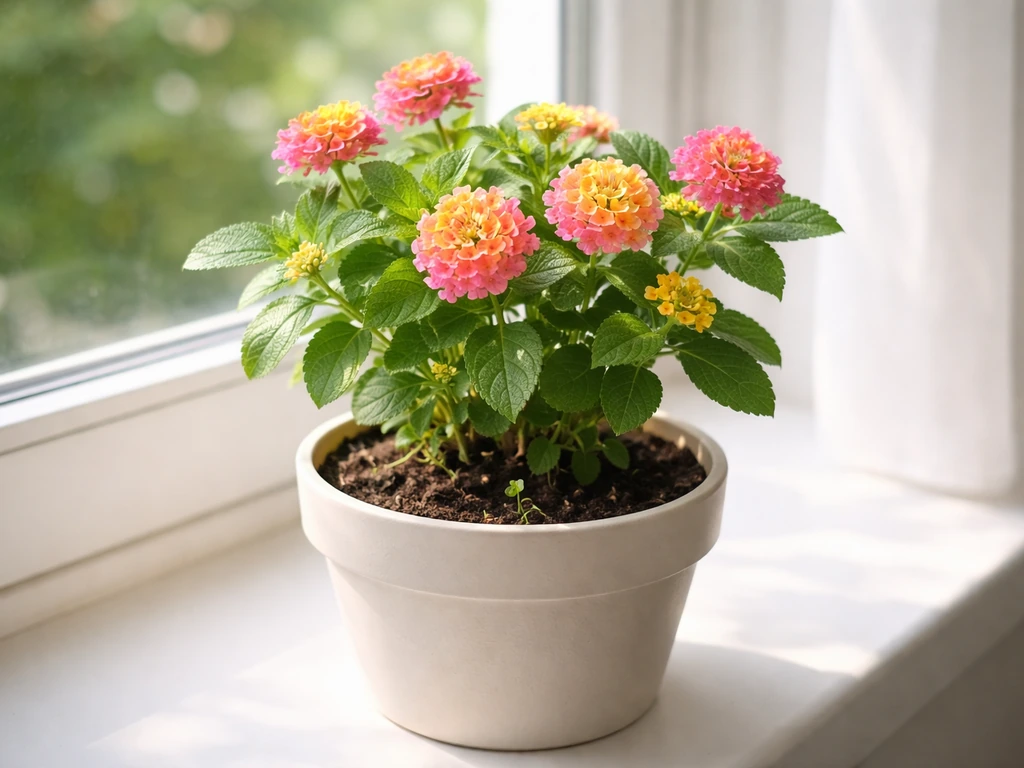
How to Grow Flowering Plants at Home From Seed to Bloom
Step-by-step guide on how to grow flowering plants at home from seed to bloom, with light, soil, care, and troubleshooti
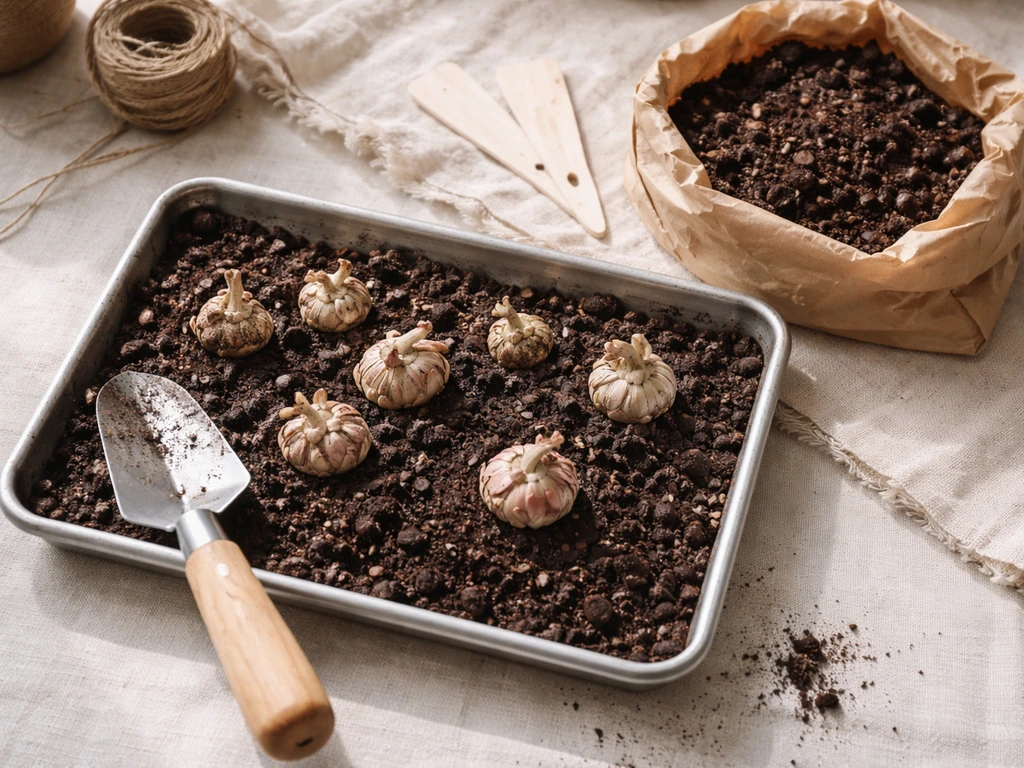
Floret How to Grow Ranunculus: Step-by-Step Guide
Step-by-step Floret-style ranunculus guide: corm prep, planting, watering, frost care, troubleshooting, and harvest for
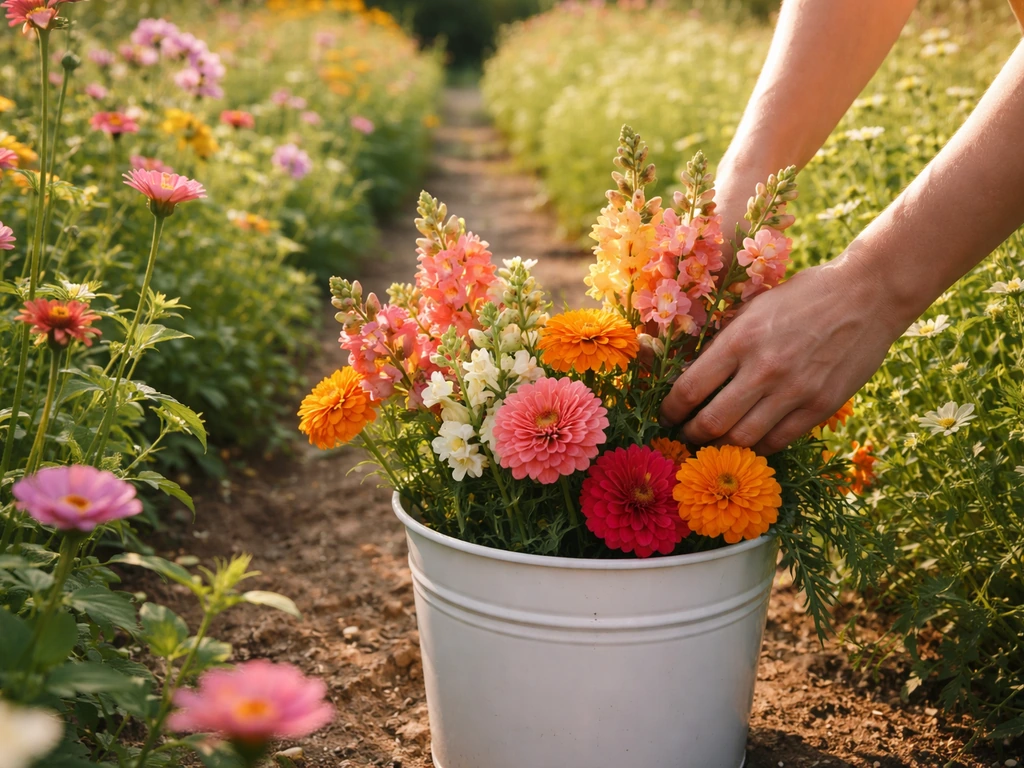
How to Grow Your Own Wedding Flowers Step by Step
Step-by-step guide to grow bouquet-ready wedding flowers, from planning and sowing dates to harvesting, conditioning, an