
Tibetan bell flowers are easy to grow from seed once you understand one thing: the name covers two related but distinct plants. Most gardeners growing 'Tibetan bellflowers' are actually growing Codonopsis, a genus of twining, bell-flowered climbers and herbaceous perennials native to the Himalayan and central Asian highlands. A separate species, Campanula pallida var. tibetica, is a true subalpine bellflower with a more specialized growing requirement. For most home gardeners, Codonopsis is the one to grow: start seeds indoors 6 weeks before your last frost date, surface-sow (do not bury them), keep them at 60–75°F, and expect seedlings in 1–5 weeks. Plant out after frost danger passes, give them a support to climb, and you will have blooms by late summer of the first or second year.
How to Grow Tibetan Bell Flowers: Seed-to-Bloom Guide

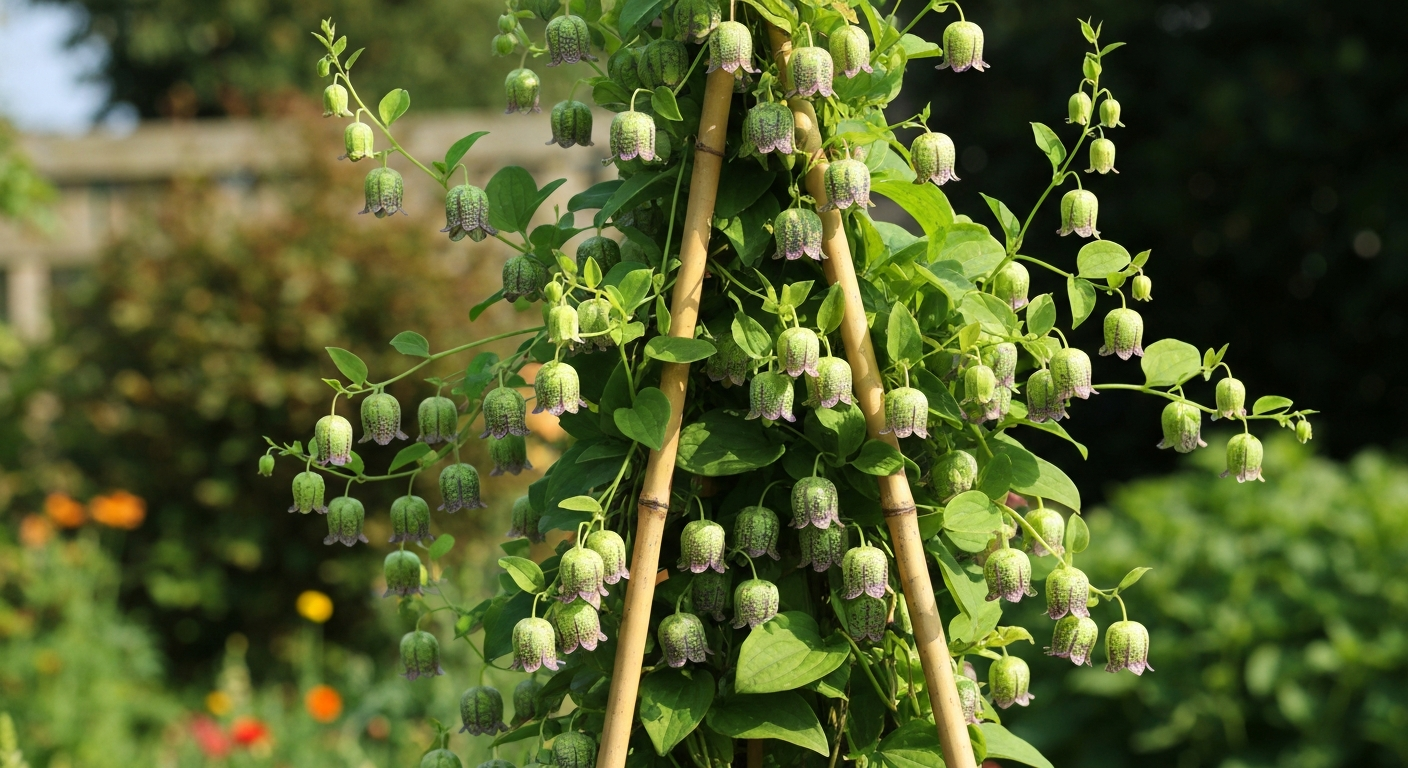
Tibetan bell flowers at a glance
| Feature | Codonopsis (bonnet bellflower) | Campanula pallida var. tibetica |
|---|---|---|
| Common name | Bonnet bellflower / Tibetan bellflower | Tibetan pale bellflower |
| Plant type | Perennial climber or bushy perennial | Subalpine perennial |
| Mature height | 10–15 ft (3–4.5 m) as a climber | Low-growing, under 12 in |
| USDA hardiness | Zone 4–8 depending on species | Zone 5–7 (cool climates) |
| Light | Full sun to part shade | Full sun, cool conditions |
| Soil | Light, fertile, well-drained, slightly acidic to neutral | Well-drained, gritty, lean |
| Water | Consistently moist, not waterlogged | Moderate; good drainage critical |
| Sow depth | Surface sow (needs light) | Surface sow |
| Days to germination | 21–35 days at 60–75°F | 14–21 days with stratification |
| Bloom time | Late summer (August–September) | Summer |
| Key use | Garden climber, cutting garden, herbal | Rock garden, alpine collection |
Why grow Tibetan bell flowers? Uses in the garden and bouquets
The first time I grew Codonopsis lanceolata up a bamboo tripod, I was not expecting much. By late August the whole structure was draped in greenish-purple, spotted bells about the size of a thimble, and every visitor stopped to ask what it was. That is part of the appeal: these are genuinely unusual plants that look like something from a botanical garden, but they ask very little of you.
In the garden, Codonopsis species pull double duty. As climbers they cover fences, obelisks, and trellises quickly in a single season once established. As a companion plant at the woodland edge or in a cottage border, they weave through shrubs in an informal, almost wild way that formal bedding plants never quite achieve. Campanula pallida var. tibetica is better suited to a rock garden or trough where its low, neat habit can be appreciated up close.
For cutting gardens, Codonopsis clematidea produces dangling blue bells that add movement and an unusual texture to mixed arrangements. Cut stems when the first bell on a spray is fully open, place them immediately in water, and they hold for around five to seven days in a vase. The flowers are not long-stemmed showstoppers, but paired with taller cutting garden staples they create the kind of naturalistic, layered bouquet that is hard to achieve any other way.
Beyond aesthetics, Codonopsis pilosula (Dangshen) has a long history in East Asian herbal medicine, where its root is the valued part. If that aspect interests you, note that the plant needs two or more years before the root reaches a harvestable size, so patience is required. For most of us, the flowers are reward enough.
Getting to know the types: species and growth habits explained
Sorting out the naming situation upfront will save you a lot of confusion at the seed rack. 'Tibetan bellflower' is a common name that floats between at least two distinct genera in the Campanulaceae (bellflower) family. Here is how to tell them apart and what each one wants.
Codonopsis: the bonnet bellflowers
Codonopsis is the genus most often sold under the 'Tibetan' or 'bonnet' bellflower label. RHS Plant Finder lists Codonopsis (bonnet bellflower) as available from UK nurseries RHS Plant Finder lists Codonopsis (bonnet bellflower) as available from UK nurseries.. These are native to the Himalayan and central Asian regions, and several species are widely cultivated. The three you are most likely to encounter are Codonopsis lanceolata, a vigorous twining vine reaching 10–15 ft (3–4.5 m) that flowers in August and September with greenish-purple spotted bells (hardy to Zone 6); Codonopsis clematidea, a more compact trailing or bushy species with pale blue, intricately marked bells, hardy to around Zone 4, which makes it the best choice for cold-climate gardeners; and Codonopsis pilosula, grown primarily for its medicinal root but bearing attractive pendant bells and valued as an ornamental climber in part-shade gardens.
Campanula pallida var. tibetica: the true Tibetan bellflower
Recognized by Kew's Plants of the World Online under the name Campanula pallida var. tibetica, this is a low-growing subalpine perennial native to Tibet, northern Pakistan, and the western Himalayas. It is a very different plant from Codonopsis: smaller in all dimensions, preferring gritty lean soils, cool temperatures, and excellent drainage. It is genuinely beautiful in a rock garden or alpine trough but is not the easiest beginner project. If you are new to growing bell flowers from seed, start with Codonopsis first and come back to the Campanula tibetica once you have a feel for the family.
Recommended varieties and where to find seeds
The variety you choose matters more than people think, partly because availability varies quite a bit by region and partly because the growth habit really does differ between species. Here is what I have found works well and where to track seeds down.
- Codonopsis clematidea: best all-rounder for cold gardens (Zone 4+), compact and manageable, pale blue bells with beautiful internal markings — look for it at specialist perennial seed suppliers such as Jelitto, Prairie Moon Nursery, and select Etsy seed sellers
- Codonopsis lanceolata: the showiest climber, best for Zone 6–8, dramatic late-summer flowers on a vigorous vine — available from Baker Creek Rare Seeds and specialty heirloom seed retailers
- Codonopsis pilosula: primarily ordered through herbal and medicinal plant seed suppliers; Strictly Medicinal Seeds and similar specialist sources carry it reliably
- Campanula pallida var. tibetica: rare in general commerce; seek it through alpine plant societies (Alpine Garden Society seed exchange), specialist rock garden nurseries, or seed swaps
One honest note: Codonopsis seeds are not always available at big-box garden centers. I have had the best luck ordering early in winter (January or February) from specialist online suppliers before stock runs out. If you are in the UK, the RHS Plant Finder is a useful tool for tracking down nurseries that carry Codonopsis plants if you cannot source seed.
Choosing the right spot: light, soil, drainage, and container vs. in-ground
Light
Codonopsis species do best in full sun to part shade. In cooler climates (Pacific Northwest, northern New England, Scotland), full sun is fine and actually encourages stronger flowering. In hot-summer areas like the mid-Atlantic, Southern Plains, or inland California, part shade during the hottest afternoon hours will keep plants from wilting and extend the bloom period. A spot that gets morning sun and dappled afternoon shade is close to ideal for most Codonopsis in warm gardens.
Soil and drainage
Every reliable cultivation source I have come across, from Missouri Botanical Garden to Plants For A Future, emphasizes the same thing: light, fertile, well-drained soil. Sandy loam is ideal. If your soil is heavy clay, work in plenty of coarse grit and compost before planting, or consider a raised bed. The pH sweet spot is slightly acidic to neutral, around 6.0–7.0. Good drainage is especially important over winter for perennial Codonopsis, as roots sitting in cold, wet soil are far more likely to rot than roots in free-draining ground.
Container vs. in-ground
Codonopsis can be grown in large containers, and this is actually a useful approach if you want to bring plants into a frost-free space over winter in colder zones. Use a pot at least 12 inches deep (deeper for Codonopsis pilosula if you want a decent root), fill with a well-draining mix of loam, compost, and perlite in roughly equal parts, and water consistently throughout summer. Be aware that container plants dry out faster and will need more frequent feeding. In-ground planting gives the roots more room to run and tends to produce larger plants with more flowering stems, so if your soil and drainage allow it, in-ground is the better long-term choice for Zone 6 and warmer. For Zone 4–5 gardeners, container growing with winter protection is a practical alternative.
Zone-aware planting calendar
The timing advice below is based on Codonopsis, which is the species most home gardeners are actually growing. Use your local last spring frost date to fine-tune the 'start indoors' column. If you do not know your frost date, your county cooperative extension service will have it, or check the USDA Plant Hardiness Zone Map online.
| USDA Zone | Approx. last frost | Start seeds indoors | Direct sow outdoors | Transplant out | Expected bloom |
|---|---|---|---|---|---|
| Zone 4 (e.g., Minneapolis, MN) | Mid-May | Late March – early April | Late May (after frost) | Late May – early June | August – September (year 2) |
| Zone 5 (e.g., Chicago, IL) | Late April – early May | Mid-March | Early May | Mid-May | August – September |
| Zone 6 (e.g., St. Louis, MO) | Mid-April | Late February – early March | Mid-April | Late April – early May | August – September |
| Zone 7 (e.g., Washington, DC) | Late March – early April | Mid-February | Early April | Mid-April | August – September |
| Zone 8 (e.g., Seattle, WA / Atlanta, GA) | Mid-March | Late January – early February | Mid-March | Early April | August – September |
| Zone 9+ (e.g., Houston, TX) | February or earlier | January | February – March | March | Summer; part shade critical |
A few notes on the table: in Zone 4 and colder, Codonopsis clematidea is the only species likely to reliably overwinter in the ground. Zones 5–8 are the sweet spot for most species. In Zone 9 and warmer, Codonopsis is challenging because summer heat is intense; treat it as a cool-season annual, provide afternoon shade, and do not expect the same vigor you would get further north. For autumn sowing of Campanula pallida var. tibetica, sow directly outdoors in September or October to allow natural cold stratification over winter, targeting a spring germination.
Starting Tibetan bell flowers from seed indoors: step by step
Indoor seed starting gives you a head start of several weeks and lets you control conditions closely, which matters a lot with seeds this small. I have found it is the most reliable route for anyone in Zone 6 or colder who wants blooms in the first growing season. Here is exactly how I do it, from prep through potting on.
What you need before you start
- Sterile, soilless seed-starting mix (peat-based or peat-free with added perlite or vermiculite — not garden soil, which compacts and carries pathogens)
- Seed trays or small pots (plug trays with cells around 1–1.5 inches work well for individual sowing)
- Clear plastic dome or cling film to retain humidity
- Spray bottle for gentle watering
- A warm location or heat mat: target 60–75°F (15–24°C) soil temperature
- Bright indirect light or a grow light for after germination
- Labels and a permanent marker (seeds look identical once separated from their packets)
Cold stratification: do you need it?
Many Codonopsis seeds germinate better after a period of cold, moist stratification. Both PFAF cultivation notes and specialist seed suppliers recommend 30–60 days of refrigeration to improve germination rates. To do this, moisten a small pinch of seed-starting mix, place your seeds in it inside a sealed zip-lock bag, and keep the bag in the refrigerator at around 34–40°F for 4–8 weeks before your planned sow date. If you are short on time, you can skip this step, but expect germination to be patchier and slower, especially with Codonopsis pilosula.
Sowing step by step
- Fill your seed tray or pots with damp seed-starting mix to about half an inch below the rim. Firm gently but do not compress.
- Surface sow: place seeds on the surface of the mix and do not cover them. Both Codonopsis and Campanula seeds need light to germinate, and even a thin layer of compost can reduce germination rates noticeably.
- Mist the surface lightly with a spray bottle to settle the seeds without washing them around.
- Cover the tray with a clear dome or cling film to hold humidity.
- Place in a warm spot at 60–75°F. A heat mat set to 68°F works well. Keep out of direct sunlight at this stage — indirect bright light is fine.
- Check daily and mist again if the surface feels dry. Do not let the mix dry out completely, but avoid waterlogging.
- Expect germination in 21–35 days for Codonopsis, typically faster if stratification was used. Campanula seeds often emerge in 14–21 days under warm conditions.
- Once seedlings appear, remove the dome and move to bright light (a south-facing windowsill or under a grow light 12–14 hours per day).
- Thin to one seedling per cell once the first set of true leaves appears, keeping the strongest individual.
- Water from below (sit the tray in a shallow dish of water) once seedlings are established to reduce damping-off risk.
Seed-starting checklist
- Seed-starting mix sourced and pre-moistened
- Stratification completed if applicable (4–8 weeks in fridge)
- Tray or plug cells filled and labeled
- Seeds surface-sown, not buried
- Dome or cover in place
- Temperature confirmed at 60–75°F
- Daily moisture checks scheduled
- Grow light or bright windowsill ready for when seedlings emerge
- Transplant-out date noted on the label (6 weeks after sow date, adjusted for your last frost)
If you are getting started with seed sowing for the first time, the same principles here apply to many other small-seeded flowers. For additional community-sourced tips and troubleshooting, see discussions titled how to grow thca flower reddit for growers sharing hands-on experience and practical advice. Good seed-starting practice is one of the most transferable skills in flower growing, and once you have done it once with a forgiving species, subsequent attempts with more finicky seeds feel far less daunting.
Hardening off and transplanting outside
Codonopsis seedlings look deceptively robust indoors but they have never experienced wind, direct sun, or temperature swings, and moving them outside too quickly causes real setbacks. Harden them off over 7–14 days by starting with just an hour or two of sheltered outdoor time on a mild, calm day and gradually increasing exposure over the following two weeks. I usually start with a shaded porch or a spot behind a low wall before moving them to their final position.
Transplant after the danger of hard frost has passed (see the zone calendar above). Plant at the same depth as they grew in their cells, do not bury the stem. Codonopsis can be sensitive to root disturbance, so handle the root ball gently and avoid shaking soil from around the roots. Space clumps about 12–18 inches apart; if you are planting multiple climbers to cover a large trellis, 3–6 feet between crowns gives each plant room to establish without competing. Water in well and keep soil consistently moist for the first two to three weeks while roots settle.
Direct sowing outdoors
Direct sowing is the low-effort option and works surprisingly well for Codonopsis in Zones 6 and warmer where the growing season is long enough. Prepare a fine-tilth seedbed by raking out clods and stones so the surface is smooth. Sow seeds on the surface and press them lightly into contact with the soil without covering them. Mist or water gently with a fine rose to avoid washing seeds around, then keep the surface consistently moist until germination. Thin seedlings to their final spacing once they have two to four true leaves.
For Campanula pallida var. tibetica and other Campanula species in the family, autumn direct sowing is often preferred. Sow in September or October in a prepared outdoor bed or cold frame, and let natural winter cold provide the stratification. Germination will happen in spring without any further intervention. This is one of those approaches that feels counterintuitive when you first hear it, but it genuinely works and often produces more vigorous seedlings than spring-started indoor batches.
Feeding, support, and ongoing maintenance
Codonopsis are not heavy feeders, but they appreciate a light top-dressing of balanced granular fertilizer (something around a 5-5-5 or 10-10-10 NPK) worked into the soil at planting time. A liquid feed diluted to half strength once a month during the growing season from early summer through August keeps things ticking along without pushing excessive leafy growth at the expense of flowers.
Climbing Codonopsis species need support from early in the season. Put your trellis, obelisk, or bamboo canes in place before or at transplanting time rather than trying to add them later once stems have started twining in awkward directions. I use a simple bamboo tripod for container plants and a 6-foot wire obelisk for in-ground climbers. The stems are not particularly heavy so you do not need a heavy-duty structure, but they do twine and weave, and untangling them later is a thankless job.
Deadheading spent flowers encourages continued blooming and prevents the plant from putting energy into seed production if that is not your goal. Cut back top growth in late autumn once it dies down, and mulch the crown with a few inches of straw or dry leaves over winter, especially in Zone 5 and colder. This insulation makes a real difference to overwinter survival rates.
Pests, diseases, and how to deal with them
The honest good news first: Missouri Botanical Garden describes Codonopsis as having no major insect or disease problems in typical garden conditions. My experience matches that. These are not high-maintenance plants once established. That said, there are two vulnerabilities worth knowing about.
Slugs and snails on young plants
Young Codonopsis shoots and freshly transplanted seedlings are genuinely vulnerable to slug and snail damage. Plants For A Future flag this specifically, and I have lost entire batches of seedlings to overnight slug feeding. Protecting plants at the seedling and early transplant stage is the most important pest management task you have with this species. Organic options include copper tape around pot rims, crushed eggshell or grit around the base of transplants, and iron phosphate slug bait (safe around pets, birds, and soil life), applied in the evening when slugs are active. Nematode drenches (Phasmarhabditis hermaphrodita) applied in spring are highly effective if slugs are a persistent problem in your garden.
Damping off in seedlings
Damping off is a fungal collapse of seedlings at the soil line, almost always caused by overwatering, poor ventilation, or using non-sterile growing medium. Prevention is the only real cure: use sterile seed-starting mix, water from below once seedlings are up, keep air circulating around your seed trays (do not leave the dome on too long after germination), and avoid overcrowding. If damping off does appear, remove affected seedlings immediately, reduce watering, and improve airflow. A light dusting of horticultural cinnamon powder on the surface of the mix has some evidence behind it as an organic preventative.
Root rot in heavy soils
Established Codonopsis plants in heavy clay soils can suffer root rot, particularly over a wet winter. This is a soil and drainage issue more than a pest or disease issue. If you have lost plants after winter in heavy soil, improve drainage with grit before replanting, or move them to a raised bed. There is no fungicide cure for root rot once it takes hold, so getting the soil right before planting is the only reliable fix.
Harvesting, cutting for arrangements, and saving seed
Cutting for the vase
Cut Codonopsis stems for arrangements when the first bell on a stem has opened fully and one or two buds remain closed. Cut in the early morning, immediately plunge stems into cool water, and recut the stem end underwater at an angle before arranging. In a cool room the stems hold for around five to seven days. The hanging bell shape adds real character to arrangements alongside upright flowers like snapdragons, and the spotted interior of many Codonopsis flowers shows best in loose, naturalistic bouquets rather than tightly packed formal ones.
Saving seed
Allow a few seed heads to mature fully on the plant at the end of the season. Codonopsis capsules turn papery and brown when ripe; collect them just before they split open, or tie a small paper bag around the ripening head to catch seeds as they disperse. Lay collected capsules on a sheet of paper indoors for a week to finish drying, then tap out the seeds, label them clearly, and store in a cool, dry, dark place in a sealed paper envelope or airtight container. Seeds stored this way stay viable for two to three years. Remember that if you are growing several Codonopsis species close together, cross-pollination is possible and saved seed may not come true to the parent.
A note on related bell flowers worth growing
If you enjoy the bell-flower family and want to explore further, there are some genuinely rewarding close relatives to try. If you also enjoy learning about warm-season, heat-tolerant blooms, see a guide on how to grow Indian blanket flower for tips on cultivating Gaillardia. Basket flower and Indian blanket flower offer a different palette of warm tones and are excellent cutting garden companions to the cooler hues of Codonopsis. The samanthi flower is another interesting ornamental for gardeners drawn to less common species. For step-by-step guidance on cultivation and seed starting, see how to grow samanthi flower (resource ID 749b357b-5c32-4544-aa2b-bfa14874b421). Each has its own seed-starting quirks, but the same principles of surface sowing, good drainage, and hardening off apply across most of them. Starting with one and building from there is a much less overwhelming approach than trying four new species in the same season.
FAQ
Clear, search‑oriented title and concise meta description
Title: How to Grow Tibetan Bell Flowers (Seed to Bloom): A Practical Step‑by‑Step Guide Meta description: Grow Tibetan bell flowers from seed to bloom—easy, zone‑aware steps, care tables, pests, harvesting, and seed‑saving tips. (≤160 chars)
What are “Tibetan bell flowers”? Types and common uses
Overview: “Tibetan bell flower” is an umbrella horticultural name that can refer to different members of the bellflower family linked to the Tibetan/Himalayan region. Common garden types: - Campanula pallida var. tibetica: a subalpine perennial (true ‘Tibetan’ Campanula). Good for rock gardens and alpine borders. - Codonopsis species (bonnet/Asian bellflowers), e.g., C. lanceolata, C. pilosula, C. clematidea: herbaceous climbers or clumping perennials used on arbors, trellises, mixed borders and medicinal/culinary gardens (some species have edible/medicinal roots). Typical uses: vertical interest (twining Codonopsis), cut flowers, pollinator patches, rock gardens and medicinal/heritage plots. Choose species by habit (vine vs clump) and hardiness (see recommended varieties).
Planting timing and zone‑aware calendar
General guidance: Codonopsis often started indoors ~6 weeks before last frost or surface‑sown outdoors after soil warms; some Campanula benefit from late summer/fall sowing for natural cold stratification. Convert to dates using your USDA zone and local frost dates. Example planting calendar table (adjust 1–2 weeks to local frost dates): - USDA Zones 3–5: - Late summer (Aug–Sep): surface sow Campanula outdoors for winter stratification. - Spring (Apr–May): start Codonopsis indoors 6–8 weeks before last frost; transplant after frost. - USDA Zones 6–8: - Early spring (Mar–Apr): direct sow or start indoors 4–6 weeks before last frost. - Late summer (Aug): optional fall sow for Campanula with winter chill. - USDA Zones 9–10: - Fall or late winter (Oct–Feb): start indoors or seasonally cool months; provide afternoon shade in hot summers. Notes: For precise dates, use your last‑frost calendar: indoor start date = last frost date − 6 weeks (Codonopsis); fall sow = 6–12 weeks before first expected hard freezes for natural stratification.
Seed‑starting (indoor) step‑by‑step
Indoor seed‑starting (stepwise): 1. Use a sterile, fine seed‑starting mix (peat‑free or peat with perlite/vermiculite). 2. Fill flats/pots; firm surface but do not compress. 3. Surface‑sow seeds (do not bury—seeds are light‑sensitive). Lightly press seed into the mix. 4. Mist to moisten; cover with clear dome or thin plastic to retain humidity. 5. Maintain medium temps ~60–75°F (15–24°C). Provide bottom heat only if germination is slow. 6. Keep evenly moist (not waterlogged); good ventilation reduces damping‑off risk. 7. Provide bright light once cotyledons appear (grow light or bright window). 8. Thin or pot up at 2–4 true leaves. Harden off over 7–14 days before transplanting. Timing & stratification: many Campanula/Codonopsis benefit from 30–60 days cold, moist stratification (refrigerate in damp media) if germination is poor.
Direct sow (outdoor) instructions
Direct sowing (stepwise): 1. Prepare a fine, weed‑free seedbed; rake to a smooth surface. 2. Surface sow seeds and lightly press into soil; do not cover (or cover with a fine grit layer only). 3. Keep soil surface consistently moist with gentle watering or misting. 4. Protect seedlings from slugs/snails (copper tape, collars, beer traps or diatomaceous earth). 5. Thin to final spacing after 2–4 true leaves: Codonopsis clumps 12–18 in (30–45 cm); vines allow 3–6 ft (1–2 m) per crown for multiple climbers. 6. For fall sowing (Campanula): sow 6–12 weeks before sustained cold; seedlings will emerge in spring after stratification.
Transplanting and hardening‑off best practices
Transplanting checklist: - Harden off seedlings 7–14 days, gradually increasing outdoor hours. - Transplant after last frost (for tender types) or when soil is workable for hardy species. - Plant at the same depth as in the container; firm soil to remove air pockets. - Water well after planting and mulch to conserve moisture. - Avoid deep root disturbance for Codonopsis—handle roots gently; pot up rather than bare‑root where possible. Spacing: clumping Codonopsis 12–18 in (30–45 cm); trellised vines need 3–6 ft (1–2 m) between separate crowns.
Beginner-friendly Reddit-style guide to legally growing THCA-rich cannabis: strains, setup, feeding, harvest, safety.
How to grow samanthi flower: step-by-step seed-to-bloom guide with planting calendar, troubleshooting and seed-saving
How to grow plants from bouquet: step-by-step rooting, seed saving, bulbs, timelines and troubleshooting