If you want flowers worth cutting, start with zinnias, sunflowers, cosmos, snapdragons, and dahlias. Those five will carry most of your bouquets from early summer through first frost. Add sweet peas for spring, larkspur for early cool-season color, and rudbeckia for late-season staying power, and you have a cutting garden that produces almost year-round in most climates. If you are aiming for year-round blooms, this cutting-garden approach also aligns with how to grow fresh cut flowers in your own space. If you want the best way to grow cut flowers in your climate, start by building a cutting garden with the right varieties, timing, and care after harvest. If you want the best way to grow cut flowers in your climate, start by building a cutting garden with the right varieties, timing, and care after harvest how to grow cutting flowers. Everything below explains exactly why these work, how to grow them from seed to stem, and how to cut and care for them so they actually last in the vase.
Good Cutting Flowers to Grow: Best Picks for Bouquets

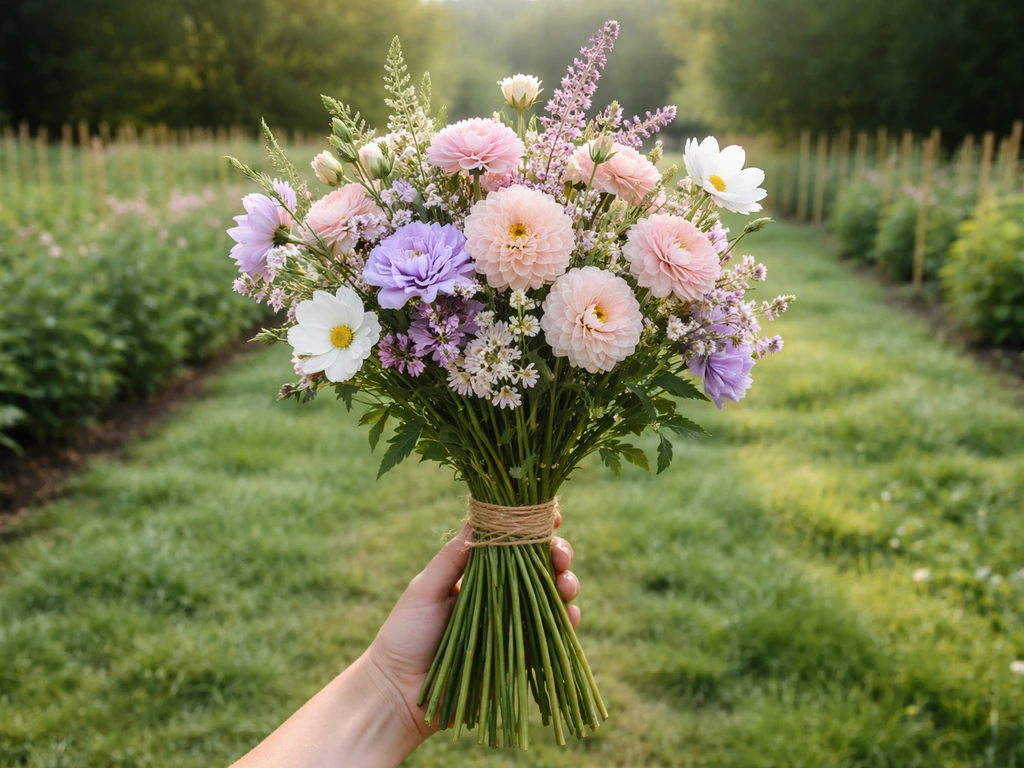
Quick shortlist: the best cut flowers to grow
These are the varieties that show up consistently in university farm trials, produce long straight stems, and hold up well after cutting. They are also genuinely beginner-friendly, which matters when you are still learning the rhythm of a cutting garden.
| Flower | Best use | Vase life | Season |
|---|---|---|---|
| Zinnia (e.g., 'Benary's Giant Mix') | Focal flower, all bouquet styles | 7–12 days | Summer to frost |
| Sunflower (e.g., 'Starburst') | Focal or statement stem | 7–10 days | Mid-summer |
| Cosmos | Filler and airy accent | 5–8 days | Summer to frost |
| Snapdragon (tall varieties) | Vertical spike, focal or filler | 10–14 days | Spring and fall |
| Dahlia | Focal flower, high-value arrangements | 5–8 days | Mid-summer to frost |
| Sweet pea | Fragrant filler, spring bouquets | 4–7 days | Spring/cool season |
| Larkspur | Vertical spike, cool-season color | 7–10 days | Spring/early summer |
| Rudbeckia | Late-season filler and focal | 7–10 days | Late summer to fall |
| Marigold (tall African types) | Filler, long-season color | 7–10 days | Summer to frost |
| Lisianthus | Premium focal, wedding-style blooms | 14–21 days | Summer |
For a variety with a proven track record in actual farm trials, Zinnia 'Benary's Giant Mix' is hard to beat. University of Minnesota Extension trials of 53 flower varieties found it produced the highest stem yield and served as a focal flower for most of the growing season. If you can only grow one cutting flower this year, make it that one.
What actually makes a flower 'good for cutting'
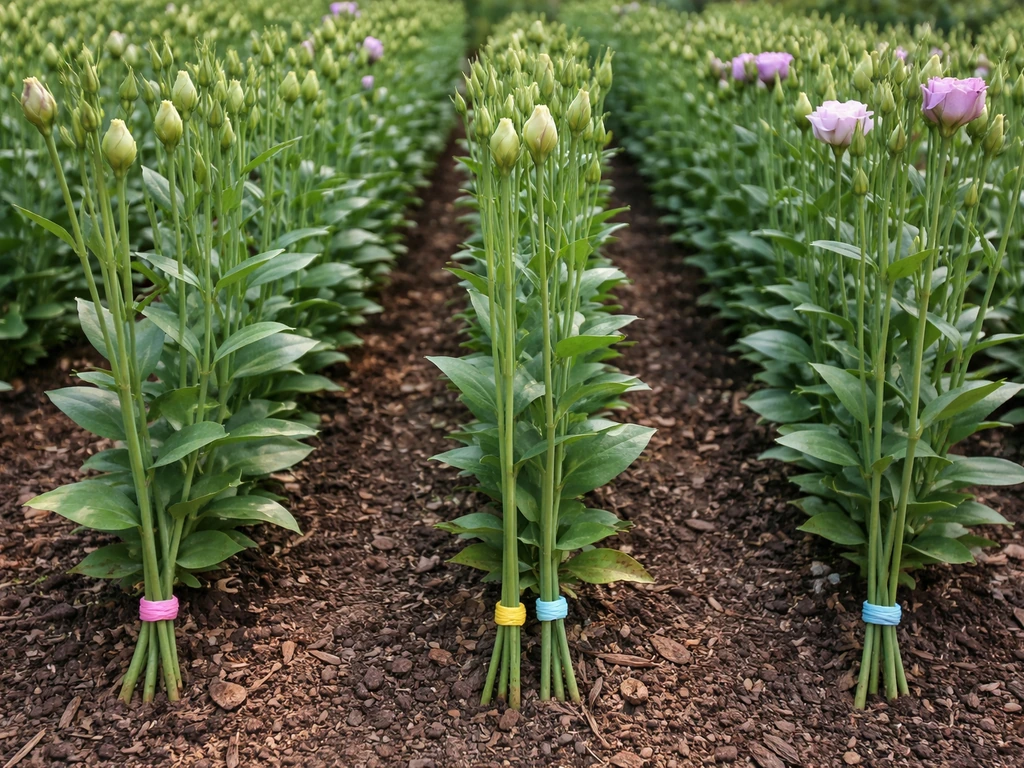
Not every pretty flower belongs in a vase. A good cutting flower needs to tick several boxes at once, and understanding those criteria helps you make smarter variety decisions before you ever buy a seed packet.
- Stem length: Aim for at least 12 inches of usable stem. Short-stemmed flowers can work in small arrangements but limit your options. Tall zinnias, sunflowers, and snapdragons regularly hit 18–24 inches.
- Vase life: The flower needs to stay fresh once cut. Lisianthus can last up to three weeks. Cosmos is shorter at 5–8 days but grows so prolifically that you never run out.
- Bloom productivity: You want a plant that keeps producing when you cut it. Zinnias and cosmos are classic cut-and-come-again flowers. Dahlias also reward regular cutting with more blooms.
- Harvest stage flexibility: The best cutting flowers can be harvested at slightly different stages without collapsing. Spike flowers like snapdragons and larkspur are cut when about a quarter to half of individual florets are open.
- Ease of growing: For home gardeners and small-scale market growers alike, disease resistance and low maintenance matter. Zinnias get powdery mildew pressure but still outperform most alternatives in yield.
- Petal structure: Dense, layered petals hold their form longer. A rose or dahlia with tight petals outlasts a single-layer bloom that opens and drops quickly.
Best choices by growing situation
Growing in an existing garden vs a dedicated cutting garden
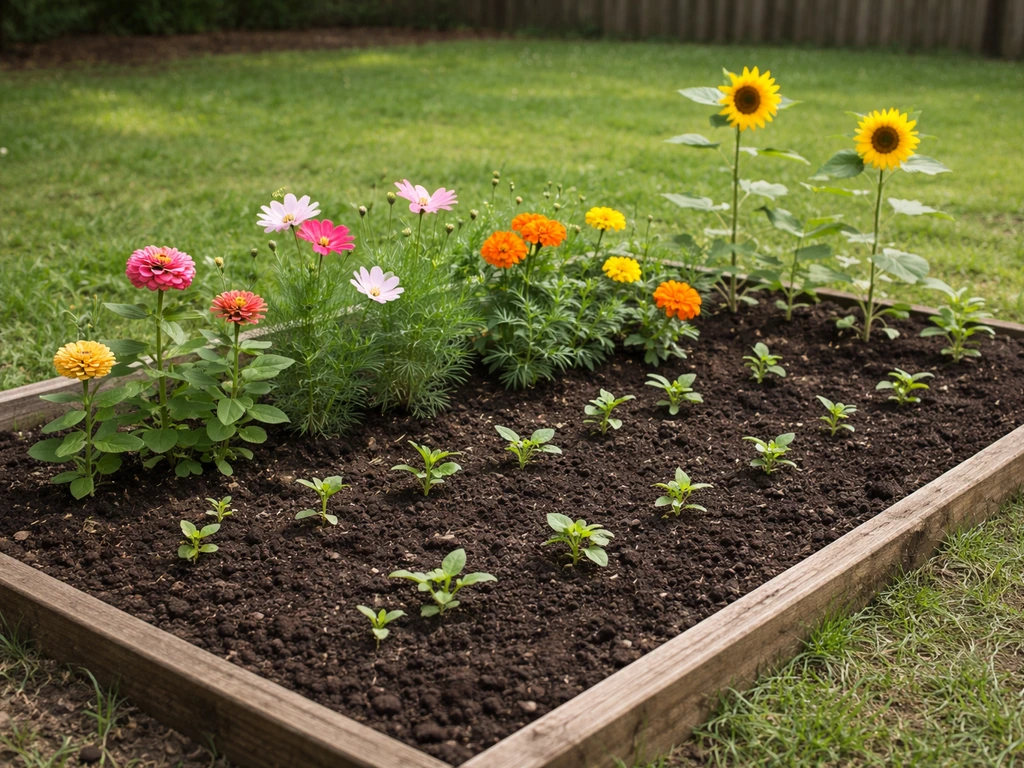
If you are tucking cut flowers into an existing ornamental border, choose plants that look good all season even when you are regularly harvesting from them. Zinnias, rudbeckia, marigolds, and cosmos all fit this role. They fill in gaps, attract pollinators, and still give you plenty of stems to cut without the garden looking raided. If you have a dedicated cutting garden, productivity matters more than aesthetics, so you can pack plants closer together, grow in rows, and choose varieties purely for stem length and yield rather than garden appearance.
Best picks for absolute beginners
Zinnias, cosmos, sunflowers, and marigolds are the four flowers I would tell any beginner to start with. They are all direct-sow friendly, they germinate fast (5–10 days in warm soil), and they forgive a lot of beginner mistakes like irregular watering or slightly poor soil. Michigan State University Extension recommends exactly these types for new cutting garden growers, and that recommendation matches real-world experience. Get those four right, and you will have enough blooms to fill vases from July through October.
Best picks for maximum productivity
Once you are comfortable with the basics, add snapdragons, dahlias, and lisianthus to chase higher stem counts and longer vase life. Snapdragons are cool-season workhorses that can fill bouquets before your summer flowers are even close to blooming. Dahlias are unmatched for focal flowers but require tuber storage in cold climates. Lisianthus has an exceptional vase life of two weeks or more, but it is a slow grower that needs to be started indoors 3–4 months before transplant. It rewards the effort if you can manage the timeline.
How to grow cut flowers from seed to bloom
Timing your sowing
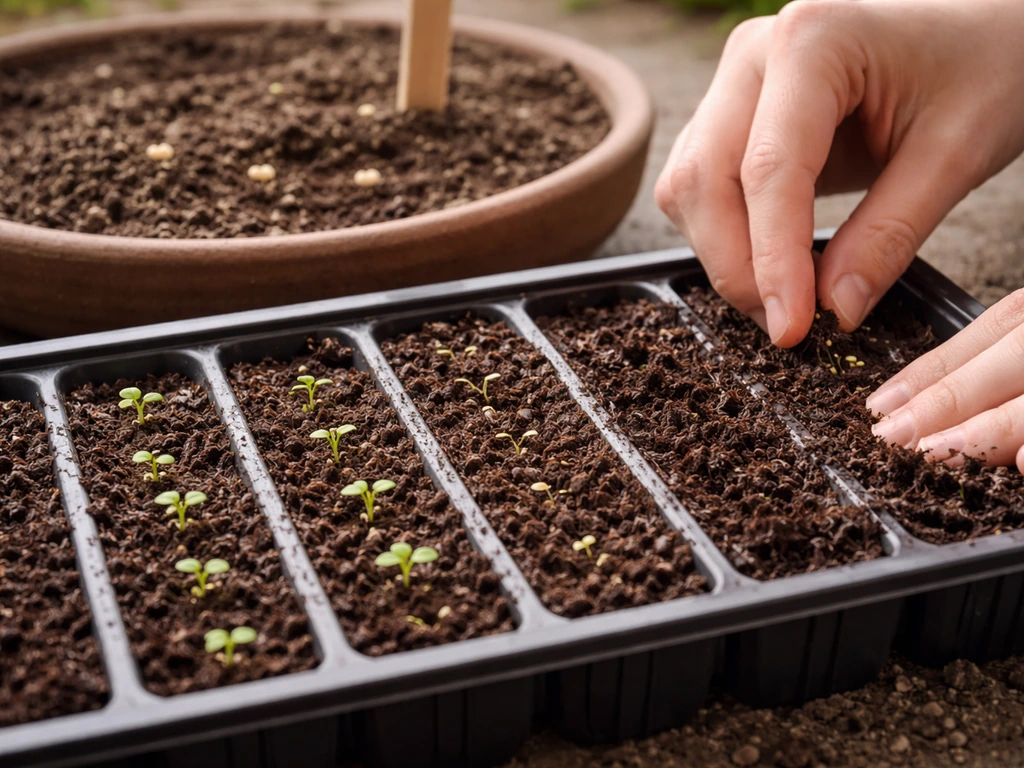
Cool-season annuals like snapdragons, sweet peas, and larkspur can be sown about a month before your last frost date. Warm-season flowers like zinnias, cosmos, and sunflowers go in after your last frost, either direct-sown or as transplants. If you want to start warm-season flowers early indoors for a head start, do it about 2–3 weeks before your last frost date (not earlier, or they get leggy fast). For flowers like lisianthus that have a very long lead time, start indoors about 3–4 months before your planned transplant date.
Soil, spacing, and feeding
Most cutting flowers prefer a slightly acidic soil with good drainage. Zinnias do well at pH 5.5–7.5, and cosmos prefer it a bit more acidic around pH 5.0. Get a soil test before you heavily amend anything. University of Massachusetts Amherst extension researchers recommend collecting 10 subsamples from your plot for an accurate reading, and they stress that nitrogen is the most critical nutrient for consistent stem quality. Do not guess at fertility if you want reliable results. For spacing, closer planting encourages taller, straighter stems because plants compete for light. A general guide is 9–12 inches for zinnias and cosmos, 12–18 inches for dahlias and sunflowers.
Pinching for more stems
Pinching is the single most underused technique for cutting garden beginners. When your zinnia has 2–3 sets of leaves, cut out the growing center of the plant. This forces it to branch and produce multiple flowering stems instead of one. You sacrifice the first bloom but gain four to six stems where you would have had one. Cosmos and dahlias respond similarly well to early pinching. Skip this step and you will still get flowers, but far fewer of them.
Support and disease management
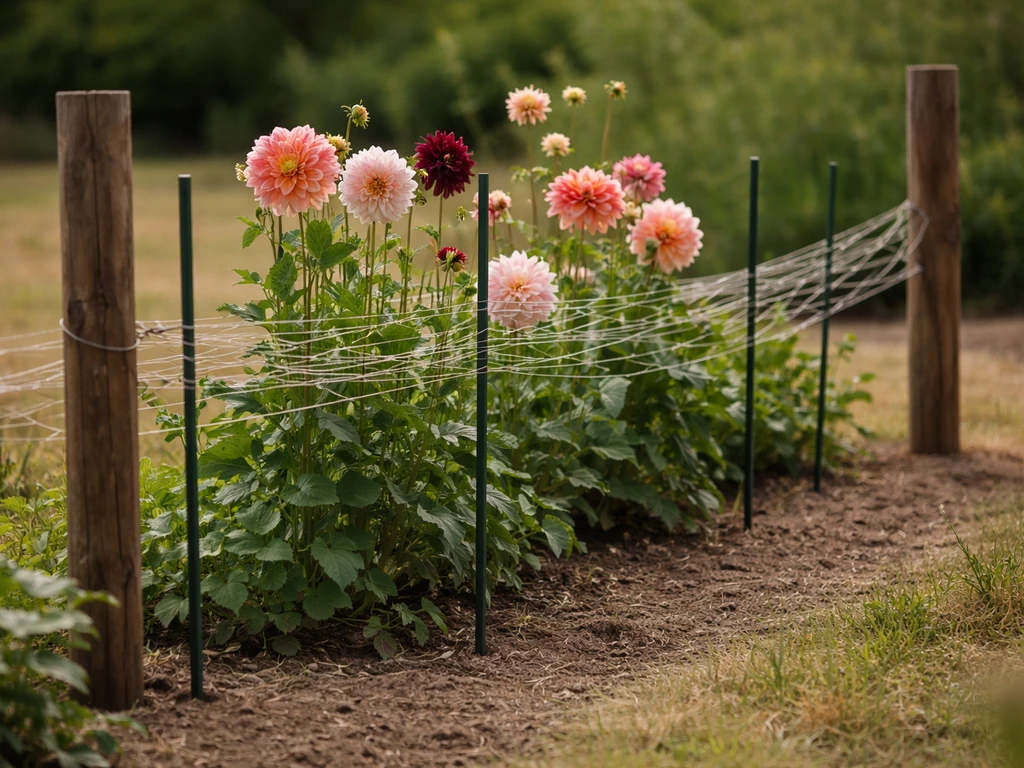
Tall cutting flowers need support, especially in open or windy sites. Stake dahlias individually and use horizontal netting (corral-style, stretched between posts at about 18 inches high) for zinnias, cosmos, and sunflowers. Powdery mildew is the main disease problem with zinnias. Improve airflow by not overcrowding, water at the base rather than overhead, and if you have had serious outbreaks before, look for mildew-resistant varieties or switch to a weekly preventive spray. Penn State Extension flags this as a significant production issue, and it really can ruin late-season zinnia harvests if you ignore it.
Harvesting and post-harvest care
When to cut
Cutting at the right stage makes a bigger difference than almost anything else you will do. Harvest too early and the flower will not open fully in the vase. Too late and it will be past its peak within a day. For zinnias, cut when the bloom is fully open and the stem is firm enough that shaking it does not make the head wobble. For spike flowers like snapdragons and larkspur, cut when one quarter to one half of the individual florets along the spike are open. For sunflowers, cut when the petals have just started to unfurl but the center is still firm. Cut in the early morning when stems are fully hydrated, not midday when the plant is under heat stress.
Conditioning after harvest
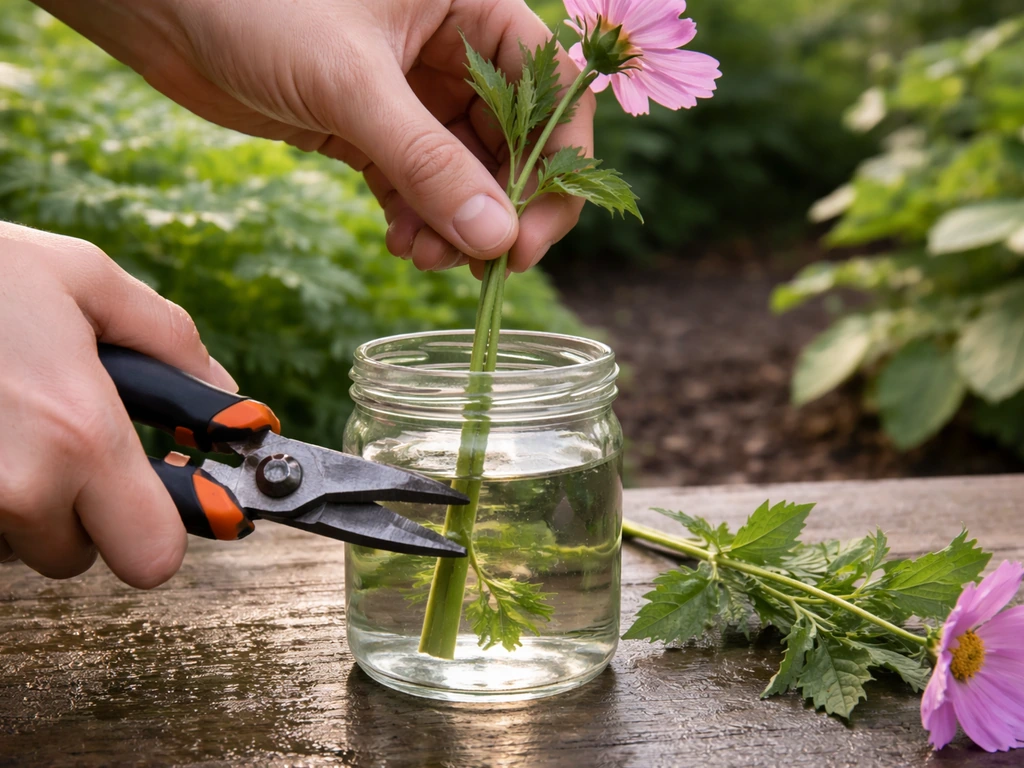
This step is where most home gardeners leave vase life on the table. As soon as you cut a stem, recut it underwater, removing about half an inch to an inch of stem to eliminate the air bubble that forms the moment a stem is severed. Place stems immediately into clean buckets of water, not onto a table or into a basket to deal with later. Oklahoma State University Extension is clear that conditioning should begin promptly after harvest and that dry handling followed by delayed rehydration consistently shortens vase life. Use clean containers every time. Bacteria plug the water-conducting channels in stems, and that kills flowers faster than almost anything else.
Temperature and storage
Cool your flowers as quickly as possible after harvest. The ideal holding temperature is 32–35°F (0–2°C) with 80–90% relative humidity. A garage fridge dedicated to cut flowers is a worthwhile investment if you are harvesting regularly. Do not store flowers near ripening fruit. Ethylene gas from apples, pears, and bananas actively shortens vase life, and sweet peas in particular are very sensitive to it. Also avoid moving flowers directly from a cold room to a warm display area because the condensation that forms promotes microbial growth. Finally, do not use chemically softened water for storage. The sodium in softened water is damaging to cut stems.
Planning a cutting-garden calendar
A single sowing of zinnias in late May will give you blooms from July until frost, which sounds great until you realize you will have a glut in August and nothing in June. Succession sowing solves this by staggering your start dates so fresh crops mature every few weeks throughout the season.
- Late winter (8–10 weeks before last frost): Start snapdragons, lisianthus, and sweet peas indoors. These cool-season and slow-growing flowers need the head start.
- 4–6 weeks before last frost: Sow a first round of zinnias and cosmos indoors for early transplants. Direct-sow larkspur outdoors if your soil is workable.
- At last frost: Transplant snapdragons and sweet peas outdoors. Direct-sow your first succession of zinnias, sunflowers, and cosmos.
- 2–3 weeks after last frost: Plant dahlia tubers. Sow a second round of zinnias and cosmos directly.
- Every 2–4 weeks through midsummer: Continue sowing zinnias and cosmos for a continuous harvest. A fresh sowing every three weeks is the standard practice for avoiding gaps.
- Midsummer: Sow a final round of quick maturing flowers like rudbeckia and marigolds. These will carry the garden through fall.
Mix in varieties with different days-to-bloom as another layer of succession planning. If you sow three zinnia varieties at the same time but one matures in 55 days and another in 75, you extend your harvest window without any extra sowing steps. This variety-mixing approach works especially well once you have a good sense of which cultivars you like and how they perform in your specific conditions.
Market-ready vs home bouquets: picking the right approach
Growing for home use
For home bouquets, you have a lot of flexibility. You can mix and match whatever is blooming, cut stems at slightly different stages, and use any vase you like. Focus on growing a wide variety of colors, textures, and heights so you always have something interesting to combine. Grow more filler flowers than you think you need. Cosmos, larkspur, and tall marigolds fill out bouquets beautifully and are far easier to grow in quantity than the premium focal flowers.
Growing for market or regular gifting
If you are growing for farmers market sales or regular weekly bouquets to give away or sell, consistency and volume become the priority. Stick to a smaller set of proven varieties rather than growing 20 different things. Zinnia 'Benary's Giant Mix' and sunflower varieties like 'Starburst' are exactly the kind of workhorse performers you want, because they produce predictable stem lengths and bloom stages week after week. Plan for market harvesting by cutting daily at the proper stage of development. Daily harvesting keeps plants productive, removes overblown flowers before they drain the plant's energy, and gives you fresher stems than harvesting just once a week.
Yield expectations
A single zinnia plant, properly pinched and maintained, can produce 20 or more harvestable stems over a season. A 10-foot row of zinnias planted at 9-inch spacing gives you roughly 13 plants and potentially 200+ stems across the summer. That kind of yield from a small space is why zinnias dominate small-scale cutting gardens and farmers market flower buckets alike. Dahlias produce fewer stems per plant but each stem is worth more because the blooms are showier and the vase life is good. For market, a mix of 70% workhorses (zinnias, cosmos, sunflowers) and 30% premium focal flowers (dahlias, lisianthus, snapdragons) gives you reliable volume with high-value additions.
A practical starting point
If you are just getting started, do not try to grow everything at once. Pick three flowers from the shortlist at the top of this article, plan two successions of each, and get your soil tested before you plant. Master the harvesting and conditioning steps early because growing beautiful flowers and then cutting them at the wrong stage or skipping the cool-water conditioning is one of the most common ways new growers end up disappointed. Once you have a rhythm with your first season, growing for cutting becomes one of the most satisfying things you can do in a garden. If you want a smooth first season, follow a simple how to grow a cut flower garden plan and adjust it for your local climate and sunlight growing for cutting. If you want to add a woody, long-lasting stem to your garden, learn how to grow eucalyptus for cut flowers.
FAQ
Which cutting flowers are best if I have full sun for only part of the day?
Prioritize sun-lovers that still tolerate some shade while staying productive, like zinnias, cosmos, and marigolds. If your site gets less than about 6 hours of direct sun, expect shorter stems and fewer blooms, and you can compensate by planting a slightly tighter spacing only if airflow is good (to reduce mildew risk on zinnias).
Can I grow “good cutting flowers” in containers instead of a garden bed?
Yes, but choose plants that match pot culture, like dwarf or compact zinnias, cosmos varieties labeled for containers, and snapdragons for cool seasons. Use fast-draining potting mix, keep soil evenly moist (not soggy), and plan to harvest more frequently because container plants dry out faster and drop buds if they stress.
How do I prevent zinnia powdery mildew when I am harvesting a lot?
Start with airflow, avoid overhead watering, and don’t overcrowd (spacing matters more than many new growers expect). Remove severely infected leaves early, and keep harvested stems in clean containers because any mildew spores blown onto buckets can recontaminate water. If mildew hits hard in your area, switch to mildew-resistant cultivars and consider a consistent preventive routine before symptoms appear.
What soil test result should I actually change for better stem quality?
Focus on nitrogen first, since stem production and quality usually track most closely with it. If pH is off, adjust it gradually because big swings stress plants. Also note drainage, if the test site stays wet after watering or rain, fix drainage rather than adding more fertilizer.
What is the biggest mistake when cutting flowers for bouquets?
Cutting at the wrong stage and conditioning too slowly. Harvest too early and blooms fail to open fully, harvest too late and petals deteriorate quickly, then recut underwater promptly and place into clean, filled buckets immediately to eliminate air and prevent bacterial clogging.
How often should I harvest to keep plants producing?
For volume crops, harvest daily or every other day during peak bloom. Remove open, usable flowers before they over-ripen on the plant, and keep cutting even when the garden looks “picked clean,” because many of these varieties will generate new stems after repeated harvests.
Do I need to pinch zinnias if I am growing only a few plants?
Pinching still matters, even in small beds, because it shifts the plant from one main flowering stem to multiple branching stems. The tradeoff is sacrificing the first bloom, but you gain a much larger total harvest later in the season, which is usually what small-space growers want.
Can I store harvested stems in the fridge overnight before arranging?
Yes, if you condition them first (recut underwater, then place into clean water) and store them cool and humid. Avoid storing next to ripening fruit, and try not to move them rapidly from cold storage to a warm display, because condensation can increase microbial growth and shorten vase life.
Is it okay to use softened water for filling vases or storage buckets?
It’s better not to for storage, softened water can contain sodium that damages cut stems. If you only have softened water available, use fresh unsoftened water for conditioning and storage when possible, or at least switch to unsoftened water for the final vase filling.
How do I stagger blooms if I want flowers for events every month?
Use succession sowing by planning target weeks for first harvest, then sow warm-season types after your last frost in small batches. Add variety differences in days to bloom, so one crop batch can stretch longer instead of creating a short peak followed by a gap.
What vase life can I realistically expect from dahlias versus lisianthus?
Dahlias often have excellent show value, but they typically produce fewer stems per plant. Lisianthus is known for long vase life, but it requires a longer lead time and more careful starting indoors, so expect a longer planning horizon even if the payoff is rewarding.
Should I fertilize aggressively to get straighter, longer stems?
Don’t guess. The article stresses nitrogen as key, but too much fertilizer can encourage lush foliage with weaker structure and more disease pressure, especially with poor airflow. Use your soil test to guide rates, then supplement cautiously once plants are established and actively growing.
What’s the easiest tall-flower support method that won’t ruin the look of my cutting garden?
Use horizontal netting for crops like zinnias, cosmos, and sunflowers because it supports stems without individual stakes in every plant. For dahlias, staking each plant works best, since stems can be heavy and blooms can pull sideways in wind.
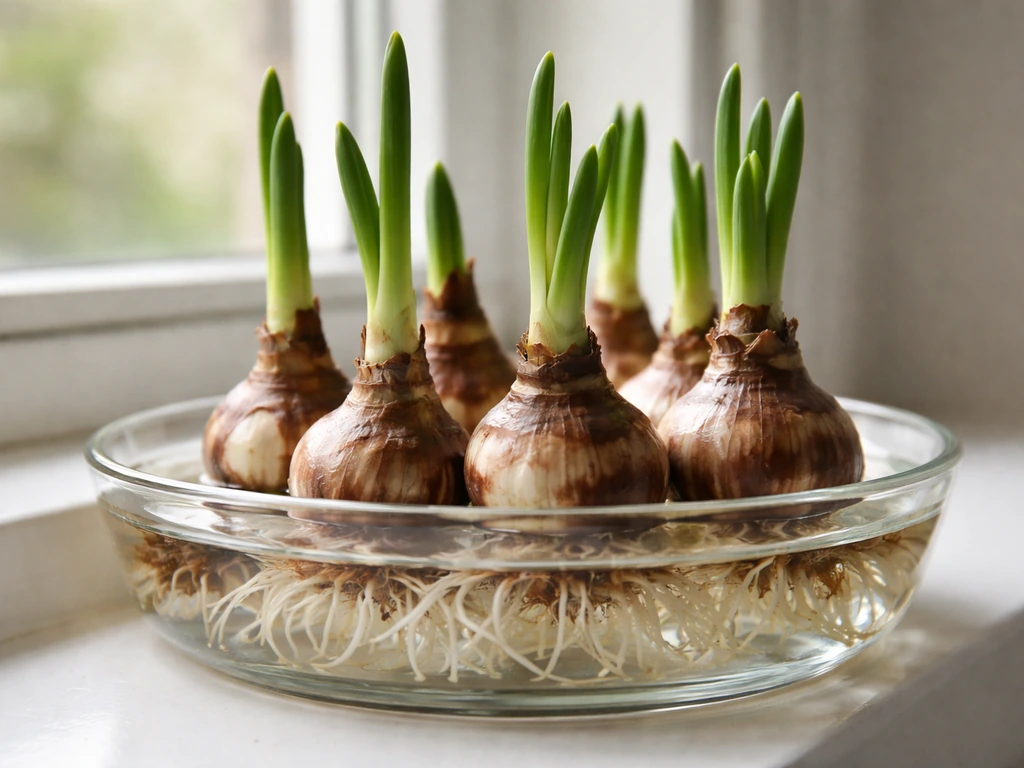
Step-by-step indoor guide to grow paperwhites: bulb choice, planting in water or soil, care, timing, and flop prevention
Step-by-step how to grow wildflowers from seed to bloom with site prep, sowing, watering, and troubleshooting for any sp
Step-by-step guide to grow duck flower from seed to blooms, with care tips, troubleshooting, and seasonal timing.