Growing flowers is one of the most rewarding things you can do in a garden, and it's far more straightforward than most beginners expect. Whether you're starting your first packet of marigold seeds on a windowsill or planning a full cutting garden, the core process is the same: understand what your flower needs, give it the right conditions at the right time, and stay consistent with care. This guide walks you through that entire process, from seed to bloom, for ornamental flowers. It also covers a second, completely different topic that often gets searched alongside it: how to grow THCA flower, which is a cannabis cultivation topic and gets its own dedicated section below.
How to Grow Flower: Seed to Bloom and THCA Flower Basics
James Holloway
24 Mar 2026
How flowers grow: the life cycle from seed to bloom
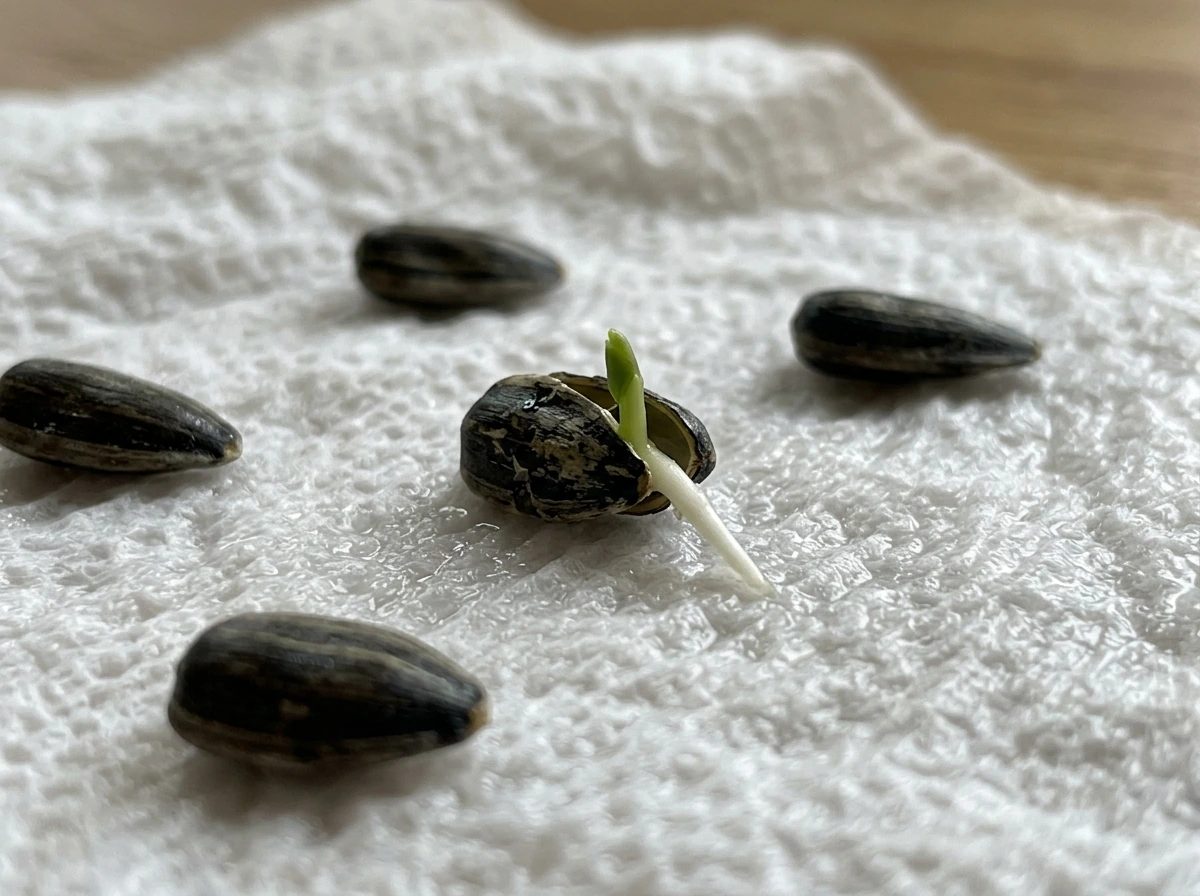
Every flower starts the same way: a seed absorbs moisture, cracks open, and sends out a root and a shoot. That first shoot pushes toward light while the root anchors down and starts pulling in water and nutrients. Within days you have a seedling with its first set of true leaves, and from there the plant puts on vegetative growth, building stems and foliage before it shifts energy toward producing flowers.
That shift from vegetative growth to flowering is the part most beginners don't think about, and it's where photoperiod (day length) plays a surprisingly big role. Many common flowers are classified as long-day, short-day, or day-neutral plants. [Long-day plants bloom earlier when days are longer than a critical threshold. ](https://www.
canr. msu. edu/news/lightandfloweringofbedding_plants) Short-day plants either require days shorter than a critical length to flower at all (obligate short-day) or just bloom faster under short days (facultative short-day). Cosmos, for example, is a facultative short-day plant, which is why it tends to start flowering earlier when you direct-sow it in late summer than when you start it indoors in spring.
Day-neutral plants, like many marigolds and zinnias, flower based on maturity rather than day length, making them the easiest picks for beginners. If a flower you're growing just won't bloom, photoperiod is often the culprit worth investigating.
The full life cycle for most annual flowers runs something like this: germination (days 1 to 10 depending on variety), seedling establishment (weeks 1 to 3), vegetative growth (weeks 3 to 6 or longer), budding, and then bloom. After bloom, the plant sets seed and, for annuals, dies back. Understanding this arc helps you time everything, because the goal is to have your plants reach the flowering stage when outdoor conditions are right, not too hot, not frost-threatened, and with enough daylight to trigger blooming.
Choose the right flower variety and plan your timing
Before you buy a single seed packet, figure out two things: what you actually want to grow, and when your last frost date is. Your last frost date is the anchor for all your seed-starting math. You can find it by searching your zip code on any cooperative extension site. Once you have it, work backwards.
For beginners, I always recommend starting with day-neutral annuals because they're forgiving and reliable. Marigolds and zinnias are the classic starting point. Both germinate in 5 to 7 days, grow fast, and bloom heavily with minimal fuss. If you want something for a cutting garden, snapdragons and phlox are worth adding, though annual phlox needs to be started 6 to 10 weeks before your last frost date indoors. Wildflower mixes and poppies are best direct-sown because they don't transplant well, and they can actually be scattered in fall or very early spring to stratify naturally in the ground.
Here's a quick reference for common beginner annuals and their starting windows:
| Flower | Germination Time | Start Indoors Before Last Frost | Direct Sow Option |
|---|---|---|---|
| Marigold | 5–7 days | 4–6 weeks | Yes, after last frost |
| Zinnia | 5–7 days | 4–6 weeks | Yes, after last frost |
| Annual Phlox | 10–14 days | 6–10 weeks | Yes, early spring |
| Cosmos | 5–10 days | 4–6 weeks | Yes, after last frost |
| Snapdragon | 10–14 days | 8–10 weeks | Not recommended |
| Poppy | 10–14 days | Not recommended | Yes, fall or very early spring |
| Wildflower Mix | Varies | Not recommended | Yes, fall or early spring |
If you're in a warmer zone (8 and above), you have more flexibility to direct-sow earlier and run a second round of flowers in fall. In cooler zones (5 and below), getting a head start indoors is almost always worth it because your outdoor growing season is shorter. That said, don't start seeds too early. Seedlings that outgrow their containers before outdoor conditions are safe become leggy and stressed, and they're harder to establish. Stick to the timing windows on the seed packet or the table above.
How to grow flowers from seed: soil, sowing depth, and germination
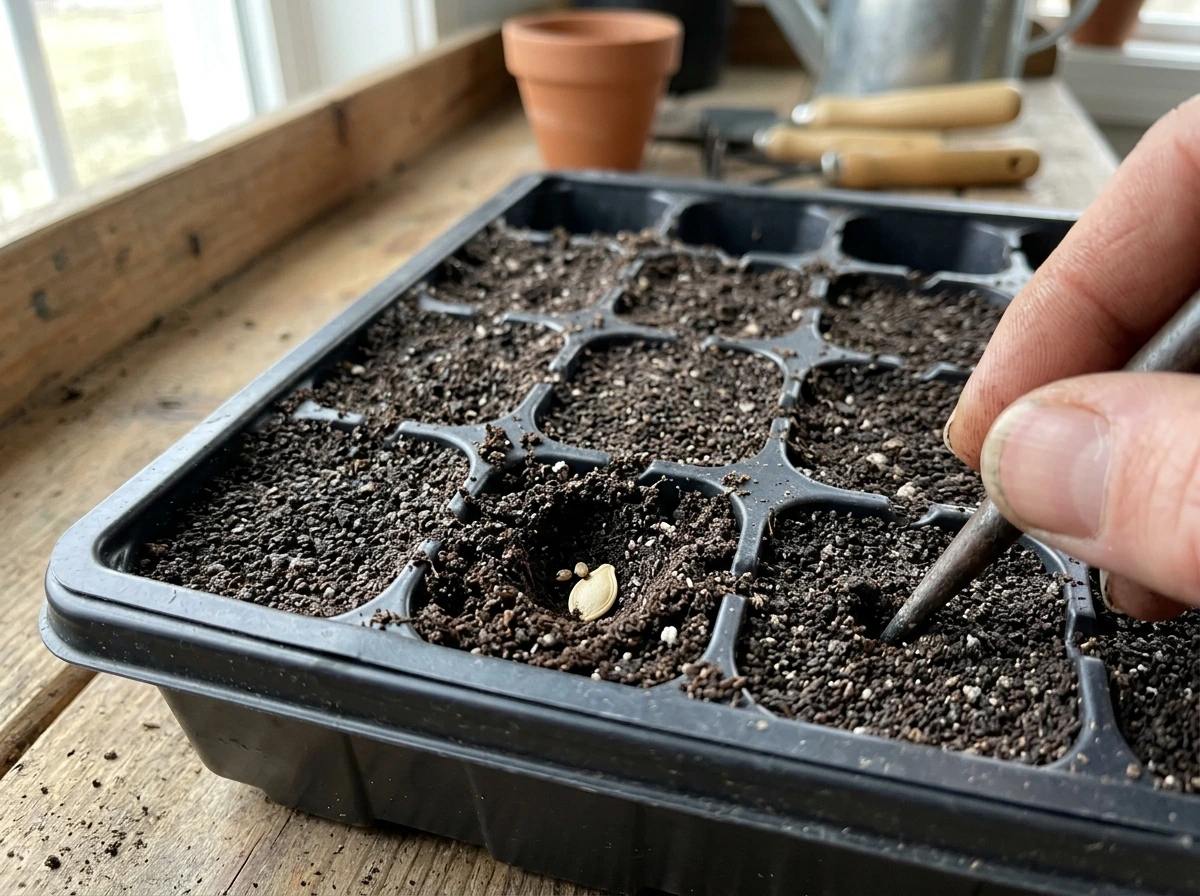
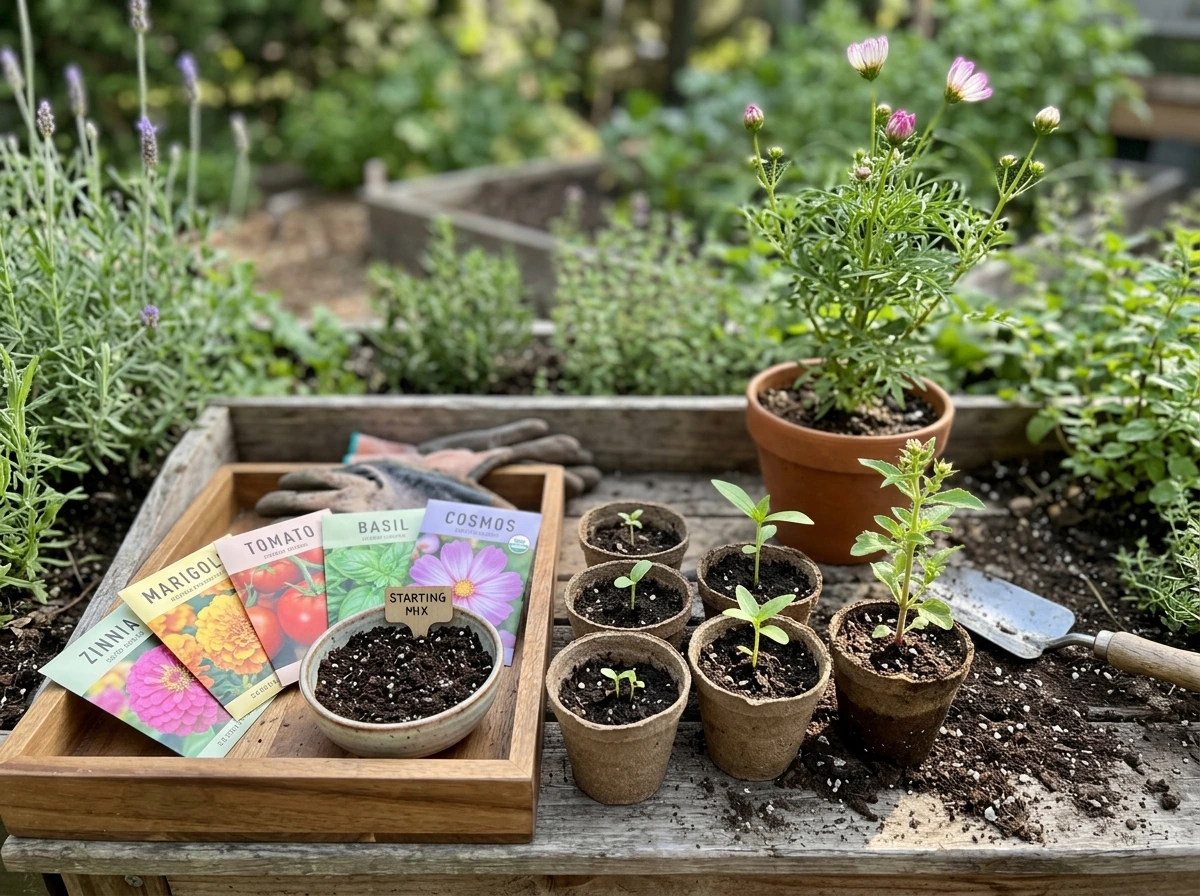
Use a seed-starting mix, not garden soil or regular potting mix. Seed-starting mixes are lighter, drain better, and have less fertilizer, which is actually what you want at this stage. This is a key part of how to grow flowers from seed, soil, sowing depth, and germination. Seeds have everything they need to germinate internally. What they need from you is consistent moisture, warmth, and the right depth.
Sowing depth matters more than most people realize. The general rule is to sow a seed at a depth equal to two to three times its diameter. Tiny seeds like snapdragon and petunia get pressed onto the surface and barely covered, sometimes just misted and left exposed to light. Larger seeds like marigold or zinnia get covered by about a quarter inch of mix. If you bury small seeds too deep, they exhaust their energy reserves before the shoot reaches light and they die. The seed packet will tell you the right depth, and it's worth following.
Fill your seed tray or cells to about a half inch below the rim, press the mix down lightly, sow your seeds, cover to the correct depth, and water gently with a mister or by bottom-watering (setting the tray in a shallow dish of water and letting it wick up). Then cover the tray with a humidity dome or plastic wrap to hold moisture and place it somewhere warm. Most flower seeds germinate best between 65 and 75 degrees Fahrenheit. Bottom heat from a seedling heat mat can cut germination time noticeably, especially in a cool house.
Check the tray every day. The moment you see sprouts, pull the dome off and move the tray to your brightest light source. A south-facing window can work but often isn't bright enough to keep seedlings from stretching toward the light and going leggy. A grow light set 2 to 4 inches above the seedlings for 14 to 16 hours a day is the most reliable setup. If your seedlings are leaning hard toward the window and getting thin and spindly within a week of sprouting, that's a light problem, not a watering or soil problem.
Transplanting and early care: light, watering, feeding, and spacing
Hardening off before you move plants outside
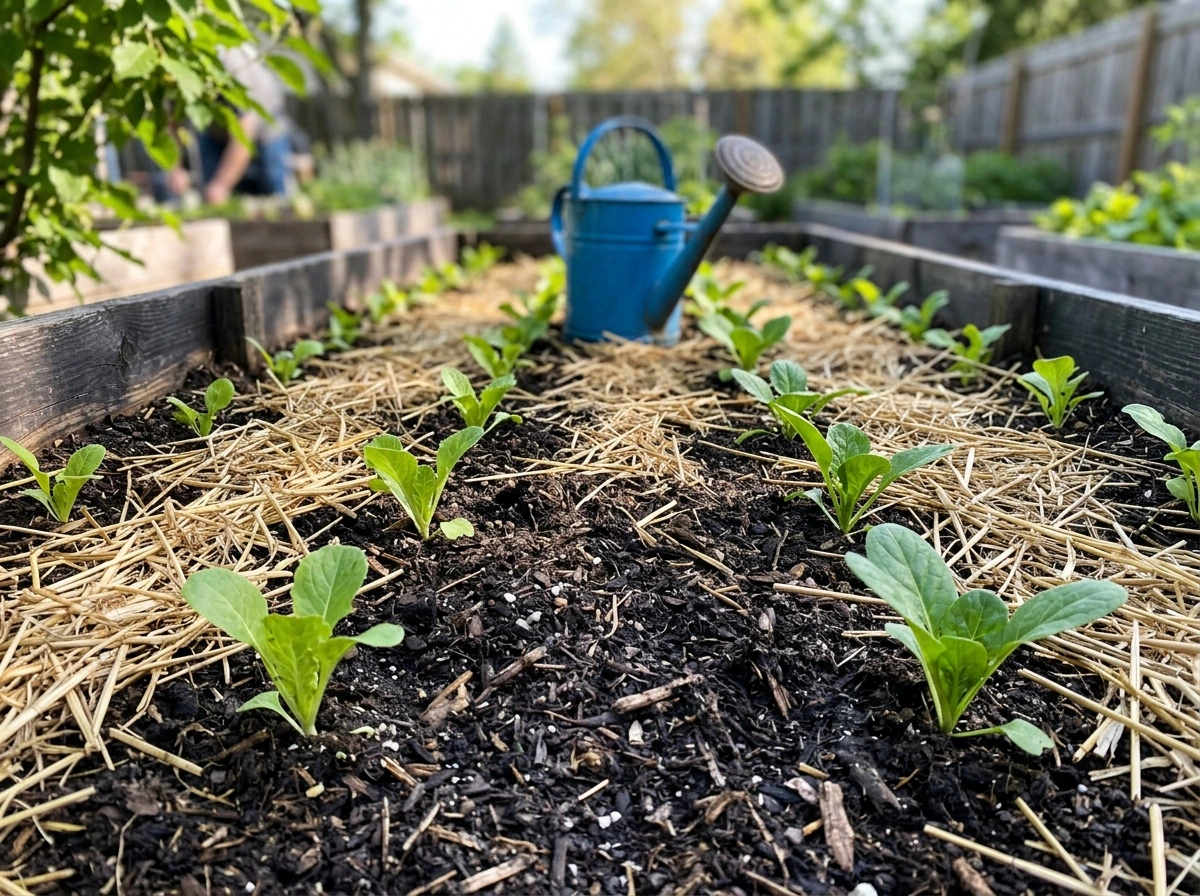
Seedlings grown indoors are soft. They've never dealt with wind, direct sun, or temperature swings, and if you take them straight from your grow light setup to a garden bed, you'll stress them badly. Hardening off is the process of gradually introducing them to outdoor conditions over 7 to 10 days. Start by setting the tray outside in a sheltered, partly shaded spot for just a couple of hours on the first day. Add an hour or two each day, gradually introducing more sun and wind. By day 7 or 8, they should be able to handle a full day outside. Wait until nighttime temps are consistently above 50 degrees Fahrenheit before leaving tender annuals out overnight.
Spacing, light, and watering in the garden
When you transplant into the garden, space matters. Crowding is one of the most common beginner mistakes. Crowded plants compete for light, water, and airflow, and poor airflow sets up fungal disease. Check the seed packet for spacing recommendations and resist the urge to plant closer just to fill space faster. The plants will fill in, and they'll do it healthier with room to breathe.
Most flowering annuals want full sun, which means at least 6 hours of direct sunlight per day. Some (like impatiens and begonias) tolerate shade, but the heavy bloomers like marigolds, zinnias, and cosmos are full-sun plants. Put them in shade and you'll get leggy stems and few flowers.
Water deeply and less frequently rather than a little every day. Deep watering encourages roots to grow downward, which makes plants more drought-tolerant. Water at the base of the plant rather than overhead when you can, especially for flowers prone to powdery mildew like zinnias. A layer of mulch around your plants will help retain soil moisture and reduce how often you need to water.
Feeding is simpler than people make it. A balanced slow-release granular fertilizer worked into the soil at planting covers most annuals for the whole season. If you want to give blooming plants a boost mid-season, a liquid fertilizer higher in phosphorus (the middle number on the label) supports flower production. Avoid going heavy on nitrogen (the first number), which pushes leafy growth at the expense of flowers.
Flowering and ongoing care: deadheading, pests, and troubleshooting
Deadheading to keep blooms coming
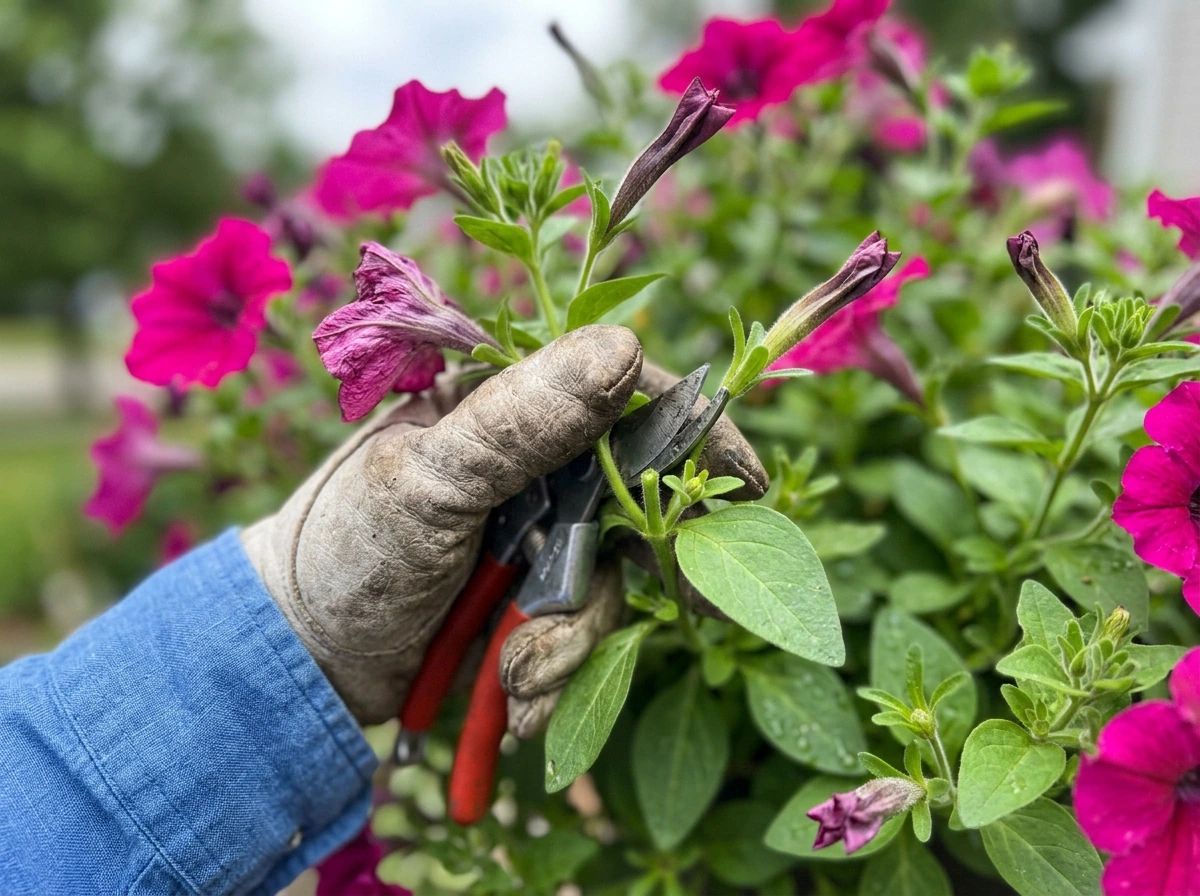
Deadheading means removing spent flowers before they set seed. This is probably the single most effective thing you can do to extend bloom time, because when a plant sets seed it thinks its job is done and slows down flower production. For marigolds, zinnias, and cosmos, just snap or cut off the faded flower head regularly. Some flowers like impatiens are self-cleaning and don't need it, but for most annuals in a cutting garden, deadheading makes a real difference.
Common pests and how to handle them
Aphids are the most common pest you'll run into. They cluster on new growth and stem tips, and a strong blast of water from a hose knocks most of them off. For persistent infestations, insecticidal soap spray is effective and low-impact. Thrips and spider mites show up in hot, dry conditions, so keeping plants watered and plants spaced for airflow helps prevent them. Slugs go after seedlings in cool, wet conditions. Diatomaceous earth around the base of transplants or slug bait pellets (iron phosphate-based ones are safe around pets and kids) handles them well.
Troubleshooting: when things go wrong
- Seeds didn't germinate: Check if the mix dried out (even once is enough to kill germinating seeds), if the temperature was too cold, or if the seeds were sown too deep. Old seed is also a common culprit; test viability by placing 10 seeds on a damp paper towel and checking how many sprout in a week.
- Seedlings are leggy and pale: Almost always a light problem. Move closer to the grow light or to a brighter window, or add a reflective surface to bounce more light toward plants.
- Plants aren't blooming: If they're growing well but not flowering, check sunlight hours first. Then consider photoperiod: some flowers won't bloom unless day length is right. Also check that you haven't over-fertilized with nitrogen.
- Leaves have powdery white coating: Powdery mildew. Improve airflow by thinning or spacing plants, avoid wetting leaves when watering, and treat with a diluted neem oil or baking soda spray.
- Plants wilting despite regular watering: Check for root rot from overwatering (roots will look brown and mushy). Let soil dry more between waterings and make sure containers have drainage holes.
How to grow THCA flower: a different crop entirely
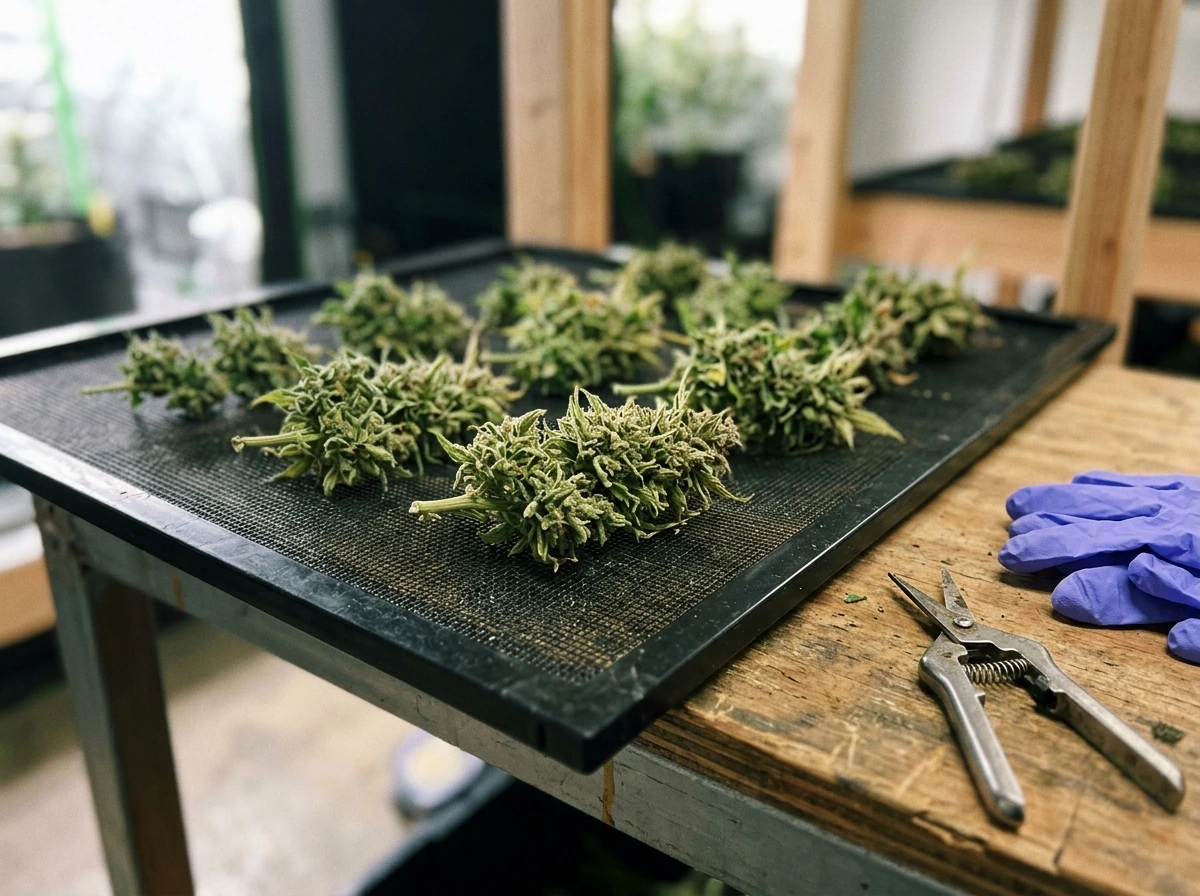
THCA flower refers to the dried, uncured or cured buds of cannabis plants that are high in tetrahydrocannabinolic acid (THCA), the non-psychoactive precursor to THC. This is an entirely different cultivation topic from ornamental flowers, and it belongs in its own track. Before you start, check your local laws. Home cultivation of cannabis is legal in some U.S. states and jurisdictions and illegal in others, so confirm the rules where you live before growing a single plant.
Setup: indoor vs outdoor and what you need
Cannabis grown for THCA flower can be cultivated indoors, outdoors, or in a greenhouse. Indoor growing gives you the most control over light cycles, temperature, and humidity, which directly affects yield and cannabinoid content. Outdoor growing is lower cost and can produce large plants, but you're dependent on your climate and natural day length to trigger flowering. For beginners, an indoor setup is generally more predictable.
For a basic indoor setup you'll need: a grow tent or dedicated room, a full-spectrum LED grow light sized for your space (typically 200 to 600 watts for a 4x4-foot space), a ventilation system with an inline fan and carbon filter, a timer for your lights, pH-adjusted water (cannabis prefers a pH of 6.0 to 7.0 in soil, or 5.5 to 6.5 in hydroponic systems), and a quality growing medium. Soil with good drainage is the most forgiving for beginners. Coco coir and hydroponic setups are more efficient but require more precise nutrient management.
Growth stages: from seed or clone through harvest
Cannabis has four main growth stages: germination, seedling, vegetative, and flowering. Each stage has different light, nutrient, and environmental needs.
- Germination (days 1 to 7): Soak seeds in water for 12 to 24 hours, then place between damp paper towels until the taproot emerges (usually 2 to 5 days). Plant the sprouted seed root-down about a half inch deep in a small starter pot.
- Seedling stage (weeks 1 to 3): Seedlings need gentle light (18 hours on, 6 hours off for photoperiod strains) and careful watering. Overwatering at this stage is the most common beginner mistake. Let the top half inch of soil dry before watering.
- Vegetative stage (weeks 3 to 8 or longer): Under 18 hours of light, the plant builds its structure: stems, branches, and fan leaves. This is when you can train the plant using low-stress training (LST) techniques like tying branches down to spread the canopy and improve light penetration. Feed with a nitrogen-rich nutrient formula during this stage.
- Flowering stage (weeks 8 to 20 depending on strain): Switch the light cycle to 12 hours on and 12 hours off to trigger flowering in photoperiod strains. Autoflowering strains flower automatically regardless of light cycle, typically around weeks 3 to 5 from germination, making them popular for beginners. During flowering, shift to a phosphorus and potassium-heavy nutrient formula and reduce nitrogen. Buds develop over 8 to 12 weeks for most strains.
- Flushing and harvest: Many growers flush the medium with plain pH-adjusted water for the final 1 to 2 weeks before harvest to clear residual nutrients. Harvest timing is determined by examining trichomes (the resin glands on buds) with a jeweler's loupe or digital microscope. Clear trichomes mean the plant isn't ready. Cloudy white trichomes indicate peak THCA content. Amber trichomes signal degradation of THCA into other compounds.
Environment and key variables to manage
Temperature during the vegetative stage should stay between 70 and 85 degrees Fahrenheit during the light period, dropping 5 to 10 degrees during the dark period. During flowering, keeping temps on the cooler end of that range (68 to 78 degrees) can actually help develop more resin and, in some strains, bring out purple coloration. Relative humidity should be around 50 to 70 percent during vegetative growth and dropped to 40 to 50 percent during flowering to reduce the risk of bud rot (botrytis), which is the most devastating disease issue in dense cannabis flower.
Airflow is critical. Stagnant air leads to mold and weak stems. Make sure your inline fan creates gentle movement across all leaves and that fresh air is constantly exchanged. A carbon filter on your exhaust fan controls odor, which matters for indoor grows.
Harvest and what comes next, for both ornamental blooms and THCA flower
Finishing ornamental flowers
For cutting garden flowers, harvest blooms in the early morning when stems are fully hydrated, then use the same consistent care habits when you plan how to grow stock flower. Cut at an angle, strip the lower leaves, and place immediately in clean water. Flowers like zinnias and marigolds have a vase life of 7 to 12 days when cut properly. To keep your garden productive through the season, keep deadheading spent blooms and fertilize every 3 to 4 weeks if you didn't use a slow-release product at planting.
If you want to save seed for next year, let a few flowers fully mature and dry on the plant before collecting. Store seeds in a cool, dry, dark place in a labeled paper envelope. Most annual flower seeds stay viable for 2 to 3 years stored this way. This is one of my favorite parts of growing flowers: the season ends, but the seeds in your envelope mean it starts again next spring for free.
Finishing THCA flower: drying and curing
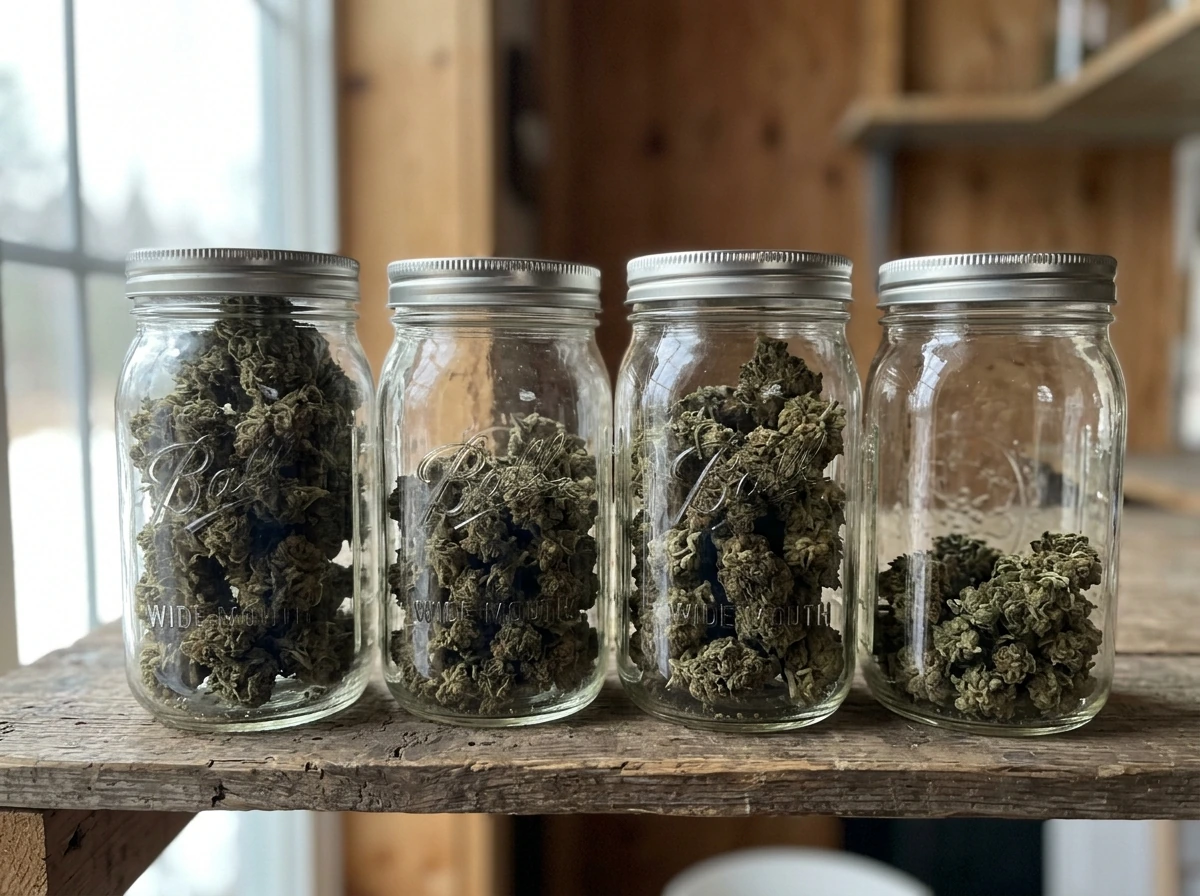
After harvest, cannabis buds need to be dried and cured to preserve THCA content and develop aroma and smoothness. Cut the plant at the base or trim into branches and hang them upside down in a dark room with 60 to 65 percent humidity and temperatures around 60 to 70 degrees Fahrenheit. Good airflow without blowing directly on the buds is important. Drying typically takes 7 to 14 days. The stems should snap rather than bend when the buds are dry enough to move to curing jars.
For curing, place dried buds loosely in wide-mouth glass mason jars, filling them about 70 percent full. Store in a cool, dark place and open the jars once or twice a day for the first 1 to 2 weeks to burp out moisture and exchange fresh air. This process, called burping, prevents mold and slowly develops the terpene profile. A minimum cure of 2 to 4 weeks is standard, and many growers find that 4 to 8 weeks produces noticeably better quality.
Your next steps this week
If you're starting with ornamental flowers and it's late March, you're right in the window for starting marigolds, zinnias, and snapdragons indoors in most of zones 5 through 7. If you're starting with ornamental flowers and it's late March, you're right in the window for starting marigolds, zinnias, and snapdragons indoors in most of zones 5 through 7, which is the same kind of timing you will use when you plan how to grow a flower garden.
Pull up your last frost date, count backwards using the timing table above, and get your seed-starting mix and trays ready. Pick two or three varieties to start, not a dozen, so you can actually pay attention to each one. If you're further south and past your last frost, you can direct-sow marigolds and zinnias right now.
If you're planning a THCA flower grow, spend this week on setup and strain research before you do anything else. Confirm your legal situation, decide on indoor or outdoor, and choose between an autoflowering strain (simpler, faster, about 70 to 90 days total) or a photoperiod strain (more control, higher potential yield, longer timeline). Get your environment dialed in before your seeds arrive. A well-prepared space will make the entire grow smoother than any other single thing you can do.
FAQ
How many flower seeds should I plant per cell or pot to avoid running out of seedlings?
For most annuals, sow 2 to 3 seeds per cell, then thin to the strongest seedling once you see true leaves. If the seed packet lists a low germination rate or you are using older seed, plant an extra seed or two per container, and keep moisture consistent until germination is complete.
What should I do if my flower seeds sprout but then stop growing?
First check for light and temperature. After sprouting, seedlings need strong light to prevent stretching and stalls caused by weak growth. Also confirm the soil stays evenly moist but not soggy, because poor drainage can lead to damping-off even if germination already happened.
Why are my seedlings leggy even though I have a grow light?
Legginess usually means the light is too far away, the timer duration is too short, or the seedlings are leaning toward a brighter side. Raise the light closer (within safe manufacturer distance) and run 14 to 16 hours per day. Also rotate the tray every day so both sides receive similar intensity.
Can I start flowers directly in the ground if I missed the indoor window?
Some annuals tolerate direct sowing well, especially those that do not transplant easily. Use the seed packet guidance for whether direct sowing is recommended, and sow at the right time for your frost conditions. If your seedlings would face too-short a season, direct sowing often yields fewer blooms.
Do flower seeds need light to germinate, or should I always cover them?
Not all seeds are treated the same. Tiny seeds like petunia often need exposure to light and only a light press, while larger seeds generally need a shallow cover. If you cover a light-germinating seed too deeply, germination can fail even when temperature and moisture are correct.
How do I prevent fungus gnats and mold when growing seedlings indoors?
Use bottom-watering, avoid keeping the surface constantly wet, and ensure the tray has good drainage. Let the top of the mix dry slightly between waterings if your seedlings are not drooping. A small amount of airflow near the seedlings (without chilling them) can also reduce mold risk.
What’s the fastest way to tell if my seedlings are overwatered or underwatered?
Overwatering often causes consistently damp soil, limp plants, and sometimes yellowing, even while the mix feels wet. Underwatering usually looks like wilting that improves after watering. For a practical test, lift the tray or pot, it should feel lighter before watering and heavier after a deep soak.
When should I transplant, and how big should seedlings be first?
Transplant when seedlings have several true leaves and the stems are sturdy enough to handle normal handling. Don’t wait until they’re root-bound in the cells, because it increases transplant stress. If you are unsure, a good compromise is to transplant at the first sign of strong root structure and before crowding begins.
How should I harden off seedlings if nights are still cool?
If nighttime temperatures are near the low-50s, harden off in stages and bring plants inside or under protection during cold nights. The key goal is gradual exposure, not keeping them outdoors overnight until they can tolerate it. Wait to leave tender annuals out overnight only when nights are consistently safe.
Why do my flowers stop blooming after they looked great at first?
Two common causes are overcrowding and stress from watering inconsistency. Crowded plants compete for light and airflow, which reduces bloom power and can trigger disease. Also check fertilizer balance, too much nitrogen favors foliage over flowers, so switch to a more bloom-supporting approach if growth has gone leafy.
Should I remove dead flowers right away, or can I wait until a weekly session?
For best results, deadhead frequently enough that faded blooms do not fully set seed. A weekly routine can work for many annuals, but the sooner you remove spent heads, the more the plant continues redirecting energy into new buds.
What spacing mistake most often causes disease in flower beds?
Planting closer than the recommended spacing to fill empty gaps is the main issue. Tight spacing reduces airflow, keeps leaves wet longer, and increases fungal pressure. If you must adjust, prioritize spacing for airflow rather than maximum density.
Is it safe to use slug bait around pets and kids, and what’s the safer option?
Use iron-phosphate based pellets where possible because they are generally safer than many older bait chemistries. Place bait only where pets and kids cannot access it, and follow the label directions for quantity and timing, especially near edible plants.
Can I save ornamental flower seeds, and how do I know which ones are worth keeping?
Only save seeds from healthy plants that are true to type (not obviously mixed varieties). Let selected blooms fully mature and dry on the plant when possible, then store in labeled paper envelopes in a cool, dry, dark place. Expect most annual seeds to remain viable for about 2 to 3 years if stored well.
For THCA flower, do I need to cure to preserve potency and smoothness?
Yes. Drying and curing are what preserve THCA content and improve aroma and smoothness. Even if buds look dry enough to handle, curing in jars with periodic opening helps prevent mold and allows the internal moisture balance and terpene profile to develop.
How do I reduce bud rot risk in a dense THCA flower grow?
Bud rot risk rises with high humidity and poor airflow. Keep humidity lower during flowering, aim for consistent air exchange, and avoid stagnant air pockets. Also watch for overly compact buds and prevent leaf clutter that traps moisture.
Should THCA flower be grown indoors with strict light control, or is outdoor okay for beginners?
Outdoor can work, but it ties flowering to your natural day length and local climate. Indoors is usually more predictable for beginners because you can control light cycles, temperature, and humidity to match each growth stage more precisely.
Next Articles
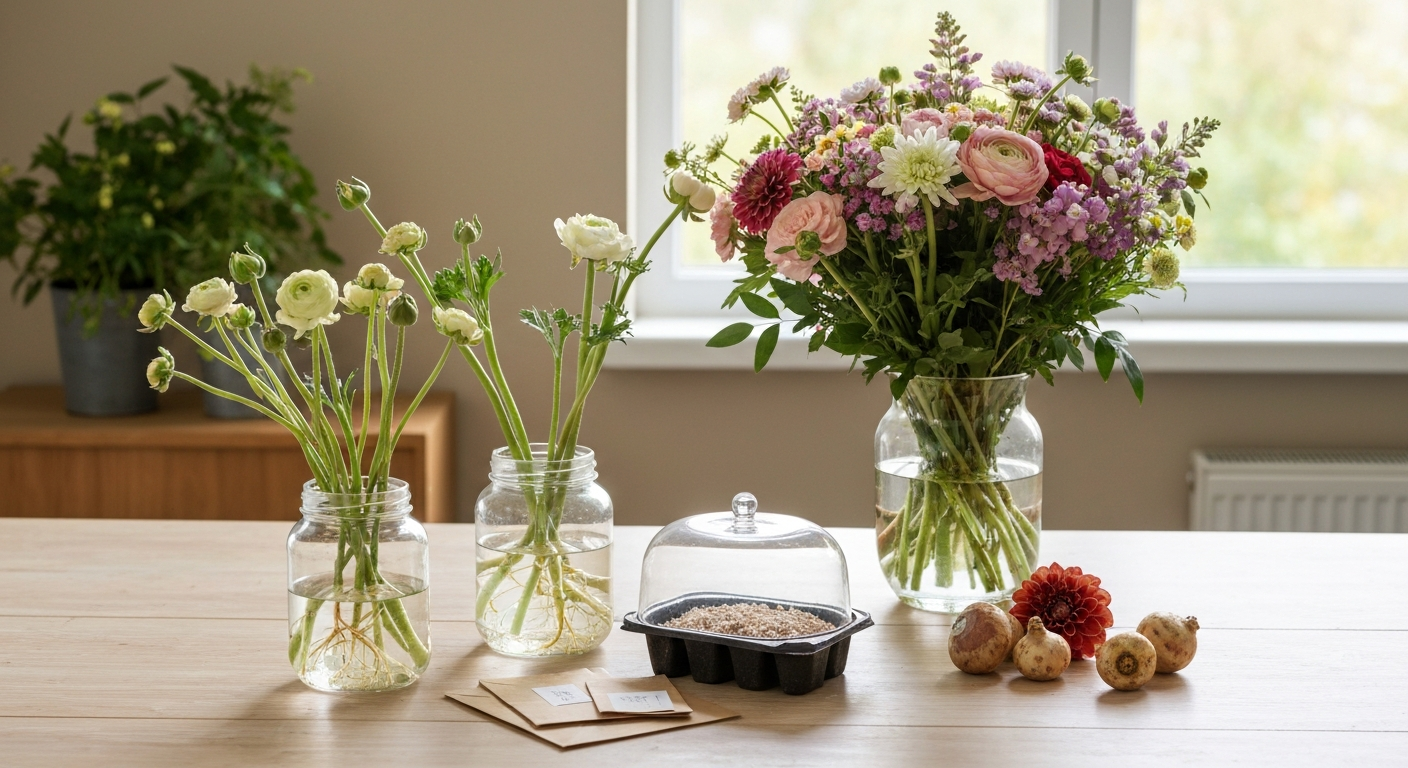
How to Grow Plants from a Bouquet: Step-by-Step Guide for Beginners
How to grow plants from bouquet: step-by-step rooting, seed saving, bulbs, timelines and troubleshooting
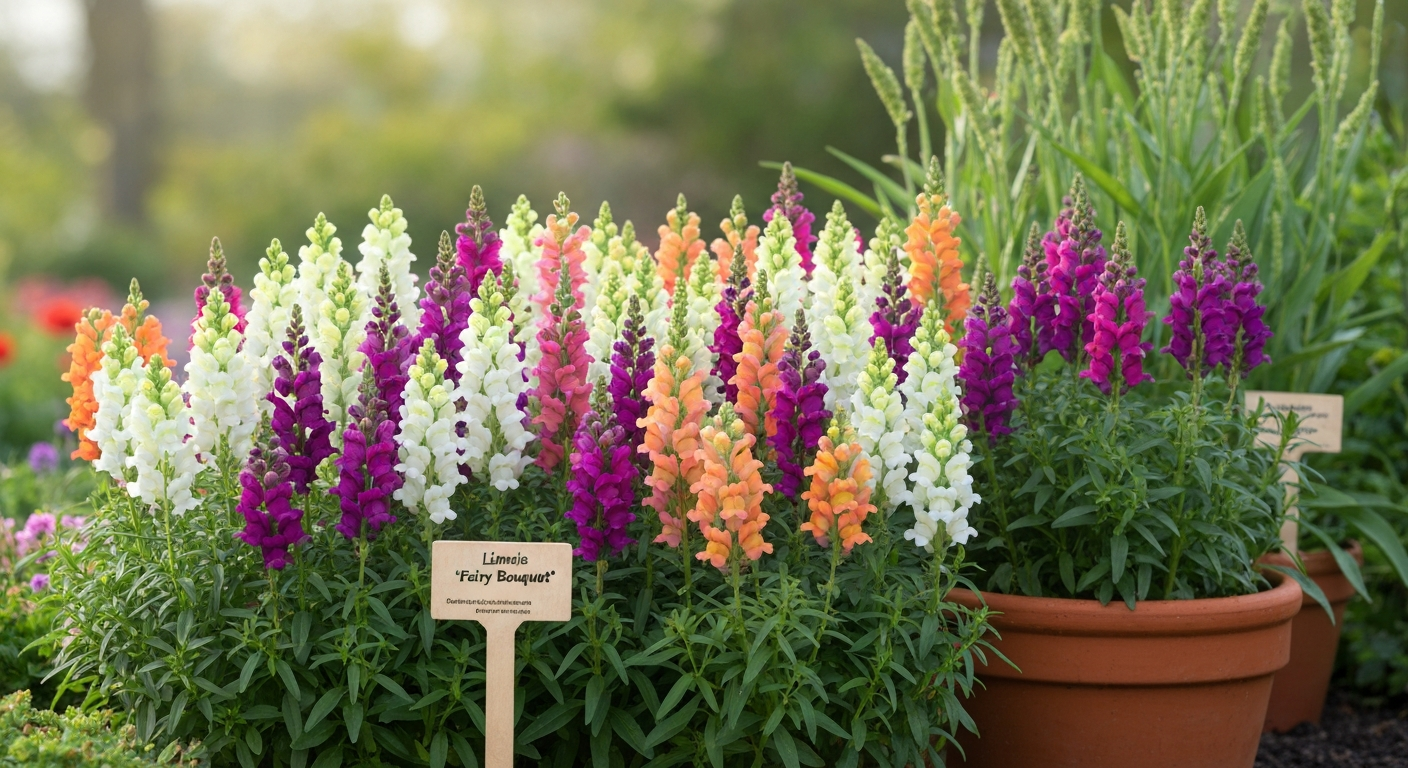
Linaria 'Fairy Bouquet' How to Grow: Seed to Cut Flowers
Grow Linaria 'Fairy Bouquet' from seed to vase: step‑by‑step sowing, care, cutting, seed saving & troubleshooting.
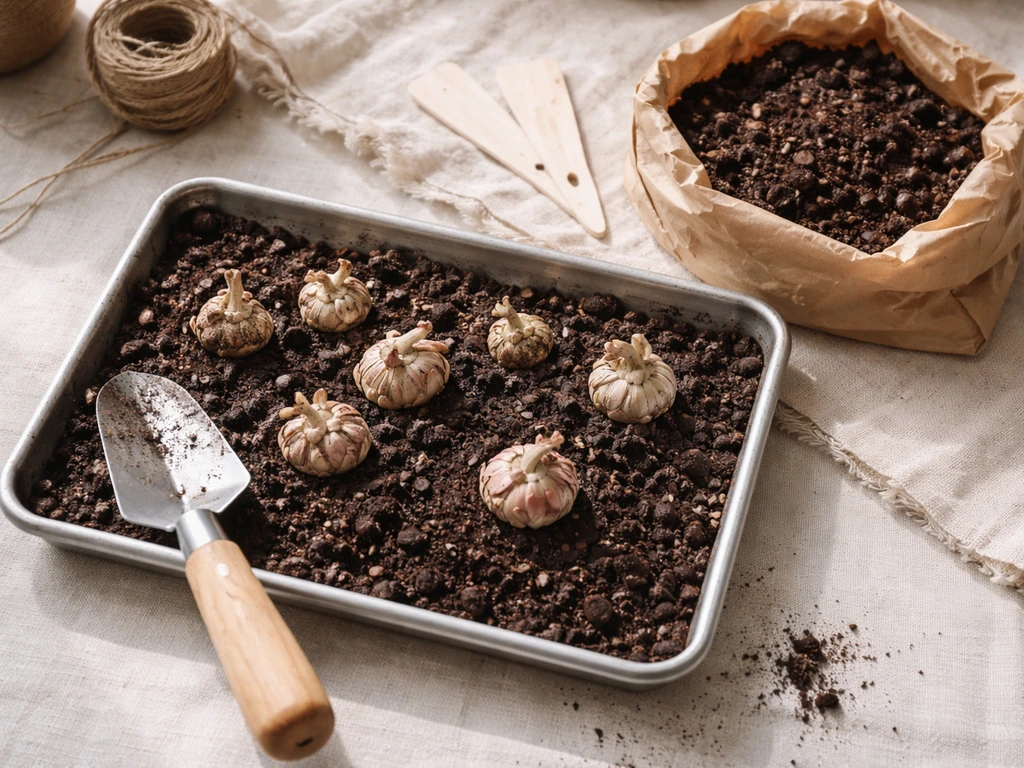
Floret How to Grow Ranunculus: Step-by-Step Guide
Step-by-step Floret-style ranunculus guide: corm prep, planting, watering, frost care, troubleshooting, and harvest for